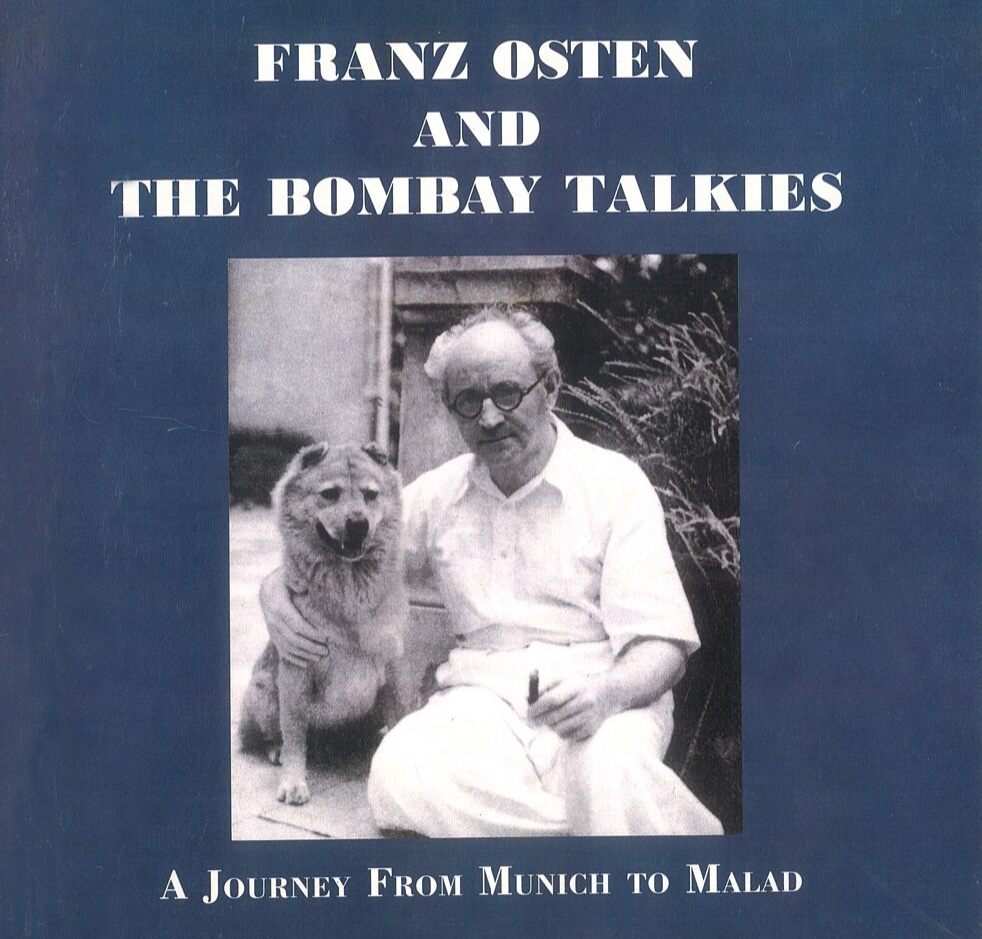
Franz Osten was a Bavarian Filmmaker who along with Himansu Rai was among the first retainers of Bombay Talkies. Osten partnered with Rai on a number of India’s earliest blockbuster films like Achhut Kanya and Jeevan Naiya.
Osten was born Franz Ostermayr in Munich. He trained to be a photographer like his father and gave acting a try. In 1907, he founded a traveling cinema called the “Original Physograph Company” with his brother Peter Ostermayr, who later established the predecessor to Bavaria Film Studios, today one of Germany’s largest film studios. Amongst other films, he showed Life in India, a short documentary film about the Munich carnival. The run was not very successful: three days after the opening, the projector exploded in flames. Osten decided to make films and in 1911 directed his first feature, Erna Valeska. His career was interrupted by the start of the First World War. He worked first as a correspondent, then became a soldier. After the war Osten made peasant dramas like The War of the Oxen and Chain of Guilt for EMELKA in Munich.
The 28-year-old Indian solicitor Himansu Rai came to Munich in search of partners for series of films on world religions. He had studied law in Calcutta and London where as a student of Nobel Prize winner Rabindranath Tagore he had also directed a theatre group that promised to revive Indian acting and theatre traditions. He had heard that the passion plays of Oberammergau were a showcase for German culture and now wanted to create the Indian equivalent.
The Germans were to provide equipment, camera crew and the director, Franz Osten; Rai would provide the script, the actors, locations and all the capital necessary. On 26 February 1925, Osten and Rai, together with their cameramen, Willi Kiermeier and Josef Wirsching, and comedian Bertl Schultes as interpreter, boarded a ship for India. On 18 March they arrived in Bombay.
Osten’s silent films tell varieties of Indian stories. Osten and Himanshu Rai directed his silent Indian film, Prem Sanyas (1925) – Die Leuchte Asiens (German title) –The Light of Asia (English title), the first German – Indian co-production. It was adapted from the book, The Light of Asia (1879), by The film tells the story of Prince Gautama Buddha, who according to an Edwin Arnold, bases on the life of Prince Siddharth Gautama, who founded Bhddhism by becoming the Buddha or the “Enlightened one”.
Shiraz (Shiraz : A Romance of India) / Das Grabmal einer groben Liebe (German title), is a 1928 silent film, directed by Osten. It was adapted from a stage play of the same name by Niranjan Pal, and based on the story of the commissioning of the Taj Mahal – the great Mughul prince for his dead queen.
Prapancha Pash / Schicksalswurfel (German title) / A throw of Dice (English title) is a 1929 silent film directed by Ostem, based on and episode from the Indian epic Mahabharata. Film was shot in black and white on 35mm film. It contains thousands of cast members and animals, including 10,000 extras, 1,000 horses and scores of elephants and tigers.
Achhut Kanya / Die Unberuhrbare (German title) / Untouchable Girl (English title) is a 1936 film directed by Osten. The film deals with the social position of Dalit girls and is considered a reformist period – piece. An “untouchable” girl and a Brahmin boy fall in love, but the strict caste system and the gossip of the villagers threaten to keep them apart.
Janmabhoomi (Land of Birth) is a 1936 film directed by Osten. Released during the Indian Independence movement. Janmabhoomi was the first patriotic movie in the history of Hindi cinema. It was also the first ever Hindi movie to have an explicitly nationalistic song : “Jay Jay Janani Janmbhoomi” (Hail the land of our birth), written by Jamuna Swarup Cassyap. The song was an extremely popular song in its Era. A tune from the film was utilised by the BBC as a signature tune for its “Indian News Service”.
Jeevan Naiya is a 1936 film directed by Osten. The film is about the ostracism of dancing girls. Izzat (Honor) is a 1937 film social drama, directed by Osten. The film involves two “warring clans”, the Marathas and Bhil tribe, along with a young couple in love, much in “a Romeo and Juliet” style love setting.
Jeevan Prabhat (Dawn of Life) is a 1937 film social drama, directed by Osten. The film deals with the social evils of the caste system, and remarriage. Uma is sent back to her father’s home after her husband remarries, as she is unable to bear children. Her renewed friendship with a childhood friend, Ramu, a Harijan, bings censure and misunderstanding from her husband and society. Baburao Patel, the Filmindia, editor, in his review of December 1937, called it Osten’s “better work than even before”. The audience reception was good with the film running for ever 17 weeks in Bombay, while doing good business in the rest of the country too, becoming a commercial success.
Prem Kahani (Love Story) if a 1937 film directed by Osten. Writer Niranjan Pal’s original title for the English – language story and screenplay was ‘Touchstone’ or ‘Marriage Market’, including a shorthand version of the film’s theme. Savitri is a 1937 mythology legend film directed by Osten. The film is based on an incident from the epic Mahabharata and tells the story of Savitri and Satyavan. Savitri persists in getting the God of Death, Yama, to revoke her husband Satyavan’s Death.
Bhabhi (Sister-in-law) is a 1938 social family drama film directed by Osten. The film was based on a Bengali Novel written by Sharadindu Bandyopadhyay called “Bisher Dhoan”. Nirmal (1938), Vachan (1938), Durga (1939), Kangan (1939) films directed by Osten.
The War of the Oxen (1920), The Monastery’s Hunter (1920), The Night of Decision (1920), The Black Face (1921), The Terror of the Sea (1924), The Tragedy of Night of Passion (1924), A Song from Days of Youth (1925), Little Inge and Her Three Fathers (1926), The Seventh Son (1926), Break-in (1927), The Lady in Black (1928), The Eccentric (1929), The Judas of Throl (1933), At the Strasbourg (1934), German Films directed by Osten.
Photo courtesy Google. Excerpts taken from Google.
 Writer Sunita