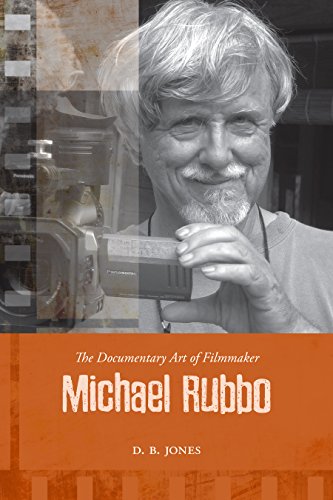
Michael Rubbo is an Australian filmmaker, Screenwriter, and publisher who has written and directed over 50 films in documentary and fiction.
Michael worked for 20 years as a documentary film director at National Film Board of Canada, taking time off between films to teach both in Australia at the just opened National Film School, and U. S. Universities (including Harvard University). Hired by the NFB to make to make films for children, Michael directed over 40 documentaries, winning many international prizes.
Sad Song of Yellow Skin is a 1970 direct Cinema – styledocumentary film on the effects of the Vietnam War on street children in Saigon. The 58 – minutes documentary was written, directed and narrated by Michael. Michael had originally gone to Vietnam with the stated goal of making a documentary about the work of Foster Parents Plan with Vietnamese War orphans. Awards for Sad Song of Yellow Skin included a special Canadian Film Award and the BAFTA Award for Best Documentary. It was named best film over 30 minutes at the 1971 Melbourne Film Festival.
Waiting for Fidel is a Canadian documentary directed by Michael. New York Times film reviewer Richard Eder observed that “It is about Cuba, in a way, but it is also about the difficulty in seeing Cuba for what it may be” Gray Evans, in his chronicles of the National Film Board of Canada, called the film “one of the most intriguing documentaries of the period “.
Margaret Atwood: Once in August is a 1984 documentary film about Canadian writer Margaret Atwood, directed by Michael. The film was made in Michael’s trademark style of self- conscious documentary filmmaking.
Michael has also directed and written four children’s feature films including The Peanut Butter Solution (1985), Tommy Tricker and the Stamp Traveller (1988) along with its sequel The Return of Tommy Tricker (1994), and the Daytime Emmy award winning film Vincent and Me (1990). He spent some time as the Head of Documentaries at Australian Broadcasting Corporation (ABC) Television.
A more recent documentary made after his NFB tenure, Much Ado About Something (2001), explores the possibility that Christopher Marlowe was the hidden hand behind William Shakespeare. This documentary being repeated several times on PBS Frontline Program which still sells the film. His work is also in the collection of the Museum of Modern Art (MOMA) New York and film schools around the world. He has been visiting lecturer at New York University, UCLA, Stanford University and the University of Florida with longer teaching periods Harvard University, The Australian Film, Television and Radio School (AFTRS).
In The Documentary Art of Michael Rubbo, Author D. B. Jones traces Rubbo’s filmmaking from his days as a film student at Stanford, through his twenty years at the National Film Board of Canada, where Rubbo developed his distinct documentary style. Jones then follows Rubbo’s post – NFB venture into feature film directing and return to his native Australia. Jones reveals not only the depth of meaning in Rubbo’s films, but also the depth of their influence on filmmaking itself.
Photos courtesy Google. Excerpts taken from Google.
 Writer Sunita