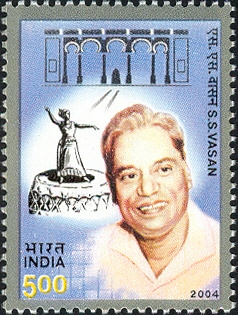
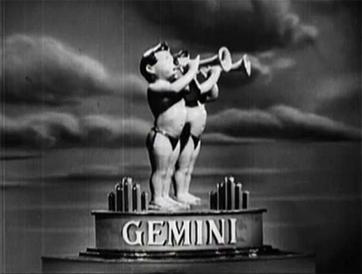
Subramaniam Srinivasan, popularly known by his screen name S. S. Vasan, was an Indian Journalist, Writer, Advertiser, Film Producer, Director. He is the founder of the Tamil-language magazine Ananda Vikatan and the film production company Gemini Studios, Gemini Film Laboratories and Gemini Picture Circuit. He was a member of Parliament (Rajya Sabha) from 1964 and served his term till his death.
By the late 1920s, Vasan had begun to make considerable profits and one of the Magazines he advertised in (almost dominated) was a local Tamil humour magazine Ananda Bodhini with a circulation of about 2000. During this period, Vasan wrote a number of short stories for the Tamil Magazines he brought advertisements for, with mixed success. He also translated popular English fiction and ran a successful mail order business.
In 1928, Vasan purchased a struggling Tamil Magazine “Ananda Vikatan”. Vasan bought the publication in January 1928 and relaunched it with the same name but in a different format from February 1928. He completely revamped it by introducing serial stories and crossword puzzles. Vasan followed a rigorous marketing strategy which eventually saw the emergence of Ananda Vikatan as the best selling Tamil magazine of the time. In 1933, he started a humour magazine in English called The Merry Magazine and in 1934, a Tamil weekly called Naradhar devoted to arts, politics, literature and social issues, both of which were successful. In 1934, Ananda Vikatan became the first Tamil magazine to advertise in the British periodicals Advertiser’s Review and Advertiser’s Weekly. A key to Vasan’s success was his ability to find and nurture talent and one of the biggest breaks came in the early 1930s when Vasan found a new writer Kalki Krishnamurthy in whose writing he saw great potential. Kalki and Vasan created history in the decade or so where they were professionally aligned and remained close friends for life. Ananda Vikatan, a part of the Vikatan group today continues to be one of the leading names in Tamil households and celebrates 87 years of publishing being the oldest vernacular magazine in the country.
Vasan entered the Tamil film industry in 1936 when his Novel Sathi Leelavathi was made into a film. When a fire broke out in 1940 in the premised of the Motion Picture Producers Combine, a prominent film studio, rebuilt and renamed it as the Gemini Studios. The Gemini Studios produced their first movie, Madanakamarajan, which was a box-office success. Vasan followed it with Mangamma Sapatham and Miss Malini both of which were successful. Miss Malini, based on the story Mr. Sampath by R. K. Narayan, launched the career of Gemini Ganesan, who later became a leading actor in the Tamil film industry. The Hindi version of this film was Mr Sampath in Hindi and, these films are the only adaptation of his novels that the famous writer R. K. Narayan was involved in the scripting of the screenplay. Mangamma Sabatham launched Vasundhara Devi, the mother of actor-politician Vyjayanthimala Bali as the lead and created a craze making her a huge star in just one film. The picture was directed by Acharya, one of the early brilliants of Tamil cinema. In 1942, Gemini also made Bala Nagamma, a silver jubilee hit in Telugu based on a popular folk tale which captured the imaginations of the audience and was hugely successful. It was the last film to star Kanchanamala and was an important film in the career of Pushpavalli.
Bala Nagamma was later adapted into Hindi with Madhubala playin the lead and Savitri making her Hindi debut as Bahut Din Huwe with the addition of the climax borrowed from another Gemini Film, Avvaiyar which used elephants to the rescue. This was especially hugely successful in Maharashtra with their devotion to Lord Ganesha. Other successes during the period leading to independence included comedy capers like Kannama En Kadhali, Daasi Aparanji – a period social satire and Apoorva Sagotharargal, an adaptation of the story of the Corsican Brothers – a tale of co-joined twins separated at birth. It was one of the first films in India and one of the first few in the world that had a double role for the lead M. K. Radha who played both brothers. It also set the trend for innumerable successful films in India that had siblings, especially look-alike ones that were separated at birth and grew up in two different circumstances a la Prince and the Pauper or Man in the Iron Mask only to be switched or join forces to exact revenge. The actor-politician, M. G. Ramachandran picked this film to remake as “Neerum Neruppum” as a tribute and homage to Vasan in 1971 and earlier in 1968 had done his 100th film Oli Vilakku, particular that it be a Gemini production. Another successful film in this period, a devotional Nandanaar was a controversial story of a harijan man overcoming the shackles of the caste oppression to gain admittance into the Chidambaram Nataraja temple with divine sanction, hence becoming a Nayanmar shaivite saint. This starred the famous singer Dandapani Desikar with the film and soundtrack becoming a runaway super hit in Tamil Nadu. Technically, it was the first film in India that used playback singing in a portion where a divine song, a call to the saint in a heavenly voice rings out of the ether – this of course set a trend for playback singers and revolutionised the necessity to use singer-actors for films that had been the norm through the 1930s and early 1940s.
Vasan’s involvement in films eventually led him to direct his first movie, Chandralekha. He was really preparing his big post-independence break. The 1948 Tamil Chennai film industry classic Chandralekha was rereleased in Hindi and Tamil.[7][8] While the film was original begun under the direction of Acharya who had earlier directed landmark Gemini films like Mangamma Sabatham, differences of opinion between Vasan and Acharya led to the director stepping down from the film. Vasan then donned the role of director in addition to being the producer of the epic movie. The film, a spectacle, is remembered for its drum dance and extensive sword fight sequence. 603 prints of Chandralekha were made and the film was even released in the United States as Chandra with English subtitles – the first Indian film to do so! Even now, a print exists in the Library of Congress as representative of classic Indian cinema. Vasan encouraged his dear friend Tarachand Barjatya to found Rajshri Pictures in 1947 and assigned him the distribution of Chandralekha in the North, the first project distributed by Rajshri and one of the biggest successes of its time thus spurring off the growth stories of one of the biggest distributors and producers of Indian cinema today.
Gemini Studios made several films in Hindi that include Insaniyat, Aurat, Paigham, Gharana, Grahasti, Ghoongat, Zindagi, Mr Sampat, Sansar, Lakhon Mein Ek, Raj Tilak, Nishan, Mangala, Bahut Din Hue, Teen Bahuraniyan and Shatranj that all found Box office success. Insaniyat was one of the only films to star both Dilip Kumar and Dev Anand and Gemini films first begun the practice of making popular ensemble cast films with multiple leading men. Although films have been made by Gemini and Vasan with almost all the top leading heroes of the time including Raaj Kumar, Rajendra Kumar, Manoj Kumar, Ashok Kumar, Dilip Kumar and Dev Anand, there was no picture that Gemini made with Raj Kapoor while there were two that had Prithviraj Kapoor making a comeback in strong supporting roles in Teen Bahuraniyan and Zindagi. Aurat had one of Rajesh Khanna‘s first major on-screen roles before he got his major break as a leading man. Similarly, Amitabh Bachchan got his opportunity to become introduced as the male lead man opposite Mala Sinha in a Gemini production (produced and directed by S.S. Balan, Vasan’s son), Sanjog shortly after Saat Hindustani and just before his success with Zanjeer. Many technicians, writers, directors, producers and artistes across India were introduced into the media world by Gemini and even personally encouraged or mentored by Vasan and later by his son Balan. In the 1950s Gemini Pictures came out with films both in Tamil and Hindi in addition to Telugu and other regional languages. Popular Hindi films include Mr. Sampat (1952), Insaniyat (1955), Raj Tilak (1958) and Paigham (1959).
In 1958, he established Gemini Colour Laboratories and believed in establishing the Film Trade on professional lines. His vision saw establish one of the first media conglomerates in the world that were vertically aligned that included the Gemini Picture Circuit – one of the largest film distributors in the country that saw a variety of Indian and foreign films release under its umbrella across the nation. He noted that success of a film depended on its distribution and found its validation with the success of the GPC. The Gemini Studios was also the location of choice for various film shootings across the country and also boasted of having the first air-condition floors in addition to the largest sound stages in Asia at the time. Some famous and milestone films shot at Gemini studios include Uday Shankar‘s Kalpana, a dance and visual extravaganza that was being made simultaneously with Chandralekha and in fact inspired the drum dance sequence. Meticulously organised, Gemini Studios ran like a factory churning out successful films in multiple languages for 30 years under his dynamic vision. The distribution network was spread across South Asia and even had trade links with Hollywood, London and Russia. Additionally, the ownership and popularity of the magazine Ananda Vikatan under his aegis completed the vertical alignment of the media empire. Major films in Tamil include “Avvaiyyar” (1952) on the life of the poet-saint that was directed and produced by Vasan at lavish cost and that found everlasting success starring K. B. Sundarambal who was persuaded to act in the film (as she had been widowed a few years earlier) for a whopping sum or Rs 100,000 rupees which was the highest ever fee for an actor in India at the time. Other extremely successful Tamil films produced and some directed by him include Mangamma Sabatham, Vazhkai Padagu, Nandanaar, Motor Sundaram Pillai, “Oli Vilakku”, Chakradhari, Aboorva Sagotharargal, Vanji Kottai Valipan, Irumbu Thirai.
Vasan was the President of the Film Federation of India for two terms, helping found it and was even nominated to the Rajya Sabha (the first film producer to be an MP of the Rajya Sabha). He also helped found the South Indian Film Chamber. He pushed for extensive reforms of the film trade, gave up cash transactions in film financing as early as the 1950s and was one of the first pioneers to ask for industry status. He was the given the Padma Bhushan by the Govt. of India in 1969, the year of his death.
Vasan believed that films were meant to entertain and were meant to be catered to the ordinary man. Colossal production values, huge sets, mammoth dances, thousands of extras were his hallmark. It can be said that a direct development of the use of song, dance and pageantry in film became almost a hallmark of Indian/Bollywood cinema and gave rise to the Madras formula of success. In more recent decades, this unfortunately overshadowed all the other cinematic values to have become almost the blueprint for formula films of India. Gemini was also the first to pioneer innovative marketing and PR plans for the release of films including the first to use the concept of giant ‘cut-outs’ and billboards beginning with Chandralekha. A vast number of reigning film and media professionals came out from the mentorship or employment of Gemini Studios.
Lavishness in production, splashing money in promoting, packaging and publicising a picture, he was a pioneer in Indian Cinema and had no equals, then, and now. ‘Be wise and advertise!’ He had a character speak in his film “Miss. Malini” (1947), giving expression to one of his personal beliefs. And he showed what one could achieve with punch-plus publicity.
— - Film historian Randor Guy on S.S.Vasan
Photos courtesy Google. Excerpts taken from Google.
 Writer Sunita