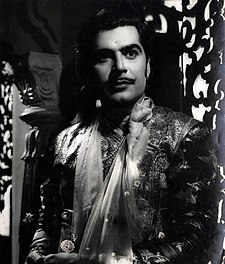
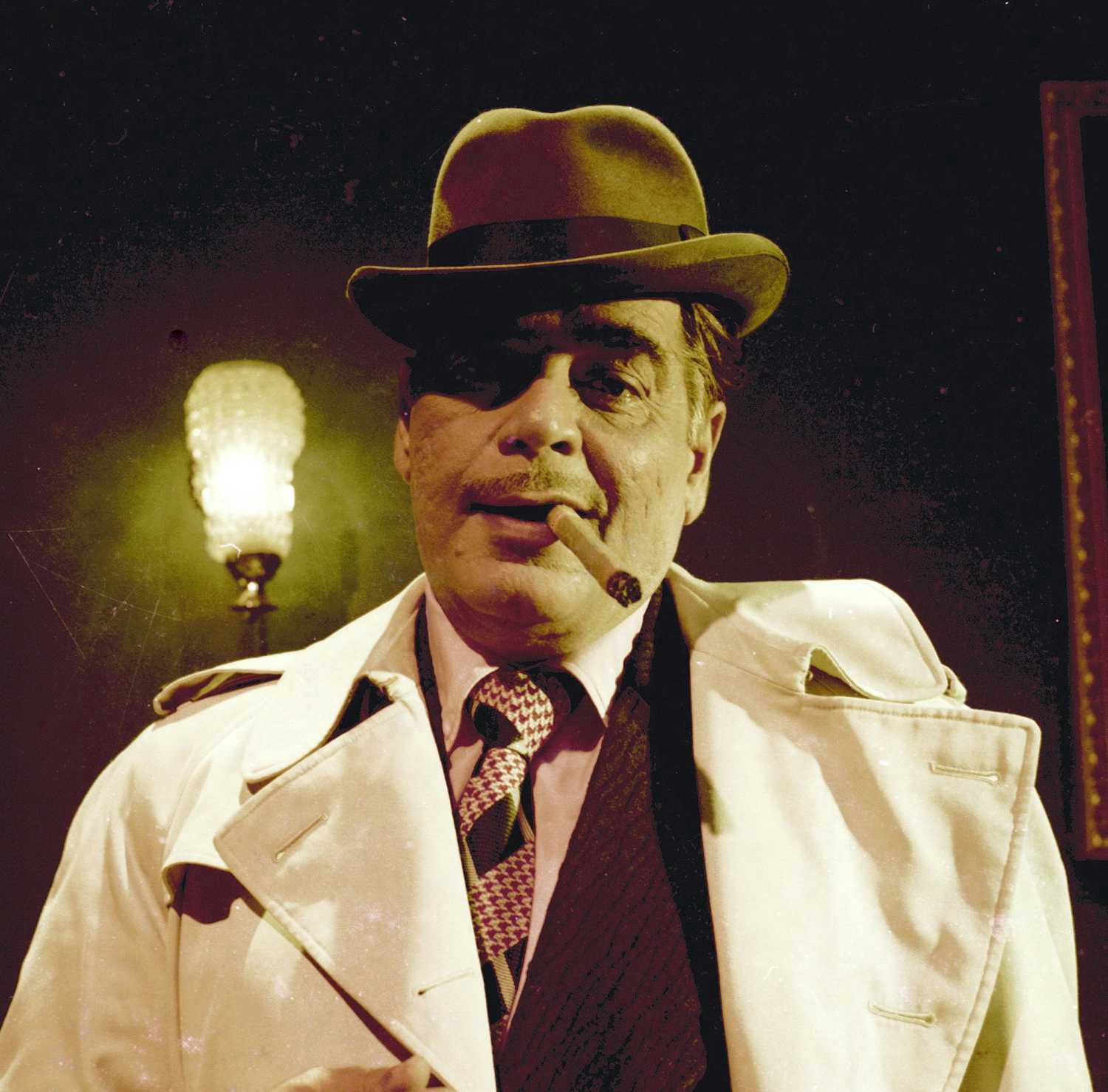
Hamid Ali Khan, better known by his stage name Ajit, was a prominent Indian actor in Hindi cinema. Over nearly five decades, he appeared in more than two hundred films. Ajit is best known for his leading roles in popular Bollywood movies such as Beqasoor, Nastik, Bada Bhai, Milan, and Baradari. He also played significant second lead roles in iconic films like Mughal-e-Azam and Naya Daur.
Film director K. Amarnath, who directed Ajit in Beqasoor (Innocent), suggested that the actor shorten his long name, Hamid Ali Khan, and adopt the screen name “Ajit.” Beqasoor was the first film in which he was credited by this new name. Starring alongside Madhubala, Beqasoor became one of the biggest hits of the 1950s. The family drama centers on an inspector who is falsely accused of black marketing and his wife, who is forced to dance for money. The film’s success solidified Madhubala’s status as one of the era’s most bankable stars and established Ajit as a notable newcomer. Beqasoor ranked seventh among the highest-grossing films of 1950.
Ajit starred as the hero in Nastik (The Atheist), a 1954 crime drama. The song “Dekh tere sansar ki haalat kya ho gayi Bhagwan” (See What Your World Has Come To, God), picturized on him, remains popular to this day. The film is set against the backdrop of the Partition of India, portraying the ensuing riots and violence, and even includes actual footage of refugees.
The story follows a man who loses his faith in God after his parents are killed in the riots, and his brother and sister die as refugees when a priest refuses to help them. Driven by grief and anger, he sets out to avenge their deaths. Despite initially being banned, Nastik was a major box-office success, running for fifty weeks and earning the status of a Golden Jubilee hit. The film powerfully highlights the anguish of Partition and is regarded as one of the better cinematic portrayals of the tragedy. It continues to serve as a benchmark for other films on the same subject.
Ajit delivered credible performances in films such as Bada Bhai, Milan, Baradari, and Dholak. However, he soon transitioned to second-lead roles, accepting them due to the need for a steady income. Notable films in which he played these supporting roles include Naya Daur and Mughal-e-Azam.
Ajit acted in the most films (15) alongside Nalini Jaywant. Later in his career, he transitioned to playing villainous roles, with his first film as a villain being Suraj. This was followed by memorable performances in films such as Zanjeer and Yaadon Ki Baaraat. Some of his famous dialogues include the iconic “Mona darling” from Yaadon Ki Baaraat, “Lily, don’t be silly” from Zanjeer, and the memorable “Lion” line from Kalicharan.
Apart from these, Ajit’s notable films include Naya Daur and Shikari, among many others. Over his four-decade-long career, Ajit acted alongside legendary actors like Prithviraj Kapoor, Sohrab Modi, Amitabh Bachchan, I. S. Johar, Dilip Kumar, Dev Anand, Shammi Kapoor, Dharmendra, and a wide range of actresses spanning generations.
By the mid-1970s, Ajit had acted in over 57 films, predominantly in villainous roles. His distinctive style of dialogue delivery remains popular even today. Many of his colleagues in the film industry—leading actors who worked with him and grew up watching him in Mumbai—hold him in high regard for his memorable screen presence.
Ajit almost always portrayed the sophisticated, educated, and well-groomed evil mastermind—a heartless villain with style. He was famously presented in striking Western attire, featuring bold checked suits, matching overcoats, white leather shoes, wide sunglasses, and distinctive jewelry accessories. Given his stature as a senior artist, Ajit typically played the gang leader above second-tier villains such as Jeevan, Prem Chopra, Ranjeet, Kader Khan, and Sujit Kumar.
Rarely did Ajit’s characters engage in “dirty work” themselves; instead, they relied on an army of henchmen, showing zero tolerance for failure. He was almost always accompanied by a savvy female accomplice, often named “Mona.” Acting in over 200 films, Ajit specialized in playing suave villains with memorable catchphrases delivered in his iconic nasal drawl, such as the legendary “Mona, darling.”
Ajit also popularized the smuggler villain, frequently portraying characters involved in smuggling gold biscuits across borders. Interestingly, most of his gang members had Christian names like Robert, Michael, and Peter, with Ajit pronouncing “Robert” as “Rabbert”—a quirk that has been humorously parodied many times.
One of his favorite and most famous dialogues was “Very smart,” delivered in his menacing voice, which became a hallmark of his villainous roles. Today, Ajit is remembered as one of the most iconic villains in the history of Indian cinema. His enduring popularity is also fueled by countless jokes and parodies by comedians who lovingly spoof his famous lines.
As part of the celebrations for the actor Ajit’s 100th birth anniversary, a coffee table book titled Ajit the Lion by Iqbal Rizvi is set to be released soon, along with screenings of his iconic films across India. In addition, a series of picture postcards and a webinar exploring his life, times, and legacy are planned for this centenary year. The coffee table book offers an in-depth look at Ajit’s life and career, featuring numerous rare photographs of the legendary actor. Rizvi has been working on this project for the past 11 years and, upon learning that 2022 would mark Ajit’s centenary, accelerated his efforts to complete the book in time for the celebrations.
Photos courtesy Google. Excerpts taken from Google.
 Writer Sunita