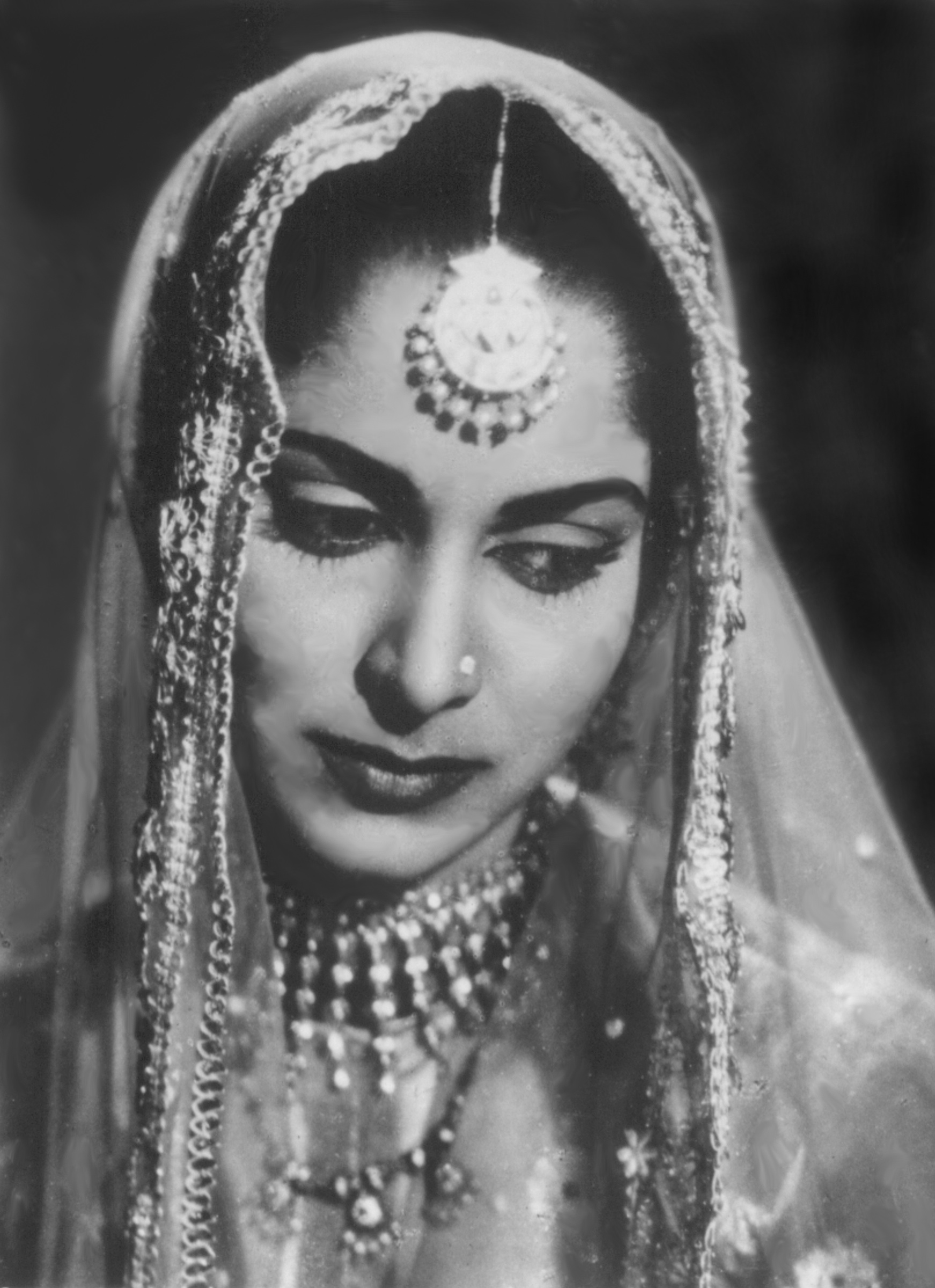
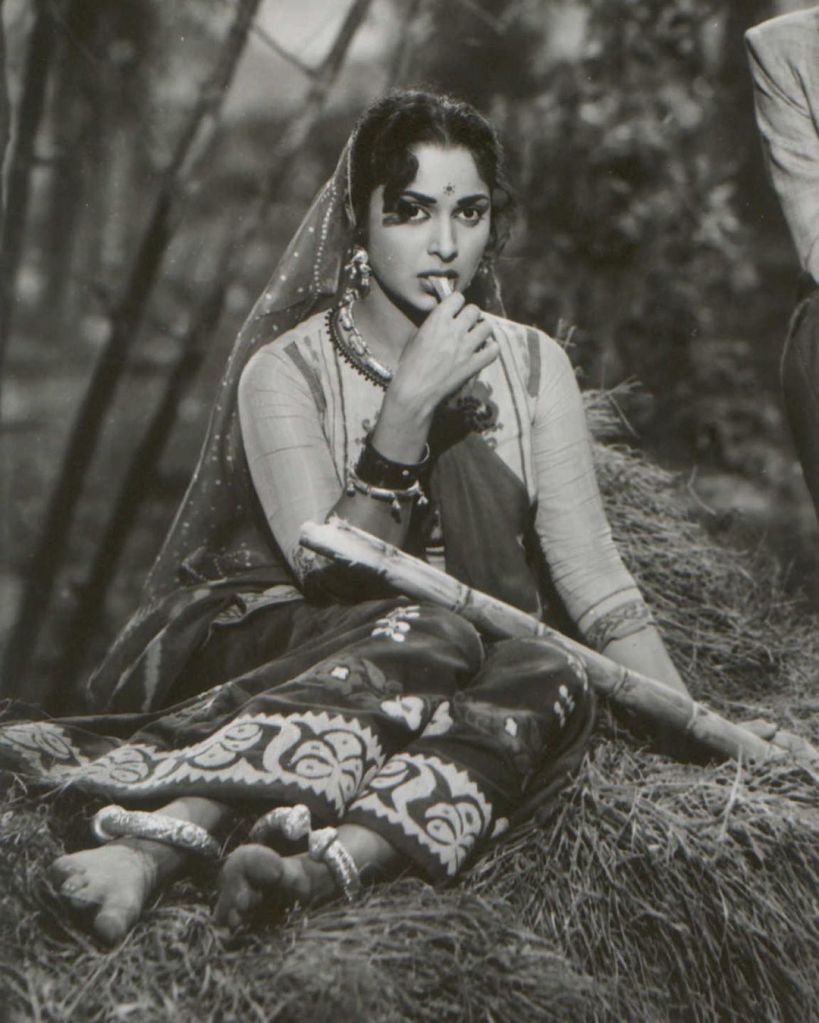
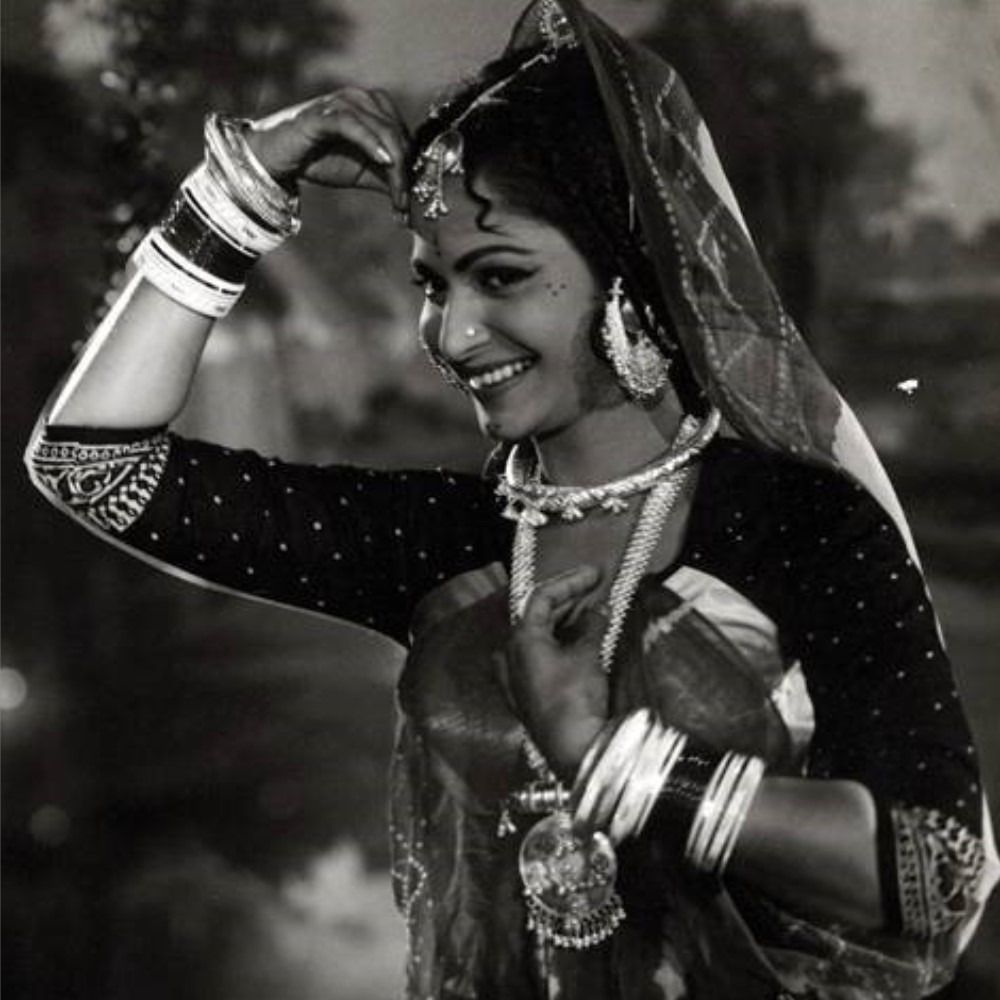
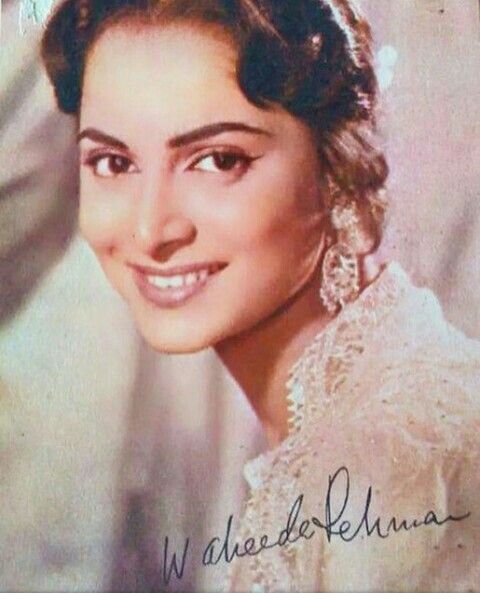
Waheeda Rehman is an Indian actress and dancer. Regarded as one of Hindi cinema‘s greatest actresses.
Rehman made her film debut with the 1955 Telugu Language films “Rojulu Maraayi” (The Days Have Changed). The story is set in a native village environment and portrays the changing times. The film is the debut of Waheeda Rehman in the film industry. The film ran for over 25 weeks in theatres, thereby becoming a Silver Jubilee Film. For the former, she appeared as a dancer in an item number. Audiences came to the theatres repeatedly just to watch the song ‘Yeruvaaka sagaro’ that catapulted Rehman to the National level.
In the year following, Rehman made a cameo in the Tamil film Alibabavum 40 Thirudargalum (1956). Based on the folktale Ali Baba and the Forty Thieves, it is the first Tamil film to be colourised. In the mid 1950’s.
Rehman’s performances caught the eye of Hindi filmmaker Guru Dutt, whom Rehman consider her mentor. Dutt brought her to Bombay and cast her as Kamini in the Hindi film C.I.D. (1956).
Pyaasa (Thirsty) is a 1957 hindi film directed and produced by Guru Datta. Rehaman’s character in Pyaasa was inspired from a real life character. The film follows Poet Vijay (Guru Datta) encounters with the golden – hearted prostitute Gulabo (Rehman) and his former girlfriend (Mala Sinha), how the former helps him to get his poetry published, the success of his works, and his romantic relationship with Gulabo.
Rehman established a working relationship with Dev Anand. They had a number of successful films to their credit which include Solva Saal (1958); Suresh Kohli of The Hindu writes on her performance in Solva Saal, “Though barely 20 then and only in her fourth Hindi release, Waheeda Rehman demonstrates her class: both in serious scenes demanding intensity and through sparkling, mischievous eye movements during lighter moments.” 12’o Clock is a 1958 thriller and mystery film starring Rehman.
Kaagaz ke Phool (Paper Flower), Kala Bazar (Black Market), and Ek Phool Char Kante (One flower, four thorns) is a 1959 hindi film, starring Rehman.
Chaudhvin Ka Chand (The Moon of the Fourteenth Day) is a 1960 hindi Muslim social film lead role of Rahman. The film centers on a love triangle. The actress next ventured into Bengali film-making with Satyajit Ray‘s film Abhijan (1962). Following this, she played a murder suspect in Baat Ek Raat Ki (1962), a girl embroiled in a sibling feud in Rakhi (1962) and an infertile woman in Ek Dil Sau Afsane (1963). As a leading lady, she was cast opposite of many familiar faces of Hindi Cinema; notably, this includes Sunil Dutt in Mujhe Jeene Do (1962), Nirupa Roy in Kaun Apna Kaun Paraya (1963) and Biswajit in the horror film Kohraa (1964), the drama film Majboor (1964), and the psychological-thriller Bees Saal Baad (1962) — the latter becoming the highest-grossing Hindi film of 1962. At the end of 1964, Rehman became the third-highest paid actress in Bollywood.
Vijay Anand‘s magnum opus, the 1965 romantic drama Guide was an adaptation of the same book written by R. K. Narayan, published in 1958. Rehman starred as Rosie, a rebellious, strong-willed wife of an unfaithful archaeologist. She stated that the role proved difficult for her, particularly because it went outside of film stereotypes at the time. Guide was a commercial success, peaking as the, and it opened to high critical acclaim, with Rehman’s performance receiving particular praise. Trisha Gupta of Hindustan Times writing, “Rosie was triply unusual : a woman who walks out of an unhappy marriage, begins a romantic relationship with a man who isn’t her husband, and simultaneously embarks on a successful career as a dancer. She would be an unusua l Hindi film heroine even today…” and ranked her performance amongst Bollywood’s best. She won the Filmfare Award for Best Actress, and Guide went on to win the National Film Award for Best Feature Film. It became India’s official entry to the Oscars, though it did not get nominated. It has obtained a cult following, and is considered Rehman’s signature film performance.
Rehman’s peak continued when she was paired with other well-established superstars, namely Dilip Kumar, Rajendra Kumar, Raj Kapoor, and Rajesh Khanna. Among her most acclaimed films of late 1960s include Teesri Kasam (1966) which won the National Film Award for Best Feature Film, Ram Aur Shyam (1967), Neel Kamal (1968) and Khamoshi (1969). The last three films each earned Rehman consecutive nominations for Filmfare Award for Best Actress each, winning for Neel Kamal. In her highly-praised role in Khamoshi starring alongside Rajesh Khanna and Dharmendra, she plays a nurse who goes mentally insane after falling in love with one of her patients, and eventually is sent to her own mental institution. Other commercia l successes of this period were Patthar Ke Sanam (1967) and Aadmi (1968). At the end of the 1960s , Rehman ranked a new record amongst herself in becoming the second-paid actress in Bollywood.
The film Reshma Aur Shera (1971), Rehman won the National Film Award for Best Actress, which is India’s equivalent to the Academy Award for Best Actress. Rehman began experimenting with roles at this stage of career. She accepte d Reshma Aur Shera in 1971 which received nominations for the Golden Bear at the 22nd Berlin International Film Festival and garnered her praise from critics.
Rehman accepted the offer to play a mother to Jaya Bhaduri in Phagun (1973). In her new innings from the ’70s, her successful films include Kabhi Kabhie (1976), Trishul (1978), Jwalamukhi (1980), Naseeb (1981), Namkeen and Dharam Kanta (1982), Namak Halaal (1982), Coolie (1983), Mashaal (1984), Chandni (1989) and Lamhe (1991). Kabhi Kabhie, Namkeen, Chandni and Lamhe garnered her nominations for Filmfare Award for Best Supporting Actress. Film expert Rajesh Subramanian reported that Manmohan Desai had approached Rehman, on behalf of Shammi Kapoor, during the making of Naseeb (1981). In the song “John Jani Janardhan”, Shammi Kapoor and Waheeda Rehman make a grand-entry holding hands. Incidentally this was the first time the two stars appeared together on screen.
Rehman was supposed to play the role of he r frequent co-star Amitabh Bachchan‘s mother in Karan Johar‘s Kabhi Khushi Kabhie Gham… (2001). In recent years, she has played motherly roles in Om Jai Jagadish (2002), Water (2005), 15 Park Avenue (2005), Rang De Basanti (2006) and Delhi 6 (2009), all of which received critical acclaim.
In 2011, she was honoured by the Government of India with the Padma Bhushan, and in 2013 with the Cenetary Award for Indian Film Personality for her contribution to Indian Cinema . A biography has been written and published in 2014 bout Rehman, entitled “Conversations With Waheeda Rehman, ‘ which consist of interviews collected by author and director Nasreen Munni Kabir.
Photos courtesy Google. Excerpts taken from Google.
 Writer Sunita