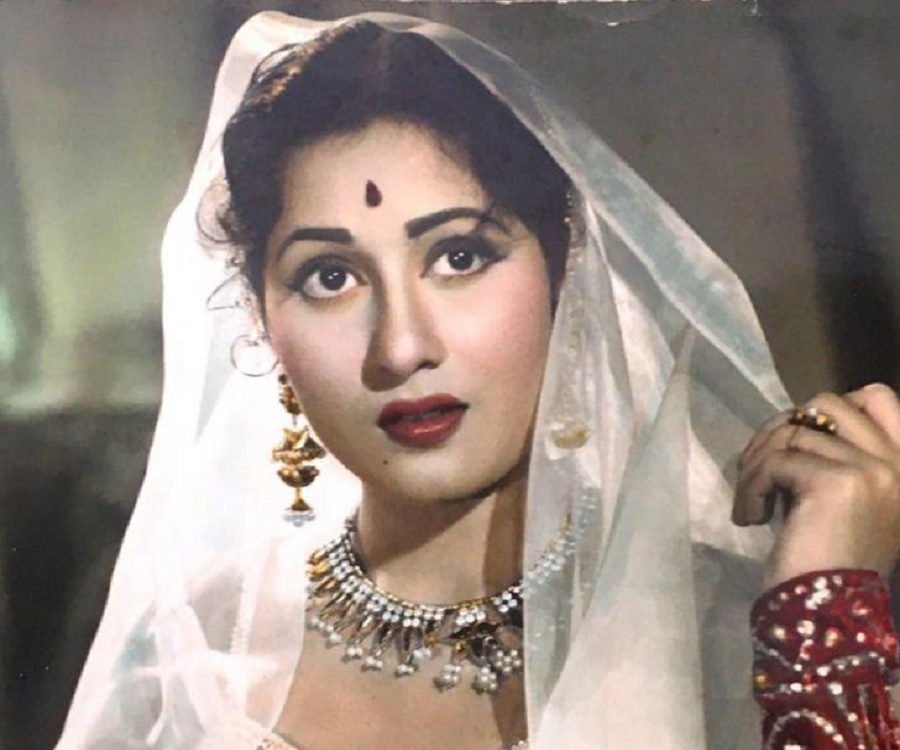
Madhubala (born Mumtaz Jehan Begum Dehlavi) was an Indian actress and producer who worked in Hindi Cinema. She starred in more than 60 films in a career spanning over two decades, and became one of India’s most popular and highest-paid entertainers between the late 1940s and early 1960s. Half a century later, she continues to be held in high regard, with her portrayals of strong-willed and independent characters being seen as a significant departure from the regular portrayals of women on the Indian screen.
In Delhi Madhubala was employed at the All India Radio station to sing compositions of Khurshid Anwar. The seven-year-old continued working there for months, and became acquainted with Rai Bahadur Chunnilal, the General Manager of the studio Bombay Talkies, situated in Bombay. Chunnilal took an immediate liking towards Madhubala, eventually suggesting her father to visit Bombay for a better lifestyle. An approval from the studio executives, Chunnilal signed Madhubala to a juvenile role in Bombay Talkies’ production, Basant (1942), at a salary of ₹150. Released in July 1942, Basant became a major success commercially.
Madhubala was signed to a three-year contract with Chandulal Shah‘s studio Ranjit Movietone, on a monthly payment of ₹300. , Madhubala playing minor roles in five of Ranjit’s films : Mumtaz Mahal (1944), Dhanna Bhagat (1945), Rajputani (1946), Phoolwari (1946) and Pujari (1946) ; she was credited as “Baby Mumtaz” in all of them. Madhubala began shooting for two of Mohan Sinha’s directorial ventures, Chittor Vijay and Mere Bhagwaan, which were supposed to be her introduction to the silver-screen in adult roles.
Madhubala’s first project in a lead role was Sohrab Modi‘s Daulat, but it was shelved indefinitely (and would not be revived until the next year). Her debut as a leading lady came in Kidar Sharma‘s drama Neel Kamal, in which she starred opposite debutante Raj Kapoor and Begum Para. Released in March 1947, Neel Kamal was popular with audience and garnered wide public recognition for Madhubala. She then reteamed with Kapoor in Chittor Vijay and Dil Ki Rani, both of which were released in 1947, and in Amar Prem, which came out the following year. To secure her family financially, Madhubala quickly signed 24 films.
Impressed by her work in Neel Kamal, Devika Rani suggested her to take “Madhubala” as her professional name. Madhubala found her first critical and commercial success in the drama Lal Dupatta, which The Indian Express mentioned as a breakthrough for her. Baburao Patel described the film as “the first milestone of her maturity in screen acting”. Her supporting roles in Parai Aag (1948), Paras and Singaar (both 1949) also met her with critical acclaim. In 1949, Madhubala played a femme fatale in Kamal Amrohi‘s “Mahal” (Mansion), the first horror film of Indian Cinema. The film revolves around a man who moves into an ancient mansion and learns about his previous life. Things take a turn when he gets visions of a women claiming to be his lover. Upon release, Mahal, however, proved to be an immensely popular film among audience. The scholar Rachel Dwyer noted that Madhubala’s ignorance among audience added to the mysterious nature of her character. The film, which would be Madhubala’s first of many collaborations with actor and brother-in-law Ashok Kumar, emerged as the third biggest box-office success of the year, resulting in her signing a string of starring roles opposite the leading actors of the time. Long after its release, Mahal continues to “haunt” audience and is considered a cult classic. Hailed as one of the most successful and influential films of Indian Cinema. The film found a place in the British Film Institute’s list of “10 great romantic horror films”.
Madhubala played Ajit‘s love interest in K. Amarnath‘s social drama Beqasoor (1950). The feature received positive reviews and ranked among the year’s top-grossing Bollywood productions. Also in 1950, she appeared in the comedy-drama Hanste Aansoo, which became the first Indian film to be awarded an adult’s certification. The following year, Madhubala starred in the Amiya Chakravarty – directed action film Badal (1951), a remake of The Adventures of Robin Hood. Her portrayal of a princess who ignorantly falls in love with Prem Nath‘s character. She played the titular part in M. Sadiq’s romance Saiyan, which Roger Yue of The Singapore Free Press commented was played “to perfection”. Both Badal and Saiyan proved to be major box-office successes.
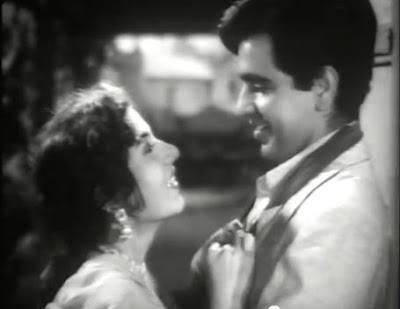
Madhubala then collaborated with actor Dilip Kumar twice in a row, on the 1951 comedy Tarana and the 1952 drama Sangdil. These films also performed well financially, popularizing the on and offscreen couple among wide audience. On Tarana, Filmindia complimented her performance as well as her chemistry with Dilip Kumar.
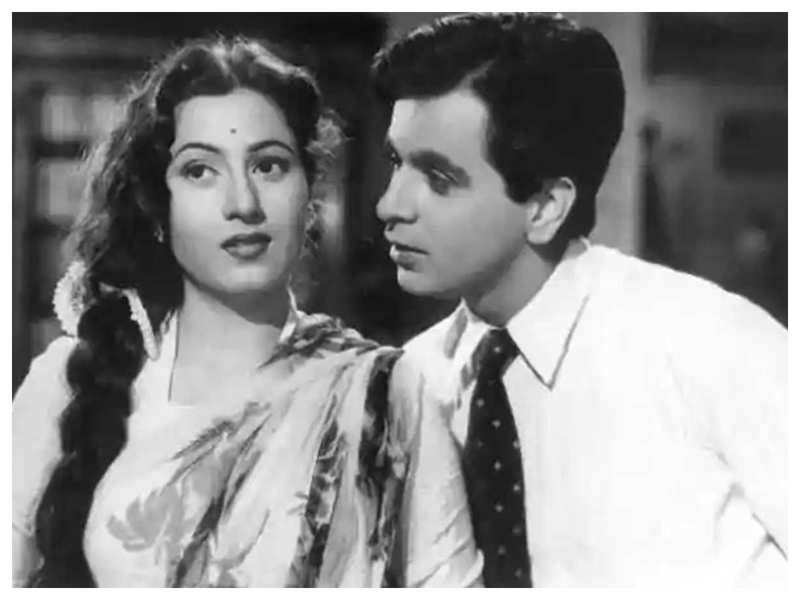
Madhubala later starred in another film of 1954, Mehboob Khan‘s “Amar” (Immortal), portraying a social worker involved in a love triangle. Dealing with the controversial subject matter of rape, the films revolves around the titular upper-class lawyer (Dilip Kumar), his feminist fiance, the social worker Anju Roy (Madhubala), and Sonia (Nimmi), a poor milkmaid. Baburao Patel, the editor of Filmindia, called it “a brilliant picture with a gripping human story superbly directed and acted with flawless perfection. A masterpiece of film craft”.
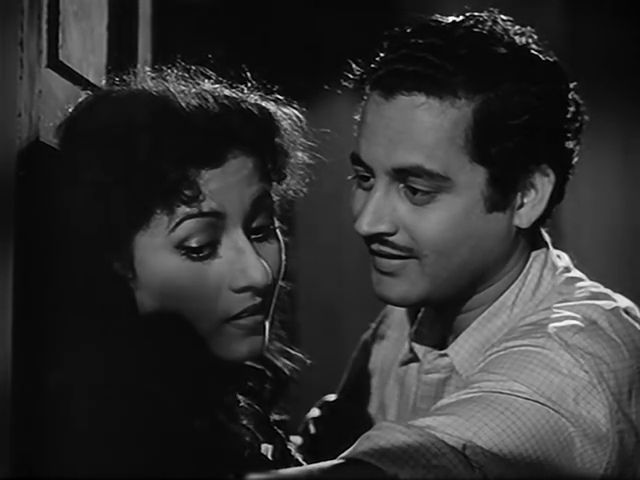
Madhubala starred in 1955 with Guru Dutt‘s comedy Mr. & Mrs. ’55, which emerged as one of the year’s highest-grossing films in India and her biggest success at that point of time. The film saw Madhubala playing a naive heiress who is forced into a sham marriage with Dutt’s character by her spinster aunt (Lalita Pawar). Harneet Singh of The Indian Express called Mr. & Mrs. ’55 ” a great ride” and acknowledged Madhubala’s “The film rides on Madhubal’s impish charm and breezy comic timing” as one of its prime assests.
Madhubala appeared in two period films in 1956, Raj Hath and Shirin Farhad, both critical and commercial successes. The following year, she portrayed a runaway heiress in Om Prakash‘s Gateway of India (1957), which critic Deepa Gahlot believed to be one of the finest performances of her career. Madhubala then starred in the drama Ek Saal (1957), which followed a terminally-ill ingenue (played by Madhubala) who falls in love with Ashok Kumar’s character. The film proved popular with audience and became as a box office hit.
Madhubala began the year 1958 with Raj Khosla‘s Kala Pani, starring her as an intrepid journalist investigating a 15-year-old murder. She was then cast as Edna in Howrah Bridge (1958), her first collaboration with director Shakti Samanta. Madhubala waived her fees to play the role of an Anglo-Indian cabaret dancer, which marked a departure from her previous portrayals of sophisticated characters. Both Howrah Bridge and Kala Pani begot positive reviews for her and became two of the year’s top-grossing films. She followed this success with the box office hit Phagun (1958). In her final release of 1958, Madhubala portrayed a wealthy city woman involved in a love affair with Kishore Kumar in Satyen Bose‘s comedy Chalti Ka Naam Gaadi – one of the biggest money-making pictures of the 1950s. The columnist Rinki Bhattacharya mentioned Madhubala’s character in Chalti Ka Naam Gaadi as “a top favourite”, stating her performance exemplifies an independent, urban woman.
Her second collaboration with Samanta, Insan Jaag Utha (1959), was a social drama film in which the protagonists work on the construction of a dam to improve their living conditions. Initially, the film was a modest success only, but it has been reviewed favourably by modern-day critics. Rachit Gupta of Filmfare and Roktim Rajpal of Deccan Herald have cited Madhubala’s performance as Gauri, a village belle, as one of her finest works. Later in 1959, she received critical praise for playing dual roles in Kal Hamara Hai, also starring Bharat Bhushan. The commercial success of Do Ustad (1959), which saw her reuniting with Raj Kapoor after a decade, Madhubala produced a second film, the comedy Mehlon Ke Khwab (1960).
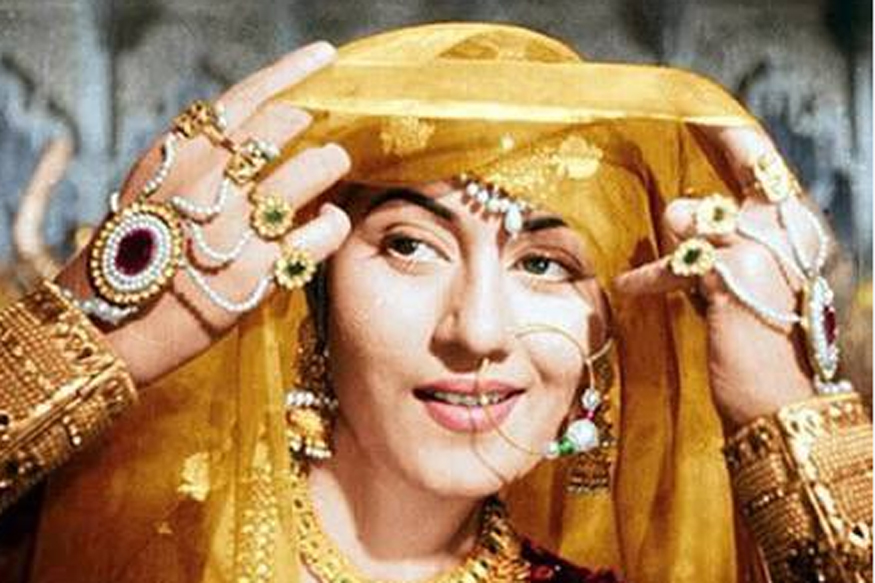
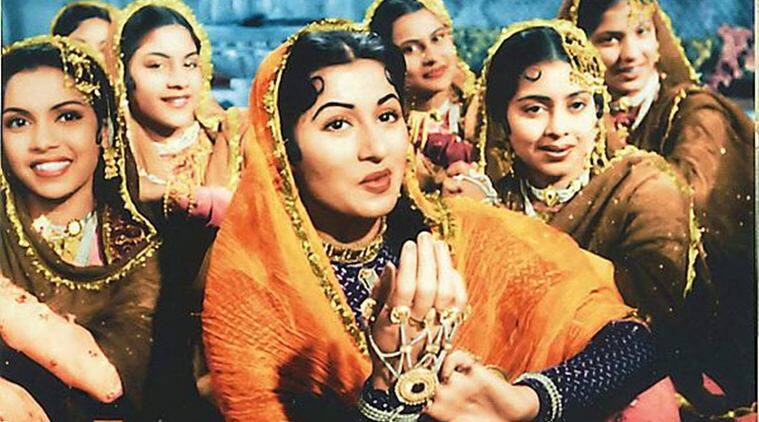
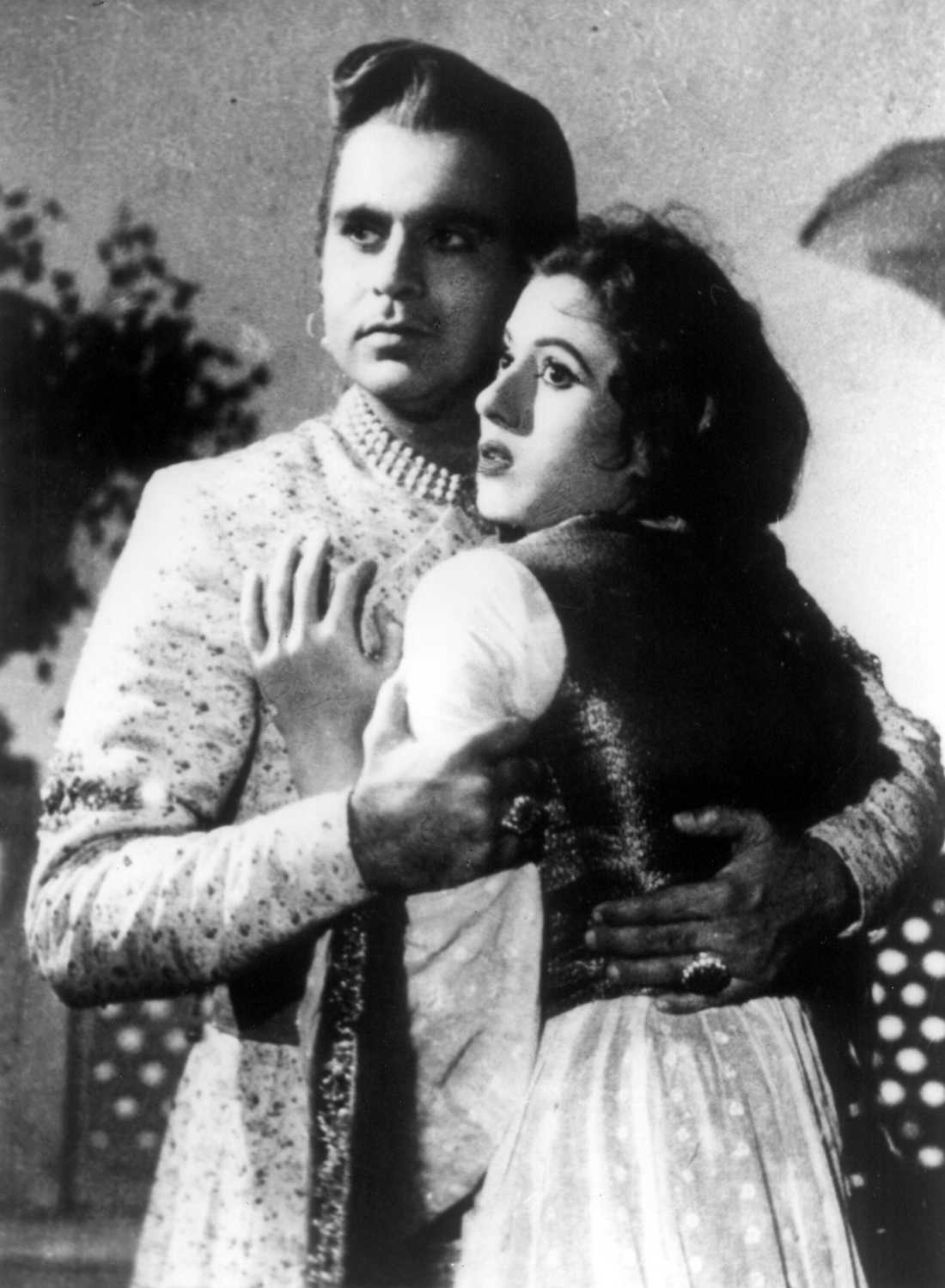
Mughal-e-Azam (The Great Mughal) is a 1960 Indian epic historical drama film starring Madhubala. Journalist Dinesh Raheja described as the “crowning glory” of Madhubala’s career. Co-starring Dilip Kumar and Prithviraj Kapoor, the film revolves on a 16th-century court dancer, Anarkali (Madhubala), and her affair with the Mughal Prince Salim (Dilip Kumar). Madhubala received an advance payment of ₹100,000, the highest for any actor or actress till then. Madhubala was also troubled by the night schedules and complicated dance sequences, which she had been medically asked to avoid. Mughal-e-Azam was first of Madhubala’s films in colour. The film had the widest release of any Indian film up to that time, and became the highest-grossing Indian film of all time, a distinction it would hold for 15 years. Mughal-e-Azam won the National Film Award for Best Feature Film in Hindi, and led the 8th Filmfare Awards ceremony with seven nominations, including Best Actress for Madhubala. A reviewer for The Indian Express commented, “Scene after scene bears testimony to the outstanding gifts of Madhubala as a natural actress.”
In late 1960, Madhubala was seen in Shakti Samanta’s crime film Jaali Note, about counterfeit money ; it was successful financially. Madhubala’s starring role in the musical Barsaat Ki Raat (1960) was better received. Film revolves around two lovers Shabnam (Madhubala) and Amaan Hyderabadi (Bharat Bhushan), who strive to be together but the society does not approve of them. The feature was the year’s second-highest-grossing film, trailing only Mughal-e-Azam.
The back-to-back blockbuster successes of Mughal-e-Azam and Barsaat Ki Raat established Madhubala as the most successful leading lady of 1960. In a few films, including the comedies Jhumroo (1961), Boy Friend (1961), and the dramas Passport (1961), releases were among the top-grossing productions of the year. Half Ticket, her last collaboration with husband Kishore Kumar was a critical and commercial success as well. Sukanya Verma called the film one of her most favourite comedies of all time. Also released in 1962 was Madhubala Private Ltd.’s third and last presentation, Pathan, which turned out to be a box office flop. Following a sabbatical of two years, she completed Sharabi in 1964; the film became her final release in her lifetime. Baburao Patel, writing for Mother India, praised Madhubala’s performance for “reviv[ing] the old heartache”. Rediff.com called Sharabi a “fitting finale to a luminous career, showing the actress at her most beautiful and her most effective, a heroine destined not to age in any of our eyes.” In 1971, one of Madhubala’s incomplete works, Jwala, was released. Co-starring Sunil Dutt and Sohrab Modi, the film was mainly completed with the help of body doubles. It marked Madhubala’s final screen role.
She performed actively in charity, which led editor Baburao Patel to call her the “queen of charity”. In 1950, she donated ₹5 thousand each to children suffering from polio myelitis and to the Jammu And Kashmir relief fund, and ₹50 thousand for the refugees from East Bengal. Madhubala’s donation sparked off a major controversy due to her religious beliefs and received wide coverage in the media at that time. Subsequently, she kept her charity work guarded and donated anonymously. In 1954, it was revealed that Madhubala has been regularly giving monthly bonuses to the lower staffs of her studios. She also gifted a camera crane to the Film and Television Institute of India in 1962, which is operational till date.
James Burke photographed her for a feature in the American magazine Life, which described her as the biggest star in the Indian film industry at that time. Her fame reached beyond India as well: director Frank Capra offered her a break in Hollywood (which her father declined) and in August 1952, David Cort of Theatre Arts Magazine wrote of her as “the biggest star in the world — and she’s not in the Beverley Hills.” Cort estimated Madhubala’s Indian and Pakistani fan base equal to the combined population of the contemporary United States and Western Europe, and also reported her popularity in Myanmar, Indonesia, Malaysia and East Africa. Along with Nargis, she also had large fan following in Greece.
Madhubala’s beauty and physical attractiveness were widely acknowledged, and led the media to refer to her as “The Venus of Indian Cinema” and “The Beauty with Tragedy”. In 1951, Clare Mendonca of The Illustrated Weekly of India called her “the number one beauty of the Indian screen”. Several of her co-workers cited her as the most beautiful woman they ever saw. Nirupa Roy said that “there never was and never will be anyone with her looks” while Nimmi (co-star in the 1954 film Amar) admitted passing a sleepless night afte r her first meeting with Madhubala. Due to her perceived appeal, Madhubala became one of the Brand Ambassadors of beauty products by Lux and Godrej. However, she stated that happiness matters more to her than physical beauty.
Writing retrospectively for The New York Times, Aisha Khan characterised Madhubala’s acting style as “natural” and “understated”, noting that she often portrayed roles of “modern young women testing the limits of traditions”. Film critic Sukanya Verma felt that actresses like Madhubala “should be applauded for doing more than just looking good and crying buckets.” Madhubala was acknowledged in the media for her unconventional roles. Madhubala has also been credited for introducing several modern styles, such as trousers (for females) and strapless dresses in Bollywood. Her distinctive wavy hairstyle was referred to as “the out-of-the-bed look” and further established her screen persona as a liberated and independent woman. David Cort summarized her as “the ideal of the free Indian woman or what India hopes the free Indian woman will be.” In the 1970s, the Greek singer Stelios Kazantzidis produced the song “Mandoubala” as a tribute to Madhubala.
In retrospect, Madhubala remains one of the most beautiful, talented actors Indian screen has seen. Dubbed Marilyn Monroe of India, the legendary actor still has it in her to arrest peoples’ attention, decades after passing away.
Photos courtesy Google. Excerpts taken from Google.
 Writer Sunita