
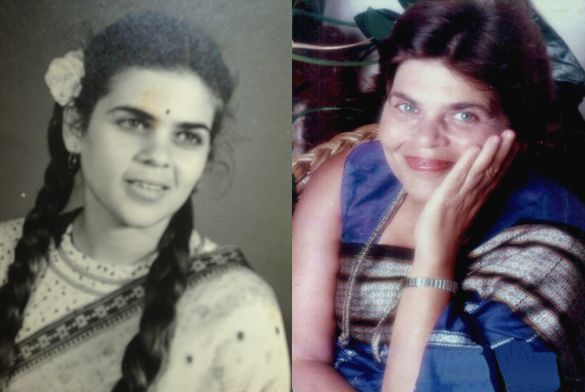
Sai Paranjpye is an Indian film director and screenwriter. She has written and directed several Marathi plays such as Jaswandi, Sakkhe Shejari, and Albela.
As a child, Sai Paranjpye used to listen to stories from her mother every day. One day, her mother, Shakuntala Paranjpye, told her, “Today you must tell me a story.” Sai actually narrated one, and her mother then asked her to write three pages daily. When enough material was collected, her mother proudly published Sai’s book titled Mulanchā Mewa (“Children’s Delicacies”). At that time, Sai was only eight years old.
Multilingual and multi-talented, Paranjpye has had a long career in which she wrote scripts and directed plays, films, documentaries, and television serials, creating work for audiences ranging from children to adults. Sparsh, Chashme Buddoor, and Katha are considered some of the most acclaimed films of the 1980s. She also wrote and staged several plays such as Sakkhe Shejari, Jaswandi, and Maza Khel Mandu De. In the 1980s, she directed the television serials Ados-Pados and Chhote-Bade.
Sai Paranjpye completed her education at the National School of Drama (NSD), New Delhi, in 1963.
She began her career in Pune, Maharashtra, as an announcer at All India Radio (AIR) and soon became actively involved in AIR’s children’s programmes.
Paranjpye wrote and directed numerous plays in Marathi, Hindi, and English for both adults and children. She also authored several children’s books, six of which received national or state-level awards.
For many years, Paranjpye worked at Doordarshan in New Delhi as a director and producer. The Little Tea Shop was Sai Paranjpye’s first telefilm, made in 1972. The short film tells the story of a woman who runs a small roadside eatery. On the Delhi–Agra highway, a courageous woman builds her own life while facing truck drivers and travelers with determination and self-respect. Her courage, independence, and will to live transform the tea stall into more than just a place for refreshments—it becomes a symbol of hope. This film earned her the prestigious “Asian Broadcasting Union Award” at the Tehran festival.
In the same year, she was chosen as the producer of the inaugural program of Mumbai Doordarshan.
In the 1970s, Paranjpye served twice as the chairperson of the Children’s Film Society of India (CFSI), a Government of India body dedicated to promoting value-based entertainment for children. She directed four children’s films for CFSI, among which Jadoo Ka Shankh (1974) and Sikandar (1976) won critical acclaim and awards.
Paranjpye’s first feature film Sparsh was released in 1980. The film is about the lives of visually impaired people. The title Sparsh means “touch,” symbolizing the sense and emotion that visually impaired individuals rely upon in their daily lives.
The story revolves around the love between a visually impaired principal and a sighted teacher who work together in a school for the blind. As they fall in love, their inner inhibitions and insecurities create obstacles in their relationship. Eventually, they attempt to understand each other better and rediscover the “touch of love.”
The film is remembered for the subtle and powerful performances of its lead actors, as well as for its sensitive portrayal of the relationship between the sighted and the visually impaired. It highlights the emotional and perceptual differences between the two worlds with great depth.
Sparsh won the National Film Award for Best Actor, while Paranjpye received the award for Best Screenplay. The film also earned Filmfare Awards in the categories of Best Film, Best Director, and Best Dialogue.
Chashme Buddoor is a 1981 romantic comedy film. The story follows three college students who decide to stay together instead of going home during the summer holidays. The plot centers on their mutual interest in a young woman who sells “Chamko” washing powder. This film is considered one of Sai Paranjpye’s most popular works.
At the 29th Filmfare Awards, Chashme Buddoor received nominations for Best Film, Best Director, Best Supporting Actor, and Best Comedian.
Katha (1983) is a film that portrays the daily lives of people living in a Mumbai chawl. The story is based on the traditional folk tale of The Hare and the Tortoise, but given a contemporary twist.
Sai Paranjpye writes:
“In most chawls, water is not available throughout the day. The supply comes only in the early morning hours, and that too for a very short time. So, all the utensils, buckets, cans, and pots are lined up as if preparing to welcome a VIP guest! The sounds from the taps before the water actually arrives are quite special. Some taps cough, some sound like they are gasping in death throes, some growl like a tiger, while others hiss like a cat. And then the real moment comes! It begins with a gentle tip-tip-tip, then the water gathers strength: frr, frr, ghrr, ghrr, grrr, grrr… All these strange sounds together create a marvelous hydro-choir.”
Disha (1990) is a film that powerfully depicts the struggles of rural migrants as they try to adapt to urban life. The film highlighted Paranjpye’s commitment to addressing social issues and left a deep impact on audiences. It was selected for the Indian Panorama section at the International Film Festival of India. Disha went on to win the Best Jury Award as well as the Most Popular Film Award at the Rencontres Cinématographiques festival.
Papeeha (1993) tells the story of the relationship between humans and nature. The film follows a young anthropologist who arrives in a forest for research. During her work, she meets an honest forest officer, and gradually, affection grows between them, blossoming into love. However, their personal lives become intertwined with a larger struggle, as the local tribal community fights to protect their forest. Their stand is that the forest must not be destroyed in the name of development. Through this love story, the film emphasizes the struggle to save the forest, the pain of the tribals, and the message of environmental conservation.
Saj (1998) is a film based on the lives of two sisters who share a deep passion for singing. The elder sister achieves success first, but later, the younger sister also rises to fame. This creates jealousy and rivalry between them. However, in the end, their shared love for music brings them close again. The film explores how success, fame, and relationships can be balanced in the world of music.
She also created television serials such as Hum Panchhi Ek Chawl Ke, Partyana, and Behna. In the film Papeeha, as well as in the serials Hum Panchhi Ek Chawl Ke and Partyana, Sridhar Rangayan assisted her. On stage, Paranjpye wrote and presented plays like Maza Khel Mandu De, Jaswandi, and Sakkhe Shejari.
Sai Paranjpye also directed several documentaries. Among them:
- Helping Hand – made in London, this documentary focuses on social aid, assistance to the needy, and support initiatives.
- Talking Books – highlights the importance and use of audio-recorded literature for the blind and visually impaired.
- Capt. Laxmi – based on Captain Lakshmi Sahgal, one of the associates of Netaji Subhas Chandra Bose in the Indian National Army (INA). It sheds light on her courage, patriotism, and social contributions.
- Warna Orchestra – focuses on folk arts, music, and cultural integration in rural areas, showcasing “Warna Orchestra,” a popular program that emerged as part of the cultural activities of the Warna Cooperative Sugar Factory.
- Pankaj Mullick – Pankaj Mullick was a renowned composer, singer, and music director. This documentary presents an overview of his musical career.
In 1993, she made the documentary Choodiyan, based on a small village in Maharashtra. In this village, women launched an anti-liquor movement. Alcohol addiction was destroying families—men had stopped working, and households were collapsing. The women came together, protested with determination, and successfully enforced prohibition. The film highlights the women’s courage, unity, and ability to bring about social change. It won the National Film Award for Best Film on Social Issues.
In 2001, she directed Bhago Bhoot, a children’s film. In this story, elders in the village frighten children by telling them, “There’s a ghost.” But the children bravely confront the so-called “ghost,” only to discover in the end that it isn’t real—fear exists only in people’s minds.
In 2005, at the first International Women’s Film Festival held in Goa, a special retrospective of her films was presented, showcasing some of her best works.
In 2007, at the 55th National Film Awards, she served as the chairperson of the jury for the feature film section.
In July 2009, her documentary “Sui” was released. The film is based on injecting drug users (IDUs), portraying what their lives are like and the difficulties they face. It emphasizes treatment, care, support from friends and society, rehabilitation, and employment opportunities.
This documentary was produced under the World Bank’s South Asia Region Development Marketplace initiative in collaboration with the NGO Sankalp Rehabilitation Trust in Mumbai. The 29-minute film was telecast on Doordarshan on World AIDS Day.
In 2016, she wrote her autobiography in Marathi, “Sai Maza Kala Pravas“. The book became popular, and by 2020, five editions had been published.
There was a need for an English translation of the autobiography. However, instead of hiring a professional translator, Paranjpye decided to translate it herself. She did not do a literal translation but rewrote several chapters afresh. As a result, the English edition turned into a different autobiography.
The English book, published by HarperCollins India, was titled A Patchwork Quilt – A Collage of My Creative Life.
About this, Paranjpye said:
“Initially, I began translating my artistic journey sentence by sentence. But soon I realized that doing so was foolish. Marathi and English have different sensitivities. Some things work well in Marathi but don’t quite fit in English. Since the book was my own, I had the right to change it the way I wanted.”
At a time when there were very few women directors, Paranjpye was writing her own scripts and directing films. Moreover, she was making comedies—a genre generally considered the domain of men.
In 2006, the Government of India honored Paranjpye with the Padma Bhushan.
In 2017, she received the Maharashtra Foundation Award for Literature and Social Work. In 2019, she was honored with the Fergusson Gaurav Award: Outstanding Alumnus Award by Fergusson College.
Renowned film and theatre director Sai Paranjpye has donated her originals, handwritten drafts, and scripts (of films, television plays, and stage plays in Marathi, Hindi, and English) to the Archives of Contemporary India at Ashoka University.
This collection includes scripts of important films such as Sparsh, Chashme Buddoor, Katha, Disha, Papeeha, and Saaz. It also features her books like Aall Bell, Sakkhe Sejari, Majha Khel Mandu De, Jaswandi, as well as children’s plays such as Nana Phadnavis, Jaducha Shankh, Harvalelya Khelanyanche Rajya, Shepticha Shaap, and Patte Nagrit.
With this contribution, Paranjpye became the first film director to donate her personal collection to Ashoka University. These documents will provide researchers with a valuable resource to study her journey in Indian cinema and the evolution of her ideas.
As part of the program, a special screening of the Marathi film Abhalala Gavasni (The Sky is the Limit) with English subtitles was held. The film is based on the unique play/film created by Sai Paranjpye in 2018 to mark the 80th birthday of renowned astrophysicist Prof. Jayant Vishnu Narlikar.
While giving advice to aspiring filmmakers, Sai Paranjpye said, “Students should try to understand the life around them and watch good films, both from India and abroad, as it provides valuable learning.”
Her handwritten collection is now part of the Archives of Contemporary India and includes drafts of both published and unpublished works. This collection will serve as a valuable resource for researchers, scholars, and cinema enthusiasts, and will be useful for budding filmmakers in learning direction, scriptwriting, and storyboard preparation.
Photos courtesy Google. Excerpts taken from Google.
 Writer Sunita