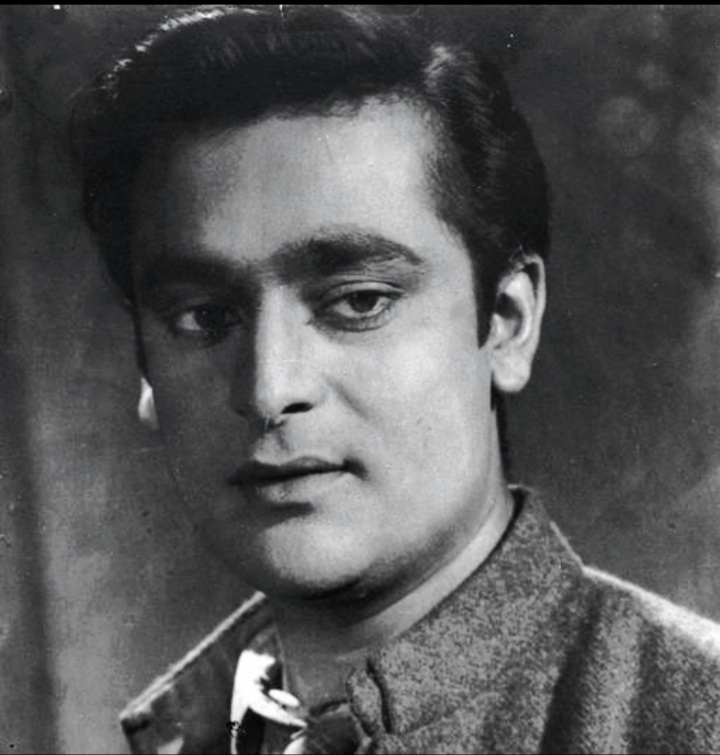
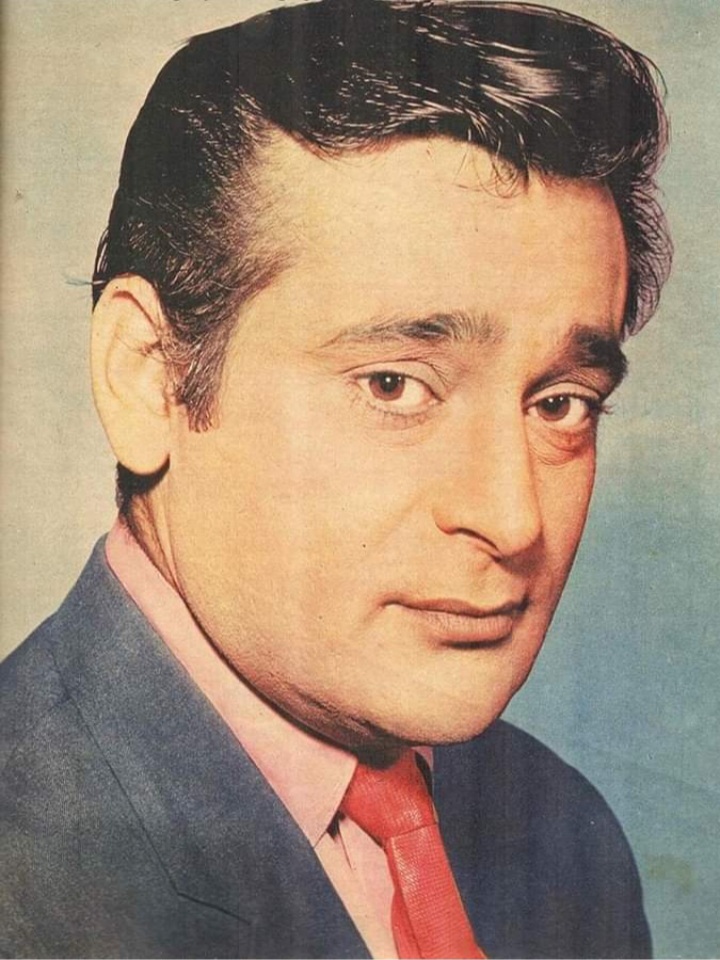
Rehman was an Indian Actor is noted for his frequent collaboration with the legendary filmmaker, Guru Dutt. The actor, whose career spanned more than four decades from the late 1940’s to the late 1970’s, made his debut on the silver screen with Chand (1944). Some of his other notable film credits include Shahjehan (1946), Nargis (1946), Pyar Ki Jeet (1948), Choti Bahen (1959), Dharmputra (1961), Ganga Ki Lahren (1964), Dulhan Ek Raat Ki (1967), Dushman (1971), Salaam Memsaab (1979), and Rajput (1982).
After college (1942), he joined the Royal Indian Air Force and trained at Poona as a pilot. The Air Force didn’t appeal to him and soon left for a career in films at Bombay. He is best known for his suave sophisticated roles, which suited his personality. His movie career started with a job as third assistant director to Vishram Bedekar at the studios in Pune. On the sets of ‘Chand’ the crew were unable to find anyone who could tie a Pathani Turban, Rehman resolved this problem, and was given a small two lined dialog role in the film.
His first major role was in ‘Hum Ek Hain’ with Dev Anand during 1946, and then as legendary Emperor Shahjahan in ‘Shahjahan’ in the same year.
One of his major hits as hero was “Pyar Ki Jeet” with Suraiya, and the song – “Ek Dil Ke Tukade Hazar Hue, Koi Yahan Gira, Koi Wahan Gira” was a major hit. “Badi Behen” was another big hit with Suraiya. He also worked with with Madhubala in Paras (1949) and Pardes (1950); both the films were critical and commercial successes.
In Pyaasa, he plays a well-to-do publisher, sophisticated Mr. Ghosh, who wears white dhoti-kurtas with a white stole thrown in to give the perfect look of a Bhadralok. He looks very convincing as a confident professional who, at the same time, is an insecure, possessive husband. The party scene of “Pyaasa” where poet Vijay recites the heart wrenching “Jaane Who Kaise Log The Jinko Pyaar Se Pyaar Mila” and focus on how Rehman through his clenched jaw and mere lifting of the eyelids unleashes his displeasure and contempt with utmost ease. So powerful is the silent fury that the audiences dread for the poets life and it is a marvellous example of brevity in expression, provoking an explosive anguish from everyone in the theatre.
Rehman was a treat to watch in all his film personas that ranged from an alcoholic Zamindar (Chhote Sarkar) of the decaying in “Sahib Biwi aur Ghulam” and Nawab Pyare Mian of Chaudvin ka Chaand.
In the famous historical film Taj Mahal (1963), he played Emperor Jahangir very effectively. In Palki (1967), he is Nawab Mirza, in Dil ne Phir Yaad Kiya (1966), he plays Amjad, Dharmendra’s best friend, in Dharmputra (1961), he is Javed who is married to Bano (Mala Sinha), in Gazal (1964), he is Akhtar Nawab. He provided an interesting dimension to these films.
In Aap ki Kasam in 1974, we saw Rehman playing father to the heroine, Mumtaz. His scenes with superstar Rajesh Khanna were greatly appreciated. In Mere Hamdam Mere Dost, as Ajit Narang and in Baharein Phir bhi Aayengi as Mr. Verma, he quietly tries to flirt with Sharmila Tagore and Mala Sinha respectively in his characteristic underplayed style.
Rehman had a deep, impressive and powerful voice. It can easily be said that his colourful role as Chenoy Seth in B. R. Chopra’s 1965 film ‘Waqt‘ was one of his best loved performances. Despite his evil designs for Raaj Kumar in the film, audiences admired his style and prosperous look. He proved the perfect match for Jaani” Raaj Kumar. The scenes between the two, especially at the swimming pool, are among the highlights of the first multi-starrer of our film industry. Word for word, expression for expression, Rehman stood his own opposite Raaj Kumar who was known for his unique voice, style and dialogue delivery. In fact, Rehman seemed more in control than “Jaani”. How smoothly and politely an evil man can accomplish his goals is what Chenoy Seth shows us in Waqt. Indeed, a memorable performance!
Rehman received four Filmfare nominations as Best Supporting Actor for Phir Subah Hogi (1958), Chaudhvin Ka Chand (1960), Sahib Bidi Aur Ghulam (1962) and Dil Ne Phir Yaad Kiya (1966).
Veteran Producer Satinder Singh Broca fondly recalls Rehman was a perfectionist who would never be satisfied with any shot and laughingly says, “Many termed him an agent of Kodak (the company which supplied the film rolls) for his insistence on a few extra takes!” Broca feels that while his favourites like Guru Dutt, D. D. Kashyap, Ramesh Saigal or Yash Chopra were persuaded to expose a few extra reels, his other directors were extremely wary of his quest for excellence as it added to their costs. Yet nobody complained since they understood “the quiet unassuming man was an asset” who never trod on others’ toes.
Lekh Tandon opines, “he was a rare breed of actor who brought his own sheen and sophistication to a character”, discerning audiences know he was an actor who was worth his weight in gold. Like a rare melody that is little remembered but never forgotten by our heart, Rehman twinkles in our memory.
He performed the negative roles rather subtly, through his expressions and his arresting voice, raising his eyebrows while smoking a pipe, one hand in his trouser pocket. His sarcastic tone and his dialogues in chaste Urdu added to the effect.
”Effortless” is the perfect word to describe Rehman’s acting. He never gave interviews and not much is known about his personal life. He believed in letting his work speak for him. There seems to be no other actor with whom he can be compared. He was in a class of his own — one of a kind. Striking in looks, regal in attitude and in complete control of his art, Rehman will always be remembered and admired by audiences. He looked equally impressive in achkan/sherwanis, chooridaars, in elegant suits and in dhoti-kurtas.
The song in which he appeared with Suraiya in Badi Behan will be remembered forever. “Chup Chup Khade ho, Zaroor koi Baat hai”, will always be in our memories. From this point, Rehman had a long journey as a many, splendoured actor. His aristocratic bearing made him a great favourite with Directors. Roles were written exclusively for him.
My special tribute to Rehman on his birth anniversary.
Photos courtesy Google. Excerpts taken from Google.
 Writer Sunita