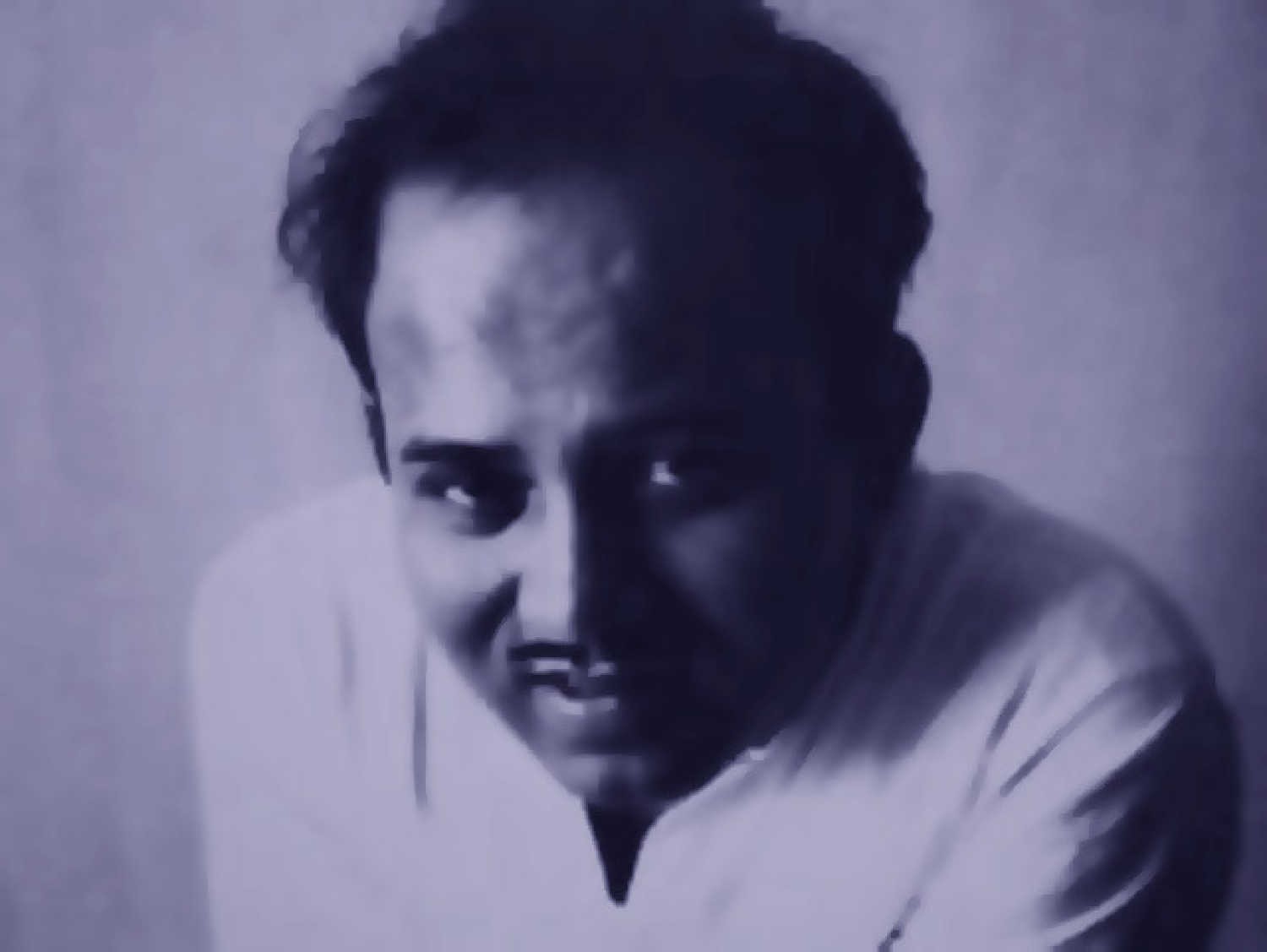
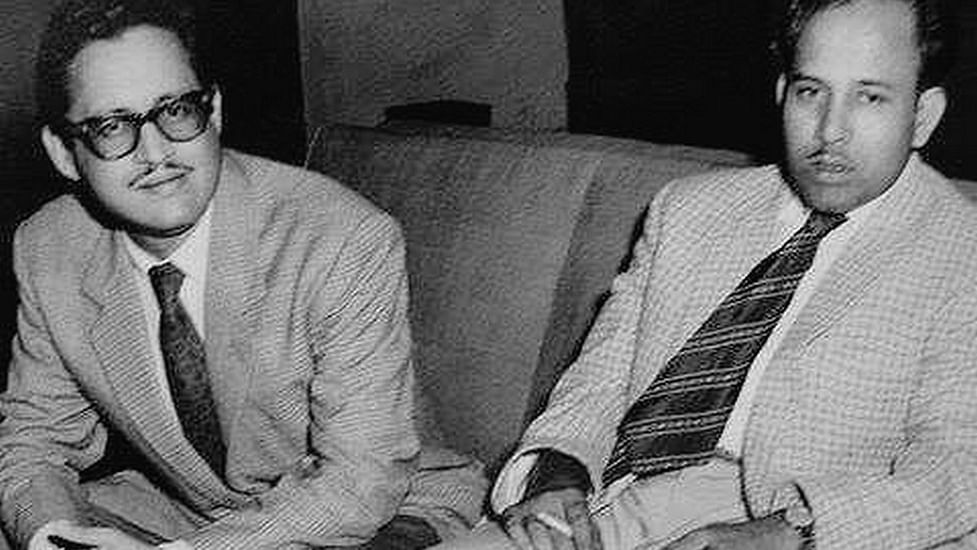
Abrar Alvi was an Indian film writer, director and actor. Most of his notable work was done in the 1950s and 1960s with Guru Datt. Guru Datt’s filmography cannot be discussed extensively without acknowledging his creative collaboration with writer – director Abrar Alvi. He was not only Datt’s good friend but regularly worked on Datt’s scripts and had aslo directed hit film Sahib Bibi Aur Ghulam (1962). He wrote some of the most respected works of Indian cinema, including Kaagaz Ke Phool and Pyaasa. Pyaasa is included in the All-Time 100 Movies by Time, as chosen by Time movie critics Richard Corliss and Richard Schickel.
Abrar Alvi’s talent was discovered by Datt accidentally when he heard Abrar giving Raj Khosla some pointers above the dialogues of the film. Datt gave Abrar the chance to write dialogues for his next film Aar Paar (1954). For Aar Paar, he convinced Guru Dutt that the dialogues must reflect the personalities of the characters. He believed that a character’s personality was a “sum total of a person’s or character’s environment, upbringing, education and background”, and their dialogues needed to be a reflection of that. Hence, for all the five protagonists of the film, he created almost five different languages — one for the Christian young lady, another for the Punjabi father, one for the Parsi comedian, a blend from the MP-originated Bombay taxi driver and a Lucknow twang for the Qazi friend. The film was a hit and Abrar became a permanent part of Guru Datt Films.
Guru Dutt and Abrar’s next collaboration was the classic comedy Mr. & Mrs. 55 (1955). The film, based loosely on a play written by Abrar Alvi called Modern Marriage. Unlike most Hind i films where dialogues repetitively stress the same emotions again and again, each dialogue exchange in the film skillfully develops the plot, while the dialogue as a whole invokes a range of feelings. Also, Abrar Alvi’s dialogues diffuse highly charged situations with a down-to-earth and matter-of-fact repartee. An excellent example of this was the scene where Preetam draws a cartoon of Sita Devi wearing a Roman toga, standing in a Roman chariot with a whip in hand. Anita and Preetam are the horses that pull the chariot. On seeing the cartoon Sita Devi is furious and confronts Preetam. He answers every question with ‘Ji Haan’ (Yes) but the scene is brilliantly constructed in a manner such that each reply gives it a different shade, a different meaning. And of course, not forgetting the unforgettable exchange between Sita Devi and Preetam when they first meet and after listening to his views, she asks him if he is a communist. No, a cartoonist he replies!
Abrar undertook a great deal of research for the script of the iconic “Pyaasa”. He was only credited for the dialogues. Abrar was credited as screenplay and dialogue writer for the first time for the Datt’s “Kagaaz Ke Phool” (1959).
The controversy about who actually directed Sahib Bibi Aur Ghulam has increased over the years. Since the film is characteristic of Guru Datt’s feel and style, it is difficult to think that he did not direct the film. However, Guru Dutt never denied Abrar Alvi’s role in the film, nor did he make any counter-claims when Abrar won the Filmfare Award for Best Director for the film. Abrar Alvi has stated that Guru Dutt did direct the songs in the film, but not the film in its entirety.
He last appeared three-part documentary on Guru Datt, reminiscing on his work and days with the Guru Datt team. The documentary was produced by Channel 4. After his association with Guru Datt and due to controversy regarding who actually directed Sahib Bibi Aur Ghulam, he was unable to give any notable directorial work. Abrar, however, continued to pen screenplay and dialogue for several movies, some of these were hits, such as Professor, Prince, Suraj, Sunghursh, Shikar, Manoranjan and Bindiya Chamkegi.
Abrar Alvi could be called the first modern writer in Hindi cinema. He large extent brought realism into dialogue in Hindi cinema, which was otherwise stagey and theatrical. And he along with Nabendu Ghosh could be considered the earliest writers who were responsible for writers getting due respect for their work in the Hindi film industry. He is most remembered and respected for the way he transformed the perception and practice of dialogue writing.
Photos courtesy Google. Excerpts taken from Google.
 Writer Sunita