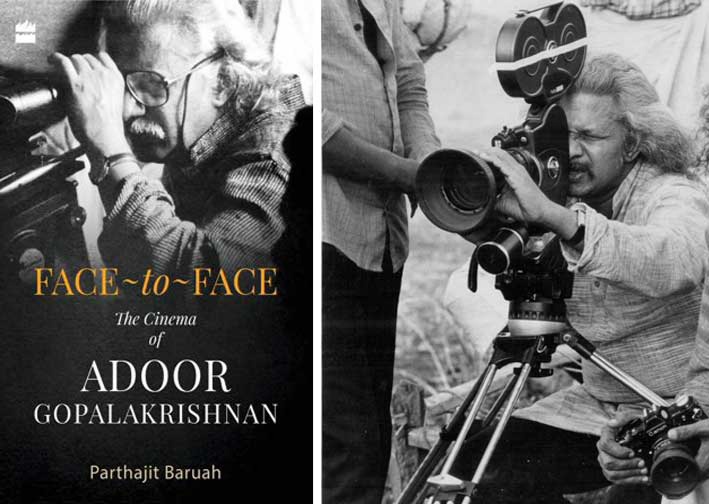
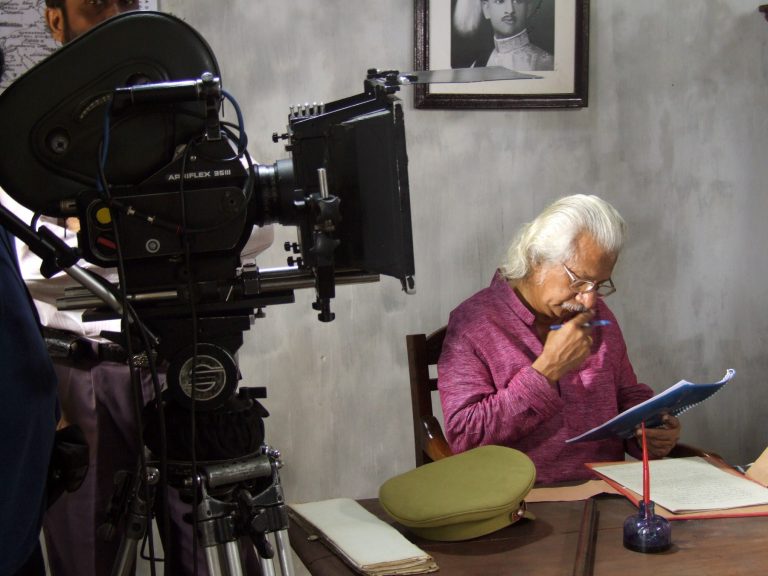
Adoor Gopalakrishnan is an Indian Film Director, Script Writer, and Producer. He is regarded as one of the most notable and renowned filmmakers in India. With the release of his first feature film Swayamvaram (1972), Gopalakrishnan pioneered the new wave in Malayalam Cinema during the 1970s. In a career spanning over five decades, Gopalakrishnan has made only 12 feature films to date. His films are made in the Malayalam language and often depict the society and culture of his native state Kerala. Nearly all of his films premiered at Venice, Cannes and Toronto International Film Festival. For his films, Gopalakrishnan has won the National Film Award 16 times. He also won the Kerala State Film Awards 17 times. He was awarded the State honours Padma Shri in 1984 and the Padma Vibhushan in 2006. He received the Dadasaheb Phalke Award in 2004 for his valuable contributions to Indian cinema. In 2016, he was awarded the J. C. Daniel Award, Kerala government’s highest honour for contributions to Malayalam cinema. The University of Wisconsin – Milwaukee have established an archive and research center, the Adoor Gopalakrishnan Film Archive and Research Center, at their Peck School of Arts where research students will have access to 35 mm prints of the eleven feature films and several documentaries made by Gopalakrishnan.
Gopalakrishnan started his artistic life as an actor in amateur plays when he was 8. Later he shifted his base to writing and direction and wrote and directed a few plays. After securing a degree in Economics, Political Science and Public Administration in 1961 from the Gandhigram Rural Institure, he worked as a Government officer near Dindigul in Tamil Nadu. In 1962, he left his job to study screenwriting and direction from the Film and Television Institute of India Pune. He completed his course from there with a scholarship from the Government of India. With his classmates and friends, Gopalakrishnan established Chithralekha Film Society and Chalachithra Sahakarana Sangham; the organization was the first film society in Kerala and it aimed at production, distribution and exhibition of films in the co-operative sector.
In 1972 Gopalakrishnan’s debut film, the national award-winning Swayamvaram (One’s Own Choice) was a milestone in Malayalam Film history. The film was exhibited widely in various international film festivals including those held in Moscow, Melbourne, London and Paris. Film narrates the tale of a couple, Vishwam and Sita, who have married against the liking of their families and have eloped to the city in search of love and a new life. Vishwam aspires to become a writer and publish his novel. But to survive in the city, both the couple starts looking for a job. They fail in their attempts to find work and the romantic idea of a life away from the strictures of their families is shattered. The everyday existence of their day-to-day life becomes their bone of contention. They have to make one compromising choice after the other and in the process get embroiled in a tight spot. The quest for economic survival for the two helpless souls is also dampened because they are outsiders in the city. Their internal struggle of existence also highlights the repercussion of their choices. At the end of the film, Vishwam dies, leaving Sita in the lurch with their baby. For the year 1973, Adoor received a nomination at Moscow International Film Festival, Russia. The film also went on to win National Film Award for Best Feature Film, Best Director, Best Actress, and Best Cinematography. It also won Kerala State Film Award for Best Photography (Black-and-white) and Best Art Direction.
Kodiyettam (The Ascent) second feature film of Adoor Gopalakrishnan narrates the story of growth and development of the principal character of the film Shankarankutty (Gopi), who at the beginning of the film is a free soul whose childhood had got extended a bit longer. He idly spends his life at the teashop in the morning and at the toddy shop in the evening. He takes delight in accompanying the young boys of the village in their frisky liveliness of fishing and climbing coconut trees. It was the first film of Adoor Gopalakrishnan, which Satyajit Ray saw at the 1979 International festival in Delhi and he enjoyed every minute of the film. The film went on to win the National film award for Gopi as Best Actor and the Best feature film in Malayalam.
Elippathayam (The Rat Trap) film documents the feudal life in Kerala at its twilight overshadowed with grief. The film can be arguably christened as one of the best films from the oeuvre of the director’s filmography. The film has minimal usage of dialogues and does not follow the conventionally popular narrative structure. The British Film Institute awarded the film with the Sutherland Trophy for the most original and imaginative film of 1982. The film premiered at the Cannes Film Festival. The film also won the National Award for the best feature film in Malayalam and the Best audio-graphy award, besides three other Kerala State Film Awards.
Mukhamukham (Face to Face) 1984, film begins in the early part of the 1950s, when we watch Sreedharan (P. Gangadharan), a trade union activist who believes in communism, participating in a strike against the owner of a tile factory. Later in the film, the political situation spiral out of his grasp, and he is compelled to go underground after his name gets embroiled with a murder. For a good length of time in the film, he is considered to be dead and even a memorial gets erected in respect of the leader. The film can be considered Adoor’s most political film to date, where the viewers observe within its complex narrative structure how corruption had seeped into the framework of the Communist Party as the individuals previously associated with the ideology start blaming the intention and ethics of each other. The unanimity amongst the members weakens and their belief in the pursuit of political perfection shatters. For the year 1984, the film had won the National Awards for Best Direction, Best Screenplay, Best Audiography, and Best Malayalam Film. And the Kerala State Awards for the Best Film, Best Direction, Best Cinematography, Best Audiography, and Best Editing.
Anantaram (Monologure) 1987, it is a kind of film that tells a story about story-telling and can be considered as a complex and original form of narrative. As the protagonist narrates his life it offers the viewers an option to probe into the mind of the troubled soul who designs the truth in accordance to his benefit or at his whims and fancies to pacify himself. At the National film award for 1987, the film had won awards for Best Director, Best Screenplay, and Best Audiography. And the Kerala State Award for Best Director. It has also won the International Film Critics Prize (FIPRESCI) for the Best film, Karlovy Vary Film Festival.
Mathilukal (The Walls) 1990 film is one of the first adaptations by Adoor Gopalakrishnan. The novella of the same name as the title of the film is written by the celebrated Malayalam writer Vaikom Muhammad Basheer. The milieu of the film is set against the background of India’s freedom struggle in the 1940s. The events in the film unfold within the restricted narrow area of the prison, where the protagonist Bashir (Mammootty), develops an attraction towards a fellow woman prisoner, Narayani, who is on the other side of a wall. Due to the presence of the wall, they are never able to meet each other and it is through their conversations that they develop a bonding with one another. But fate had something else in store for the protagonist and he is not able to unite with his ladylove. At the National film award for 1989, the film had won awards for 1989, the had won awards for Best Director, Best Actor, Best Sound, and Best Malayalam film. At the Kerala State Award, it won the award for Best Story. It also won the International Film Critics Prize (FIPRESCI) at Venice.
Vidheyan (The Servile) film is an adaptation of a novella by Malayalam writer Paul Zacharia. It is the story of an unimpeachable labourer from Kerala, Thommy (M. R. Gopakumar) who has shifted to neighbouring South Karnataka in search of a better life. In the village, he, unfortunately, encounters the cruel and oppressive landlord Bhaskara Patelar (Mammootty), who exploits him without an iota of pity. Thommy also helps Patelar in murdering his wife Saroja and makes it appear like a murder. But the bad karma of Pattelar brings evil consequences in his life and he is eventually killed and Thommy regains his freedom. At the National film award for 1993, the film had won awards for Best Actor (Mammootty) and Best Malayalam film. Whereas, at the Kerala State awards for Best Film, Best Director, Best Actor and Best Story, Special Jury award in acting for M. R. Gopakumar.
Kathapurushan (The Man of The Story) is one of the most important aspects of the film is the portrayal of how demarcating lines of class division is blurred. Meenakshi (Mini Nair) happens to be a childhood friend of our protagonist and belongs to the family of a servant. But that does not stop Kunjunni, who is an heir to the feudal landlord, from marrying her. Thus the hierarchy of the society is infringed as the country heads towards beginning another glorious political chapter. The film had won the National Awards for Best Film and Best Supporting Actress and the Kerala State awards for Best Director, Best supporting actor and best-supporting actress.
Nizhalkkuthu (Shadow Kill) film of a poor old and the last hangman, Kaliappan (Oduvil Unnikrishnan), in the princely state of colonial Travancore set in the 1940s. As the plots unfold the son of the executioner, Narain (Muthu), who believes in the principles of Mahatma Gandhi, is saddled with the responsibility to stand in for his father. The title of the film represents an episode from the Indian epic Mahabharata. At the National film award for 1993, the film had won awards for Best Film in Malayalam. At the Kerala State Awards, it won Best Actor, Best Cinematography, Best Editing, Best Sound, Best Costumes, and Best Supporting Actor.
Naalu Pennungal (Four Women), film can be considered as a collection of four stories, that are not interconnected directly, about four women each of them belonging to a different rung of the society in Kerala. The first story is titled ‘Oru Niyamalanghanathinte Katha’, where Kunjipennu plays the role of a street prostitute Padmapriya, in the second story, titled ‘Kanyaka’, where Geetu Mohandas plays a peasant girl Kumari, in the third story titled ‘Chinnu Amma’, Manju Pillai plays the role of a middle-aged homemaker named Chinnu and in the final story titled ‘Nityakanyaka’, Nandita Das, who is a girl from an affluent family makes a firm choice not to get married. At the 55th National Film Awards, the film had won awards for Best Director (Adoor Gopalakrishnan) and Best Editor.
The “Helsinki Film Festival” was the first film festival to have a retrospective of his films. In 2016 – On the occasion of India celebrating its 70th Independence Day, news agency NDTV compiled a list called “70 Years, 70 Great Films” and “Swayamvaram” was among the four Malayalam films that found place in the list. He is the author of two books on the theatre as well as a book on the cinema, “The World of Cinema”, for which he won a national award in 1983.
Gopalakrishnan has been known as a director who completely dictates every fine detail of his films. On the performance of actors in his movies, he stated that – “It is not the artist’s job to do the detailing. I do not want different interpretations of roles that may clash with each other. It has to be absolutely unified.” He normally does not encourage his crew to read the script or even the stories. The actors are told at the time of shooting about the role and the scenes before conducting several rehearsals. According to Gopalakrishnan “In movies, the actor is not performing to the audience like the stage actor. Here they are acting for me. I am the audience and I will decide whether it is correct or not, enough or not.”
Gopalakrishnan also worked in several respected posts in the film fraternity. He was a member of Sivaramakarath Committee formed by the Government of India for framing a national film policy. He was a national film award committee member in 1974. He was a member of jury in Venice, Singapore, Hawaii and Delhi International Film Festivals. He was the chairman of International Film Festival of Kerala in 1999. He headed the National Film Development Corporation of India in the years 1980–1983. He was the director of Pune Film and Television Institure of India. In the years 1975–1977, he was a member of the advisory board for National Film Archieve of India, Pune.
Photos courtesy Google. Excerpts taken from Google.
 Writer Sunita