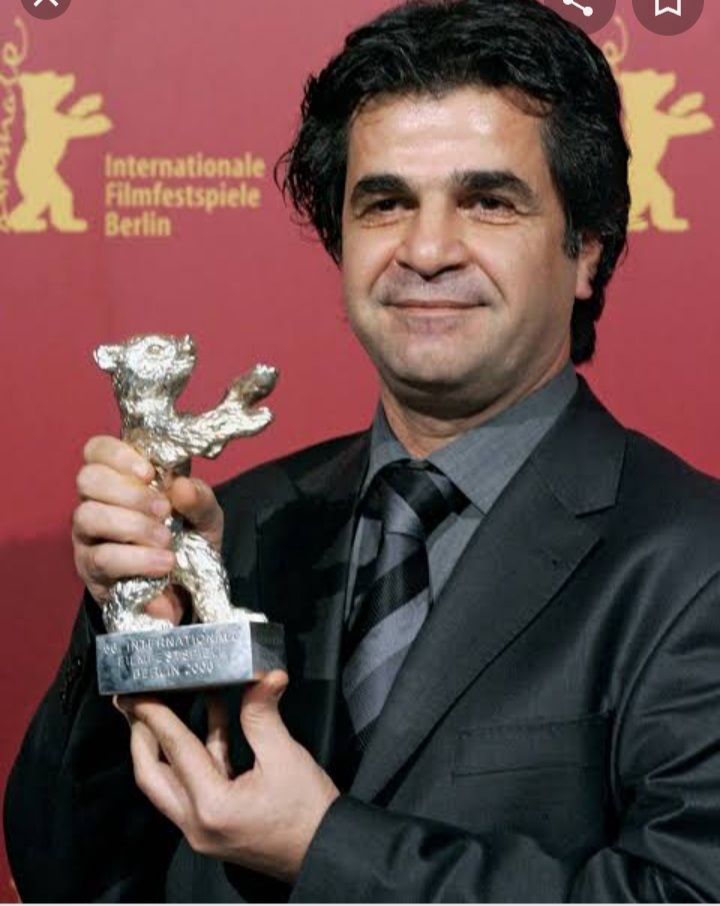
Jafar Panahi, Iranian film director, screenwriter and editor, commonly associated with the Iranian New Wave film movement. After several years of making short films and working as an assistant director for fellow Iranian filmmaker Abbas Kiarostami, Panahi achieved international recognition with his feature film debut, The White Balloon (1995). The film won the Camera d’Or at the 1995 Cannes Film Festival, the first major award an Iranian film won at Cannes.
When he was ten years old he wrote on 8mm film camera. He also acted in one film and assisted Kanoon’s library director in running a program that taught children how to operate a film camera. Starting at age 12, Panahi worked after school in order to afford to go see films. His impoverished childhood helped form the humanistic worldview of his films.
At age 20 Panahi was conscripted into the Iranian army and served in the Iran-Iraq War, working as an army cinematographer from 1980 to 1982. From his war experiences he made a documentary that was eventually shown on TV. after completing his military service. Panahi enrolled at the College of Cinema and TV in Tehran, where he studied filmmaking. During college he interned at the Bandar Abbas Center on the Persian Gulf Coast, where he made his first short documentary films. He also began working as an assistant director on his Professor’s films before graduating in 1988.
Panahi made several short documentary films for Iranian television through the Islamic Republic of Iran Beroadcasting’s Channel 2. His first short film, The Wounded Heads, was a documentary about the illegal mourning tradition of head slashing in the Azerbaijan region of northern Iran. The film documents a mourning ceremony for the third Shi’ite Imam, Imam Hossein, in which people hit their heads with knives until they bled. Panahi had to shoot in secret and the film was banned for several years. In 1988 Panahi filmed The Second Look, a behind-the-scenes documentary short on the making of Kambuzia Partovi’s film Golnar. It focuses on the puppet maker for Partovi’s film and his relationship with his puppets. It was not released until 1993.
In 1992 Panahi made his first narrative short film, The Friend, an homage to Kiarostami’s first short film, The Bread and Alley. That same year Panahi made his second narrative short, The Final Exam (Akharin Emtehan). Both films starred non-professional actors and won awards for Best Film, Best Screenplay, Best Cinematography, and Best Editing at Iran’s National TV Festival that year. Kiarostami hired Panahi as his assistant director for the film ‘Through the Olive Trees’. He had seen several of Panahi’s short films and in 1995 said he was “extremely gifted and can be a promising figure in our cinema’s future.”
“The White Balloon” (1995) was Jafar Panahi’s feature film debut, produced in Iran by IRIB Channel 2, Ferdos Films, and the Farabi Cinema Foundation. Set in Tehran on New Year’s Eve, the film follows a determined 7-year-old girl, Razieh (Aida Mohammadkhani), who wants to buy a goldfish for her family’s pond before the shops close for the holidays. With her brother’s help, she sets off with their last 500 tomans, facing small obstacles along the way.
Panahi worked closely with his young lead, guiding her performance with care. He said the film was about proving he could make a successful feature and get strong performances, even with a small story: “In a world where films are made with millions, we made a film about a girl who wants a fish for less than a dollar.”
In Iran, the film was seen mainly in children’s cinemas and won awards at the Isfahan and Fajr film festivals. It became a New Year’s TV tradition on Channel 2. Internationally, it was highly praised and won the Camera d’Or at Cannes, along with awards in Tokyo, São Paulo, and Canada. Though submitted to the Oscars, political tensions led Iran to ask for its withdrawal, which the Academy denied. Panahi was later banned from traveling to the U.S. to promote the film. Critics praised it for its honesty and charm, with The National Review calling it “pure delight,” and Rotten Tomatoes giving it 82%.
“The Mirror” (1997) was Jafar Panahi’s second feature film, produced by Rooz Films. Inspired by a lonely girl he saw on a bench in South Korea, Panahi created a story about Mina (Mina Mohammadkhani), a first-grader trying to find her way home through the busy streets of Tehran after her mother doesn’t show up after school.
The film begins as a fictional story but takes a surprising turn when Mina breaks the fourth wall, saying she no longer wants to act and wants to go home. The rest of the film follows her as herself, blending fiction and reality. Mina is the sister of Aida Mohammadkhani from The White Balloon, and Panahi cast her because he sensed both vulnerability and determination in her.
The Mirror won several international awards, including the Golden Leopard at Locarno, Best Director at the Singapore Film Festival, and prizes at festivals in Istanbul, Belgium, and Ringa.
“The Circle” (2000) was Jafar Panahi’s third feature film and a bold shift from his earlier child-centered stories. Produced by Jafar Panahi Film Productions and Mikado-Lumiere, the film critiques the harsh treatment of women under Iran’s Islamist regime. It follows the stories of four women in Tehran, each captured with a different camera style to reflect their emotional states—from handheld shots to static frames with little sound.
Panahi cast non-professional actors, including lead Nargess Mamizadeh, whom he discovered in a park. The film explores small yet oppressive rules women face daily, like needing a chador or not being allowed to travel alone. Through visual contrasts—such as a marriage celebration occurring while a young girl is abandoned—Panahi highlights the tension between joy and suffering.
Submitted without official approval, The Circle won the Golden Lion and multiple other awards at the Venice Film Festival, but it was banned in Iran for its critical tone. Fearing confiscation, Panahi hid copies of the film around the country. It later earned global acclaim, including the FIPRESCI Film of the Year Award, and was praised for its honest portrayal of Iranian women’s struggles.
“Crimson Gold” (2003), directed by Jafar Panahi and produced by his own company, tells the story of a poor pizza delivery man who attempts to rob a jewelry store, revealing the social injustice that led to his actions. The film was inspired by a real event Panahi heard from Abbas Kiarostami, who later wrote the script.
Panahi submitted the film to the Cannes Film Festival without a permit, after refusing to make government-demanded cuts. It won the Un Certain Regard Jury Award at Cannes and the Golden Hugo at the Chicago International Film Festival, but, like The Circle, it was banned in Iran.
Before filming “Offside” (2006), Iran’s Ministry of Guidance warned Jafar Panahi that it wouldn’t approve the film unless he re-edited his earlier works. Ignoring the demand, Panahi began shooting during the actual World Cup qualifiers, using digital video and listing his assistant director as the official director to avoid attention. Despite efforts to shut it down, filming was completed.
The film starred non-professional actors—mostly football-loving university students—and was shot in 39 days. It premiered at the Berlin Film Festival, winning the Silver Bear Jury Grand Prix, but was banned in Iran like The Circle and Crimson Gold. Although officially blocked, pirated DVDs spread quickly across the country, and Panahi believes Offside became his most-watched film in Iran.
The film also inspired the White Scarf Girls, a feminist group that protested at matches. A U.S. distributor requested a limited screening in Iran to qualify for an Oscar nomination, but the Ministry refused.
Jafar Panahi directed the short documentary “Ardekoul” in 1997. In 2007, he contributed “Untying the Knot”—a single long take inspired by his childhood—to the omnibus film Persian Carpet. In 2010, he made “The Accordion” for the Then and Now: Beyond Borders and Differences series, which premiered at the Venice Film Festival. Calling this period “the dark ages for filmmaking in Iran,” Panahi said he aimed to document life under repression. In 2021, he directed a segment for the anthology film “The Year of the Everlasting Storm”, which premiered at Cannes.
In September 2009, Jafar Panahi served as Head of the Jury at the Montreal World Film Festival. While there, he showed support for Iran’s Green Movement, convincing the jury to wear green scarves during ceremonies and appearing in photos with protesters.
“This Is Not a Film” (2011) is a documentary by Jafar Panahi and Mojtaba Mirtahmasb, shot on a camcorder and iPhone over four days. Filmed while Panahi was under house arrest, it captures him at home reflecting on his court case, past films, and a project he was banned from making. It was smuggled to the Cannes Film Festival as a surprise entry, and later shortlisted for Best Documentary Feature at the 85th Academy Awards.
In October 2012, Abbas Kiarostami revealed that Jafar Panahi had completed a new film. In February 2013, “Closed Curtain” premiered in competition at the 63rd Berlin Film Festival, where Panahi won the Silver Bear for Best Script.
In January 2015, it was announced that Jafar Panahi’s film “Taxi” would premiere at the 65th Berlin International Film Festival. The film, set inside a taxi driven by Panahi himself, offers a portrait of Tehran. It won the festival’s top honor, the Golden Bear.
In December 2014, Jafar Panahi received a $25,000 Motion Picture Association Academy Film Fund grant for his screenplay “Flower (Gol)”, awarded at the 8th Asia Pacific Screen Awards in Brisbane, Australia.
Film scholar Stephen Teo notes that Panahi’s work redefines humanitarian themes in Iranian cinema by focusing on women’s issues and portraying characters as relatable, universal figures. His unsentimental, realistic style blends social and political critique with emotional depth—an approach that has come to characterize the aesthetic of Iranian cinema on the global stage.
Jafar Panahi describes his filmmaking style as “humanitarian events interpreted in a poetic and artistic way.“ He emphasizes simplicity and humanity, saying, “In a world where films are made with millions of dollars, we made a film about a little girl who wants to buy a fish for less than a dollar.” He believes all his characters, male or female, are fundamentally good: “You never see an evil character in my films.”
In an interview with Anthony Kaufman, Panahi explained that his goal is to engage both the intellect and emotions without resorting to manipulation: “We were not trying to create tear-jerking scenes… it engages people’s intellectual side, assisted by the emotional aspect.”
Scholar Hamid Dabashi calls Jafar Panahi the least self-conscious filmmaker in Iranian cinema, praising his work as a reflection of post-revolutionary Iran. He sees Crimson Gold not just as a story of a failed robbery, but as a symbolic history of Iran’s Islamic Revolution and the Iran-Iraq War.
Dabashi highlights Panahi’s subtle portrayal of violence, noting that it is shown through aftermath and suggestion rather than direct depiction. For example, in The White Balloon, Razieh’s brother appears beaten, but the source—likely their father—is only implied off-screen. In The Circle, Nargess is visibly injured, yet we’re never told why or by whom.
Dabashi writes: “Violence in Panahi’s cinema is like a phantom… it lacks a source or physical presence.” This ambiguous, unseen violence creates a constant sense of fear and anxiety, making it a hallmark of Panahi’s storytelling style.
Some Iranians have criticized Jafar Panahi’s work, arguing that his films do not present a fully realistic image of Iran and that the challenges faced by women in his stories reflect only the experiences of a specific social class, rather than society as a whole.
Photo courtesy Google. Excerpts taken from Google.
 Writer Sunita