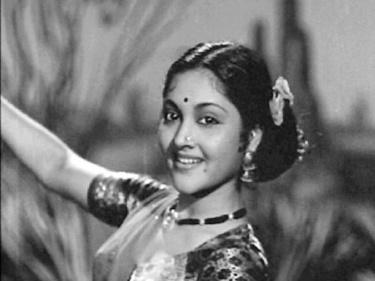
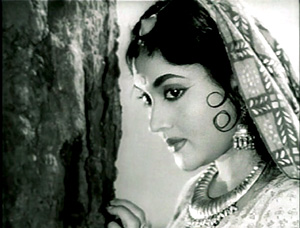
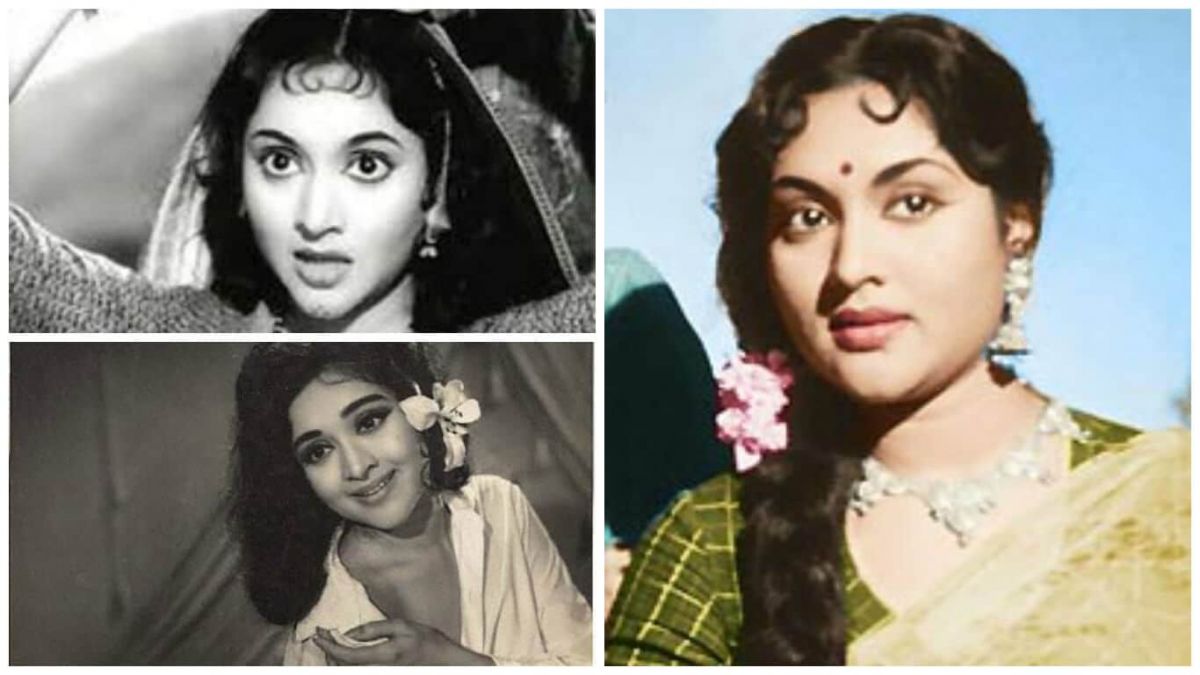
Vyjayanthimala is a former Indian Actress, dancer and parliamentarian. Regarded as the “First Female Superstar” of Hindi Cinema (specifically the 1950s and 1960s), she is the recipient of several accolades, including two BFJA Awards and five Filmfare Awards. She had her arangetram at the age of 13 and started performing in Tamil Nadu later. She made her screen debut at the age of 13 with the Tamil Film ‘Vaazhkai‘ (1949), and followed this with a role in the Telugu Film ‘Jeevitham‘ (1950). Her first work in Hindi Cinema was the social guidance film ‘Bahar‘ (1951), which she headlined, and achieved her breakthrough with the romantic film ‘Nagin‘ (1954).
When director M. V. Raman was looking for a new face to cast in AVM Production’s Vazhkai, he saw Vyjayanthimala performing Bharata Natyam in Chennai’s Gokhale Hall. The movie was a big success and was remade in Telugu after one year as Jeevitham. This film enjoyed great success upon release. For the Telugu version, Vyjayanthimala did her own voice dubbing with a little assistance from her father who knew Telugu well and coached her during the filming process. Vyjayanthimala also did a guest appearance in the 1950 film Vijayakumari. She danced for the song “laalu…laalu…laalu”. Though the film was not a commercial success, her western-style of dance became popular and was considered one of the major highlights of the film.
Vyjayanthimala on the cover of May 1951 edition of Telugu Swatantra Weekly magazine
The success of her Tamil film ‘Vazhkai’ in South India inspired AVM Productions to remake it in Hindi as ‘Bahar’ in 1951. In their first Hindi venture, they decided to cast Vyjayanthimala again in the lead role. She learned Hindi at the Hindi Prachar Sabha to dub her own voice for her character in the film. Upperstall.com in their review, wrote that “She does bring the film to life with her dances though, something which was new then for the North Indian audience”. The film became sixth highest-grossing film of 1951 with a verdict of box office hit. After the success of her debut films in all three languages, Vyjayanthimala again acted in a multilingual film which was produced by AVM Productions. The first version was in Tamil as ‘Penn’. The second version was in Telugu titled ‘Sangham’ which was released in the same year. The Tamil and the Telugu films were big successes across South India. The film was once again remade in Hindi as ‘Ladki’ starring Vyjayanthimala, reprised her role from the original film. Her performance was described by Upperstall.com as, “Vyjayanthimala’s dances are the film’s saving grace although it is unintentionally funny now to see how deliberate and obviously tacky the sequences are which lead into her dances… Ladki too makes no real demands on “feminist” tomboy Vyjayanthimala histrionically”. The movie became second highest-grossing film of 1953.
In 1954, Vyjayanthimala acted in the film ‘Nagin‘. The film got favourable responses from the audience and became the highest-grossing movie of 1954 where it was labelled as a blockbuster. Her performance as the Nagi tribe’s chief got Mala favourable reviews from the critics, as in 1955, a critic from Filmfare magazine had said that “Vyjayanthimala in the title role puts over a commendable performance besides looking ravishingly beautiful as the belle of the hills. Her dancing, too, is very graceful, specially in those eye-filling colour sequences and delightful ballets towards the finish”, while in The Hindu review Vijay Lokapally similarly praised her portrayal: “The ethereal Vyjayanthimala, barely 18, illuminates the screen with her stunning beauty, moving around daintily from one song to the other… The close-up shots of Vyjayanthimala highlight her ability to convey so much with so little effort… Nagin was a precursor to her rise in Hindi cinema as an iconic actor, who combined her talents, performing and dancing, to rule the screen on her terms… biggest recall values of Nagin are Vyjayanthimala”. Post Nagin Vyjayanthimala had established herself as one of the leading actresses in Hindi films because of the film’s nationwide success. Hemant Kumar’s music and her dance on the song, “Man Dole, Mera tan dole”, was one of the highlights of the film. In the same year she acted in ‘Miss Mala‘, which was a box office success.
In 1955, Vyjayanthimala acted in five Hindi films. The first one was director Abdur Rashid Kardar’s ‘Yasmin’, which won the Filmfare Best Cinematographer for Dwarka Divecha. Besides that, she also starred in three other films, namely ‘Pehli Jhalak‘, ‘Sitara‘ and ‘Jashan‘. The same year, Bimal Roy cast her as Chandramukhi opposite Dilip Kumar in the critically acclaimed Devdas, which was the adaptation of the novel with same title by Sharat Chandra Chatterji. The film unit suffered with financial crisis and at this point Vyjayanthimala offered to do the role of Chandramukhi, where she said to Bimal Roy, “I am ready if you think I can do it”. Vyjayanthimala played Chandramukhi, the Tawaif with a heart of gold. The film and her acting was praised, later considered to be her magnum opus. For Devdas, she won the Filmfare Award for Best Supporting Actress which she refused, stating that she played a leading role equal to that of Suchitra Sen, her co-star, and so she could not accept the award for a supporting role. Rediff wrote: “Vyjayanthimala imbues Chandramukhi with true sympathy. Who better than Chandramukhi would know the pain of a hopeless love?… Vyjayanthimala, a star after the blockbuster Nagin, still had to establish her acting credentials when Roy went against the tide and cast her in the role of Chandramukhi”. In 2006, a poll conducted by Rediff ranked her role of Chandramukhi as one of the best Tawaif characters in Hindi films.
After being recognised as a capable actress with Devdas, Vyjayanthimala acted in successful movies in 1956, namely Taj, Patrani, Anjaan : Somewhere in Dehli and Kismet Ka Khel. In the same year, she also acted in film Devta, which was a remake of the hugely successful Tamil film Kanavaney Kankanda Deivam. Surprisingly though, she accepted a supporting role as a vamp. However, according to Upperstall.com, her role was very crucial in the film and her portrayal as the Naag Rani accompanied by her dance is the main attraction of the film.
She went on to star in series of commercial successes, which include the comedy film New Delhi (1956), which became the fifth highest-grossing film of box office hit. The film showcases a love that sprouts between a Punjabi boy, played Kishore Kumar, and Tamil girl, played by Vyjayanthimala. Her performance was applauded by fans and critics alike; a review on Upperstall.com regarding her performance in this movie states that: “Vyjayanthimala proves to be the perfect foil for Kishore Kumar… has always had t he mandatory dance sequence in practically every film of hers evoking “classical art” associations. She excels in the two main dances in New Delhi — the solo Bharatnatayam Aliruppu number and the Bhangra folk dance in her Punjabi avatar and she is absolutely brilliant in the Bhangra folk dance…in her second avatar. Even Vyjayanthimala played a Punjabi girl and most successfully too”. Subsequently, she did a Tamil film called ‘Marma Veeran‘.
Vyjayanthimala opposite Dilip Kumar in Naya Daur (1957). The film, had a theme of “Man vs. machine”, and Vyjanthi’s portrayal of village belle Rajni received positive reviews from critics. A review from Rediff says that: “Vyjayanthimala too is not your average petulant “gaon ki gori”. She ably projects a hands-on worker who comes up with ideas on how to ford a stream and risks her life to save the bridge… wonderful scene between two stars whose chemistry is undeniable”. Vyjayanthimala’s next release was ‘Kathputli’, in which she co-starred with actor Balraj Sahni for the first time. This film was about a young girl named Pushpa who, on account of being a good dancer and singer, assists puppeteer Shivraj in his puppet show. Kathputli remains one of the memorable films of Vyjayanthimala which has an offbeat theme with a Pygmalion touch. Vyjayanthimala then acted in Ek Jhalak, which was produced by the latter with his home production company Deep & Pradeep Productions. She returned to the screen again with Kishore Kumar in the 1957 partially colour-made film Aasha which became a hit at the box office. The story revolves around the central character Kishore, played by Kishore Kumar, who, despite being a Zamindar, believes in helping the needy. Vyjayanthimala, as Nirmala, plays the lover of Kishore. The story suddenly goes from being light-hearted and humorous to a court-drama when Kishore is falsely accused of murder. The rest of the movie sees both the protagonists trying to prove Kishore’s innocence. The movie is best known for its song “Eena Meena Dekha”, in two different versions.
The following year proved to be very successful for Vyjayanthimala, since she signed opposite Dilip Kumar in Bimal Roy’s Madhumati in the title role. Originally supposed to essay four roles, the director finally scaled it down to three, Madhumati, Madhavi and Radha. The film was launched in front of the Karlovy Vary International Film Festival Theatre in Czecholovakia. During the filming in the hills of Nainital, Vyjayanthimala was required to dance barefoot where she tripped on a stone and fell, hurting herself badly and causing damage to her fibre tissues in the solo of her foot. Written by Ritwik Ghatak, the film is about Devendra, played by Dilip Kumar, who takes shelter during a storm in an abandoned house. Here he discovers a painting of the owner of the house Raja Ugranarayan, painted by him in his previous life when he was Anand, also played by Dilip Kumar, and worked as a foreman on a plantation of Raja Ugranarayan. Devendra had been in love with Madhumati, played by Vyjayanthimala. She had committed suicide while trying to save herself from Ugranarayan’s advances. Madhumati’s ghost finally takes revenge on Ugranarayan. The film was well received by critics and audience, and it became highest grossing Hindi language film of 1958 and was labelled as a blockbuster at t he box office. Her performance as Madhavi, Radha and the ghost Madhumati earned her accolades from critics. Shahid Khan from Planetbollywood.com said: “Vyjayantimala has never been one of my most favourite actresses but this is one of the few performances where I am completely bowled over by her. Her expressions while playing both the main characters are perfect. With Madhumati, she brings the wonder, surprise and innocence needed in the person. With Madhavi, she brings the poise, the curiosity and pity for the grief that Anand is going t hrough”. Madhumati came to be known as the first film which dealt with the theme of reincarnation.
Vyjayanthimala with Sunil Dutt in Sadhana (1958), a role which won her the Filmfare Award for Best Actress. The Filmfare Award-winningn story revolves around Rajini, enacted by Vyjayanthimala, a prostitute’s love affair with a professor, played by Sunil Dutt. Chopra had adapted the theme on the rehabilitation of prostitutes which was then a controversial topic in India. Along with the film, her performance received universal acclaim, as told by Vijay Lokapally from The Hindu : “Among the great movies made on the subject of helpless women versus society, Sadhna holds its own for its realistic portrayal and treatment of a subject, so aesthetically documented by Chopra and Vyjayanthimala” and praised the latter “gorgeous when she entertains the clients a t her kotha… stunningly restrained when she assumes the character of a prospective wife”. Sadhna also performed well at the box office where it became fifth highest-grossing film of 1958. Her next release was ‘Amar Deep’, where she was paired against Dev Anand for the first time. Her other releases of 1958 Sitaroan Ke Aage and Piya Milan became average successes.
The same year she did another Tamil film Gemini Pictures’s Magnum opus Vanjikottai Valiban. The Black-and-white epic film was produced and directed by S. S. Vasan. She played the role of Princess Mandakini, the beautiful princess of Ratna Island Kingdom. As a stubborn princess, she always wanted to achieve her ambition in any deed which led to her ultimate death and formed the climax. The film had a great theatrical run where the film completed 100 days run at cinemas and was labelled as a blockbuster at the box office. The film is still remembered for the dance of Vyjayanthimala and Padmini in the “Kannum Kannum Kalanthy” song, and was well received by critics and audience alike, wherein the popularity of the song surpassed the popularity garnered by the film. The song is still regarded as one of the best dance sequences in Indian Cinema. Vanjikottai Valiban was followed by its Hindi version titled Raj Tilak. By the end of the year, The Indian Express named Vyjayanthimala as the most successful female star of 1958. Similarly, Boxofficeindia.com ranked Vyjayanthimala at the top spot in their list of “Top Three Successful Box Office Actress of 1958”. In 1959, Vyjayanthimala reunited with Dilip Kumar for the fourth time in the bilingual Paigham. Produced and directed by S. S. Vasan. Upon release Paigham became second highest-grossing film of 1959 with the verdict of a box office hit. The same year she did a Tamil film Athisaya Penn which was a remake of Aasha. She acted opposite Pradeep Kumar in the romantic film Jawani Ki Hawa in 1959.
In 1960, Vyjayanthimala mostly concentrated on Tamil films to keep in touch with the industry. Her first release in 1960 was S. S. Vasan’s Irumbu Thirai, the Tamil version of Paigham. She did a Hindi film titled College Girl.
Vyjayanthimala signed Dilip Kumar’s home production film ‘Gunga Juman. The film was one of the first Hindi films to deal with the theme based on two brothers on opposite sides of law. Directed by Nitin Bose, she co-starred with Dilip Kumar. In this dacoit drama, she enacted the role of Dhanno, who falls for childhood friend Gunga, played by Kumar and eventually killed during a gun fight. To prepare herself for that role, Vyjayanthimala had to learn the Bhojpuri, a Hindi language dialect spoken by people in East India region. She was assisted by Kumar, who chose the shade of saree that Vyjayanthimala would wear in every scene. Upon release, the film opened to widespread critical acclaim from the critics. Her performance earned her rave reviews. Dinesh Raheja from Rediff said that: “Ganga Jamuna deployed several crowd-pleasing elements…most of all, an enchanting relationship between Dilip Kumar and Vyjayanthimala… Their characterisation ran so deep, which helped Dilip Kumar and Vyjayanthimala give magnetic performances. Dilip is of course a thespian, but Vyjayanthimala is a revelation”; while K. K. Rai from Stardust applauded her performance by adding “Vyjayanthimala played the village woman with such simplicity and grace; you’d forget she was one of the most glamorous stars of her time. She also spoke the Bhojpuri dialect like a native”. Critics praised Vyjayanthimala for her ability to master the Bhojpuri dialect despite her South Indian upbringing. Subsequently, the film enjoyed huge success at the box office across India. The film was the Highest-grossing film of 1961, and was the third highest grossing Hindi film of the decade, Kumar and Vyjayanthimala starrer respectively. For her performance, Vyjayanthimala was awarded with the Filmfare Award for Best Actress trophy at the 9th Filmfare Awards. In addition to that, she also won her first ever Bengal Film Journalists’ Awards in the Best Actress category.
In the same year, she starred in Nazrana. She acted alongside Raj Kapoor for the first time. The triangular love story received an average run at cinemas and ended up as the twelfth highest-grossing film of that year. The same year she did the first Tamil film to be shot in Jammu and Kashmir. The film and the soundtrack were widely appreciated by the audience, where it was a huge success. The film was followed by J. Om Prakash’s ‘Aas Ka Panchhi’. For her portrayal, Vyjayanthimala got some negative feedback from the critics; The Hindu review said that: “Even the otherwise powerhouse of talent, Vyjayantimala, with many a sterling performance under her belt, barely passes muster, despite the usual dance and song sequence to showcase her formidable prowess as an accomplished dancer thrown in”. The film was labelled as a hit at the box office and was declared the fourth highest-grossing film of 1961 where it had a silver jubilee run at the theatres. In 1962, she co-starred with Manoj Kumar in Dr. Vidya.
Vyjayanthimala re-attained her success in Hindi films through Raj Kapoor’s first technicolor film ‘Sangam’. Termed as Kapoor’s magnum opus, the film was produced with a lavish budget by his production company R. K. Films. Kapoor fixed Rajendra Kumar and himself as the male leads. Sangam was the first Indian film shot in Europe and outside of Asia. With cinematography by Radhu Kamarkar, the European filming locations include Venice, Paris, Switzerland and London, while the Indian locations include Ooty and Kashmir Valley. Upon release the film was well received by critics and was considered as Hindi cinema’s greatest love triangle. Vyjayanthimala’s performance too was praised by critics. Dinesh Raheja of Rediff said that: “to put it simply, radiant… the maturity with which she tackles her character, the insouciance as well as the agony” and called it “one of commercial cinema’s most unforgettable performances”. Similarly, the film was commercially successful throughout India and other countries as well. The film was labelled as a blockbuster, where it was ranked as highest-grossing film of 1964 and the second highest-grossing film of the decade. Sangam also had a great box office run outside of India where it was well received in countries such as China, Malaysia and Russia. For her role of Radha, who was caught between her husband and her former lover, Vyjayanthimala was awarded with the Filmfare Best Actress trophy. She then co-starred with Dilip Kumar for the sixth time in Ram Mukherjee’s ‘Leader’. Like most of Vyjayanthimala and Kumar’s films, their on-screen chemistry received praise from the critics, where Deepak Mahan from The Hindu said: “What made the film even more enjoyable was the equally spirited response of doe-eyed Vyjayantimala, oozing oodles of impish charm in every frame. The pair carried the film on their shoulders, giving abundant joy and mirth to audiences with their outstanding histrionics. Their interactions make the film worth going miles to watch and it is certain that without their resolute shoulders”. A female-centric film Zindagi, it features Vyjayanthimala alongside Rajendra Kumar, Raaj Kumar and Prithviraj Kapoor. Zindagi became a success at the box office, where it celebrated a silver jubilee theatrical run and was the fourth highest-grossing film of that year with a verdict of “hit”. She signed for Phoolon Ki Sej and this became her third consecutive hit of the year. In 1964 was Ishaara, in which she co-starred with actor Joy Mukherjee for the first time, and her performance ensured that the film was a box office success.
In 1965, Vyjayanthimala starred in two box office-wise disappointing films; Naya Kanoon, and Nam Iruvar. Naam Iruvar became her last Tamil film. In 1966, Vyjayanthimala starred in Do Dilon Ki Dastaan. Vyjayanthimala signed alongside Rajendra Kumar in the romance film ‘Suraj’. Suraj was huge box office success and was one of the popular costume dramas in Hindi cinema. Vyjayanthimala starred in the historical film ‘Amrapali,. . Based on life of the Nagarvadhu (royal courtesan) of Vaishali Amrapali, she played the title role along with Sunil Dutt, , who enacted the role of King Ajatashatru. Upon release, the film opened to widespread critical acclaim and was India’s official submission for Academy Award for Best Foreign Language Film at the 39th Academy Awards. The same year she starred in Vijay Anand’s ‘Jewel Thief’ The crime thriller reunited Vyjayanthimala, after a decade, with her co-star Dev Anand. For the first time she worked under Dev Anand’s production house, Navketan Films. The success of Jewel Thief made Vyjayanthimala and Dev Anand a hit pair. Subsequently, Vyjayanthimala’s dance number in “Hothon Pe Aisi Baat Main” becomes huge hit where it was considered one of the best dance numbers in Indian cinema. Her last release in the year was Hatey Bazarey, with Ashok Kumar. Inspired by Banaphool’s novel with the same title, the film was directed by acclaimed director Tapan Sinha, where Vyjayanthimala made her Bengali cinema debut through the film. She played the role of a widowed young woman – Chhipli – who falls for a civil surgeon Doctor Anandi Mukheerjee. Upon release the film received unanimously positive reviews, where it was awarded the Best Feature Film Aware at the 15th National Film Awards, while Vyjayanthimala’s performance was also appreciated by critics alike. A review from Upperstall had mentioned that: “Vyjayantimala, in her debut in Bengali films is extremely convincing as the independent and vivacious tribal widow”. Similarly, her singing in the song “Shyam Tor Tore Tamal Tolay Boshe Thaki” along with singer Hemanta Mukherjee received praise, where it was described as a “pleasant surprise” in the same review. Hatey Bazarey was also received well commercially and was one of the most successful Bengali films.
In 1968, Vyjayanthimala appeared in three big budget films. Her first release of the year was Sunghursh, co-starred with Dilip Kumar, last time in her career. For Vyjayanthimala’s enactment of a courtesan, Laila-e-Aasma, she received positive feedback from the critics. Anuj Kumar from The Hindu said that: “Vyjayanthimala is graceful as ever. In a film dominated by men, Rawail made sure she had a substantial role. Her dances and Naushad’s lilting tunes come as a welcome break to the sinewy tone imparted by Abrar Alvi and Gulzar’s dialogues”. The role fetched her the Best Hindi Actress Award at 25th Bengal Film Journalists’ Association Awards. Second film Saathi, a remake of the highly acclaimed Tamil film of 1961, Palum Pazhamum. She co-starred with Dev Anand for the third and last time in Duniya. Duniya, Saathi and Sunghursh were named as tenth, eleventh and twelfth highest-grossing film of 1968 respectively.
All her films released from 1969; Pyar Hi Pyar, Prince and Ganwaar, became huge box office successes. After a starring role in the film Ganwaar (1970), Vyjayanthimala retired from the acting industry.
In 1969, she was the first Indian dancer to perform at the United Nations General Assembly to commemorate the 21st anniversary of the proclamation of the Universal Declaration of Human Declaration of Human Rights.
In 1968, she was awarded the Padma Shri by the Government of India, the fourth-highest civilian honor. She has since gained popularity for her dancing, particularly for her work in Bharata Batyam, a form of Indian classical dance, and was later given the Sangeet Natak Akademi Award, the highest Indian recognition given to practising artists.
After quitting films, Vyjantimala took up shrimp farming, opened up a dance academy, even took an active interest in politics, and with the backing of Indira Gandhi’s Congress Party was elected Member of Parliament during the 1980s. She chose to quit politics due to principled differences during 1999.
In 2007, she published her autobiography titled “Bonding.”
Photos courtesy Google. Excerpts taken from Google.
 Writer Sunita


