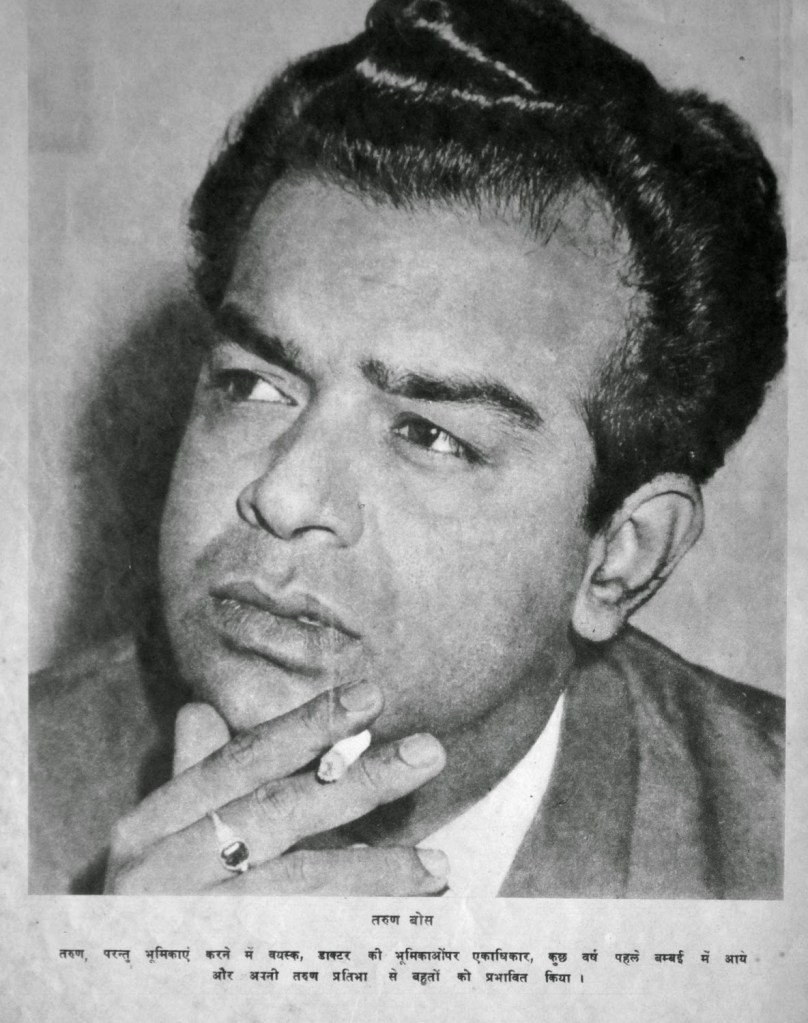
Tarun Bose was an Indian film charcter actor, active in Bollywood during the 1960s and 1970s.
Early in his teen he started performing a local plays and at age 15 he auditioned for the newly opened All India Radio, Nagpur, where he went on to work in radio plays. After completing his education, he started working with the Post and Telegraph Department, so that he could pursue acting on the side, without any family pressure.
Bose made his film debut in 1957 in the Asit Sen film ‘Apradhi Kaun?‘ (1957). The story of wealthy man, suspected of murder, who is killed before he can be arrested. Everyone in his houehold is under suspension. A private investigator looks into the case and finds himself falling in love with one of the suspects. Bose played a doctor in the film. He made a meaningful impact with a portrayal that did not betray any shortcomings of a newcomer.
His acting in Bimal Roy’s Sujata (1959) was appreciated. A role that not only earned him laurels but also a right to many father-figure roles to heroines who were near his own age. So effortless and natural was Tarun Bose in that role of an affectionate and endearing father to Nutan and Shashikala that cinegoers never perceived it was just a 30 year old actor enacting a mature persona.
Bose was noted for his intense performances in movies such as Gumnaam, Bandini, Devar, Aaan mile Sajna and several other movies in the sixties and early seventies.
In “Anupama”, Bose brought forth the troubled psyche of a man unable to reconcile with the death of his wife in a sombre display of histrionics. His eyes and facial expressions conveyed not just his estranged relationship with his daughter but also lent an extra edge to the taciturnity of his daughter (Sharmila Tagore). Similarly, if in “Oonche Log”, he demonstrated a certain whimsicality of the desperate killer; he lent conviction and grace to the Police Superintendent in “Mujhe Jeene Do”.
Suspense thriller “Kohra” could be described as a feather in his cap. It was his voluble laughter that provided the chill to the story just as his dishevelled looks and inscrutable expressions made many viewers sweat under their collars. The film was released in the dark, dense single screen halls of mid 1960s and despite mono soundtracks, his aughter and intriguing innuendos gave goose bumps to audiences everywhere. Rather difficult to confirm but it is said that the booming laughter which led to several cinegoers screaming in terror in various parts of the country, also unnerved and startled Tarun Bose himself when he viewed the film for the first time after completion.
What struck you first about actor Tarun Bose were his luminous eyes. Though dark and bulbous, they made an instant impact with their intense gaze even when their owner remained silent. It was because his eyes portrayed unalloyed emotions.
Like Ashok Kumar, his venerated idol, Tarun Bose too was inclined to dangle a cigarette or a pipe in his fingers yet he too crafted roles without elaborate “theatrics”. Without any disrespect to his calibre, even when viewers do not recall his name, they do remember his characters since his “normalness” gave life to ordinary human beings on screen!
He was an actor who delivered as per the needs of the director without ever trying to attract undue attention towards his own self. Those that know the business of arc lights will tell you how hard it is for most actors to resist the temptation of hogging the camera at the slightest pretext. But Tarun Bose shared screen space with a sense of responsibility that contributed to the director’s vision of the story.
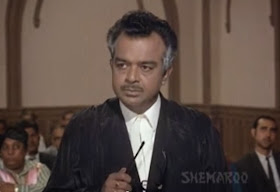
He starred in at least 41 films between 1957 and 1972 and gained a reputation for playing middle class professional figures, particularly doctors and occasionally judges or lawyers.
Photos courtesy Google. Excerpts taken from Google.
 Writer Sunita