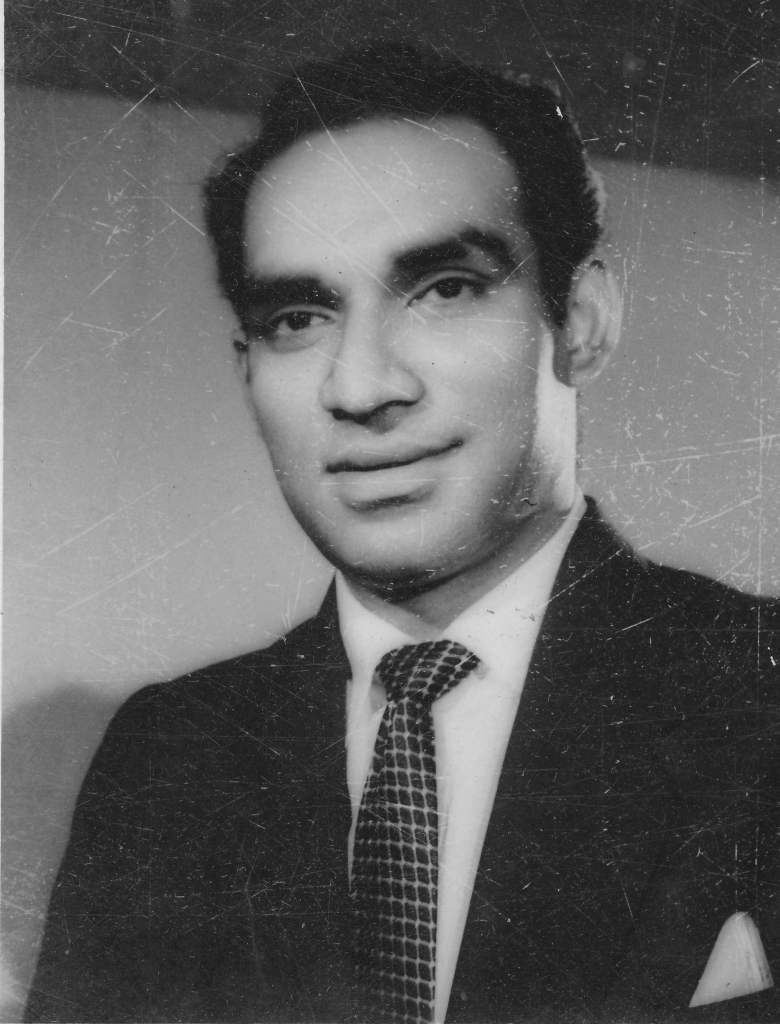
Yash Raj Chopra was an Indian romantic films and with one of the best musical senses in the business, most successful director, r and film producer who worked in Hindi Cinema. The founding chairman of the film production and distribution company Yash Raj Films, Chopra was the recipient of several awards, including 6 National Film Awards and 8 Filmfare Awards.
Chopra began his career as an assistant director to I. S. Johar and his elder brother, B. R. Chopra. . He made his directorial debut with Dhool Ka Phool (Dust’s Flower) in 1959. The story revolves around a Muslim bringing up an “illegitimate” Hindu child and featured the classic song ‘Too Hindu Banega Na Musalman Banega, Insaan Ki Aulaad Hai, Insaan Banega on Manmohan Krishna, who also won the Filmfare Award for Best Supporting Actor for his role as Abdul Rasheed. The film was well received by critics and became the fourth highest-grossing film of the year.
Dharmputra is a 1961 first Hindi film to depict the partition of India, and Hindu fundamentalism. The film dealt with issues of religious bigotry, fanaticism and communalism amidst the backdrop of the partition. This was Shashi Kapoor’s first film as an adult actor playing the pivotal role of a Hindu fundamentalist. In this hard-hitting pre-partition drama, Chopra further established his reputation of a progressive filmmaker with an exceptional ability for sensitive storytelling. At the 9th National Film Awards it was awarded the Best Feature Film in Hindi.
Waqt (Time) is a 1965 is also a landmark film as it set the style of modern urban Indian youth with its costumes, sets and lifestyle. It was also one of the first multi-starrers. It too referred to the Partition, in the separation of the family of Lala Kedarnath, which moved from an area where the language was Urdu, to Bombay-the earthquake symbolising the upheaval of Partition. The ‘Time’ of the title refers to fate, and the idea that we cannot control our destiny but must deal with what life gives us, summed up in the song Aage bhi jaane na tu. It also began the now obligatory style of depicting wealth and social class. Its lavish scale and spread of top stars with Raaj Kumar spewing legendary retorts, Sadhana flaunting her epic tight kurta-churidar combo and Balraj Sahni playfully calling out ‘Aye meri Zohra jabeen’ to Achala Sachdev continue to be Waqt‘s most noted highlights. 13th Filmfare Awards film won Best Director (Yash Chopra), Best Supporting Actor, Best Story, Best Dialogue, Best Cinematography (Color) – Dharam Chopra. The film took the top spot at the box office in 1965. The film soundtrack was composed by Ravi with lyrics by Sahir Ludhianvi.
In 1969, Chopra directed two movies produced by his brother. The first was Aadmi Aur Insaan. The film’s music is by Ravi with lyrics by Sahir Ludhiyanvi. “Zindagi Ittefaq Hai ” song is still popular .
He directed Ittefaq (1969), film is based on 1965 American movie Signpost to Murder, which was earlier adapted into a Gujarati drama Dhummas starring Sarita Joshi. Shot in a month and on a low budget, the film was deemed unusual by critics. It was one of the first Hindi film whicih did not have any songs or an interval. Taking place almost entirely over the course of one stormy night, a woman is terrified when an accused murderer escapes from a mental hospital and seeks refuge in her home. Chopra won his second Filmfare Award for Best Director.
In 1970, he founded his own production company, Yash Raj Films, whose first production was Daag : A Poem of Love (1973), Hindi language romantic drama film produced and directed by Yash Chopra. It is an adaptation of the 1886 Thomas Hardy novel The Mayor of Casterbridge. Chopra was a master of — touching upon a controversial subject just enough to push the boundaries, but playing it safe enough to win over the audience. The romance drama/suspense starring Rajesh Khanna, Sharmila Tagore and Raakhee, woven around one man with two identities and two wives owing to mysterious circumstances, was a huge success thanks to its engaging plotline, hit songs and crackling chemistry between the co-stars. 21st Filmfare Awards film won Best Director (Yash Chopra), Best Supporting Actress.
Joshila (Spirited) is a 1973 thriller film is loosely inspired by James Hadley Chase’s 1959 novel, Shock Treatment. Most outdoor parts of the movie were shot in Darjeeling, West Bengal.
Deewaar (The Wall) is a 1975 action crime drama film. The film tells the story of a pair of impoverished brothers who, after their family is betrayed by the misplaced idealism of their father, struggle to survive in the slums of Bombay, , and eventually find themselves on opposing sides of the law. The Deewaar (“wall”) of the title is the wall that has sprung up between the two brothers, drawn apart by fate and circumstances in a time of socio-political turmoil. Upon release, Deewaar was both critically and commercially successful, with praise going towards the film’s screenplay, story, and music, as well as the performances of the acting ensemble. It is often considered a ground-breaking cinematic masterpiece, with Indiatimes ranking Deewaar amongst the Top 25 Must See Bollywood Films, as well as being one of three Hindi-language films to be included on the list of 1001 Movies You Must See Before You Die. Deewaar received the Filmfare Best Movie Award, Best Screenplay, Best Dialogue, Best Director (Yash Chopra), Best Sount, Best Story, and Best Supporting Actor.
Kabhi Kabhie (Sometimes) is a 1976 musical romantic film. It was particularly noted for its soundtrack compositions by Khayyam, who won Best Music, while Sahir Ludhianvi won Best Lyricist for “Kabhi Kabhie Mere Dil Mein, ” the song also earned Mukesh the Best Male Playbace Singer at the 24th Filmfare Awards. Kabhi Kabhie received overall positive reviews from critics upon release.
Doosra Aadmi (The Other Man) is a 1977 romantic film, produced by Yash Choprs and directed by Ramesh Talwar. Trishul (Trident) is a 1978 action film focuses on the intertwined stories of three main characters. Kaala Patthar (Black Stone) is a 1979 action film was based on the Chasnala mining disaster. The film was critically acclaimed, and received several Filmfare Award nominations. It attained cult status, and is considered a classic in Hindi cimema. Amitabh Bachchan was much appreciated for his portrayal of ex-Navy captain now working in mines, in order to forget his past. However, Shatrughan Sinha walked away with all the applause.
Noorie is a 1979 Indian romance film produced by Yash Chopra. The film was a “Super-Hit.” It was also an overseas hit in China, where it released in 1981, and became one of the most successful Indian films in China at the time. Noorie tells a simple and touching story of Noorie and Yusuf’s fearless love and dream at all cost.
Silsila (Continuation) is a 1981 romantic film film co-written, directed, and produced by Yash Chopra. The story revolves around the love triangle of Amit, a romantic playwright, Shobha, his wife, and Chandni, his former partner. Silsila follows the incidents faced by Amit and Shobha in their forced marriage, which drifts them apart, and his encounter with Chandni that leads to an extramarital affair. At the 29th Filmfare Awards, the film received nominations for Best Actor, Best Actress and Best Music Director.
Mashaal (‘Torch’) is a 1984 action film was based on the well-known Marathi play ‘Ashroonchi Zhali Phule’ written by famous Marathi writer Vasant Kanetkar. A chain of events changes Vinod’s (Dilip Kumar) life – from honest journalist to black marketer to an underworld Don and a Racketeer in order to combat Vardhan (Amrish Puri). It was the fourth highest grossing Hindi film of the year in 1984.
Chandni (Moonlight) is a 1989 romantic musical film stars Sridevi in the titular role of Chandni Mathur, a young effervescent woman torn between two suitors.
The eighties marked a professional setback in Chopra’s career, After a series of failed action movies, Chopra decided to return to his roots and make a romantic musical, a film with all the hallmarks of what has come to be known as the “Yash Chopra style” – heroine-oriented, romantic, emotional, depicting the lifestyle of the super-elite, with melodic music used in songs picturized in foreign locations. The film marked the first collaboration between Chopra and Sridevi.
The film was a widespread success and became one of the highest-grossing Hindi films of 1989, whereas its soundtrack became the best selling album of the year as well as the decade with more than 10 million copies sold. The huge success of the film and its soundtrack were instrumental in ending the era of violent action films in Indian Cinema and rejuvenating the romantic musical genre. The success of film further reinforced Sridevi’s position as the top female star of the era. At the 37th National Film Awards, it won Best Popular Film Providing Wholesom Entertainment, while at the 35th Filmfare Awards, the film received 10 nominations, including for the Best Film, Best Director (for Chopra), and Best Actress (for Sridevi), and won Best Cinematography (Manmohan Singh). Describing Sridevi’s performance in Chandni, Indiatimes wrote “True to her screen-name, she was an epitome of radiance, warmth and vivacity. She effortlessly introduced us to the powerful streaks, her classic, angelic character was laden with.” CNN-IBN ranked her no. 1 on its list of ‘Yash Chopra’s 10 Most Sensuous Heroines’, saying that “Yash Chopra immortalized Sridevi as the perfect Chandni.”
Lamhe (Moments) is a 1991 musical romantic film stars Sridevi and Anil Kapoor in lead roles. In the film, Viren falls for Pallavi, but she marries Siddharth. The couple dies, leaving behind their daughter, who grows up to look just like her mother and falls in love with Viren. The film marks the second collaboration between Sridevi and Chopra.
Lamhe was shot in two schedules in Rajasthan and London. Over the years, it has been hailed as a classic and Chopra’s finest film. Although the film did moderate business domestically, it became a huge success overseas. It received numerous accolades and featured on Outlook’s list of Bollywood’s Best Films. It has been cited as Yash Chopra’s personal favourite of the movies he has made. On the occasion of the Centenary of Indian Cinema in 2013, Lamhe featured among the Top Ten Romantic Movies Of 100 Years.At the 39th National Film Awards, Lamhe won Best Costume Design and 37th Filmfare Awards film nominations 8 and won a leading 5 awards – Best Film, Best Actress, Best Comic Actor, Best Story and Best Dialogue (Masoom Raza).
Darr: A Violent Love Story (Fear) is a 1993 romantic psychological thriller film directed and produced by Chopra. Darr received highly positive reviews from critics upon release, with praise for the screenplay, soundtrack, cinematography and the performances of the cast, with particular praise directed towards Chawla and Khan’s performances. It was declared a blockbuster at the box-office, becoming the third-highest grossing film of the year. Darr has won several accolades, including the National Film Award for Best Popular Film Providing Wholesom Entertainment. The film received 10 nominations at the 39th Filmfare Awards, including Best Film, Best Director (Chopra), Best Actress, Best Actor, and Best Villain, and one 2 awards.
Dil To Pagal Hai (The heart is crazy), is a 1997 musical romance film follows the love lives of the members of a musical troupe, in which two dancers played get entangled in a love triangle with their choreographer. The film was screened retrospective, during the 2014 International Film Festival of India in the Celebrating Dance in Indian cinema section. The film received highly positive reviews from critics, who praised Chopra’s direction, the storyline, soundtrack.
Dil To Pagal Hai is the recipient of several awards. At the 45th National Film Awards, the film won three awards. The film was nominated f or eleven awards at the 43rd Filmfare Awards and picked up eight trophies, including ones for Best Film, Best Actor, Best Actress, and Best Supporting Actress.
Veer-Zaara is a 2004 period epic romantic film which narrated the love story of an Indian air-force officer Veer Pratap Singh and a Pakistani woman, Zaara Hayaat Khan is the daughter of a Pakistani politician. Veer is imprisoned on false charges, and a young Pakistani lawyer, fights his case. He has handled the script cleverly. Whenever the pace begins to slacken, he introduces a new character and a twist.” Speaking about the film’s theme, Chopra said, “Veer-Zaara is a humble tribute to my home in Punjab. It is my tribute to the oneness of people on both sides of the border.” In preparation, Chopra watched videos of Pakistani marriages and consulted Nasreen Rehman, a professor of the Cambridge University for the film’s portrayal of Pakistani culture, their courts and dialects. Rama Sharma from The Tribune wrote: “Giving love its due, Yash Chopra has understandably linked the script to the life of a common man. The pace is exacting. Drawing from the best of the two countries, the story is made more colorful by a spray of the Punjabi culture— be it celebrating Lohri in India or visiting a dargah in Pakistan.
Set in India and Pakistan, principal photography took place in Punjab and various locations in Mumbai: parts of the film were also shot in Pakistan. All scenes which featured in a prison were shot in a single day, at a jail in Pakistan. The court scenes were shot in a Pakistani law court. The soundtrack album, based on old compositions by Madan Mohan, was the highest-selling album of the year in India.
Veer-Zaara was the highest-grossing Indian film of the year in both India and overseas territories. It received highly positive reviews from critics, with praise directed to the story, screenplay, dialogues, music, performances and sensitive portrayal of India-Pakistan relations. It was described by analysts as having themes pertaining to a shared Punjabi culture, secularisam and feminism, among others. The film is considered as one of the greatest romantic films of Indian film history.
A special screening was conducted in Punjab, Pakistan for Pakistani audiences. Apart from that, it was screened at the Berlin Film Festival, where it was received well. On 26 April 2006, Veer-Zaara had its French premiere at The Grand Rex, the biggest theatre in Paris. It is the first Hindi film to premiere in such a large and luxe venue. It was released in 60 prints in the United Kingdom. It was released in the United States in 88 prints. In 2017, Veer-Zaara was restrained at the Best of Bollywood series in the United States.
In September 2007, a book based on the making of the film, titled They Said It… The Memoirs of a Love Legend Yash Chopra’s Veer-Zaara, was released. The book contains testimonials from members of the film’s cast and crew and follows the production stages of the film. In January 2006, a bus service was established between Amritsar and Lahore. Some credit the film for influencing this change.
Veer-Zaara received a leading 15 nominations at the 50th Filmfare Awards, a nd won 4 awards including Best Film and Best Story. At the 6th IIFA Awards, the film won a leading 7 awards, including Best Film, Best Director (Yash Chopra), Best Actor, Best Supporting Actress and Best Music Director (Madan Mohan). It also won the Best Popular Film Providing Wholsome Entertainment at the 52nd National Film Awards.
Jab Tak Hai Jaan (As Long As I Live), is a 2012 romantic film directed by Yash Chopra. The story revolves around Samar Anand a bomb disposal expert whose diary falls into the hands of an intern Akira Rai, the diary recounts his time as a struggling immigrant in London, and later details his whirlwind romance with Meera Thapar. The film received various accolades, such as four Filmfare Awards.
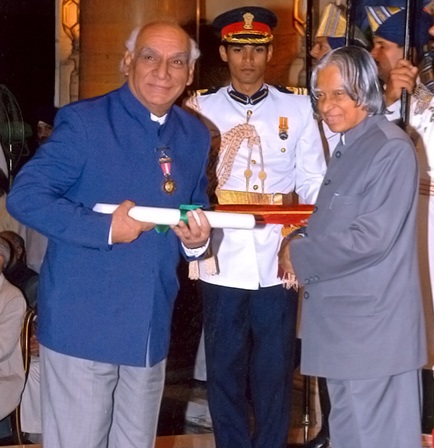
In 2001, he was chosen for the prestigious Dadasaheb Phalke Award, the topmost and the highest honour given in the Indian film industry for his contributions. In 2005, he was bestowed the coveted Padma Bhushan Award, one of the country’s highest civilian honours. Both of these were presented by the then Honourable President of India, Dr. A. P. J. Abdul Kalam. In 2006 British Academy of Film and Television Arts presented him with a lifetime membership, making him the first Indian to receive the honour. India Post (Department of Post, India) released commemorative postage stamps depicting 50 iconic personalities from various fields of Indian Cinema. A special stamp was devoted to Yash Chopra in May 2013 for his cinematic contribution over the years.
Yash Raj Films has grown to be the forefront of the global rise of Bollywood cinema. Yash Raj Films have expanded their company from locally based Hindi films to global achievements. They have managed to attract home based and diasporic Indians. Yash Raj Films have used a smart technique by incorporating foreign locations as a site which succeeded. Yashji’s aesthetic of ‘glamorous realism’, where wealthy and beautiful people had to deal with emotional issues, embodied the aspirations of the youth. Films hit the optimistic note of new India, founded in tradition but modern and consumerist.
His films were not just about screenplay, dialogues and breath-taking visuals. They were also accredited with music that went on to become classics and still continues to enjoy tremendous recall value over generations. The musical scores and signature tunes which carried his story forward have become love anthems for romances till date. A Yash Chopra directed film had an engaging screenplay and sigh-inducing locales. The hero in sweaters and heroine draped in lovely sarees romanced in the beautiful snow-capped mountains, among the tall lush green trees and gorgeous flower fields. The actors went on to become iconic after appearing in a Yash Chopra film.
Yash Chopra was a complex person. Many knew the professional and public person, the filmmaker, producer, story-writer, the shrewd businessman. There was another, private person, at times the quiet man and at others the boisterous and witty Punjabi family man, the affluent businessman yet the humble middle class Indian personified. His jovial Punjabi-Hindi style of speaking masked an acute mind and an extremely sharp analysis of people and business. His emotional intelligence and understanding of others as well as himself were startling, and he could communicate with family and friends silently, letting the other person know he knew what they thought and felt. Though he was tenacious in business, he was soft-hearted with his loved ones: “I am an emotional fool.”
A legendary filmmaker, Yash Chopra changed the face of romance in Hindi cinema to become a brand in Bollywood with numerous hits under his belt in his five-decade long illustrious career. Chopra was one of the pillars in Bollywood, directed some of Indian cinema’s most successful and iconic films. Yash Chopra, known for musical romances, had also made ‘Ittefaq’ a dark thriller sans songs.
Switzerland was unabashedly one of his favourite countries to shoot his films. Owing to showcasing the country’s beauty across films, the Embassy of Switzerland felicitated Yash Chopra with the ‘Swiss Ambassador’s Award 2010’ in October 2010. He has shot in Switzerland so many times that a lake in the Alpenrausch, a favourite shooting spot of his, has been christened Chopra Lake. Also, Jungfrau Railways in Switzerland inaugurated a train named after Yash Chopra. With his signature and name on a signboard, the train was launched by him. A suite in the luxurious Victoria Jungfrau Grand Hotel & Spa was also named after him. As a mark of gratitude, the Swiss Government, in May 2016, honoured the incredible work of Yash Chopra with a special bronze sculpture. Weighing 350 kilos, this sculpture captures him in his element. The statue is installed in the heart of Interlaken in Switzerland.
Photos courtesy Google. Excerpts taken from Google.
 Writer Sunita