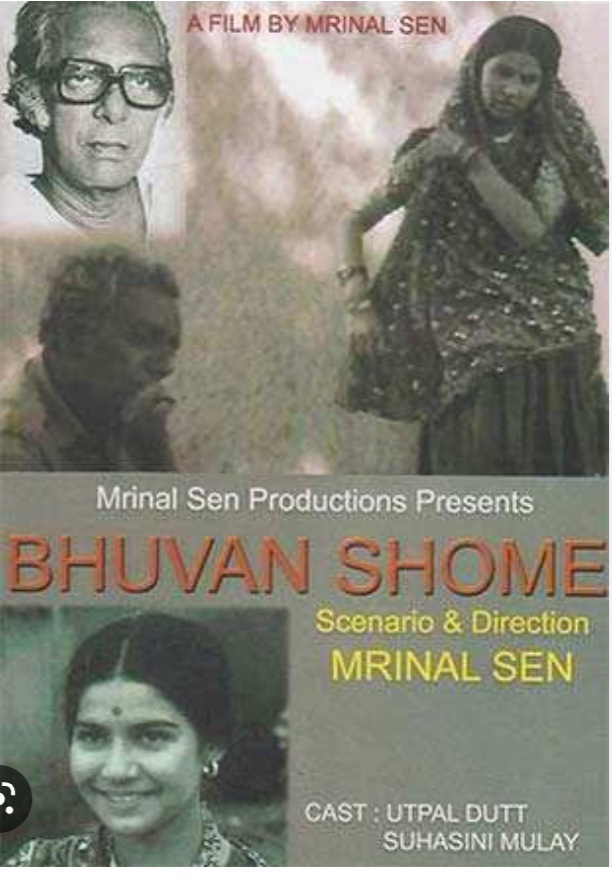
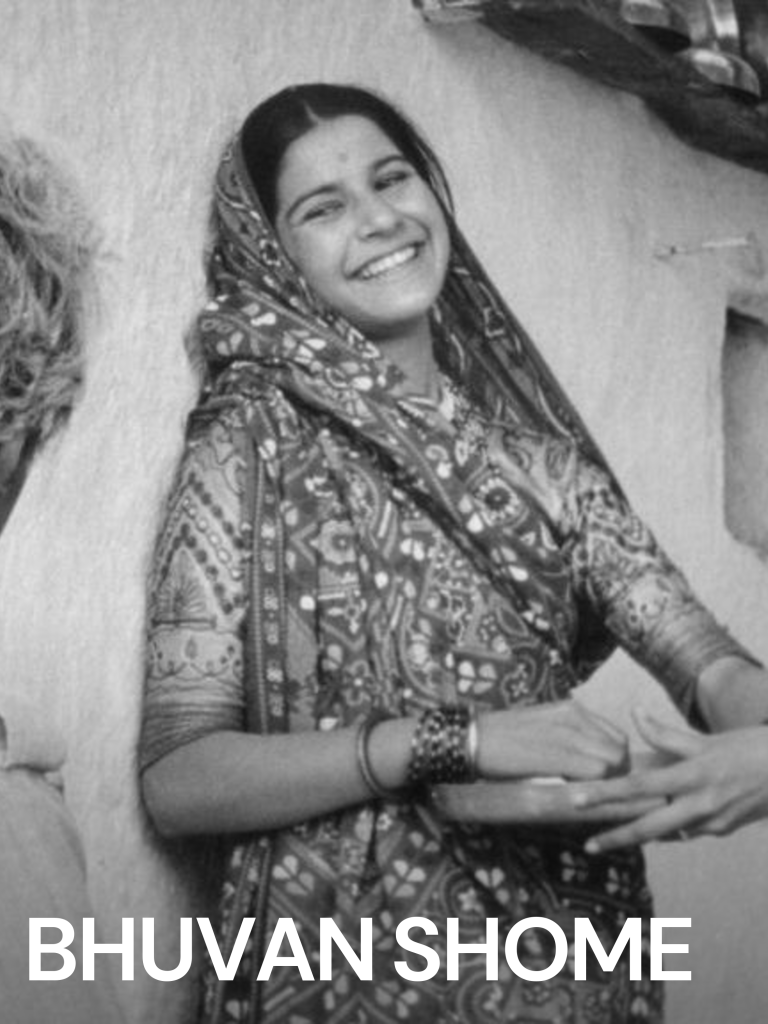
A classic Hindi Film written and directed by Mrinal Sen, ‘Bhuvan Shome’ (1969) stars the acting powerhouse Utpal Dutt and Marathi actress Suhasini Mulay (making her film debut) in the lead. Sen’s screenplay is based on a Bengali story by Banaphool aka Balai Chand Mukhopadhyay. Amitabh Bachchan did the voiceover and was the narrator. The days of self-isolation and social distancing are going through, the Sen classic seems all too real. Bhuvan Shome was the film that started the era of the Indian new wave in cinema.
The cult classic revolves around Bhuvan Shome (Utpal Dutt), a ruthless Bengali bureaucrat working in the Indian Railways. Greatly feared by his subordinates, the middle-aged widower has spent his life trying to be righteous and has zero tolerance for the corrupt or the incompetent. The background of the film is constructed in the context of a few railway ticket checkers discussing him as a strict, unreasonable officer (“afsar”). It continues with him being described, by the narrator, as a man whose “Bengali”-ness has not been affected by his travels. His apparent age, late 50s, is an important element of his psychology. He is highly respected by everyone around him but being a martinet he is forced to live in abject solitude.
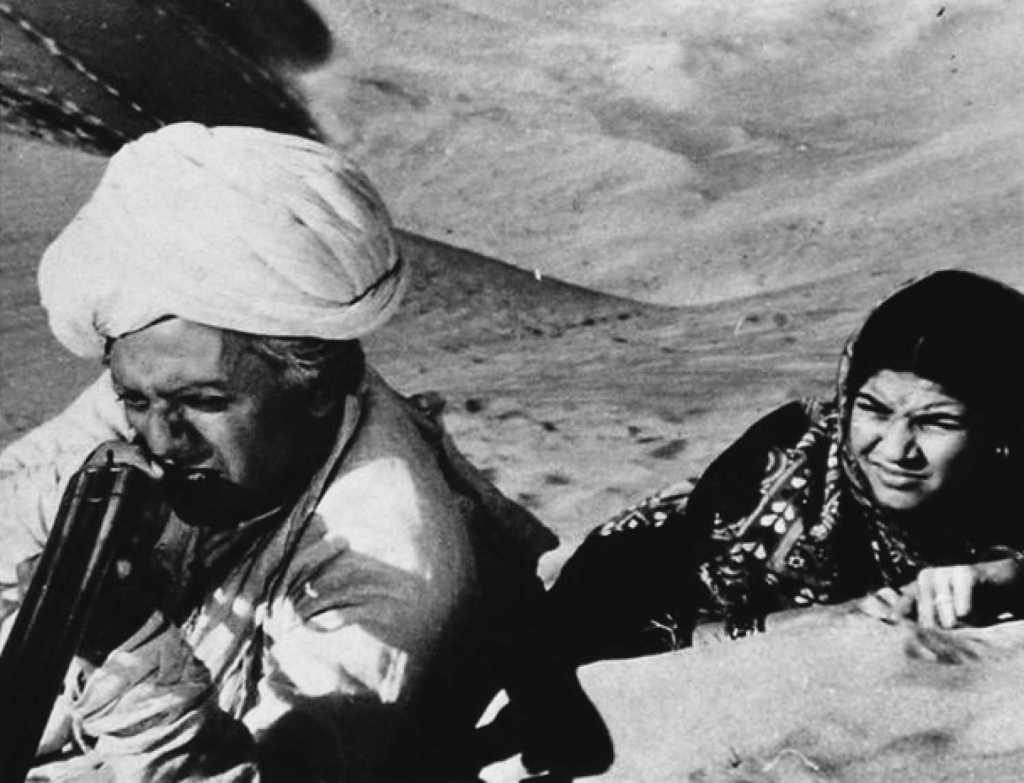
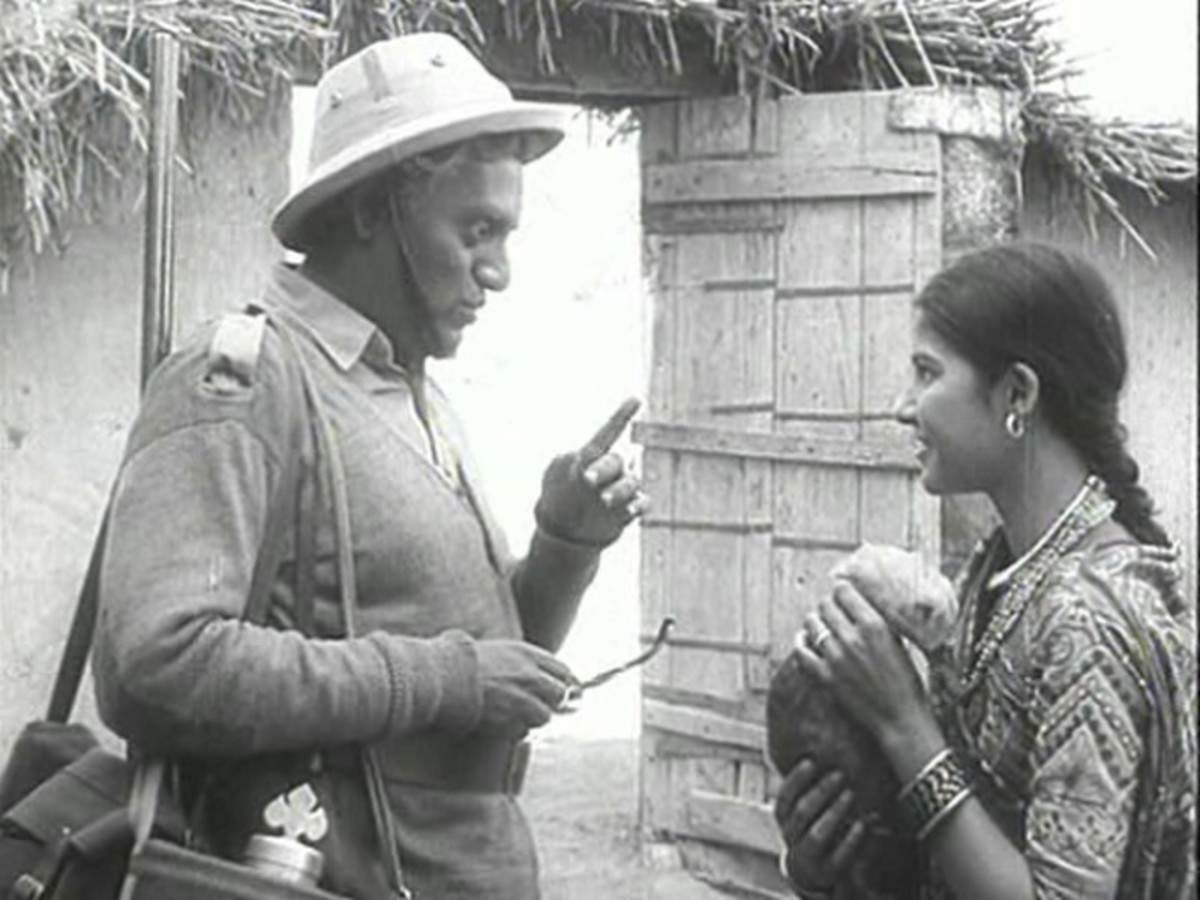
Inspired by the idea of hunting, Bhuvan Shome takes a “hunting holiday” to Gujarat. It is quite clear that his expedition is amateurish. He is portrayed as an inept “hunter” rather than a man who knows how to acquire a skill. His encounter with the young Gouri is fortuitous because it is she who takes care of him and helps “hunt” birds. She helps him through a barren wilderness, takes him home and takes care of him. When he is made to change his clothes because otherwise the “birds will know” and fly away is probably an important part of his transformation from a strict, conformist and aging man to one of a person more open to the stimuli of his environment.
The subsequent hunting sojourn of Gouri and Bhuvan Shome is a lyrical exploration of Bhuvan Shome’s transformation. He is not only enamored by the simple beauty of Gouri, but also enchanted by the sights of birds on the lake and in the sky. His hunt is “successful,” but only in a way that reflects Bhuvan Shome’s limitations as a man. Bhuvan Shome is deeply affected by Gouri, who is actually schooled more than he could expect to be in that environment. When he returns to his office chambers, he is seen to reprieve an offending railwayman. This is a sub-plot that completes the story and context of the initial narration. The rest of the movie takes us on unfolds as a journey of self-realization for Bhuvan Shome, who gradually learns to appreciate the importance of human company.
As soon as Bhuvan Shome rejoins his office, he summons Jadhav Patel and tears down his dismissal orders and promotes him to a bigger junction, in fond remembrance of his times with Gauri and her imminent marriage to the man. This is a far cry from his declared motto on his arrival at beginning of the film: “Duty first, self last.” But the ticket collector has the last laugh: he writes to Gauri that a bigger junction means bigger money. And we assume that the young couple has a hearty laugh at the expense of the metamorphosed bureaucrat without his ever realizing it.
There are several ways to approach Bhuvan Shome. At its most elementary level, it can be described as a film about a man’s bird hunting adventure on the shores of Saurashtra. At another level, the film can be seen as a powerful character study of a strict bureaucrat who finds it difficult to survive the moment he steps outside the comforts of his cocooned existence. The film can also be looked upon as a treatise on human solitude and longing for companionship. Yet another way to approach the film is as a social commentary on the great rural-urban divide in India. While a powerful bureaucrat living in the city is cruel to everyone around him, the people in the village are friendly and helpful even to strangers. ‘Bhuvan Shome’ is also a film about human camaraderie and trust. A beautiful village girl Gauri leaves everything aside to help a total stranger whom she sees as her guest. Bhuvan Shome blindly trusts the young girl during his bird hunting expedition.
Mrinal Sen’s imaginative direction is brilliantly complemented by K. K. Mahajan’s breathtaking black and white cinematography which gives the movie its soul. Mahajan brilliantly captures the vast expanses of Gujarat’s desert land. The extreme close-ups reveal a lot about the characters even before to hear them talk. The overhead shots of moving railway tracks, horse/bullock carts are used to accentuate the toil associated with travel. The editing techniques employed in the film are quite clever. In addition to a couple of impressive montage sequences, the movie uses a lot of jump cuts and freeze-frames. There is a beautiful sequence in Bhuvan Shome which deserves a special mention wherein Gauri pretends to be on a swing and the camera strategically zooms in and out on her, imitating the swing action. Vijay Raghav Rao’s musical pieces immensely add to the experience.
Bhuvan Shome is a groundbreaking work of cinema that set the ball rolling for the Indian New Wave. The film is a testament to Mrinal Sen’s iconoclastic genius as filmmaker. This brand of cinema endeavours to encourage the viewers to actively participate in finding the answers to the questions posed by the filmmaker.
Another strong point of Bhuvan Shome is the acting performances of Utpal Dutt and Suhasini Mulay. Anyone who aspires to become an actor ought to study Dutt’s performance in the movie very closely. Bhuvan Shome is a lonely widower, a proud old man and a disciplinarian. Looking back on the trodden path, strewn with staunch determination and drab attitudes, Bhuvan Shome, a thoroughly unenchanted man, takes a day off and walks into another world—a new world consisting of simple uninitiated village folk. There he rides a bullock cart, encounters a buffalo and finally a village belle. Off to duck shooting amidst the sand dunes, suddenly everything lights up. A day’s exposure to a host of alien situations deepens his sense of loneliness. He realizes that he has no escape from the world which he has built for himself all these years. His eyes, facial expressions and gestures together communicate a lot more than his verbal delivery.
Suhasini Mulay essays the part of a rustic belle beautifully and her amiable character serves as the perfect foil for Dutt’s mean bureaucrat. She criticizes her fiance’s boss without knowing that this stranger is the ‘culprit’ forms the central point in the film and acts as a turning point in the ‘education’ of the man. Mr Shome listens to her tirade against the bad boss with a long face; nobody has ever spoken to him like that and analyzed his character so ruthlessly and pointedly. It really is quite funny. She helps him to trap birds, he discovers the simple joys of human relationships and rural life. He undergoes a change of heart and becomes a better person, thanks to the humiliating but elevating experiences of a single day.
Satyajit Ray wonderfully summarized the film in seven words: “Big Bad Bureaucrat Reformed By Rustic Belle.
The recipient of three National Awards -Best Feature Film, Best Director, Best Actor – Bhuvan Shome played a pivotal role in establishing Mrinal Sen as a filmmaker of international repute. One of the first few films to get funded by the National Film Development Corporation (NFDC), back then known as Film Finance Corporation, ‘Bhuvan Shome’ also pioneered the Indian New Wave.
Photos courtesy Google. Experts taken from Google.
 Writer Sunita