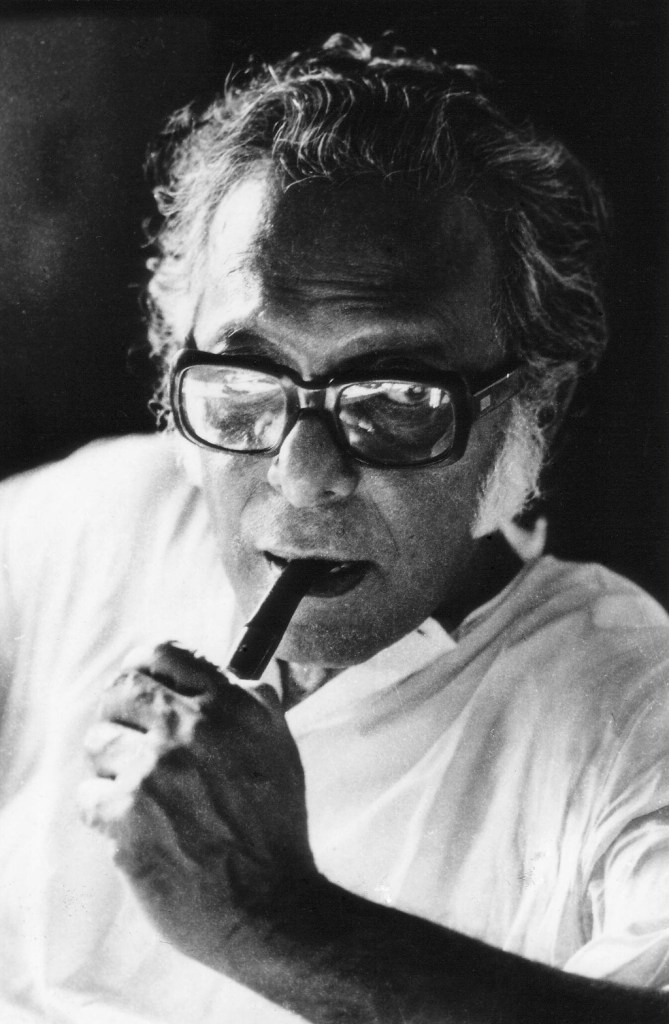
Mrinal Sen born on 14 May 1923 was an Indian film director, and screenwriter known for his work primarily in Bengali, and few Hindi and Telugu language films. Regarded as one of the finest Indian filmmakers. Sen played major role in the New Wave cinema of eastern India.
After finishing his high school there, he left home to come to Calcutta for studying physics. During his student days, he got involved with the cultural wing of the Communist party. Though he never became a member of the party, his association with the Indian Peoples Theatre Association brought him close to a number of like-minded cultural people. His interest in films started after he stumbled upon a book on film aesthetics. However his interest remained mostly intellectual, and he was forced to take up a job of a medical representative, which took him away from Calcutta. This did not last very long, and he came back to the city and eventually took a job of an audio technician in a Calcutta film studio, which was the beginning of his film carrier.
Raat Bhore is a 1955 first Bengali film directed by Sen. A poor village boy’s hazardous experience in a rich urban family.
Neel Akasher Neechey (“Under the Blue Sky”) is a 1958 Bengali film film was based on a short story Chini Feriwala of Mahadevi Verma. Film earned him local recognition. Set in the 1930s, the film tells the story of an honest Chinese hawker, Wang Lu, who sells silk in Calcutta’s streets while refusing to get involved in the opium trade run by his fellow countrymen. He feels a sisterly affection towards Basanti, the wife of a lawyer who’s engaged in a nationalist political group. Basanti is arrested and imprisoned causing Wang Lu to get involved with her political group. He later returns to China to join the resistance movement against the Japanese invasion of China in 1931.
Sen’s third film, Baishey Shravan (Wedding Day) was his first film that gave him international exposure.
Pratinidhi (The Representative) is a 1965 Bengali Black & White art film based on Prachhadpat (The Cover), a novel by Achintya Kumar Sengupta, a noted writer of Modern Bengali literature. A young engineer Niren marries a young widow Rama who already has a five-year-old child Tutul from her previous marriage. Their marital life grows increasingly difficult as Tutul refuses to recognise his stepfather. Niren’s attempts to win him over too fail even as Rama tries to please both. The marriage finally collapses and she commits suicide.
Akash Kusum (“Up in the Clouds”) is a 1965 Bengali film is the story of the longings of a middle class executive to rise in stature and greater social acceptability. Ajay Sarkar, a lower middle-class man pretends to be a successful businessman in order to win the hand of Monica, a girl from an affluent family.
Matira Manisha (Man of the Soil) is a 1966 Odia film based on the novel by Kalindi Charan Panigrahi of the same name, the film contrasts traditional and modern values as exemplified by the different attitudes of two brothers towards their inherited family land. The plot explores human relationships using a wide range of themes, including Gandhian and Marxist ideologies, postwar social conditions, agrarian culture, rustic life, and traditional family valurs. The greed for the possession of the family land destroys the affection and brotherhood between siblings, Baraju and Chakadi after their father, Shama Pradhan passes away. Film won National Film Awards 1967, Silver Lotus for Best Odia film.
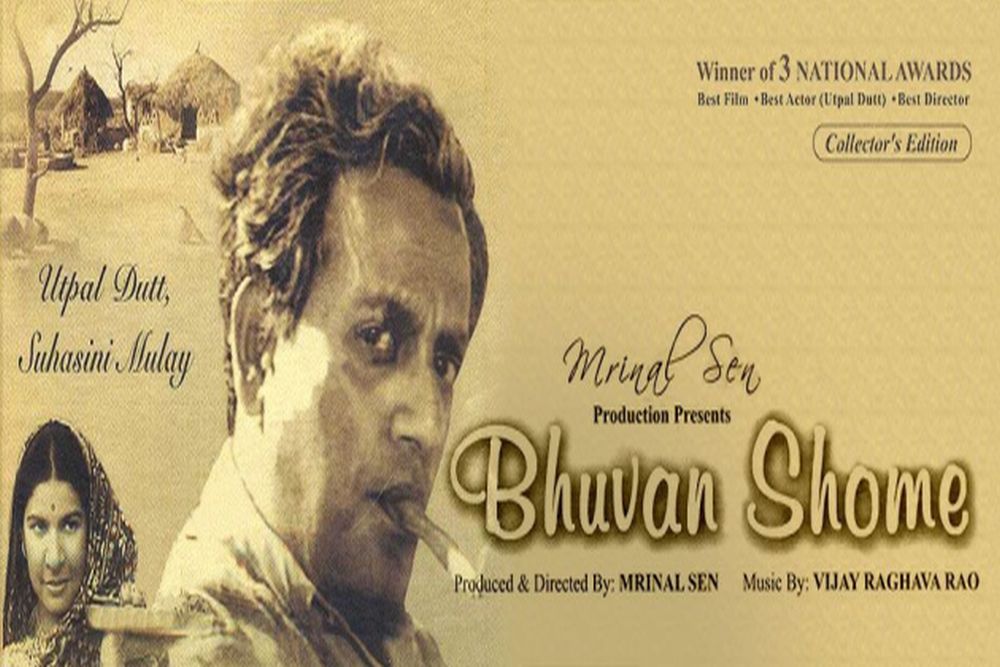
Sen directed Bhuvan Shome (Mr. Shome, 1969) which started the era of the “New Wave Cinema Movement” in India. He made a film with a shoe-string budget provided by the government of India. A lonely bureaucrat goes on holiday to a Gujarat village where a young peasant woman helps him see beyond his job and develop a newfound empathy for people. This film, finally launched him as a major filmmaker, both nationally and internationally. The film is considered a landmark in modern Indian Cinema. Film won National Film Awards for Best Feature Film, Best Director (Mrinal Sen), and Best actor. 4th International Film Festival of India film won Jury Prize for Mrinal Sen.
Interview (1971) was a Bengali film is considered to be the first film of Sen’s Calcutta trilogy. A path-breaking film in terms of the narrative innovation and cinematic technique, it was a commercial success and went to run for six weeks amidst gushing admiration and accolades, when it was screened first. It also happened to be the debut film of Ranjit Mallick. Ranjit is a smart personable young man. A friend of the family, who works in a foreign firm, has assured him of a lucrative job in his firm. All Ranjit has to do is to appear in an interview, dressed in a western style suit. It seems a simple task, but fate decides otherwise. A strike by a labour union means that he can’t get his suit back from the laundry. His father’s old suit won’t fit him. He borrows a suit, but loses it in a fracas. Ultimately he has to go to the interview dressed in the traditional Bengali dhoti and Kurta.
Ek Adhuri Kahani is 1972 Hindi language movie was based on a Bengali story, Gotrantar by Subodh Ghosh.
Calcutta 71 is a 1972 Bengali film is considered to be the second film of Sen’s Calcutta trilogy. The film is a collection of stories depicting the seventies. The Naxalite activity, starvation of common people, social and political corruption are shown. There are four stories shown in the film. An angry young man on trial in 1971, a rainstorm in a slum in 1933, a lower-middle-class family during the 1943 famine, teenage smugglers in 1953 and a middle-class group in a posh hotel in 1971.
Padatik (The Guerrilla Fighter) is a 1973 Bengali film is considered to be the third film of Sen’s Calcutta trilogy. A political activist escapes the prison van and is sheltered in a posh apartment owned by a sensitive young woman. Both are rebels: the activist against political treachery and the other on social level. Both are bitter about badly organized state of things. Being in solitary confinement, the fugitive engages himself in self-criticism and, in the process, questions the leadership. Questions are not allowed, obeying that is mandatory. Displeasure leads to bitterness, bitterness to total rift. The struggle has to continue, both for the political activist, now segregated, and the woman in exile.
Chorus is a 1974 Bengali film was entered into the 9th Moscow International Film Festival where it won a Silver Prize. Film won National Film Award for Best Feature Film, Best Cinematography (Black and White), and Best Music Direction. It begins like a fairy tale. It starts with a ritual. A bard appears on the screen and sings. Glory be the new gods who have descended to the Earth.The chairman of the gods, concerned over the problem of want, arranges for a hundred jobs. But thousands queue for them. Too many people, too many faces, too many problems. The crowd gets disillusioned and popular discontent is mobilized as word spreads that this is just another hoax. The Chorus as well as performing the traditional role of the storyteller provides the political message, juxtaposing stylization and caricature with neo-realist and documentary sequences and direct address to the camera. Freely mixing different styles and modes of storytelling including direct address to the camera, with the chorus both as narrator and as political agitator (R. Ghosh, who also plays god and the sutradhara), Sen continues exploring the possibilities of a cinematic narrative that would be both enlightening and emotionally involving without descending into authoritarian sloganising.
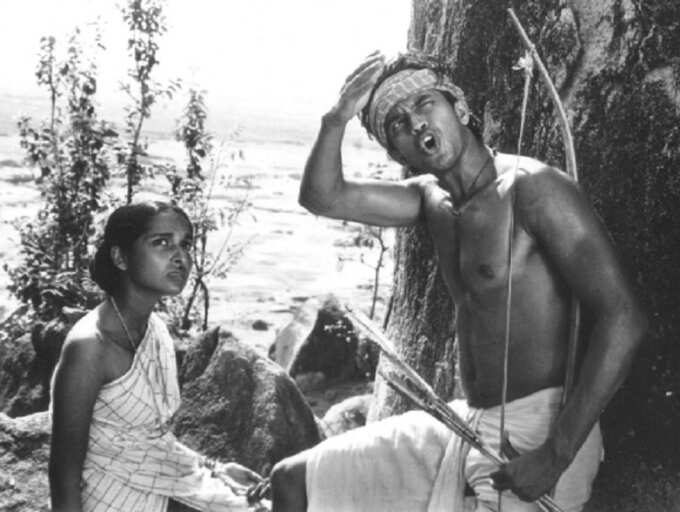
Mrigayaa (‘The royal hunt’) is a 1976 historical film is based on an Odia short story by Bhagbati Charan Panigrahi, called “Shikaar”. The film portrayed the relationship between the British colonial government and native villagers, and their exploitation by Indian landlords in 1920s India. It also depicts the friendship between a British administrator, who has a flair for game hunting, and a native tribal, who is an expert archer. At the 24th National Film Awards, Mrigayaa won two awards — Best Feature Film and Best Actor. It also won the Filmfare Critics Award for Best Movie apart from being nominated for the Golden Prize at the 10th Moscow International Film Festival in 1977.
Oka Oori Katha (The Marginal Ones) is a 1977 Telugu-Language film is based on the story Kafan by Munshi Premchand. The Marginal Ones was one of the Indian entries at the 4th Hong Kong International Film Festival. It was featured in the Karlovy Vary International Film Festival, Carthage Film Festival and the Indian Panorama section of the 7th IFFI.
It won the “Special Jury Prize (Karlovy Vary IFF); and the Best Feature Film in Telugu at the 25th National Film Awards, “for successfully transforming Premchand’s story “Kafan” into a scathing commentary on rural destitution and social injustice; for projecting through powerful performances of its leading characters, the degradation and brutalisation of human beings, for its sincere commitment to the cause of the downtrodden; for its fervent impassioned appeal to the conscience of humanity” as cited by the Jury.
Parashuram (The Man with the Axe) is a 1979 Bengali film was entered into the 11th Moscow International Film Festival where it won the Silver Prize. A rural migrant comes to the city and shares a temporary shelter with an old beggar in an abandoned graveyard. Film won National Film Award for Best Actor, Best Editing, and Special Mention (feature film) – Mrinal Sen.
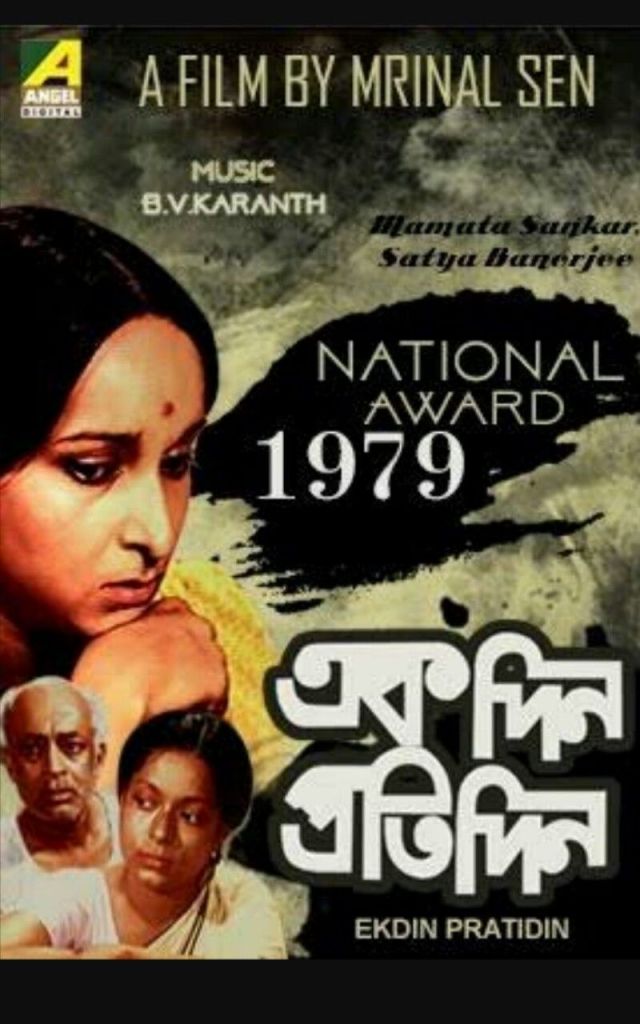
Ek Din Pratidin (“And Quiet Rolls the Dawn”) is a 1979 Bengali film was entered into the 1980 Cannes Film Festival. The daughter of an economically middle-class family fails to return home one night. Her family worries, make searches and evolves into a deep crisis, more so because she is the only bread winner in the family. Overcoming the economic and social constraints, the film has a deep underlining of hidden strength. Film won National Film Award for Best Feature film in Bengali, Best Editing, and Best Direction – Mrinal Sen.
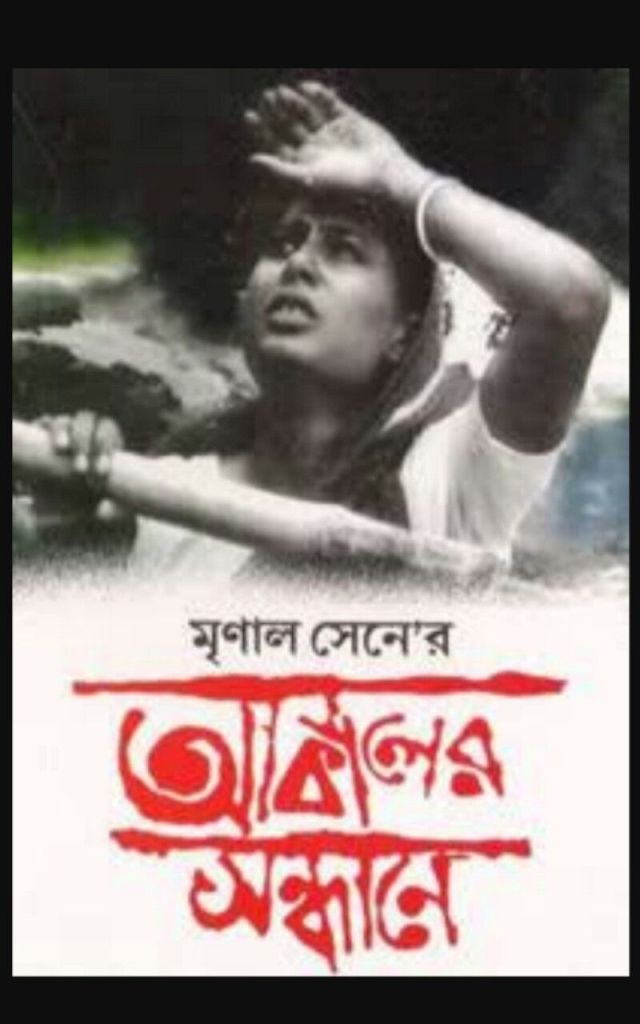
Akaler Shandhaney (“In Search of Famine”) is a 1982 Bengali Film won 31st Berlin Internation Film Festival, Silver Bear, Special Jury Prize. National Film Award for Best Feature film, Best Editing, Best Direction and Best Screenplay for Mrinal Sen. In September 1980, a film crew comes to a village to make a film about a famine, which killed five million Bangalis in 1943. It was a man-made famine, a side-product of the war, and the film crew will create the tragedy of those millions who died of starvation. The film documents the convivial life among the film crew and the hazards, problems and tension of filmmaking on location. The actors live a double life, and the villagers, both simple and not-so-simple, flock to watch their work with wonder and suspicion. But as the film progresses, the recreated past begins to confront the present. The uneasy coexistence of 1943 and 1980 reveals a bizarre connection, involving a village woman whose visions add a further dimension of time—that of the future.
Kharij, (The Case is Closed), is a 1982 Bengali film is based on a novel by Rampada Chowdhury. The movie tells the story of a middle-class family whose child servant, Palan is found dead in their kitchen, and their efforts to pacify his grieving father. 1983 Sen nominated Golden Palm and Cannes Film Festival Jury Prize. National Film Award for Best Screenplay to Sen.
Khandhar (Ruins) is a 1984 Hindi-language film, based on a Bengali short story, Telenapota Abishkar (Discovering Telenapota) by Premendra Mitra. It was screened in the Un Certain Regard section at the 1984 Cannes Film Festival. Three friends from the city visit some ruins where an aged mother and her daughter Jamini live. Mother awaits the arrival of a distant cousin to marry Jamini, but the man is already married and living in Calcutta. Subhash is a photographer from the city, who has come to take pictures of some old temples and ruins in a village. Ruins fascinate him. Subhash takes pity on the family and pretends to be the awaited suitor. They keep up the charade for the duration of the trio’s visit, Subhash quietly becoming attracted to Jamini even as he understands the fate awaiting her. When the friends leave, Jamini stays behind, facing a life of loneliness in the ruins. The fabulous screenplay, embellished with the performance of a seasoned cast is complemented with excellent cinematography, that displayed the story of ruins very exceptionally and succeeded in shifting the image of time from being a healer to a destroyer.
Genesis is a 1986 Hindi-language film was entered into the 1986 Cannes Film Festival. A farmer and a weaver exchange their products for goods provided by a regular passing trader. A woman arrives, forcing the two men’s desires but also urging them to obtain more recompense from the trader. After a visit to a village fair, the two men become more acquisitive and jealousies break out over the now pregnant woman who simply ups and leaves. As the two men fight each other, the trader’s men attack and enslave the workers again. A parable of man’s exploitation of his fellow man.
Ek Din Achanak (Suddenly, One Day) is a 1989 art film, based on a Bengali novel, Beej by Ramapada Chowdhury. One evening, in the midst of torrential rains, a professor goes out for a walk and fails to return. As the evening stretches into days and the days into weeks with no sign of him, his family struggles to regain their footing and to understand what might have caused him to leave. Slowly they return to their daily activities. The professor’s son Amit establishes his fledgling business; his younger daughter Seema resumes her studies at college; and his elder daughter, Neeta, the backbone of the family, returns to her office job. 1989, Venice Film Festival, OCIC Award – Honorable Mention to Sen.
Mahaprithibi (World Within, World Without) is a Bengali social film received BFJA Awards in 1992. The film revolves with the global changing social order. An elderly lady of a family committed suicide, then some reasons as to why she has committed suicide are revealed. She has three sons and a daughter: her eldest son was involved in the Naxalbari uprising and was killed brutally by the police. Her widowed daughter-in-law had an affair with her other son before their marriage. Soon after the death of his elder brother, the younger goes to Germany, becomes jobless and returns to Kolkata. The youngest son is unemployed and the only daughter is a mental patient. All these affects the lady and she commits suicide.
Antareen (The Confined) is a 1993 film was awarded the National Film Award for Best Feature Film in Bengali. A young writer, seeking inspiration, is living alone in a friend’s old mansion in Calcutta. One night he starts talking to a stranger over the phone. The conversation soon develops into a relationship as details of their lives are revealed. They chance met on a train, when stranger was able to recognize him from his voice and way of talking, just as she reboarded the train at a way side station.
Aamar Bhuvan is a 2002 Bengali film depicts a place of India where people live peacefully and love each other despite the hatred and violence that scars the rest of the nation. For this film director Mrinal Sen won best director’s award in Cairo Film Festival in 2002.
The script is based on the novel ‘Dhanjyotsna’ written by Afsar Amed. After Sakhina and Nur’s divorce, Sakhina has remarried Meher; a man who loves her but has difficulty providing for them and their three children. Nur went on to the Middle East and came back a rich man. He has remarried. Nur and Meher are cousins and Nur tries to help Meher (and Sakhina) by giving him work and lending him money. But when he returns Sakhina’s prized nose-ring, which he had given her secretly during their marriage and not taken back during the divorce, and which Meher later pawned for some money, Sakhina is insulted and hurt.
He has also received a number of personal honors. He received the Padma Bhushan, and in 2005 he was awarded the Dadasaheb Phalke Award, the highest honor given to an Indian filmmaker, by the Government of India. He was also an honorary Member of the Indian Parliament from 1998 to 2003. The French government awarded him the Commandeur de l’ordre des Arts et letters (Commander of the Order of Arts and Letters), the highest honor conferred by the country. In 2001 The Russian government honored him with the Order of Friendship. He has also received a number of honorary Doctorate degrees from various universities. Mrinal Sen was the president of the International Federation of the Film Societies. He also served as member of International Jury at various film festivals, including Cannes, Venice, Berlin, Moscow, Karlovy vary, Tokyo, Tehran, Mannheim, Nyon, Chicago, Ghent, Tunis, and Oberhausen.
During the last fifteen years of his life, he completed a number of books, including his memoir, Always Being Born, and My Chaplin, a tribute to his lifelong hero. He received a number of lifetime Achievement awards during this period, including Osian’s-Cinefan Festival and by the International Film Festival in India.
Mrinal Sen is best known for being a force behind the camera that inspired mainstream Indian cinema to work with social and political issues. He showed how camera and direction can become the ideal medium to question the circumstances at that time. Being an iconoclast, the renowned filmmaker used to romanticize a poverty-stricken India which made him a class apart from others.
Photos courtesy Google. Experts taken from Google.
 Writer Sunita