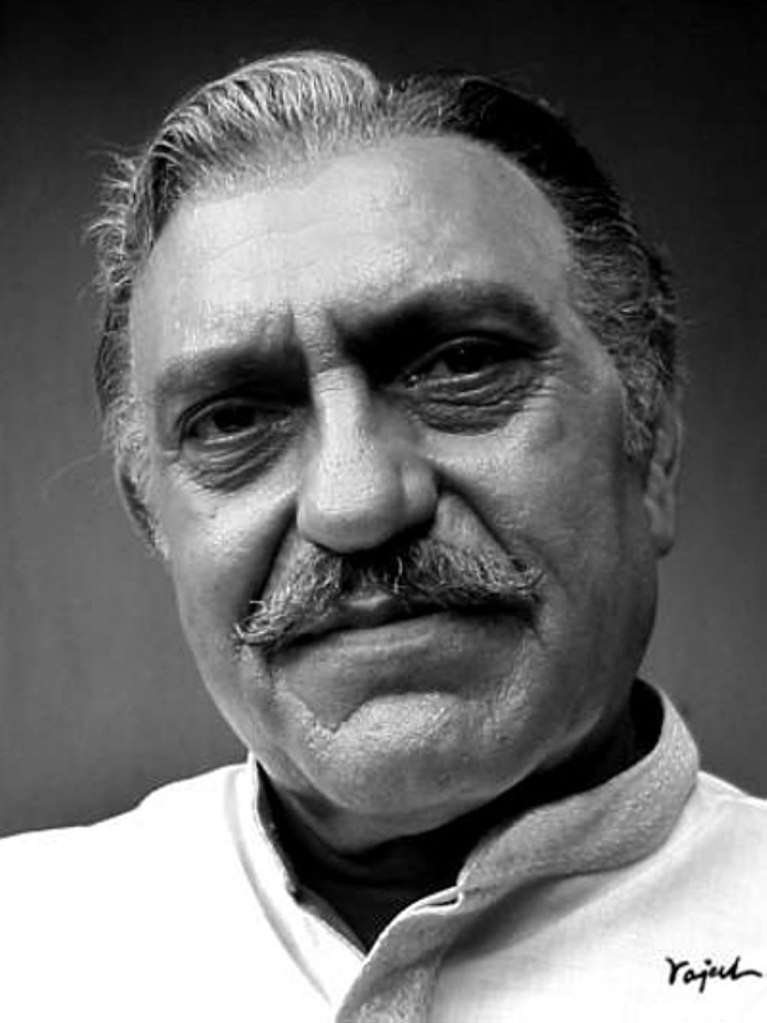
Amrish Puri born on 22 June 1932, was an Indian actor, who was one of the most notable and important figures in Indian Cinema and Theatre. He acted in more than 450 films, established himself as one of the most popular actors in Indian Cinema. Puri is remembered for playing various roles in variety of film genres, specially iconic villainous roles in Hindi Cinema, as well as International Cinema. He reigned supreme in villainous roles in the 1980s and 1990s, his dominating screen presence and distinctive deep voice made him stand out amongst the other villains of the day.
Puri likewise came to Mumbai in the mid-1950s to try his luck, but failed his first screen test. He however managed to land a stable job with the Employees State Insurance Corporation (ESIC), a government organization, and indulged his hobby of acting by becoming part of an amateur natak mandali or stage group. His group often performed at the Prithvi Theatre in plays written by Satyadev Dubey. Puri seen in classics of the genre like ‘Shantata! Court Chalu Aahe (Silence! The Court Is in Session)’, the 1971 Marathi film version of Vijay Tendulkar’s play. He eventually became well known as a stage actor and even won the Sangeet Natak Akademi Award in 1979. This theatre recognition soon led to work in television advertisements and eventually to films at the relatively late age of 40 (forty).
In 1970 he appeared in his first film, he had signed was Reshma Aur Shera which released in 1971. Shyam Bengal’s ‘Nishant’ (1975), where he plays the influential and manipulative village jagirdar; Benegal’s ‘Manthan’ (1976), where he is the wily and exploitative businessman Mishraji; and ‘Bhumika’ (1977), where he plays rich businessman Kale, who offers the heroine (Smita Patil) a pampered – but restrictive – lifestyle. His finest and most memorable art film role was Govind Nihalani’s Ardh Satya in which he was cast with Om Puri. He also appeared in Govind Nihalani’s film, Party in 1984.
Throughout the 1970s, Puri worked in supporting roles, usually as the henchman of the main villain. The super-hit movie Hum Paanch (1980) was the first film in which he played the main villain. His acting performance, personality and voice were all noticed and duly appreciated in this film. After that, he started getting cast as the main villain in other movies.
‘Vijeta’ (1982) – This film dealing with adapting to a career in the Indian armed forces, the IAF in this case, and the discipline and commitment the training demands is possibly one of the best war films to come out of Bollywood. Puri was not playing an IAF officer for the first time, but in his role as Chief Instructor, Group Captain Varghese, he proved a natural. And then as teacher of the protagonist – who has fallen for his daughter – he would set the template for this particular situation.
In 1982, Puri played the main villain, Jagavar Choudhary in the Subhash Ghai super-hit film Vidhaata. That year, he again played the main villain, JK in the movie Shakti co-starring Dilip Kumar. In 1983, Ghai again cast him as the main villain, Pasha, in the hit movie Hero. Puri regularly featured in subsequent Ghai films.
The rest of his Bollywood career is too well known to recount – the crooked, scheming lawyer in ‘Meri Jung’ (1985) and then in ‘Damini’ (1993), the rapacious landlord in ‘Waaris’ (1988), the ruthless police inspector in ‘Dayavan’ (1988) and ‘Batwara’ (1989), over-the-top villains in ‘Tridev’ (1989) and ‘Saudagar’ (1991), the kind-hearted patriarch in ‘Ghatak’ (1996) and ‘Virasat’ (1997). He also portrayed several positive characters, including his famous role as Baldev Singh in the Indian blockbuster Dilwale Dulhaniya Le Jayenge (1995), a kind-hearted American businessman in Pardes (1997) and a genial grandfather in the film Chori Chori Chupke Chupke (2001). His comic role in Chachi 420, that he acted alongside Kamal Haasan was well received by critics.
In 1987, however, one film changed his entire career graph. He attracted a great deal of attention for his work in the 1987 hit film Mr. India, directed by Shekhar Kapur. He played the evil Mogambo, who encouraged his underlings with the phrase, “Mogambo khush hua“. The phrase became very popular and remains one of the most famous dialogues till date in the industry.
‘Tamas’ (1986) – Based on Bhisham Sahni’s 1974 Hindi novel dealing with the breakdown of human relations and the unconscionable violence that the Partition brought, this Govind Nihalani TV film, which evoked chills among those who had experienced the time, has Puri as elderly Sikh community leader Teja Singh in a communal-violence stricken town. Though he only comes onscreen midway, the image of him majestically striding into the gurdwara and among the congregation to the solemn strains of Shabad “De Shiva Var Mohe”, paying obeisance to the Guru Granth Sahab, and then picking up a sword, delivering an impassioned address to the assembly on how they should gird up for the situation, will forever remain etched in the minds of the viewers. As he finishes, the Shabad “Jo Lare Din Ke Het” underscores his message.
‘Bharat Ek Khoj’ (1988-89) – This Shyam Benegal TV series is an insightful, and panoramic view of centuries of Indian history and culture and has appearances by many leading Bollywood actors, such as Naseeruddin Shah, Shabana Azmi, Kulbhushan Kharbanda, and Irrfan, who was still to achieve prowess then. Puri appears as Hasan Raza Khan, an old, capable and loyal state functionary of the Nawabs of Bengal, in episode No. 39 “Company Bahadur”, where he has to negotiate a tightrope between the demands of the British and the cupidity of his own compatriots. That shot of him calling his fiercest enemy an “ahmaq” with his usual ferocity is priceless.
‘Haatim Tai’ (1990) – It is very difficult to leave a mark in a fantasy film where the magic and enchantments, via special effects, will entrance the viewer more, but Puri does this in the second retelling of the legendary Arabian Prince, who was renowned for his generosity and altruism. As the Prince quests for answers to seven questions to resolve the tangled lives of his friends as well as his own, Puri as the magician Kamlaq, whose catchphrase is “Jinn Jinn Jinn du Jinn Daara”, emerges as the final obstacle to a happy ending.
After twenty years, he returned to Punjabi cinema in the acclaimed film Shaheed Uddham Singh (2000). He also appeared in Telugu movies such as Jagadeka Veerudu Athiloka Sundari, Major Chandrakanth, Aditya-369, Kondaveeti Donga, Aswamedham, Aakhari Poratam etc. Amrish Puri appeared in the Tamil film Dalapathi (1991), directed by Mani Ratnam, opposite South Indian superstars Rajnikanth and Mammootty.
After Dalapathi, Amrish Puri made his second and last appearance in the Rajinkanth’s film Baba (2002) in which Amrish Puri played the role of an evil tantrik who helps politicians and other evil elements to succeed in their hideous schemes. Amrish Puri had also acted in few Kannada movies such as Simhada Mari Saniya, Subbi Subbaka Suvalali, Love and few other movies. His dominating screen presence and booming voice made him stand out amongst a sea of actors.
With his deep voice and gruff, evil laughter, he was one of a growing group of Indian actors to find roles in British and American movies. He played a small role in Richard Attenborough’s Oscar-winning 1982 movie, “Gandhi,” as Khan, the nonviolent leader’s Muslim sponsor in South Africa, where Mohandas Gandhi began his fight against injustice.
Amrish Puri played many iconic characters in his lifetime and his role as Puri was an extremely busy actor when Steven’s team zeroed him down for the role and was working in almost 22 films at the time. When Spielberg learnt the same, he traveled to India to audition Puri and finalised him for the role. To Western audiences, he is best known as Mola Ram in Steven Spielberg,s Hollywood film “Indiana Jones and the Temple of Doom” in 1984. He shaved his head and it created such an impression that he kept his head shaved thereafter. His baldness gave him the flexibility to experiment with different looks as a villain in subsequent movies, and few are aware that in every film thereafter, Puri was wearing a wig. Puri and Spielberg shared a great rapport and Spielberg often said in interviews: “Amrish is my favorite villain. The best the world has ever produced and ever will!”
After the shoot wrapped, Spielberg signed a handwritten note to Puri, “To my best villain, you are unique in all the world as a bad guy and in the real world we live in. You are a terrific human being. I loved every minute of our work together, can’t wait to work with you again.”
After the success of Temple of Doom, Amrish got various offers from the West but he chose to work in the Indian film industry. “His agent over there asked him to sign (other offers) but Puri was very devoted to his Indian film industry. Puri said ‘no, I want to be over here because by God’s grace, I am doing very well over here and I want to be here and do movies for my country.”
Puri won three Filmfare Awards for Best Supporting Actor in eight nominations. He also holds most Filmfare Award for Best Villain nominations.
Puri is considered as one of greatest villains of all time in Indian Cinema. It was reported that he received a salary of ₹10 million (US$771,890.82), making him the highest-paid Indian villain actor of all time.
On 22 June 2019, Puri was honoured with a Google Doodle. Commemorating his 87th birthday, Google carried his picture and the accompanying text read as, “If at first you don’t succeed, try, try again—and you might end up like Indian film actor Amrish Puri, who overcame an early setback on the way to fulfilling his big screen dreams.”
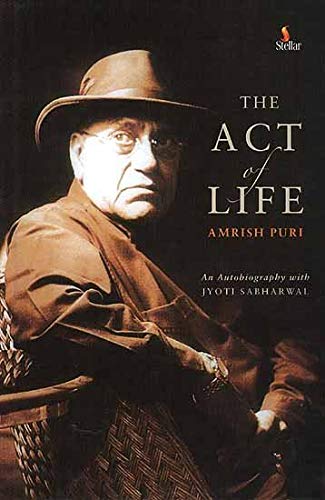
His autobiography titled, ‘The Act of Life’ was published in 2006, and is seen as the document of the cinema of his times.
Photos courtesy Google. Experts taken from Google.
 Writer Sunita