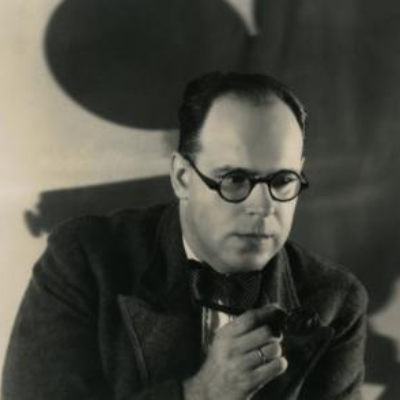
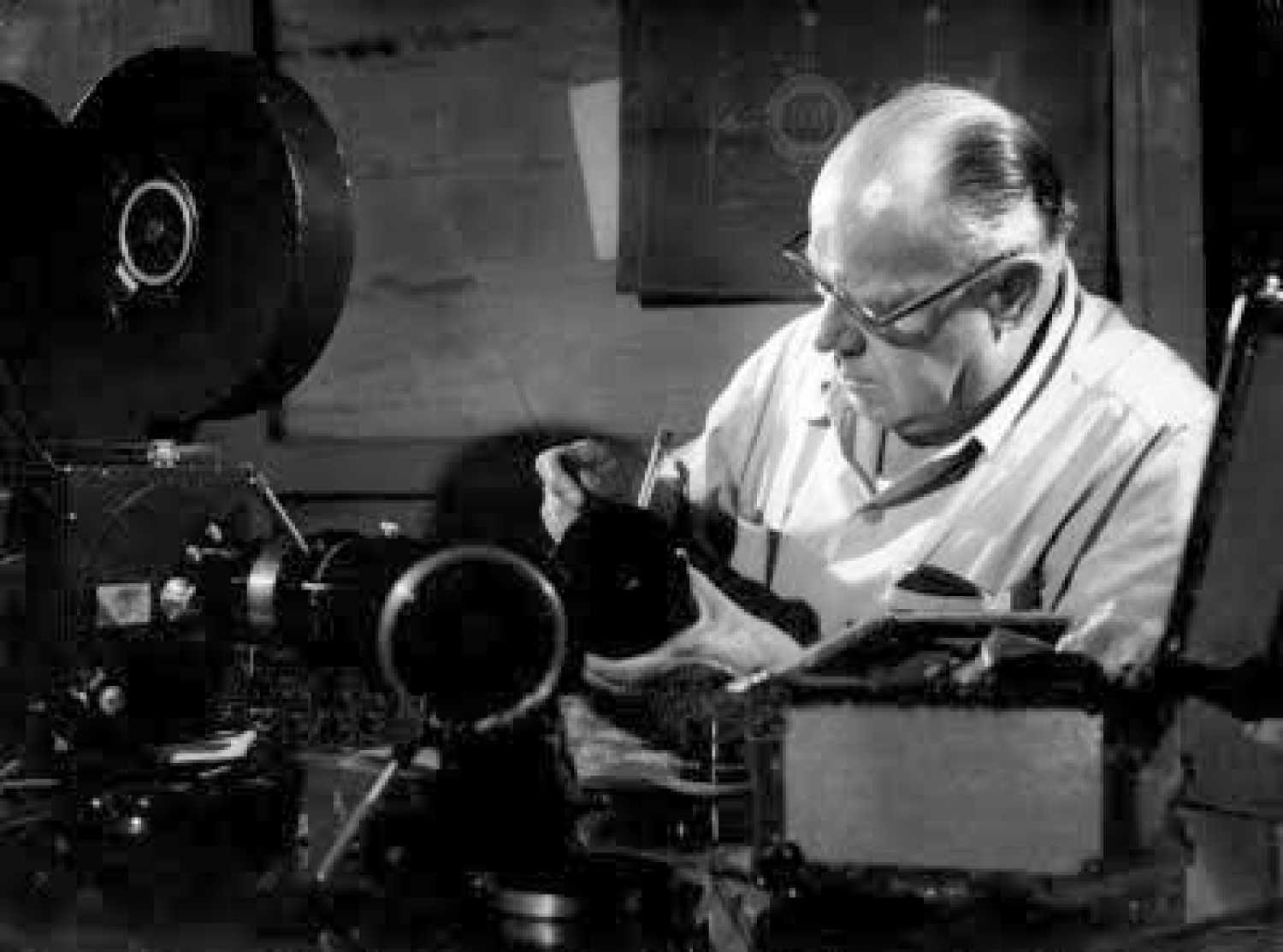
Josef Wirsching, was born on March 22, 1903 in Munich, Germany. He was a German cinematographer, who became a pioneer in cinematography in India and who contributed to the heritage of Cinema of India and still photography in its improvement into a scientific art of expression. Wirsching took to using a small handheld Leica camera, one of the first to use 35mm film and which went into production in 1925, and began taking still photographs on Mumbai’s already thriving film industry. Wirsching’s contribution had an extraordinary collaborative impact on the filmmaking of the time in India and the cinematic idiom of the day. He worked with another German, Franz Osten, in the Indo-European collaboration, The Light of Asia. Thereafter he settled in India, went on to work in over 20 films with Bombay Talkies and subsequently with Kamal Amrohi.
Born in Munich, Germany, where he also did his schooling. After his schooling he joined ‘Blau Weiβ Films’ in Munich as an apprentice photographer; he studied photography theory in the state run ‘Gewerbeschule’ in Munich.
In 1925, a 22-year-old trainee cinematographer travelled to Mumbai from Munich to join the crew of Franz Osten’s movie Light of Asia. The Indo-German production starred Himansu Rai, the pioneering filmmaker and future founder of the Bombay Talkies studio, as Gautama Buddha. When Rai set up Bombay Talkies in 1934 along with his wife, Devika Rani, he approached the German producer, Emelka Studios, for technical assistance, and recruited Osten and the trainee as part of his technical team.
Wirsching’s career at Bombay Talkies hit a standstill when World War II broke out. Since he was a German national living in British-ruled India, he was detained at internment camps in India between 1939 and 1947. After his home in Munich was destroyed in an air raid in 1944, Wirsching settled down in Mumbai.
Films such as Acchut Kanya (1935), Jawani-ki-Hawa (1936) and Jeevan Naiyya (1936) “are addressing questions of democracy, nationalism and tradition in a very nuanced way”, Allana said. “Wirsching’s photographs are not just about a German aesthetic, but also the emergence of a new kind of socialism.”
After his stint in Bombay Talkies he joined Kamal Amrohi’s Mahal Movies as director of Photography in 1959 and did two films namely Dil Apna Aur Preet Parai (1960) and Pakeezah (1972), his only colour film. The films are characterised by a distinctively bold and Expressionist lighting style and the use of asymmetrical angles, and have earned Wirsching his spot in the history of Indian cinema. The scenes which were shot are clearly noticeable. The famous Paan gali scene is credited to him. He even shows up on screen as a large bearded man in the crowd in the film.
“Wirsching brought a European internationalism to Indian cinema and aspects of modernism also took root in the secular themes of films like Achhut Kanya that questioned untouchability”, says Mr Rahab Allana of the Alkazi Foundation for the Arts in New Delhi
He is also credited for bringing aspects of German Expressionism including dreamy lighting, atmospheric compositions, unconventional camera angles and fantastic images to the Indian talkies. His camerawork brought luminosity to the screen and turned the heroes and heroines of the time like Devika Rani, Leela Chitnis, Ashok Kumar and Dilip Kumar among others into ethereal creations on celluloid.
After his death, his son Peter Wolfgang packed away Wirsching’s photographic negatives and prints in a watertight steel trunk. The trunk was a source of fascination for Peter’s son, Georg. “I knew that my grandfather was someone in the film industry, but it’s only when I went to college and studied visual communication that I actually started learning what my grandfather actually did and how important he was,” Wirsching said. “I’d never watched any of his films, but the impact of what he did started picking away at my brain, and I started wondering what was in the trunk.”
Peter Wolfgang and Georg opened the trunk in 2008, and proceeded to do an inventory of the thousands of photographs and negatives it contained. The process took them more than two years. “There were more than 6,000 negatives in hundreds of rolls, but everything was in perfect condition, apart from maybe one or two rolls which were affected by water damage,” Georg Wirsching said.
On his 50th death anniversary, Wirsching’s photographs are a reminder of a man who, in exile, turned out to be a pioneer in film and image making in a foreign land. Wirsching took his own photographs alongside shooting movies, and some of these will be shown at an exhibition at the Serendipity Arts Festival in Panaji. A selection of nearly 160 behind-the-scenes photographs of cast and crew members, production stills, and publicity images will be displayed.
In 2015, the family initiated a crowd-funding project for a coffee table book featuring Wirsching’s photographs, titled Bollywood’s German Origins. Since they were unable to raise the funds, the project was shelved. The exhibition in Goa was planned after Allana approached the Wirschings to display a selection of the cinematographer’s photographs.
Although Hindi cinema is widely regarded as the flag-bearer of India’s national identity, several foreign professionals such as Wirsching have contributed to its visual language. “Moments of encounters of various natures – personal, professional, cultural, intermedial – have shaped our cinema, and it is important to highlight this right now, in a time that is saturated with the idea of nationalism,” Mukherjee pointed out.
Wirsching’s photographs also indicate changing modes of technology. “The exhibition gestures towards important technological changes, such as the introduction of the Leica camera and the use of 35mm film,” Mukherjee said. “Some of the greatest exponents of photography used 35mm film for modern photojournalism and it changed the way people depicted reality. Josef Wirsching was doing that as well, not just for the cinema, but also for the people behind the camera.”
Photo courtesy Google. Experts taken from Google.
 Writer Sunita