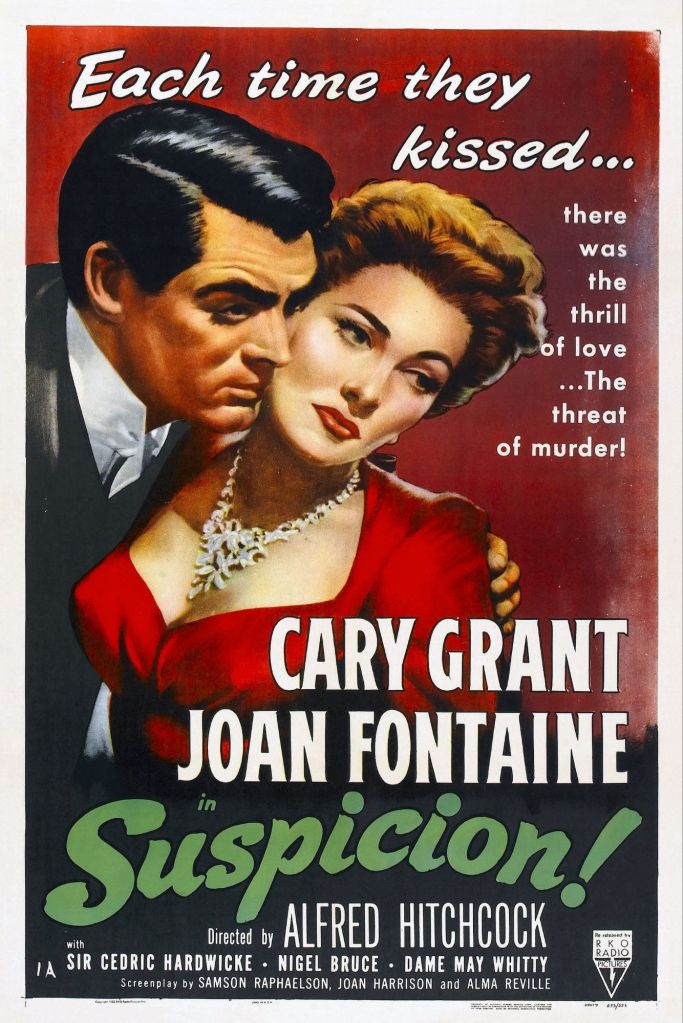
Suspicion is a romantic psychological thriller film noir directed by Alfred Hitchcock, starring Cary Grant and Joan Fontaine as a married couple. The film is based on Francis Iles’s 1932 novel Before the Fact. It follows a shy young heiress who marries a charming gentleman, only to discover that he is penniless, a compulsive gambler, and profoundly dishonest. Gradually, she begins to suspect that he may be a murderer — and that she could be his next victim.
Shy Lina McLaidlaw lives with her wealthy parents and has never attracted any suitors. One day, on a train in England, she meets the charming Johnnie Aysgarth, who brazenly tries to sit in a First Class carriage with only a Third Class ticket. Despite his cheek, Johnnie sweeps the bespectacled Lina off her feet and soon proposes marriage. After a lavish honeymoon, the couple returns to an extravagant house — only for Lina to discover that Johnnie has no job, no income, and survives on borrowed money. She learns he had even planned to live off her father’s wealth. Determined to reform him, Lina persuades Johnnie to find employment, and he reluctantly accepts a position with his cousin, estate agent Captain Melbeck.
When Beaky departs for Paris, Johnnie accompanies him part of the way. Soon after, Lina receives shocking news: Beaky has died in Paris. Johnnie lies to both her and a police inspector, claiming he remained in London the entire time. Lina begins to suspect that Johnnie was involved in Beaky’s death.
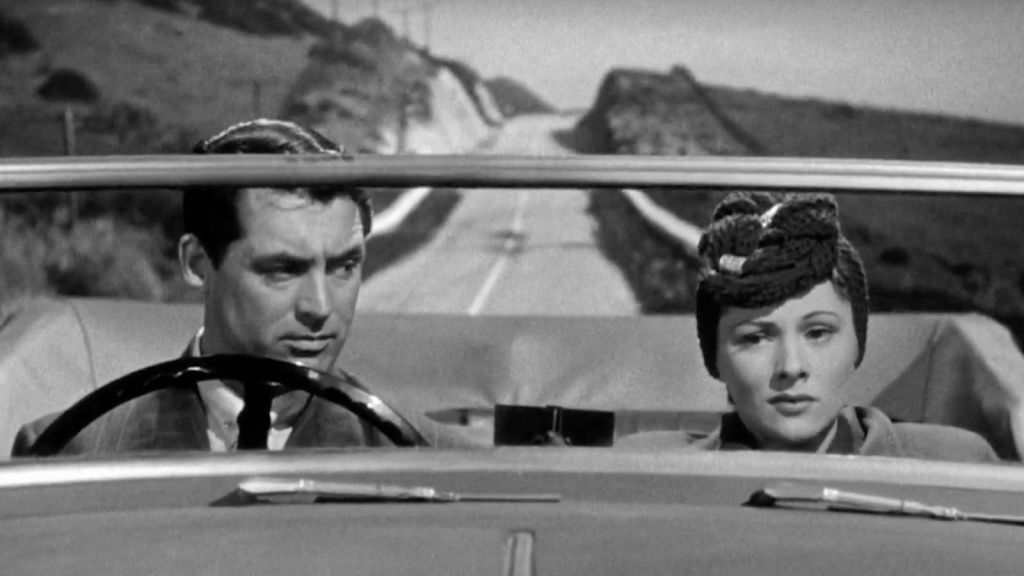
Lina begins to fear that her husband is plotting to kill her for her life insurance. She learns that he has been questioning her friend Isobel Sedbusk, a writer of mystery novels, about untraceable poisons. One night, Johnnie brings her a glass of milk before bed — but she is too afraid to drink it. Desperate for a respite, Lina tells him she will stay with her mother for a few days. Johnnie insists on driving her there. On the way, he speeds recklessly along a cliffside road in a powerful convertible. Suddenly, Lina’s door swings open. Johnnie reaches toward her, his intentions unclear to the terrified woman. She recoils, and he brings the car to a stop.
The film is a masterful showcase of Hitchcock’s skills, centering on a woman who gradually becomes convinced of her husband’s murderous intentions. Hitchcock had originally planned to end the story with the charming playboy killing his loving, wealthy wife, but the idea was abandoned for fear of tarnishing Cary Grant’s reputation and image in the eyes of moviegoers. As released, the film carries an important cautionary message about the damage that poor communication and unfounded suspicions can inflict on people’s lives. Still, it is understandable why the upbeat, optimistic ending feels somewhat unnatural after ninety minutes of psychological tension and masterfully sustained suspense from the genre’s unparalleled master.
The screenplay was written by Samson Raphaelson, Joan Harrison, and Alma Reville. Franz Waxman’s evocative score, together with Harry Stradling Jr.’s superb cinematography, greatly aided Hitchcock in creating a palpable sense of tension and an atmosphere of distrust and fear verging on paranoia.
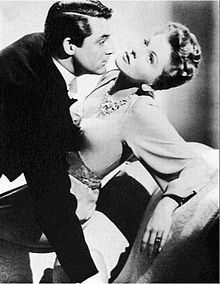
The film offers a fascinating exploration of manipulation and marriage as a psychological battleground. Lina and Johnnie love each other, yet he continually disappoints her, and she is determined to change him. Joan Fontaine delivers an outstanding performance, capturing Lina’s doubt, disappointment, and eventual resolve with remarkable nuance. Her thoughts and emotions seem to transcend the screen. Cary Grant plays Johnnie with effortless charm and ambiguity, keeping audiences guessing until the very end. The on-screen chemistry between the two is compelling, with Grant’s performance subtly reinforcing Fontaine’s portrayal. Several exterior scenes, beautifully framed and rich in atmosphere, showcase striking scenery that remains captivating even in black and white. Fontaine is at her most captivating as the long-suffering heroine, while Grant is superb as the enigmatic Aysgarth — helping to sustain the tension that ultimately cures Lina of her paranoia.
Several scenes in the film skillfully build suspense and deepen the uncertainty surrounding Johnnie’s intentions. Beaky’s death in Paris is attributed to an allergy to brandy — a fact Johnnie was well aware of. A waiter with limited English tells the police that Beaky addressed his companion that night as “Old Bean,” a familiar nickname he always used for Johnnie. In the film’s climax, Johnnie hurtles his wife along a cliffside road at breakneck speed on the way to her mother’s house, leaving her — and the audience — unsure of his true motives until the very end.
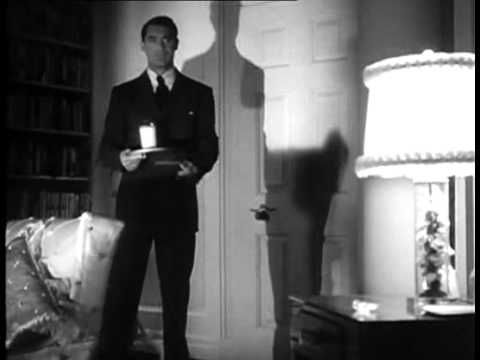
Suspicion makes clever use of a musical leitmotif to mirror Lina’s shifting emotions toward Johnnie. Whenever she is happy with him — beginning with the ball organized by General McLaidlaw — Johann Strauss’s waltz Wiener Blut is heard in its original, light-hearted form. When suspicion clouds her feelings, the waltz reappears in a threatening, minor-key arrangement, returning to its cheerful version only after the tension is resolved. In the scene where Johnnie brings her a glass of milk, a mournful rendition of the waltz underscores her dread. To heighten the effect, the filmmakers placed a lightbulb inside the glass, making the milk glow ominously as Johnnie carries it upstairs, deepening the audience’s fear that it may be poisoned.
Joan Fontaine won the Oscar for Best Actress in 1941. This is the only Hitchcock performance to win an Academy Award.
Photos courtesy Google. Excerpts taken from Google.
 Writer Sunita