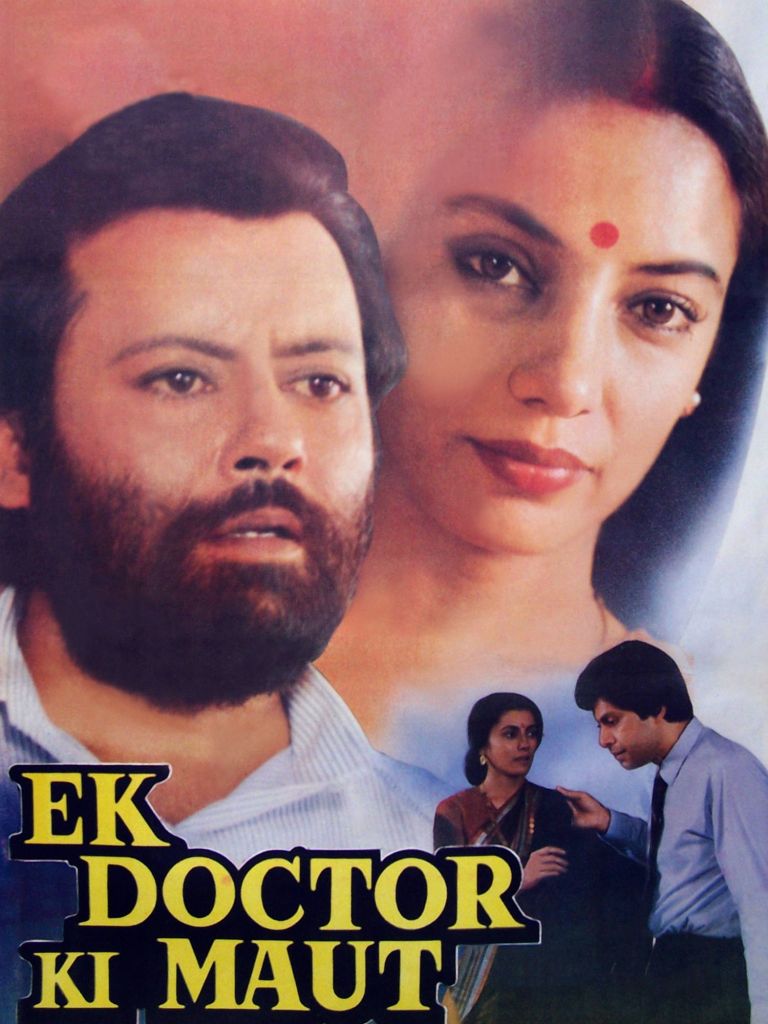
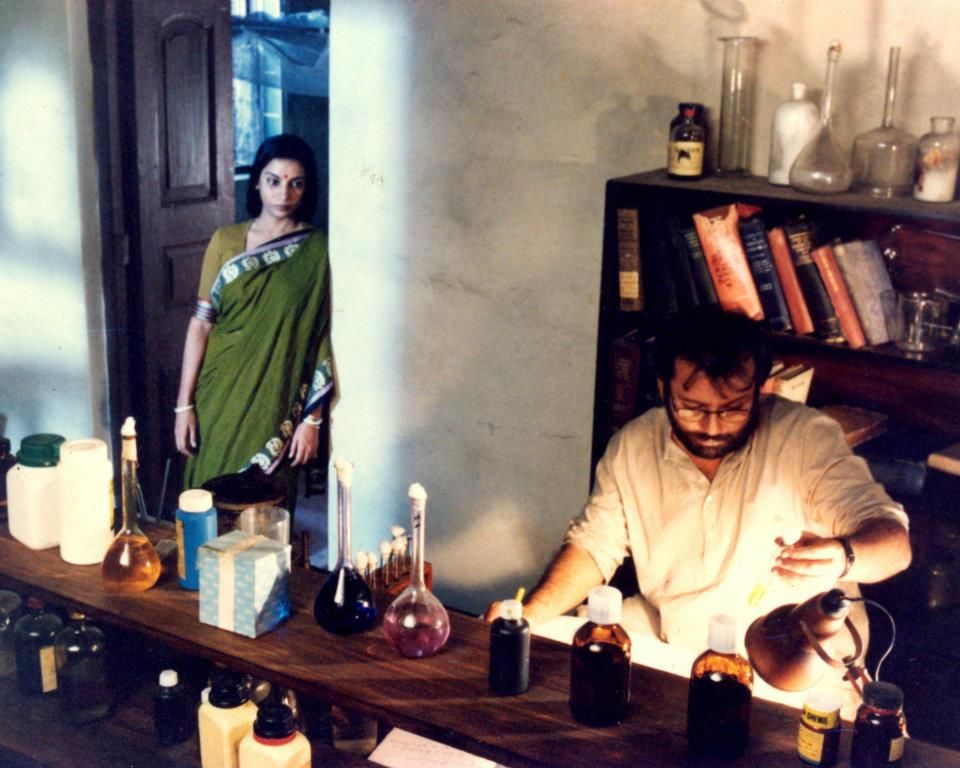
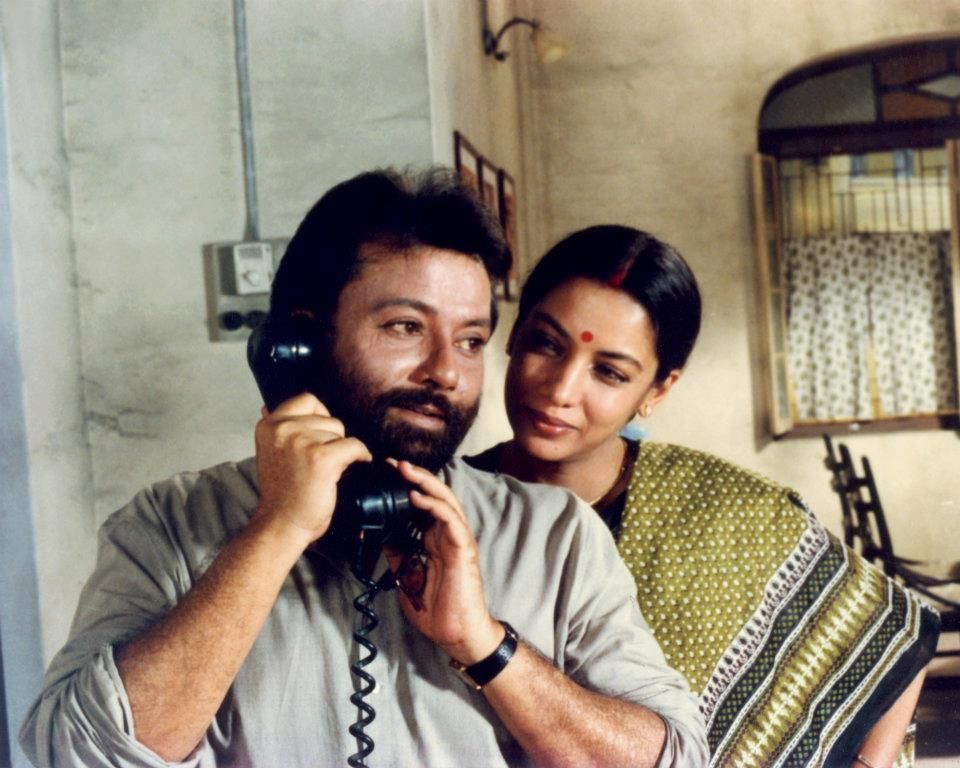
Ek Doctor Ki Maut (Death of a Doctor) is a 1990 Indian Hindi-language film directed and written by Tapan Sinha, based on Ramapada Chowdhury’s 1982 story Abhimanyu. The film is inspired by the life of Dr. Subhas Mukhopadhyay, the pioneering scientist behind India’s first and the world’s second test-tube baby in 1978. This powerful drama delves into the themes of ostracism, bureaucratic indifference, and the tragic neglect of a dedicated doctor’s groundbreaking research.
The story follows Dr. Dipankar Roy (Pankaj Kapur), a relentless scientist who devotes ten years of his life to discovering a vaccine for leprosy. His unwavering focus on his research leads him to neglect his personal life, including his marriage to Seema (Shabana Azmi). Despite feeling abandoned, Seema remains a pillar of support, enduring the strain that Dr. Roy’s obsession places on their relationship.
Dr. Roy’s breakthrough in developing a leprosy vaccine should be a moment of triumph, but instead, it becomes the catalyst for his downfall. Amulya (Irrfan Khan), a passionate journalist, hastily reports Roy’s achievement, hoping to garner support for his work. However, the publicity draws the ire of the Health Director, who dismisses Roy’s research as unsubstantiated and reprimands him for speaking to the press. An enraged Roy retaliates by insulting the Director, triggering a cascade of bureaucratic retribution.
Without Roy’s knowledge, his colleague Dr. Kundu (Anil Chatterjee) sends a copy of his research to the John Anderson Foundation in the UK. Meanwhile, the Health Department transfers Roy to a remote village hospital, further isolating him from his work. Although Dr. Emily Bernard from the Anderson Foundation visits Roy and recognizes the significance of his research, the official invitation for Roy to present his work abroad is entangled in government red tape.
When Roy finally receives an invitation from the Anderson Foundation, the Health Department refuses to let him travel, citing the need for validation by a high-level inquiry committee. This committee, however, is nothing more than a sham, subjecting Roy to humiliating interrogation. As his frustration mounts, Roy’s patience wears thin, and he ultimately storms out of the inquiry. The final blow comes when Roy learns that two American doctors have been credited with discovering the leprosy vaccine, leaving him devastated.
In the end, while Dr. Roy is denied the recognition he deserves, he clings to his passion for science and his commitment to serving humanity.
The film opens with a poignant scene of lab mice confined to cages, symbolizing the constraints and struggles faced by Dr. Roy throughout his journey. Shot by acclaimed cinematographer Soumendu Roy, the visuals amplify the film’s emotional impact.
Ek Doctor Ki Maut is a masterclass in storytelling, driven by Tapan Sinha’s insightful direction and a stellar screenplay that intricately details the scientific challenges and bureaucratic obstacles in the field of medical research. The dialogues capture the intense determination and inner turmoil of a scientist fighting against a broken system.
Pankaj Kapur delivers an unforgettable performance as Dr. Dipankar Roy, portraying the complex layers of a man torn between his love for science and the harsh realities of a corrupt system. Shabana Azmi shines as Seema, embodying a strong, intelligent woman who supports her husband through his darkest times. Irrfan Khan, in one of his early roles, impresses as the idealistic journalist Amulya.
The film received several accolades, including National Film Awards for Best Feature Film, Best Direction for Tapan Sinha, and a Special Jury Award for Pankaj Kapur’s portrayal of Dr. Roy. It also won the Bengal Film Journalists’ Association Awards for Best Film and Best Director, along with the Filmfare Award for Best Screenplay by Tapan Sinha.
Photos courtesy Google. Excerpts taken from Google.
 Writer Sunita