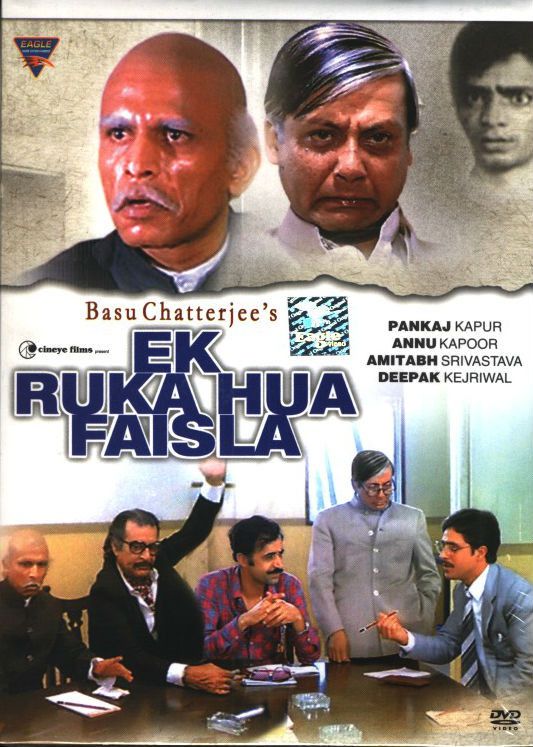
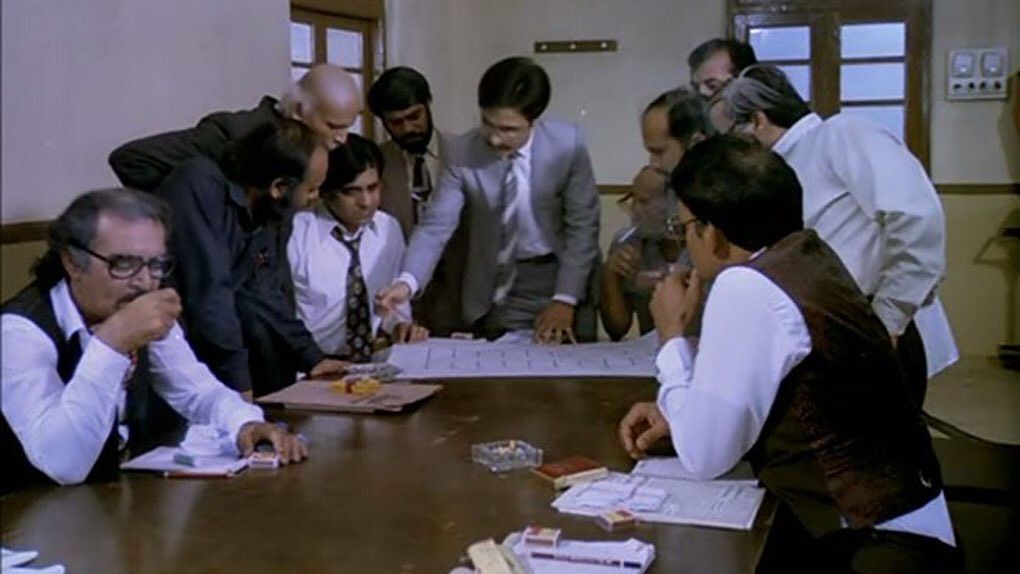
Ek Ruka Hua Faisla (A Pending Decision) is a 1986 Indian Hindi-language legal drama directed by Basu Chatterjee. It is a skillful remake of the 1957 American classic 12 Angry Men, directed by Sidney Lumet, which was adapted from Reginald Rose’s 1954 teleplay of the same name.
The film begins in a courtroom where a teenage boy from a slum is on trial for the alleged murder of his father, a crime punishable by death. The judge instructs the twelve jurors to deliberate on the case and return with a unanimous verdict. Almost all the jurors are convinced of the boy’s guilt, ready to quickly conclude the discussion and move on with their lives. However, Juror #8, played by K. K. Raina, stands alone in his belief that the boy deserves a fair discussion, despite the seemingly overwhelming evidence against him.
Juror #8 argues that the evidence is circumstantial and raises doubts about the reliability of the two key witnesses, the uniqueness of the murder weapon (a common pocketknife), and the questionable circumstances surrounding the crime, such as the noise from an elevated train passing by at the time of the incident. His insistence on thorough deliberation irritates the other jurors, who are eager to deliver a guilty verdict and go home.
As the deliberations progress, the film masterfully unravels the jurors’ personal biases, prejudices, and hidden motivations. What starts as a near-unanimous decision to convict gradually shifts as Juror #8’s calm reasoning and persistent questioning begin to influence the opinions of his peers. The film delves deep into human psychology, showcasing the power of influence, the complexities of group dynamics, and the potential for justice to be swayed by individual biases.
Tensions mount as the discussions become increasingly heated. Emotions flare, particularly in a pivotal scene where Juror #3, played by Pankaj Kapur, loses control and lunges at Juror #8, revealing his deep-seated resentment fueled by his troubled relationship with his own son. Another standout moment occurs when Juror #10’s (S. M. Zaheer) blatant prejudice against slum dwellers is exposed, highlighting how personal biases can cloud one’s judgment.
K. K. Raina delivers a commendable performance as Juror #8, a role that demands subtlety and moral conviction. While he may not fully match Henry Fonda’s iconic portrayal in the original, Raina effectively anchors the film. Pankaj Kapur, however, steals the show with his portrayal of the volatile Juror #3, bringing an intensity and raw emotion to the character that adds depth to the narrative. The entire ensemble cast, including S. M. Zaheer and Annu Kapoor, contribute strongly, with each actor gradually revealing the complexities of their characters.
Basu Chatterjee’s direction is exceptional, creating a tense and claustrophobic atmosphere within the confines of the jury room. The film’s pacing is meticulous, as it slowly builds suspense and drama, mirroring the original while adding its own cultural nuances. The climactic breakdown of Juror #3, where he finally changes his vote, is particularly well-executed and emotionally powerful.
Ek Ruka Hua Faisla is not just a brilliant adaptation of a Hollywood classic but also a significant achievement in Indian cinema. It underscores the importance of critical thinking and the dangers of allowing personal prejudices to influence decisions, especially in matters of life and death. The film’s direct-to-Doordarshan release in July 1986, was met with critical acclaim, demonstrating the potential of television as a platform for serious, thought-provoking cinema in an era before multiplexes.
The film’s sharp dialogues, tight script, and stellar performances make it a timeless piece that continues to resonate with audiences. It serves as a powerful reminder of the value of logical reasoning and unbiased deliberation in the pursuit of justice.
Photos courtesy Google. Excerpts taken from Google.
 Writer Sunita