Umbartha (Threshold) is a 1982 Indian Marathi-language film produced by D. V. Rao and directed and coproduced by Jabbar Patel. The screenplay for the film was by the noted playwright Vijay Tendulkar together with Vasant Dev. The film is a story of a woman’s dream to step outside her four walled home and bring change in the society. The film is based on a Marathi novel Beghar (Homeless) by Shanta Nisal and was also simultaneously made in Hindi as Subah with the same cast.
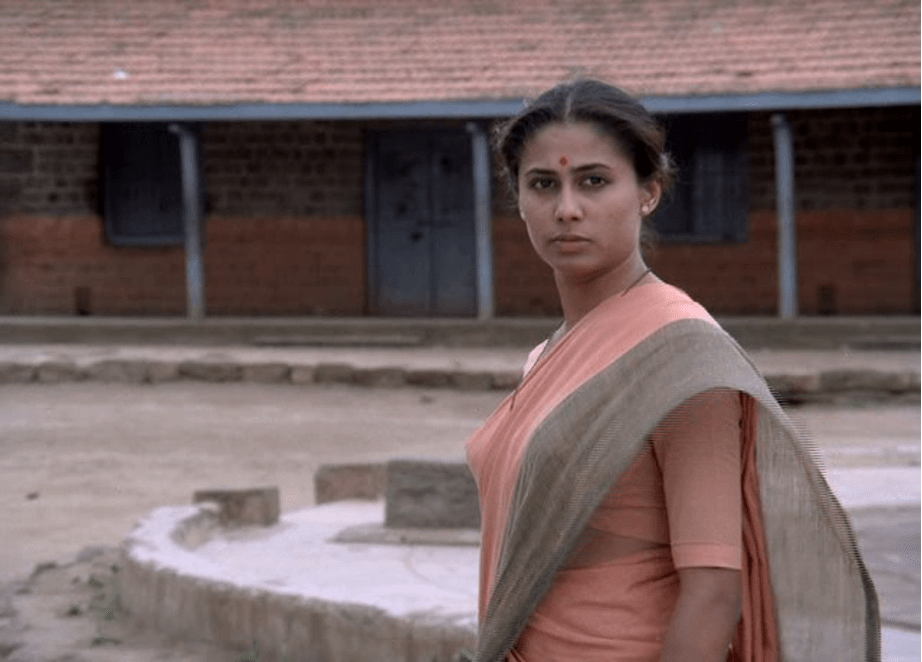
“Umbartha” is a Marathi film that tells the story of Sulabha Mahajan (Smita Patil), a woman determined to break free from the traditional confines of her home and make a difference in society. She dreams of stepping outside her household to assume greater responsibilities as a citizen, particularly to support abused, neglected, and traumatized women.
The film starts with Sulabha roaming around alone, people in her family seem to be busy. She is lonely and get a sense of what she later says, “I do not belong here“. Sulabha’s husband stands to symbolise the apathetic attitude that people have towards others, particularly disadvantaged and socially unacceptable women. Her husband, for instance, takes up a case where he defends a doctor who rapes a woman simply by painting the woman’s character in a bad light and bringing out her poverty.
With the degree she gets in sociology, a drive to do something for society and women, fuels Sulabha’s every action. Her husband Subhash, who supported her to take up this course, he taunts her for not being understanding, not doing anything for the family and claiming that her attitude seems to have changed after the course.
She receives a job offer as the superintendent of a Women’s Reformatory Home in the remote town of Sangamwadi. Her decision to take the job is met with objections from her husband, Subhash, and her conservative mother-in-law, who cannot understand her desire to leave home for work. Sulabha’s sister-in-law offers to help by looking after her young daughter, Rani, allowing Sulabha to pursue her dream.
Upon starting her new role, Sulabha faces numerous challenges. She attempts to instill discipline in the home and uncovers various frauds, but the managing committee, filled with selfish and careless individuals, does not support her efforts. Undeterred, Sulabha takes matters into her own hands, starting educational classes for the willing women and even arranging the marriage of one of the inmates to help her start a new life.
Sulabha also discovers that a local MLA, Bane, has been exploiting the inmates for his sexual needs. When two inmates, unable to cope with their circumstances, attempt to escape and are forcibly returned, they commit suicide by self-immolation. The incident draws media attention and leads to an investigation into Sulabha’s management. Facing severe scrutiny and feeling betrayed by her husband, who has been unfaithful during her absence, Sulabha resigns and returns home.
Back at home, she realizes she no longer belongs there. Her husband’s betrayal and the cold reception from her family strengthen her resolve to continue her work for women’s welfare. Sulabha decides to leave again, choosing her mission over her personal life.
“Umbartha,” meaning “Threshold,” is not just about Sulabha’s personal journey; it’s a critique of the patriarchal society that limits women’s potential and the corruption that pervades institutions meant to help the needy. The film, featuring a strong performance by Smita Patil, delves into the complexities of a woman trying to carve out her identity amidst societal pressures and the systemic injustices faced by marginalized women.
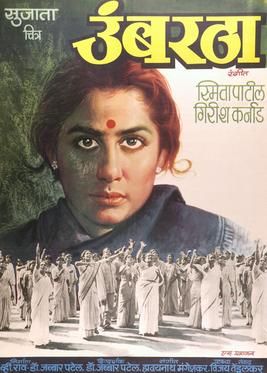
The most distinctive and striking feature of the Umbartha was its poster. Film poster dominated by the face of a woman who does not look like then-associated characterisations of being feminine and has a determined look and aura of authority around all women! This is the most intriguing element of the film – a woman trying to exercise her agency and enabling other women to do the same is what sets Umbartha apart from other films of the time.
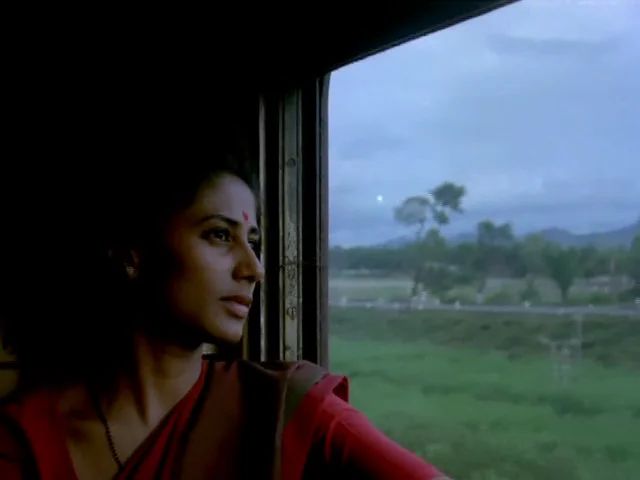
The name of the film Umbartha meaning Threshold suggests, it is a story of a woman stepping out of her home, exploring the world and her interests while she faces challenges and resistance. In the end, when she returns home, her family has moved on, and gotten used to living without her. She decides to leave her house for good. The final clip of Sulabha sitting on a train with a satisfied smile emits an aura of freedom and a sense that whatever path she will choose, she will get to do what she wants.
The film was well-received, earning accolades for its sincere depiction of a woman’s struggle to establish her identity and pursue her passion despite societal and familial opposition.
Smita Patil could do justice to the character of Sulabha Mahajan. Jabbar Patel film, the man has tremendous capacity to get the best from his lead protagonists. The film has fine editing.
The soundtrack of the film is composed by Hridaynath Mangeshkar on lyrics written by Vasant Bapat and Suresh Bhat. Songs like Gagan Sadan sung by Lata Mangeshkar that can still be heard in homes.
Smita Patil won Marathi Rajya Chitrapat Puraskar for Best Actress. The film won Best Marathi film award at National Awards and it is considered as “a sincere cinematic statement on the theme of a woman seeking to establish her identity by pursuing a career, even at the risk of alienation from her family”.
Photos courtesy Google. Excerpts taken from Google.
 Writer Sunita