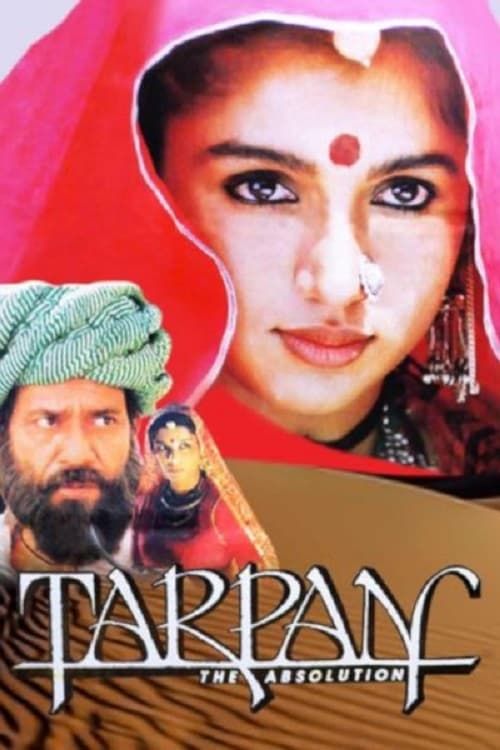
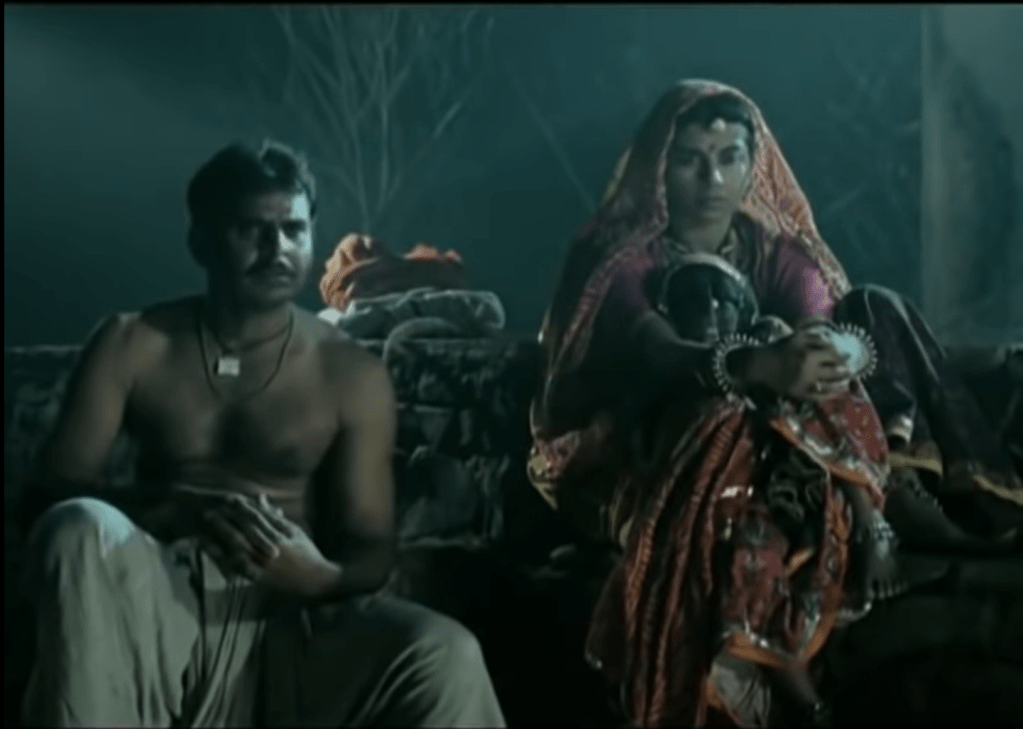
Tarpan is a 1994 Hindi drama film written and directed by K. Bikram Singh in his directorial debut. The film stars Om Puri, Revathy, Dina Pathak, Manohar Singh, and Mita Vashisht in lead roles. It was jointly produced by NFDC and Doordarshan.
Set in the 1940s in a fictional village in Rajasthan’s Shekhavati region where no girl child is allowed to live beyond the age of seven the film explores deep rooted social issues such as communalism and the caste system through four interwoven stories.
Jorawar (Ravi Jhankal) and his wife Lachmi (Mita Vashisht) live in a small village in Rajasthan with their two daughters. Tragedy struck when their first daughter died suddenly, so they are very careful and protective of their second child. But soon, their second daughter also falls seriously ill with a mysterious sickness.
The village doctor says there is no cure and tells them to give up hope and pray for her soul. But Jorawar and Lachmi refuse to accept this. They go to Jasso, a wise village elder, who sends them to Sukku Baba (Virendra Saxena), a man known for his spiritual powers. Sukku Baba tells them about an old, unused well in a faraway village, where they might find a way to save their daughter.
The couple travels many miles to reach the village with the old well. But when they get there, they learn something shocking the well is believed to be haunted by the spirits of people who were tortured and killed by upper-caste villagers.
Upon arriving, they inquire about the well but are met with silence from the villagers except for an elderly woman named Rammo, who agrees to guide them. As Jorawar approaches the well, he uncovers horrifying secrets, confronting not only the demons lurking within the villagers’ minds but also the tormented ghosts of men and women slain by the Thakurs, now seeking absolution for their suffering.
This discovery leads to the unfolding of four powerful stories, each showing the deep and painful conflict between the upper-caste villagers and the Dalits (lower-caste people). These stories reveal how Dalits are not allowed to draw water from the village well or even let their goats roam freely. The film uses these stories to highlight the cruelty of the caste system and the struggle for basic human rights.
The film contains several powerful and emotional stories, each acting like a sharp rebuke to the upper-caste villagers for the terrible injustices they committed against the Dalits. One of the most haunting elements of the film is the curse of Sumitra (Revathy), a Dalit woman who was sexually exploited and abandoned by a Thakur (upper-caste landlord). When he refused to take responsibility for her pregnancy, Sumitra, filled with pain and rage, cursed the entire village, declaring that no child would live beyond the age of seven.
As the villagers attempt to clean the well, hoping to restore its supposed healing powers, they uncover layers of pollution both physical and symbolic revealing long buried injustices of caste violence and oppression. A pivotal moment in the film occurs when an upper-caste man molests a lower-caste girl, igniting the deep seated caste tensions in the village. With the support of a local Dalit leader, the girl’s father courageously seeks justice, ultimately leading to the arrest of the perpetrator.
Since then, children in the village have been dying mysteriously, and no doctor has been able to explain or cure the illnesses. The villagers slowly come to realize that the curse is a result of their own past sins. Full of regret and fear, the upper-caste villagers begin a journey of truth, reconciliation, and repentance, hoping to seek forgiveness for their crimes and to finally break the curse that haunts their village.
Through four interwoven stories, Tarpan confronts the harsh realities of the caste system and the deep historical and spiritual scars that continue to haunt the village. The film highlights the struggles of women and marginalized communities, offering a poignant exploration of oppression and resilience.
Camerawork masterfully contrasts the region’s vibrant colors with the harsh social realities lurking beneath the surface. Each character plays their role brilliantly, adding depth to the film’s powerful narrative.
Singh won an Aravindhan Award as best debut director for Tarpan.
Tarpan was internationally recognized and screened at several major film festivals, including the Moscow, Montreal, Chicago, and Cairo International Film Festivals.
Photos courtesy Google. Excerpts taken from Google.
 Writer Sunita