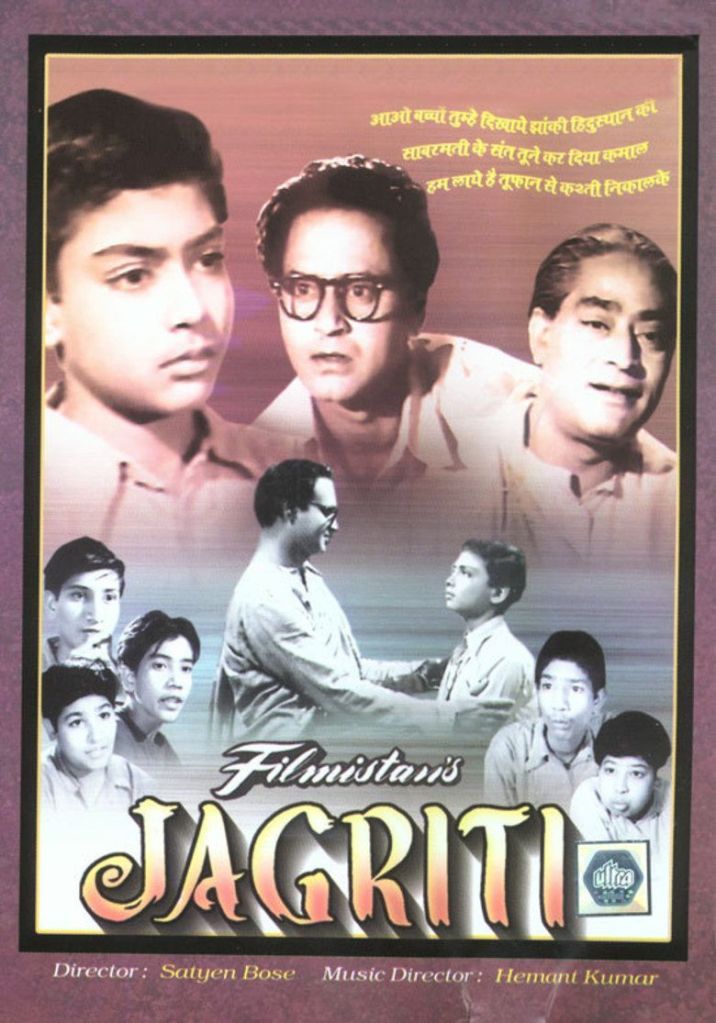
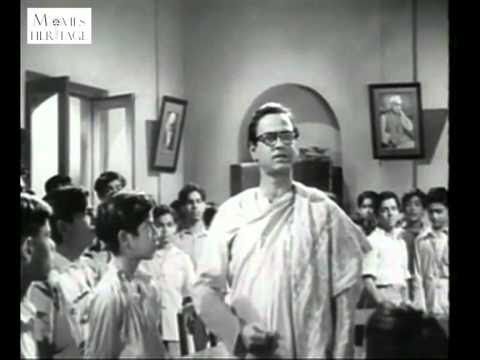
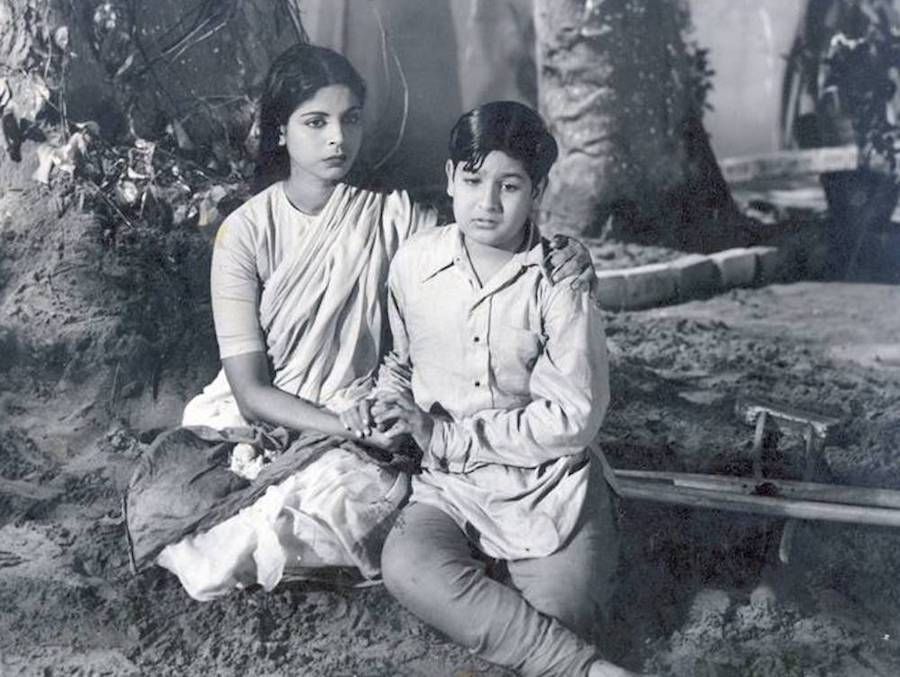
Jagriti (1954), directed by Satyen Bose, is a Hindi-language adaptation of Bose’s own earlier Bengali film Paribartan (1949). The story of Jagriti revolves around the moral and personal transformation of a troubled, spoiled boy, Ajay, played by Rajkumar Gupta, under the guidance of his compassionate and wise school superintendent, portrayed by Abhi Bhattacharya. Ratan Kumar, who plays the role of Shakti, adds emotional depth to the film with his portrayal of a kind-hearted, disabled boy who has a lasting impact on Ajay.
The detailed recount of Jagriti brings to life the story of Ajay’s transformation from a rebellious and spoiled rich boy to a reformed, conscientious student, guided by the compassionate and steady influence of Shekhar. At its core, the film deals with themes of discipline, redemption, and the positive influence a mentor can have on a misguided youth.
The core emotional arc of film by focusing on the contrast between Ajay’s rebellious nature and the gentle, understanding approach of Shekhar. Shekhar’s ability to maintain patience despite the challenges posed by the boys, particularly Ajay, showcases his deep belief in reform through empathy rather than punishment. This patient approach ultimately breaks through the boys’ initial resistance, except for Ajay, whose defiance is more deeply rooted.
The relationship between Ajay and Shakti adds a poignant layer to the story, with Shakti’s innocence acting as a moral compass for Ajay. Shakti’s goodness subtly influences Ajay, but it’s the heart-wrenching tragedy of Shakti’s death that catalyzes Ajay’s transformation. His realization of the impact of his behavior leads to a gradual shift in his character, as guilt and responsibility begin to weigh on him. His reform, symbolized by his achievements in academics and sports, represents not only his personal growth but also the fulfillment of promises made to both Shakti and Shekhar.
Analysis of Jagriti eloquently underscores the film’s powerful critique of rigid disciplinary practices in educational systems. By contrasting the harsh methods often used to deal with troubled children with Shekhar’s compassionate approach, film advocates for understanding, patience, and empathy as more effective tools for guiding students. This humane and reformative approach is central to the film’s message, making it not just a film about one boy’s journey but a broader commentary on education itself.
The simplicity of film is, indeed, part of its strength. The film doesn’t rely on grand narratives or spectacle but instead focuses on deeply human themes—accountability, personal growth, and moral guidance. The emotional connection it builds with the audience comes from its grounded storytelling, with characters like Shekhar embodying the ideal of a teacher who believes in reform over punishment, and Ajay representing the potential for change in every child, no matter how troubled.
Shekhar’s departure from the school in the climax is particularly poignant, as it highlights the emotional toll of his own sense of failure, despite his success in transforming Ajay. His regret over boycotting Ajay shows the importance of forgiveness—not only for others but for oneself—emphasizing that personal growth comes through empathy and reflection, key values the film imparts.
The nationalistic undertones, woven throughout the storyline, connect the film’s themes to the larger vision of India’s post-independence ideals. It reinforces the notion that educating the next generation is crucial for the nation’s future, embedding the values of discipline, morality, and patriotism into the very fabric of its message.
Jagriti’s lasting appeal is its ability to merge a heartfelt, emotional narrative with a deep social commentary, making it both entertaining and profound. Its sincerity and the depth of its message ensure it remains a cherished classic in Indian cinema.
Shakti’s character, with his quiet strength and tragic fate, serves as a powerful emotional anchor for Ajay’s journey, making his eventual change all the more impactful. The swing scenes between Ajay and Shakti are indeed some of the film’s most touching moments, perfectly capturing their bond and the sense of loss that follows Shakti’s death. The understated yet profound performances by Raj Kumar Gupta and Rattan Kumar make these moments all the more poignant. Abhi Bhattacharya’s performance as Shekhar brought an understated gravitas to the role, making the character’s compassionate and principled nature truly impactful. The film’s focus on nurturing young minds and fostering a sense of national pride makes it timeless, and its message of responsibility and education continues to inspire.
The film was celebrated for its strong social message, and its nationalistic tone struck a chord with audiences in post-Independence India. Jagriti became a box-office hit and won two Filmfare Awards, including Best Film and Best Supporting Actor for Abhi Bhattacharya’s role as the teacher.
The music in Jagriti truly elevates the film, with each song carrying significant emotional and patriotic weight. Hemant Kumar’s compositions, paired with Kavi Pradeep’s evocative lyrics, create timeless pieces that seamlessly blend with the film’s narrative. The decision to limit the number of songs allowed each one to shine, making them more memorable and impactful. “Aao Bachon Tumhen Dikhayen” in particular remains a cultural touchstone, symbolizing India’s historical and patriotic legacy. It’s remarkable how the music not only enhances the story but also serves as a reminder of the film’s broader themes.
Jagriti was honored at the 70th Independence Day Film Festival in 2016. The film’s strong themes of nationalism, education, and moral responsibility continue to resonate, making it an ideal choice for such an occasion. Its inclusion in the festival speaks to its enduring relevance as a cultural and patriotic touchstone.
Screening it during the Independence Day celebration further highlights how the film remains a source of inspiration and a reminder of the values that helped shape post-Independence India.
Photos courtesy Google. Excerpts taken from Google.
 Writer Sunita