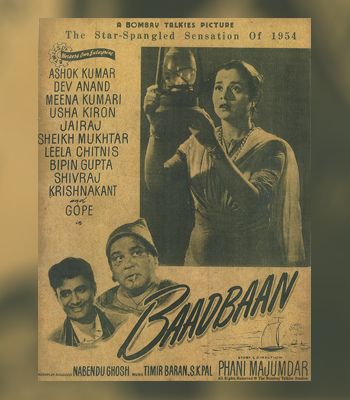
Baadbaan (1954) is indeed an important film from Indian cinema, representing a significant effort by the Bombay Talkies Workers’ Industrial Cooperative Society, which was formed after the demise of the iconic studio. Directed by Phani Majumdar, the film explores themes of social responsibility, love, and the complexities of human relationships against a dramatic backdrop.
The term “Baad” (storm) and “Baan” (shelter) aptly reflects the film’s title, which symbolically represents the idea of protection amidst chaos or turbulent circumstances. With a star-studded cast that includes Dev Anand, Meena Kumari, Ashok Kumar, and Usha Kiran, Baadbaan offers strong performances from each of the lead actors.
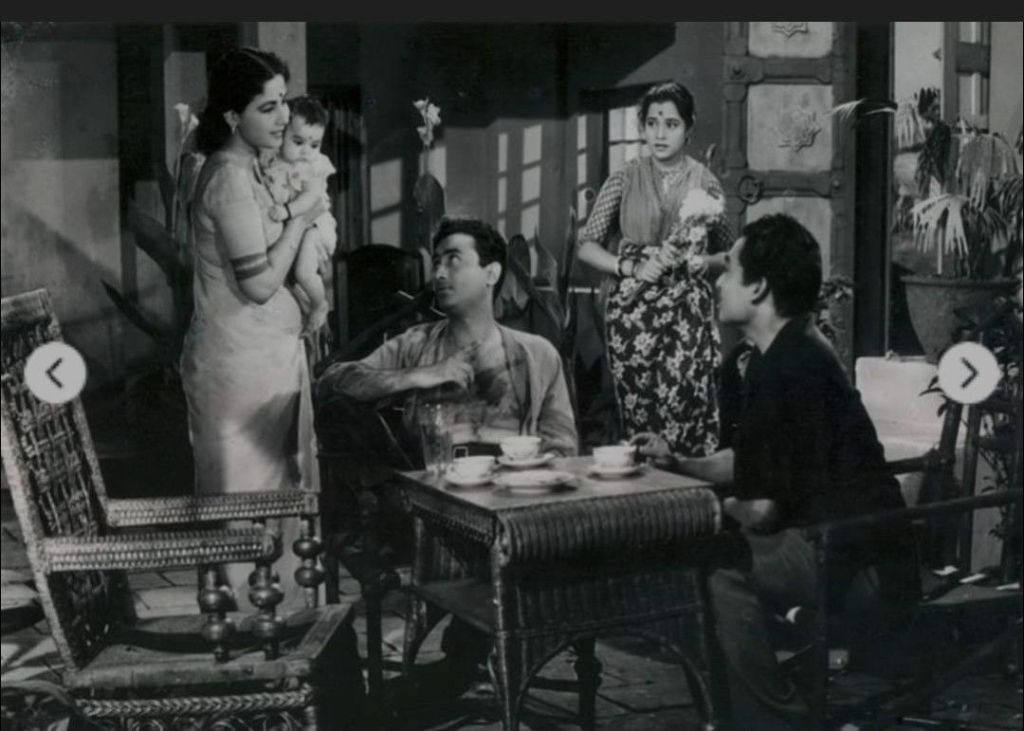
The story unfolds around an orphaned boy, whose fisher folk parents are tragically killed in a storm. He is taken in by a wealthy philanthropist, who raises him with kindness and compassion. After completing his education in England, the boy returns home and falls in love with a charming socialite. However, their romance faces a significant obstacle when her father learns about the boy’s humble origins and forbids their union. Despite this, he eventually relents upon witnessing his daughter’s despair.
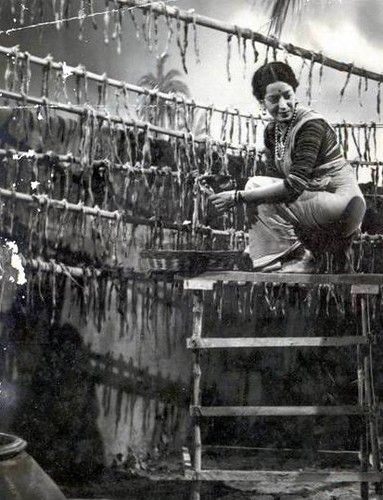
As the hero reconnects with his roots, he becomes enamored with a beautiful fisher girl, Mohnia, from his village. His desire to uplift his community and his love for both Mohnia and his socialite wife create a powerful emotional dynamic. The hero’s return to his roots and his passionate love for the fisher girl add another layer of emotional depth. His desire to improve the lives of the people in his village demonstrates his commitment to social justice and his sense of responsibility to his heritage. However, the tragedy of his wife’s death marks a turning point, bringing the hero full circle as he reconnects with his origins, signifying that despite his external transformations, he is ultimately tied to his roots.
The emotional conflict is heightened by the contrast between the hero’s two love interests: the sophisticated socialite and the beautiful fisher girl from his birthplace. His romantic involvement with the socialite introduces the tension of class disparities, with her father’s initial refusal to accept his lowly parentage being a reflection of societal prejudices. This disapproval leads to a classic drama of love and sacrifice, with the father relenting only out of concern for his daughter’s happiness.
The success of Baadbaan is a remarkable achievement, and much of the credit can indeed be attributed to the vision of director Phani Mazumdar and the well-crafted screenplay by Nabendu Ghosh. Mazumdar’s ability to bring together a talented ensemble of actors and weave their performances into a compelling narrative speaks to his skill as a storyteller. His direction allowed the emotional depth of the characters to shine, creating a rich and engaging cinematic experience.
Nabendu Ghosh’s compact screenplay and sharp dialogue played a pivotal role in capturing the essence of each character, allowing the stars to fully inhabit their roles. His ability to condense the emotional and social conflicts into meaningful exchanges between characters ensured that the story remained focused and impactful. The strong writing brought out the complexities of the narrative, from class tensions to the hero’s inner turmoil between love, duty, and identity.
Adding to this was the film’s musical brilliance, with composers Timir Baran and S.K. Pal creating a melodious and memorable score. The music, which was an integral part of the narrative, not only enhanced the emotional scenes but also provided moments of relief and beauty amidst the drama. Indivar and Udhav Kumar’s lyrics captured the emotional undercurrents of the story, further heightening its poetic quality.
The choreography by Shanti Bhardan and Parvati Kumar was another highlight, bringing a visual richness to the film. The dances not only added to the film’s aesthetic appeal but also deepened its cultural and emotional resonance, making key moments more vivid and impactful.
Together, these elements created a film that was both artistically and emotionally engrossing, with each aspect—acting, direction, music, and choreography—playing a crucial role in its success.
The production values in Baadbaan indeed reflect a high level of craftsmanship, which is essential for immersing the audience in the film’s narrative and emotional landscape.
- Sets and Costumes: The attention to detail in the sets and costumes would have played a significant role in establishing the different social classes depicted in the film. The rich, elegant settings associated with the wealthy characters would contrast with the simpler, more rustic environments of the fisher folk, visually reinforcing the story’s themes of class and identity.
- Photography: The cinematography by Roque M. Layton would have enhanced the storytelling, capturing both the beauty of the coastal settings and the emotional intensity of the characters. Effective lighting and framing can elevate a film’s impact, helping to convey the mood of various scenes, from moments of joy to the deeper sadness of tragedy.
- Overall Aesthetic: Impeccable production values contribute to the film’s ability to transport viewers into its world, making the emotional conflicts more relatable and the characters’ journeys more compelling.
The combination of well-crafted sets, costumes, and thoughtful cinematography showcases the filmmakers’ dedication to creating a visually stunning and emotionally resonant film.
Performance Highlights:
Usha Kiran shines in her role as Mohnia, delivering a captivating performance that combines grace and emotional depth, particularly through her dance sequences. Dev Anand plays the protagonist, exhibiting a commendable performance despite some awkward moments. Meena Kumari, as the tragic wife, brings nuance to her complex character, while Ashok Kumar stands out as her silent admirer and the hero’s ally, showcasing his veteran skill.
Supporting performances by Bipin Gupta and Krishnakant as the respective fathers add depth, while Gope provides comic relief, balancing the film’s emotional weight. The choreography of the folk dances is noted for its vibrancy and execution, enhancing the film’s cultural richness.
The film’s premiere, met with packed houses at the Roxy and other theatres in Bombay, was a testament to the anticipation and excitement surrounding its release. It represented the collective efforts of the Bombay Talkies Workers’ Industrial Cooperative Society. The film not only showcased the talents of stars like Dev Anand, Meena Kumari, Ashok Kumar, and Usha Kiran but also symbolized the resilience of the workers who carried forward the legacy of the legendary Bombay Talkies studio after its decline. Audiences were drawn not only by the star-studded cast but also by the film’s socially relevant themes and emotional depth. The united effort of the stars and technicians behind Baadbaan clearly resonated with the viewers, making it a noteworthy film of its time.
Usha Kiran’s win for the Filmfare Best Supporting Actress Award for her role in Baadbaan is a testament to her impactful performance. In the film, she played a significant character that contributed to the emotional depth and complexity of the story. Her portrayal likely resonated with audiences, highlighting her talent for bringing nuanced emotions to life.
Photos courtesy Google. Excerpts taken from Google.
 Writer Sunita