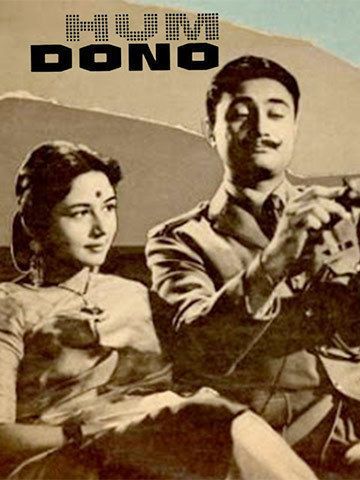
Hum Dono (1961) is a notable Hindi film produced by Dev Anand under the Navketan Films banner, with Amarjeet as the director. The screenplay and dialogues were crafted by Vijay Anand, known for his sharp writing and engaging storytelling. The film stands out for its exploration of timeless themes like class conflict—through the rich girl, poor boy dynamic—and the intriguing plot twist of identity interchange, with Dev Anand playing a double role.
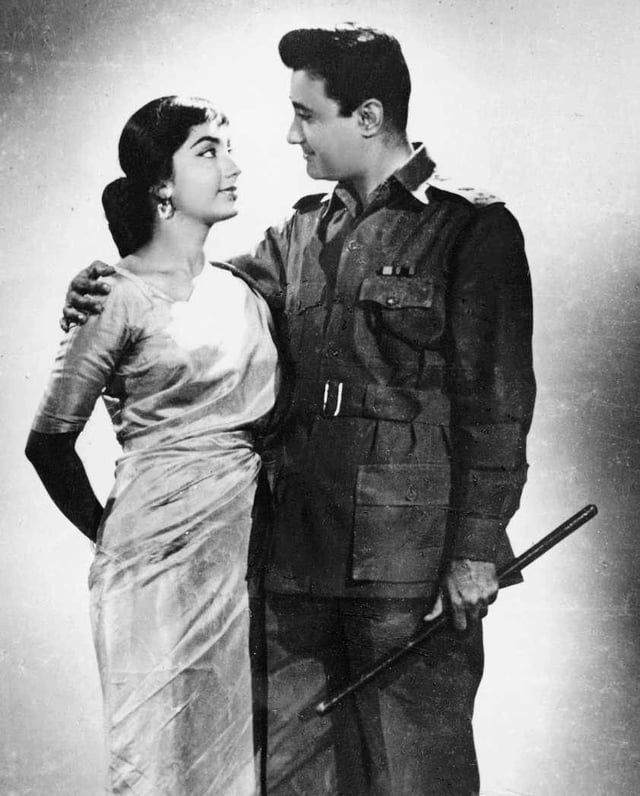
In Hum Dono, the story begins with Anand (played by Dev Anand), a man in love with Meeta (played by Sadhana), but their relationship faces a major obstacle when Meeta’s wealthy father rejects Anand for being aimless and not possessing enough social standing. Determined to prove his worth, Anand decides to join the Indian Army.
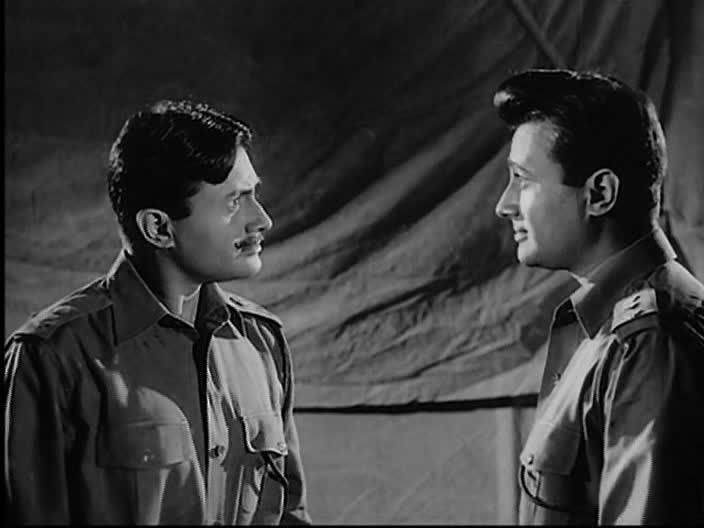
While in the army, Anand meets Major Manohar Lal Verma, who happens to be his look-alike. The two bond and form a strong friendship. However, during the war, Major Verma goes missing in action, leaving his family behind with no knowledge of his fate.
Anand, feeling responsible as a friend, visits Major Verma’s home to inform his family about the situation. But upon his arrival, Verma’s wife, Ruma (played by Nanda), and his mother mistake Anand for Verma himself. Trapped in a web of misunderstanding and unwilling to reveal the harsh truth, Anand finds himself living as Major Verma to prevent further emotional distress for the family. This leads to a complex moral dilemma for Anand, as he navigates the growing attachment between him and Ruma, and his commitment to his own life with Meeta.
Hum Dono is indeed a gem from the black-and-white era, with its timeless appeal still resonating with audiences today. The film is a melodious and emotionally rich masterpiece that stands out for its gripping storyline, well-crafted script, and impeccable direction. Dev Anand shines in his double role, especially as Major Verma, bringing depth and nuance to both characters. His portrayal is memorable, capturing the essence of a man caught between two lives. Sadhana’s beauty and grace add to the film’s charm, and her presence complements the emotional depth of the narrative.
Jaidev’s music is one of the most treasured aspects of the film. The songs have an everlasting quality, with devotional and soul-stirring numbers that blend seamlessly into the story. The song “Main Zindagi Ka Saath Nibhata Chala Gaya” is particularly iconic, reflecting a carefree philosophy of life that became synonymous with Dev Anand’s on-screen persona. Its optimistic and laid-back vibe captures the essence of his character’s resilience in the face of challenges, and its philosophical undertone continues to resonate with listeners. The music, along with the strong performances, elevates Hum Dono to a special place in Hindi cinema’s history as an unforgettable film from the golden era.
Hum Dono beautifully explores a spectrum of human relationships, delving into the emotional connections and dynamics between various characters. At its core, the film examines:
- Mother-Son Bond: The relationship between Major Verma and his mother is central to the story. Her mistaking Anand for her son showcases the deep love and dependence she has on Verma, highlighting the profound attachment between a mother and her child.
- Father-Daughter Relationship: Meeta’s relationship with her father brings out the societal pressures of class and wealth. Her father’s disapproval of Anand because of his lower social standing emphasizes the struggles of love in the face of material expectations.
- Husband-Wife Dynamic: Ruma’s devotion to Major Verma and her belief that Anand is her husband reveal the complexities of love and marital duty. It shows the depth of a wife’s faith and the emotional turmoil she undergoes when Verma goes missing, unknowingly placing her trust in Anand.
- Lovers’ Conflict: The relationship between Anand and Meeta is challenged by societal norms and personal choices. Anand’s drive to prove himself for Meeta’s love and his struggle to maintain his identity while entangled in another family’s life add layers of conflict and emotional intensity.
- Friendship: The bond between Anand and Major Verma is one of the pillars of the film. Their camaraderie, mutual respect, and brotherly connection serve as the foundation of the story, especially when Anand decides to take on the responsibility of informing Verma’s family about his disappearance.
Through these various relationships, Hum Dono creates a richly emotional narrative, portraying the complexity of human connections in times of love, war, and sacrifice. Each relationship adds depth to the film’s central themes of identity, duty, and moral conflict.
Hum Dono is often regarded as one of the greatest films made during the black-and-white era of Indian cinema. Shot by the talented cinematographer V. Ratra, the film’s visual storytelling captures the emotional depth and complexity of the characters through its elegant use of black and white. Ratra’s cinematography plays a significant role in enhancing the dramatic tension, especially in moments where the dual identities of Anand and Major Verma come into play. His ability to frame the emotional intensity of the relationships and the period setting adds a layer of timeless beauty to the film.
The use of shadows, light contrasts, and detailed composition in the film elevates the storytelling, making it a visual masterpiece of the era. Even without the vibrancy of color, Hum Dono manages to convey richness and depth through its imagery, cementing its place as one of the most revered black-and-white films in Indian cinema’s golden age.
Hum Dono received significant recognition for its performances and direction. Dev Anand’s portrayal of both Anand and Major Verma earned him a Filmfare nomination for Best Actor, reflecting his skillful handling of the double role. Additionally, the film’s director, Amarjeet, was nominated for the prestigious Golden Bear at the 1962 Berlin International Film Festival, marking the film’s international acclaim.
The film’s legacy extended well beyond its initial release, with Hum Dono being relaunched in color exactly 50 years later, on 4 February 2011. This colorized version allowed a new generation of viewers to appreciate the timeless story, performances, and music in a modernized format, while still preserving its classic essence. The relaunch was a tribute to the film’s lasting impact and its place in Indian cinematic history.
Photos courtesy Google. Excerpts taken from Google.
 Writer Sunita