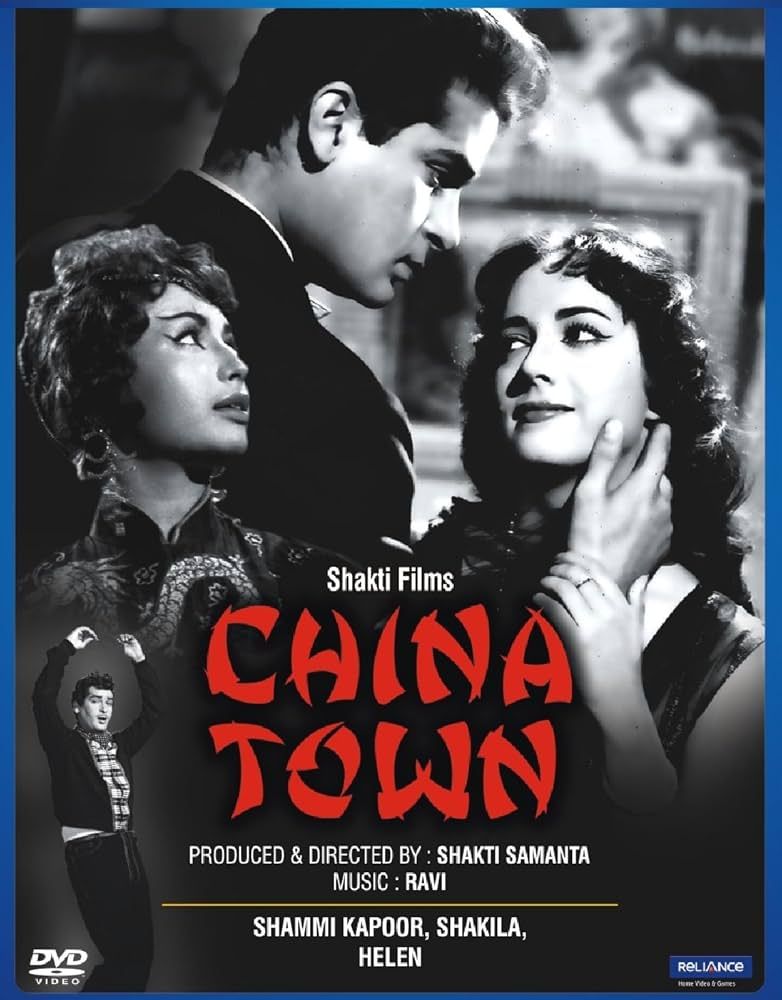
China Town (1962) is a classic Indian Hindi-language romantic comedy thriller film directed and produced by Shakti Samanta. The film is notable for its black-and-white cinematography and its engaging storyline, written by Ranjan Bose. The music, composed by Ravi, adds a memorable element to the film’s appeal.
Shammi Kapoor stars in a double role, portraying both a notorious gangster and his look-alike, a Darjeeling-based singer who is coerced into impersonating the gangster. The story follows this singer as he navigates the dangerous world of the Calcutta-based gangster, taking over his life while facing various challenges.
The film opens with flair, setting the tone with its dynamic title track, and Helen, as Suzi, certainly makes an impression with her bold dragon-covered dress. Her unrequited love for Mike, despite his cold and callous behavior, adds a layer of emotional complexity to her character. Helen, known for her dance prowess and captivating screen presence, brings a touch of glamour and tragedy to Suzi, making her more than just a side character in this crime drama.
Shammi Kapoor’s double role is masterfully done, with his portrayal of Mike oozing swagger and coolness. His introduction, lounging in a bath, perfectly encapsulates his character’s nonchalant, devil-may-care attitude. Mike’s belief that the world revolves around him makes him a formidable gangster, but also one whose arrogance sets the stage for his eventual downfall.
Madan Puri, as Mr. Wong, plays the perfect crime boss, and the setting of his hotel in the heart of Chinatown serves as a gritty backdrop to the seedy underworld of opium dens and drug deals. The criminal activities are central to the plot, but China Town more entertaining is the way it combines crime with the larger-than-life drama.
Inspector Dutta’s (Kanu Roy) determination to take down the gang, along with his failed interrogation attempts on Mike, adds tension to the narrative. Kanu Roy’s stoic performance as the no-nonsense police officer keeps the crime-thriller aspect grounded.
Shammi Kapoor’s portrayal of Shekhar, the carefree and lovably impulsive singer, is a fantastic counterpoint to the cool, dangerous Mike. Shekhar’s antics, like disguising himself as a sadhu to follow Rita, showcase Shammi’s effortless charm and comic timing. His persistence in wooing Rita, despite her indifference and her father’s objections, makes for some lighthearted and entertaining moments in the film.
Rai Bahadur’s dismay at Shekhar’s antics adds humor to the plot, and his colorful descriptions of Shekhar, like calling him a cartoon, are spot on. Despite Shekhar’s seemingly frivolous nature, his transformation into a valuable ally for the police, willing to impersonate Mike and infiltrate the gang, showcases his deeper sense of responsibility. Shammi handles the shift from a carefree lover to a secret agent smoothly, adding depth to his character.
The revelation that Shekhar and Mike are long-lost brothers brings an extra emotional dimension to the story. It raises the stakes for Shekhar, who not only has to stop Rita’s marriage to the rich Mr. Chaudhary but also find and save his brother from a life of crime. The film becomes an exciting mix of romance, family drama, and crime thriller as Shekhar juggles all these responsibilities, and Shammi Kapoor’s energetic performance makes it all believable and engaging.
The use of twin brothers, a recurring Bollywood trope, adds intrigue and ensures the film keeps the audience hooked until the very end. As Shekhar navigates the challenges of infiltrating a dangerous gang while dealing with personal relationships, the film seamlessly blends action, comedy, romance, and drama—a true masala entertainer!
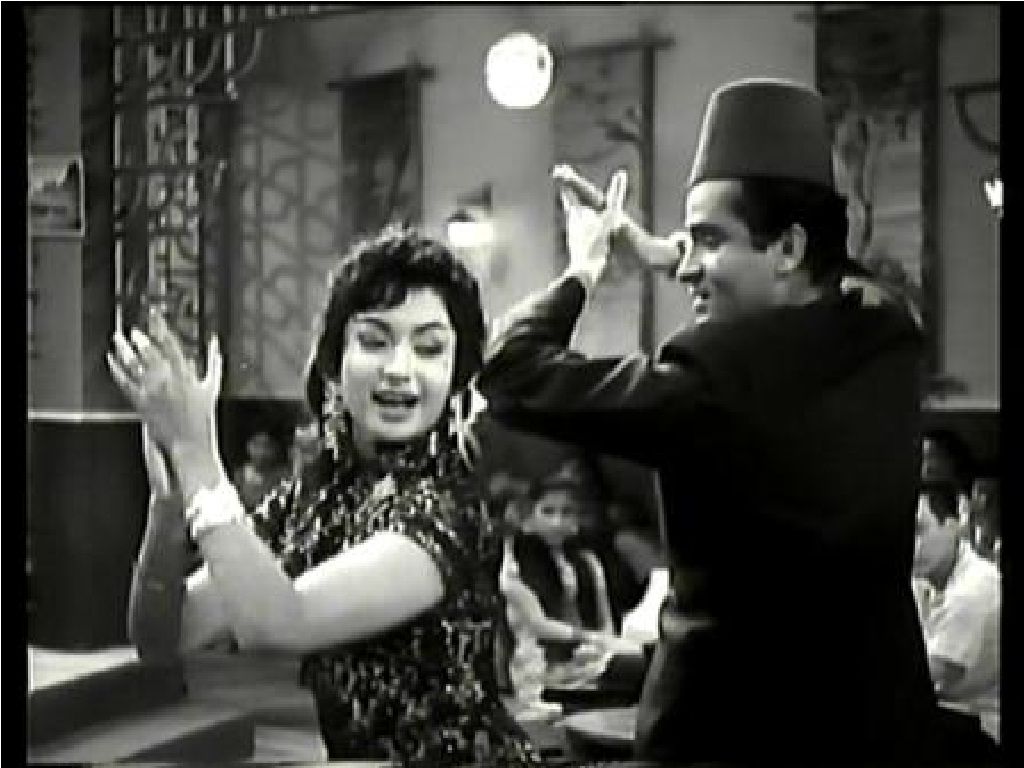
China Town strikes the perfect balance between its crime drama elements and lively musical interludes, especially with Shammi Kapoor’s infectious energy. His inability to resist dancing, even when he’s supposed to be playing it cool as Mike, is quintessential Shammi—a performer who effortlessly combines charm with playful exuberance. The scene where Shammi dances alongside Roshan Ara during the mujra is a perfect example of his inability to stay still and his need to be part of the rhythm, adding a humorous and endearing quality to the moment.
The romance between Shekhar and Rita (played by Shakila) offers a lovely contrast to the action-packed sequences. Their sightseeing around Calcutta and the sweet duets add a touch of innocence and lightness to the narrative. The scene in the hotel where they pretend to be married is especially delightful, with Tun Tun’s brief but memorable role adding humor. The vermillion tikka scene subtly hints at the couple’s deeper feelings for each other, despite Rita’s protests, and it adds a layer of emotional connection to their romance. Shakila, as Rita, is not just a damsel in distress—her feisty spirit makes her a memorable heroine who is just as willing to fight back when kidnapped, making her a strong match for Shekhar.
As for Helen, she truly shines as Suzi. While known primarily for her dancing, in China Town she gets a chance to flex her acting muscles as well. Her loyalty to Mike, despite his callousness, and her willingness to fight for him make her character more than just a secondary love interest. Helen’s dance with an intoxicated Shekhar is not only a visual treat but also serves to highlight the tension between the characters, showing her talent for adding emotional depth even to her dance numbers. She’s stunning as always, and it’s fantastic to see her in a role that lets her go beyond her usual glamorous, dancing persona.
The film’s setting in Calcutta, particularly the iconic Howrah Bridge, adds a rich layer to the narrative. The cinematography by Dwarka Divecha indeed enhances the dramatic moments with its clever use of light and shadow, making the city a character in itself. The Blue Dragon hotel, with its hidden passages and secretive ambiance, perfectly complements the film’s themes of intrigue and danger, while the sewer escape route adds an element of suspense.
Shammi Kapoor truly shines in this film, and appreciation for his performances as both Mike and Shekhar is spot on. He adeptly differentiates between the two characters, with Mike’s brutish demeanor contrasting sharply with Shekhar’s more lighthearted, clownish nature. Shammi’s ability to navigate the spectrum from tough gangster to lovable buffoon is a testament to his versatility as an actor. His charm and charisma keep the audience engaged, making even predictable plot twists feel entertaining.
The supporting cast, including Madan Puri and M.B. Shetty, also contribute significantly to the film’s success, yet it’s Shammi who steals the show. His energy and presence elevate the film, making it a delightful experience, even if some elements feel contrived or formulaic.
China Town a standout film in Shakti Samanta’s career. His skill in blending action, romance, comedy, and music within the film’s framework is remarkable, and his choice of setting in Calcutta’s Chinatown gives the film an exotic flavor that separates it from typical Bollywood crime dramas of the era. The opium dens and underworld connections lend a gritty noir edge, while the lighter elements—like Shammi Kapoor’s charm and Helen’s captivating dance numbers—inject the signature Bollywood flair.
Shakti Samanta’s deft direction during this early phase of his career, particularly in black-and-white films like China Town, demonstrates his ability to experiment with genres and storytelling styles before his transition to more melodramatic, colorful works
China Town‘s soundtrack, which played a pivotal role in the film’s success. Ravi’s music, paired with Majrooh Sultanpuri’s evocative lyrics, added emotional depth and energy to the film’s narrative. The standout track, “Baar Baar Dekho,” sung by the legendary Mohammed Rafi, became an instant classic and continues to be cherished across generations. Its infectious melody and catchy refrain have made it a timeless staple of Bollywood music, contributing to the film’s enduring legacy. Song not only enhanced the romantic and lighter moments but also balanced the film’s darker, suspenseful undertones. This careful integration of music and storytelling helped China Town transcend its genre and become a beloved piece of Bollywood history. The music added a layer of appeal that, alongside the crime drama elements and Shammi Kapoor’s performance, contributed to the film’s iconic status in Indian cinema.
Photos courtesy Google. Excerpts taken from Google.
 Writer Sunita