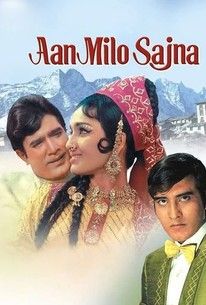
Aan Milo Sajna (1970) is a Hindi-language musical drama directed by Mukul Dutt, written by Sachin Bhowmick, and produced by Jagdish Kumar. The film stars Rajesh Khanna and Asha Parekh, supported by Vinod Khanna, Rajendra Nath, and Nirupa Roy.
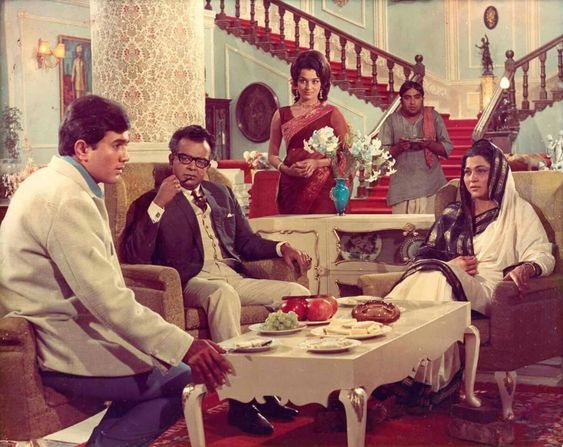
The story revolves around Savitri Choudhury, a wealthy, widowed woman, whose son, Anil, is only interested in inheriting her fortune after her death. Anil’s selfish nature is so evident that his own mother withholds financial support. However, under the guidance of the Diwan, Anil pretends to change his ways, engaging in charity and even introducing Deepali, a woman he claims to be his fiancée, to his mother.
Unbeknownst to Savitri, Deepali is a hired accomplice in Anil’s scheme, not truly in love with him. Anil’s deception grows as Deepali gains Savitri’s trust, to the point where Savitri plans to make her the sole heir to her estate. Her heart belongs to Ajit, a horse-riding peasant whose father was convicted of killing Savitri’s husband.
The twist involving Deepali’s true identity and her relationship with Ajit, a man with a complex and troubled past, adds a layer of suspense to the narrative. Ajit’s father’s conviction and Ajit’s own impending legal troubles, including being accused of an affair and murder, introduce elements of mystery and drama. These elements make the film a gripping tale of betrayal, love, and the consequences of past actions. The dynamic between Anil, Deepali, and Savitri likely creates tension and emotional depth, as secrets slowly unravel and characters reveal their true intentions.
This storyline is full of intrigue, with themes of greed, love, manipulation, and the search for justice, setting up a suspenseful climax as the truth about Deepali, Anil, and Ajit comes to light. The tension builds as each character’s motives and hidden pasts slowly surface, leading to a dramatic confrontation where Savitri will inevitably discover the truth.
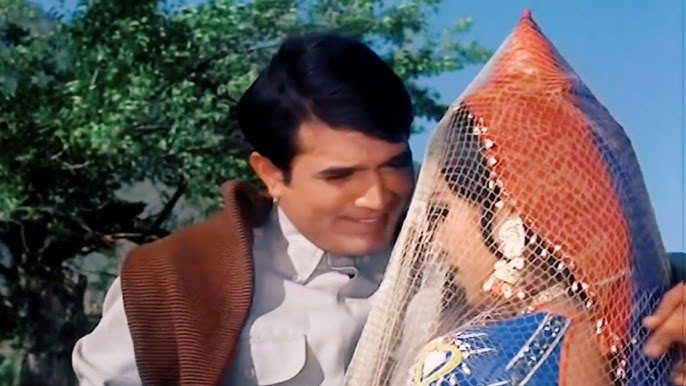
A film that became iconic due to the strong on-screen chemistry between Rajesh Khanna and Asha Parekh, two of Bollywood’s most beloved stars. Their performances, combined with the film’s engaging mix of romance, drama, and memorable music, struck a chord with audiences of the time. Rajesh Khanna’s natural charisma and Asha Parekh’s graceful presence likely added depth to the story, making their characters’ journey compelling.
Laxmikant-Pyarelal’s composition and Anand Bakshi’s meaningful lyrics perfectly captured the emotional depth of the story, while Kishore Kumar and Lata Mangeshkar’s voices brought the songs to life. “Acha To Hum Chalte Hain” became iconic not only because of its soothing melody but also due to the effortless chemistry between Rajesh Khanna and Asha Parekh, which resonated with audiences. The song encapsulated the bittersweet emotions of parting, making it timeless.
‘Rang Rang ke phool khile mohe bhaye koi rang na, ho ab aan milo sajna’ (“Various colors of flowers bloom, but no color pleases me… Oh, now come, my love.”), this song is a precious gem of Indian music and folk culture, where fields, festivals, and the emotions of love are portrayed in a very vivid and captivating manner. The song vividly expresses the wait and desire of the heroine to meet her lover. The lyrics wonderfully blend the pain of separation and the joy of anticipation, creating a unique emotional impact on the listener.
The “Sawa Sawa” refrain in the song adds a lively and vibrant touch, beautifully capturing the essence of Punjabi folk tunes and the festive atmosphere. The song captures the joy of the harvest season, preparations for festivals, and the hope of reunion in love, all intricately woven into the lyrics.
Rajesh Khanna, with his signature charm and expressive eyes, elevated the romantic and dramatic scenes, while Asha Parekh’s grace and poise complemented his performance. The music seamlessly wove into the film’s narrative, reinforcing key moments and giving the audience a memorable emotional experience.
This combination of stellar performances, soulful music, and a gripping storyline is the film remains cherished to this day.
Photos courtesy Google. Excerpts taken from Google.
 Writer Sunita