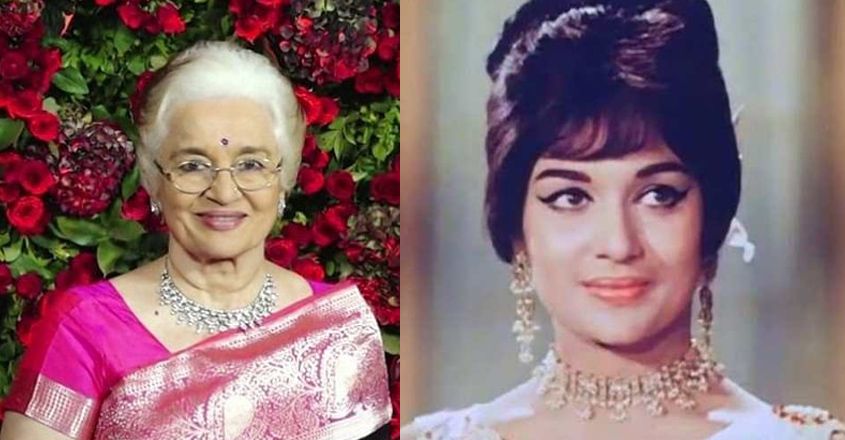
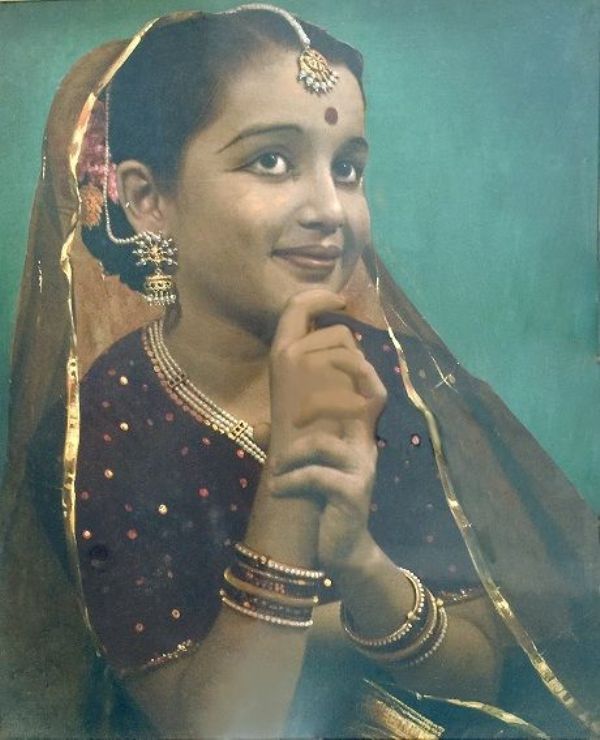
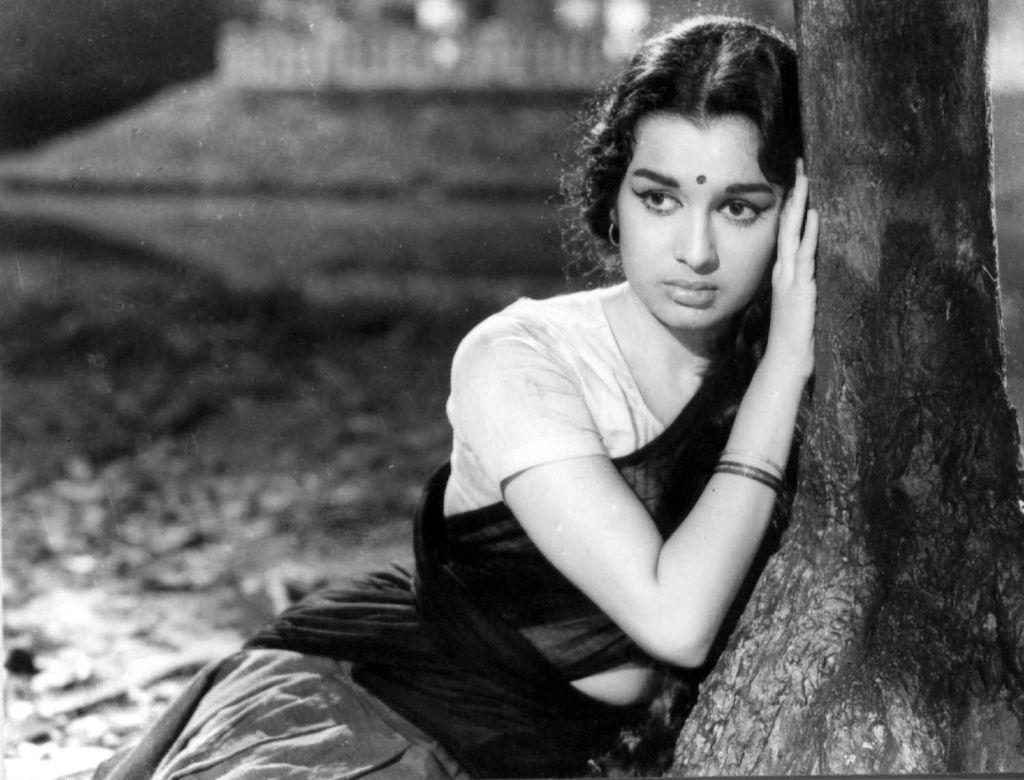
Asha Parekh is a legendary figure in Indian cinema, known for her remarkable contributions as an actress, director, and producer. Born on October 2, 1942, she dominated the silver screen in the 1960s and 1970s, becoming one of the highest-paid and most successful actresses of her era. Her versatility and charm made her a beloved figure in Hindi cinema, and her impact continues to influence generations.
Asha Parekh’s journey into cinema began early, thanks to her mother’s foresight in enrolling her in Indian classical dance classes. Her dedication to the art form led to her training under several renowned teachers, including Pandit Bansilal Bharati. This foundation in dance not only enhanced her grace but also helped shape her cinematic appeal.
Starting out as a child artist, she was noticed by the legendary director Bimal Roy, who cast her in Maa (1952) and later in Baap Beti (1954). Although Baap Beti did not perform well at the box office, leading to a brief hiatus from acting, Asha Parekh returned to films at the age of 16 with renewed ambition.
Her life took a dramatic turn when producer Subodh Mukherjee and director Nasir Hussain cast her in Dil Deke Dekho (1959) opposite the charismatic Shammi Kapoor. This film became a blockbuster, catapulting Asha Parekh into stardom and marking the beginning of her prolific career as a lead heroine in Hindi cinema.
Asha Parekh’s association with director Nasir Hussain was one of the most defining collaborations in her career. After the success of Dil Deke Dekho (1959), she became Hussain’s muse, starring in six more films directed by him: Jab Pyar Kisi Se Hota Hai (1961), Phir Wohi Dil Laya Hoon (1963), Teesri Manzil (1966), Baharon Ke Sapne (1967), Pyar Ka Mausam (1969), and Caravan (1971). These films solidified her as a glamorous, vivacious heroine, known for her dancing and often playing tomboyish or stylish roles.
Asha Parekh earned the title of “Jubilee Girl” due to her impressive streak of box office successes, including films like Ziddi (1964), Shikar (1968), and Aan Milo Sajna (1970). Despite this winning streak, she faced a rare setback with Raj Khosla’s Chirag (1969), which did not perform well at the box office. However, the film earned Asha her first Filmfare Best Actress nomination, and Khosla continued to believe in her talent, casting her again in the successful Mera Gaon Mera Desh (1971).
Shammi Kapoor and Asha Parekh starred together in three more films, with the most notable being the murder mystery Teesri Manzil (1966). Their on-screen chemistry and camaraderie contributed to the film’s success and made them a beloved pair in Hindi cinema.
She won the Filmfare Best Actress Award for Shakti Samanta’s Kati Patang (1970), in which she played a deglamourized character, a woman in a white sari pretending to be a widow, hiding her painful past behind a vulnerable smile.
Asha Parekh had a working relationship with actor and filmmaker Manoj Kumar. She respected his talent and got him cast in their first film together, Apna Banake Dekho (1962). Unfortunately, the film didn’t succeed. However, she agreed to work with him again in Do Badan (1966), which became a hit and earned her rave reviews. Impressed by her talent, Manoj Kumar cast her in Upkar (1967), where he not only starred but also wrote and directed. Sajan (1969), their last film together. Asha described Manoj as a “very intelligent person.”
This passage beautifully captures Asha Parekh’s evolution as an actress in the Hindi film industry. It highlights her transition from lighthearted roles in musicals to more nuanced performances that showcased her dramatic abilities, particularly in films like Ziddi and Kati Patang. Here are a few key points to consider:
Legacy: Asha Parekh’s contributions to cinema, particularly her dedication to dance and her philanthropic efforts, have left a lasting impact on the industry and continue to inspire future generations.
Early Roles: Asha’s early career was characterized by vibrant, trendy roles opposite established stars like Dev Anand and Rajendra Kumar. Her performances were marked by charm and liveliness, as seen in films like Dil Deke Dekho.
Diverse Roles: Asha’s ability to take on a range of characters—from the fun-loving tomboy in Ziddi to the more serious and emotionally complex roles in later films—demonstrates her versatility as an actress.
Critical Acclaim: The year 1966 was pivotal for Asha, as she starred in several successful films, showcasing her talent in both music and drama. Collaborations with directors like Vijay Anand and actors like Shammi Kapoor helped cement her status in the industry.
Awards and Recognition: Asha’s performance in Kati Patang earned her the Best Actress Award, marking a significant achievement in her career. The character’s depth and the emotional nuances she brought to the role were well received by audiences and critics alike.
Changing Dynamics: Asha found herself shifting her focus from acting to other pursuits, such as dance and charitable work, which reflects the evolving landscape of Bollywood.
Asha Parekh’s later career featured notable supporting roles, earning her Filmfare nominations for Best Supporting Actress in Udhar Ka Sindur (1976) and Main Tulsi Tere Aangan Ki (1978), with the latter also winning the Filmfare Award for Best Film. However, apart from her strong performances in Hathyar (1989) and the Gujarati film Kulvadhu (1977), she found herself disenchanted with other supporting roles as a mother or bhabhi (sister-in-law).
Her win was well-deserved, but it sparked further contention when her rival, Mumtaz Askari, felt she was more deserving for her performance in Tere Mere Sapne (1971). Despite such disputes, Asha’s stature as a top actress remained undisputed during this period.
In Hindi cinema, Parekh formed iconic on-screen pairings with many leading actors of her time, such as Dev Anand, Shammi Kapoor, and Rajesh Khanna, contributing to the success of numerous films and making her one of the most beloved heroines of her era. These collaborations, combined with her forays into different languages, showcased her adaptability and wide-ranging appeal across Indian cinema.
Encouraged by friends, she moved into television direction in the early 1990s, starting with the Gujarati serial Jyoti. She established her own production company, Akruti, through which she produced popular TV serials such as Palash ke Phool, Baaje Payal, Kora Kagaz, and the comedy Dal Mein Kaala. Her work in television was a successful second career, showcasing her talents beyond acting.
Parekh also made significant contributions to the film industry in administrative roles. She served as the President of the Cine Artistes’ Association from 1994 to 2000 and became the first female Chairperson of the Central Board of Film Certification (Censor Board) from 1998 to 2001. Although her tenure was unpaid, it was marked by controversy, particularly over her decision to censor films like Shekhar Kapur’s Elizabeth. Afterward, she remained involved in the industry as the Treasurer of the Cine and Television Artists Association (CINTAA) and later as one of its office-bearers.
Asha Parekh’s decision to step away from acting in 1995 allowed her to focus on her career as a television director and producer, where she thrived. Her contributions to the industry were recognized with the Filmfare Lifetime Achievement Award in 2002, followed by other prestigious honors such as the Kalakar Award (2004), the International Indian Film Academy Award (2006), the Pune International Film Festival Award (2007), and the Ninth Annual Bollywood Award in New York (2007). Additionally, she was bestowed with the Living Legend Award by the Federation of Indian Chambers of Commerce & Industry (FICCI).
Her achievements have been recognized with prestigious honors, including the Padma Shri in 1992, awarded by the Government of India for her contributions to the film industry. More recently, she received the Dadasaheb Phalke Award for 2022, one of the highest honors in Indian cinema, acknowledging her enduring legacy.
In 2008, she appeared as a judge on the reality show Tyohaar Dhamaaka on 9X, showcasing her continued involvement in entertainment. Her autobiography, titled “The Hit Girl” and co-written by Khalid Mohamed, was released in 2017, offering insights into her illustrious career and life beyond the screen.
Today, Asha Parekh dedicates her time to her dance academy, Kara Bhavan, and the Asha Parekh Hospital in Santacruz, Mumbai, which was named in her honor in recognition of her significant humanitarian contributions. Through these endeavors, she continues to make an impact on both the arts and society.
Her leadership in these various capacities, both on and off-screen, reflects her dedication to the entertainment industry and her multifaceted career trajectory. Films demonstrated her versatility, proving she could excel in both light-hearted, glamorous roles and intense, dramatic ones, securing her legacy as one of Hindi cinema’s greatest actresses.
Photos courtesy Google. Excerpts taken from Google.
 Writer Sunita