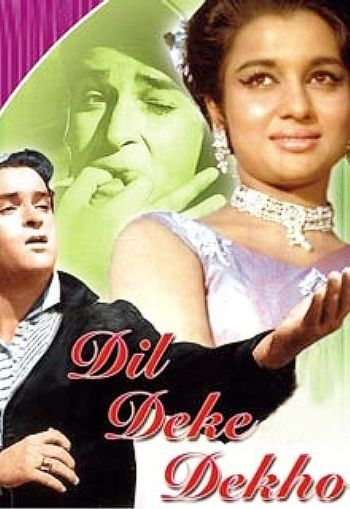
Dil Deke Dekho (1959) is a significant film in Hindi cinema, especially for several reasons. It marked the second collaboration between director Nasir Hussain and actor Shammi Kapoor.
The plot of Dil Deke Dekho weaves a delightful romantic comedy with elements of mistaken identity and familial intrigue. Neeta, the sole heiress of industrialist Jagatnarayan, finds herself at the center of a love triangle involving three suitors: Kailash, Chandar, and Raja. Initially drawn to Chandar, Neeta’s affections unexpectedly shift to Raja, creating a classic romantic tension.
However, the story takes a twist when it is revealed that Raja is not who he claims to be, leading to a dramatic confrontation. The situation escalates when Neeta’s mother, who knows the truth, claims that Chandar is her real son, Roop, leaving Raja in a precarious position. This revelation sets Raja on a journey to prove his identity and win Neeta’s love while navigating the complexities of his situation.
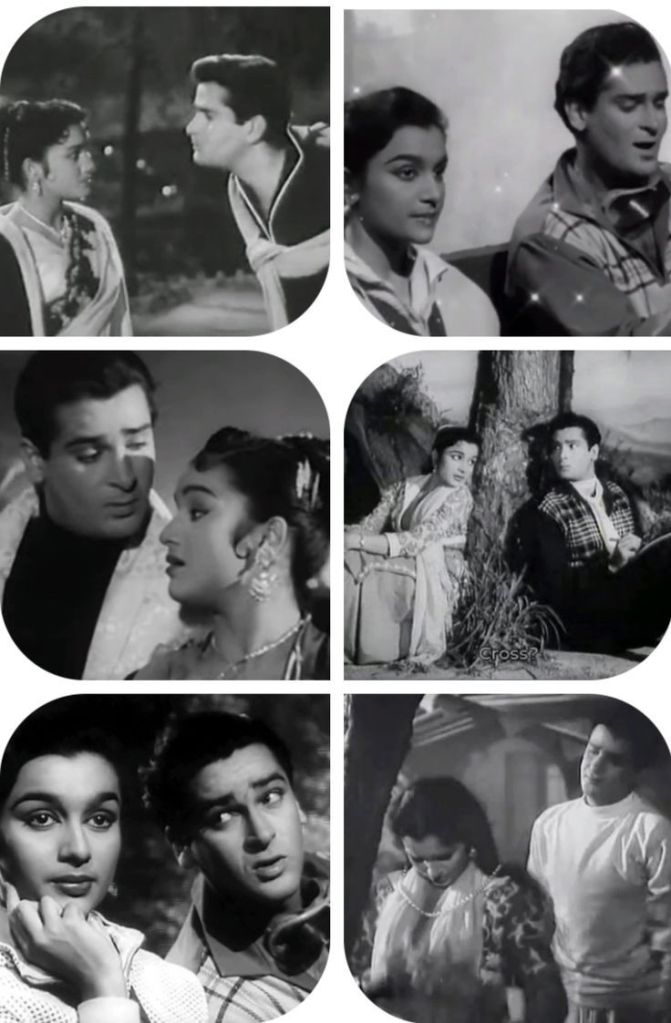
The film effectively balances romance with comedy, showcasing the vibrant chemistry between its lead characters, particularly Shammi Kapoor as Raja and Asha Parekh as Neeta. Shammi Kapoor’s vibrant, energetic style as a comedic, dancing hero was solidified in Dil Deke Dekho, which further enhanced his popularity.
The film also introduced Asha Parekh as a leading lady. Though she had worked as a child actress before, Dil Deke Dekho was her debut in a leading role, and her pairing with Shammi Kapoor became well-loved. Asha Parekh’s performance in this film launched her successful career as one of Hindi cinema’s leading actresses.
The song “Bade Hain Dil Ke Kaale” is a delightful number that captures the playful and romantic spirit of the film. Sung by Mohammed Rafi and Asha Bhonsle, the song features lively music composed by Usha Khanna, with lyrics by Majrooh Sultanpuri.
In the song, the playful banter reflects the budding romance between the lead characters, showcasing their chemistry and light-hearted interactions. The lyrics celebrate the charm and allure of the characters, especially highlighting Neeta’s captivating blue eyes and Raja’s charming persona.
The song is memorable not just for its catchy melody but also for the vibrant choreography and the way it enhances the narrative, making it a beloved part of the film’s soundtrack.
In song “Hai Dilruba Meri Neeta,” Raja serenades Neeta, showcasing his love and admiration for her. The lyrics reflect his deep affection and the lighthearted nature of their relationship. The song’s melodic charm, combined with Rafi’s soulful voice, creates a memorable moment in the film that resonates with the audience.
This song serves to deepen the emotional connection between the characters, emphasizing Raja’s feelings and the playful dynamics of their courtship. The vibrant visuals and choreography further enhance the charm of the sequence, making it a standout moment in the film.
The song “Dil Deke Dekho” is the title track of the film and one of the most iconic songs of that era. Sung by the legendary Mohammed Rafi, this lively and rhythmic song is both playful and romantic, perfectly embodying the film’s light-hearted tone.
The catchy refrain, song “Bolo bolo kuch to bolo,” emphasizes the longing for communication and connection in a budding romance. Raja expresses his feelings and encourages Neeta to respond to his affections. The playful lyrics and energetic music perfectly encapsulate the excitement of young love. The visuals often feature colorful dance sequences, enhancing the joyful nature of the song.
Photos courtesy Google. Excerpts taken from Google.
 Writer Sunita