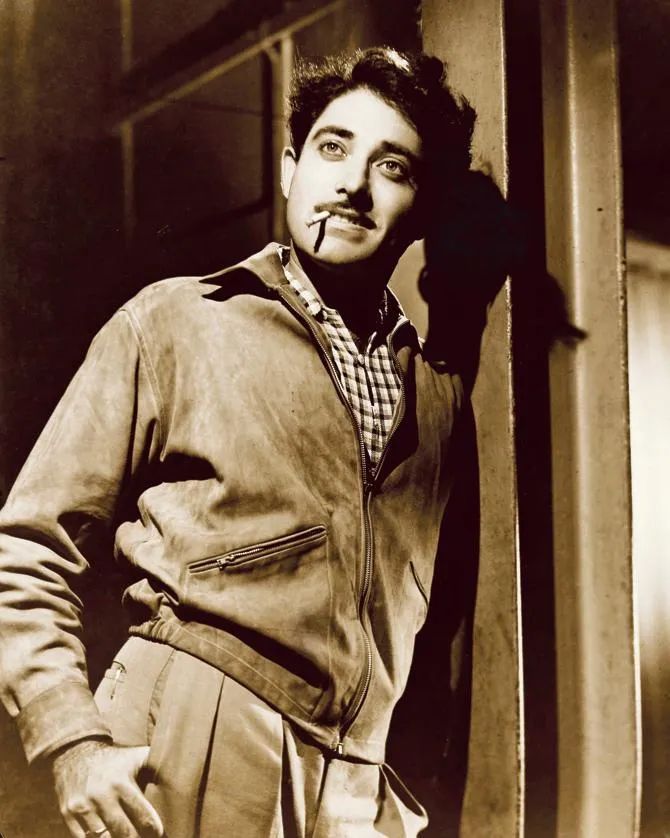
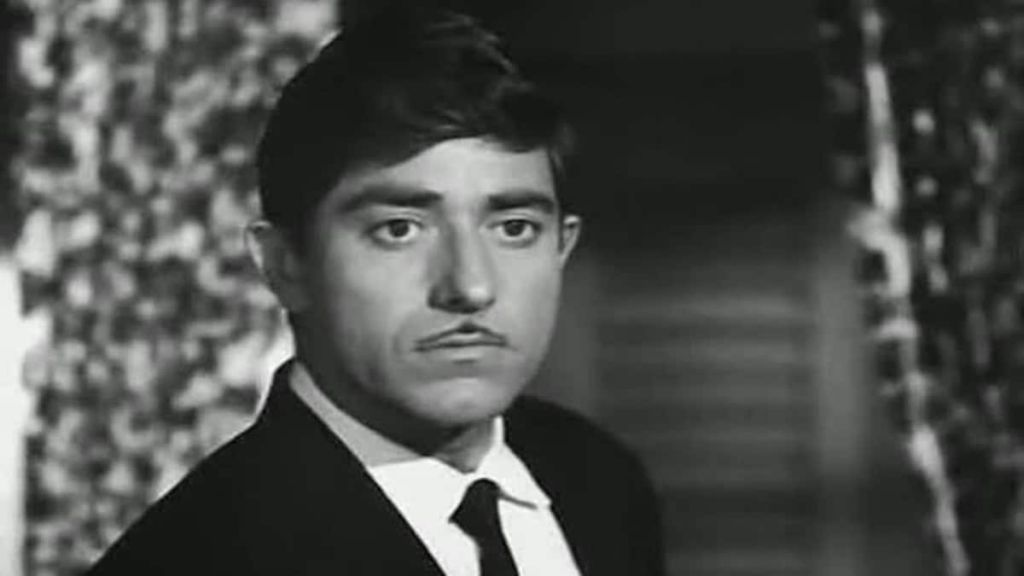

Raaj Kumar, born Kulbhushan Pandit on October 8, 1926, was a prominent Indian actor known for his deep, resonant voice and unique style of dialogue delivery. He appeared in numerous Bollywood films from the 1950s to the 1990s, carving out a niche for himself with intense, larger-than-life roles. He is remembered for his distinctive personality, regal screen presence, and iconic one-liners. Raaj Kumar’s intense screen presence and his flair for dramatic roles made him a memorable figure in Indian cinema. He starred in several iconic films.
Before entering the film industry, Raaj Kumar worked as a sub-inspector in the Bombay Police in the late 1940s. His move to Bombay (now Mumbai) was initially for this role in law enforcement, which he served with distinction. It was during his time as a sub-inspector that he was reportedly discovered by filmmakers due to his striking personality and charismatic voice.
His transition from being a police officer to becoming a successful film actor is a fascinating part of his life, showcasing a significant career shift that eventually made him one of the most memorable figures in Indian cinema.
Raaj Kumar’s early career in Hindi cinema was marked by a series of lesser-known films like Rangeeli (1952), Anmol Sahara (1952), Aabshar (1953), and Ghamand (1955). Unfortunately, these films did not make a significant impact at the box office. However, his big breakthrough came in 1957 with Mehboob Khan’s epic drama Mother India.
In Mother India, Raaj Kumar played the pivotal role of Shamu, the husband of Nargis’s character, Radha. His performance, though brief, left a lasting impression on audiences and filmmakers alike. The film was not only a massive success but became an All Time Blockbuster, establishing Raaj Kumar as a prominent actor.
Mother India remains one of the most iconic films in Indian cinema, celebrated for its portrayal of rural India and strong social themes. The film was nominated for the Academy Award for Best Foreign Language Film and is considered a classic, even earning a place in the book 1001 Movies You Must See Before You Die. This marked the beginning of Raaj Kumar’s rise to fame and the start of a distinguished career in Indian cinema.
After the immense success of Mother India (1957), Raaj Kumar’s career continued to rise with another blockbuster in 1959, Paigham, directed by S. S. Vasan. This social drama starred industry stalwarts like Dilip Kumar and Vyjayanthimala in the lead roles, with Raaj Kumar playing the important role of Dilip Kumar’s elder brother.
In Paigham, Raaj Kumar delivered a standout performance as a caring and responsible elder brother, which earned him widespread praise from critics and audiences alike. His nuanced portrayal showcased his ability to embody strong, family-oriented characters, further solidifying his reputation in the industry. For this role, he was nominated for the Filmfare Award for Best Supporting Actor, marking another milestone in his burgeoning career. Paigham was not only a box office success but also reinforced Raaj Kumar’s presence as a talented actor capable of holding his own alongside legends like Dilip Kumar.
Raaj Kumar’s career in the 1960s saw him solidify his position as a top actor in Hindi cinema with a string of box office successes. He began the decade with Dil Apna Aur Preet Parai (1960), a romantic drama directed by Kishore Sahu. The film was a superhit, and its iconic song “Ajeeb Dastan Hai Yeh,” sung by Lata Mangeshkar, became a timeless classic. Raaj Kumar’s portrayal in the film garnered widespread appreciation.
In 1961, Raaj Kumar appeared in Gharana, alongside Rajendra Kumar and Asha Parekh. A remake of the Telugu blockbuster Shanthi Nivasam, Gharana was a major success at the box office and further cemented Raaj Kumar’s status as a leading star.
Following a brief hiatus, Raaj Kumar reunited with Rajendra Kumar and Meena Kumari in C. V. Sridhar’s Dil Ek Mandir (1963), another romantic drama that became a superhit. Raaj Kumar’s performance was particularly well-received, and he won the Filmfare Award for Best Supporting Actor for his role as a terminally ill man, showcasing his ability to portray complex and emotionally charged characters. That same year, Phool Bane Angaare also performed well at the box office.
In 1964, Raaj Kumar collaborated once again with Rajendra Kumar and Vyjayanthimala in Zindagi, directed by Ramanand Sagar. The film received positive reviews and became yet another hit, continuing Raaj Kumar’s successful streak in the early 1960s.
In the mid-1960s, Raaj Kumar continued his successful run with two major films in 1965: Waqt and Kaajal. Both films opened to widespread acclaim and became blockbusters.
In Waqt, directed by Yash Chopra, Raaj Kumar portrayed a suave and sophisticated thief. His role was met with immense praise, earning him his second Filmfare Award for Best Supporting Actor. His dialogue delivery and charismatic presence in Waqt became iconic, adding to the film’s success and solidifying his status as one of the top actors of the era.
In the same year, he starred in Kaajal, a family drama in which he played a complex and emotional role. His performance was highly appreciated, and he received his first and only nomination for the Filmfare Award for Best Actor for the film. Kaajal remains one of his most memorable films, known for its strong performances and emotional depth.
In addition to these films, Raaj Kumar appeared in Oonche Log (1965), a drama co-starring Ashok Kumar and Feroz Khan. The film was well-received by critics and went on to win the National Film Award for Second Best Feature Film in Hindi. His work in Oonche Log further demonstrated his versatility and ability to take on varied roles.
After a year without any releases in 1966, Raaj Kumar returned in 1967 with the suspense thriller Hamraaz, directed by B. R. Chopra. The film was a massive critical and commercial success, eventually emerging as a blockbuster. Hamraaz also won the National Film Award for Best Feature Film in Hindi. The song “Neele Gagan Ke Tale,” sung by Mahendra Kapoor and filmed on Raaj Kumar and Vimi, became an instant hit and contributed to the film’s popularity. Kapoor won the Filmfare Award for Best Male Playback Singer for the song.
Raaj Kumar also reunited with director C. V. Sridhar (of Dil Ek Mandir fame) for the multi-starrer social drama Nai Roshni in 1967.
Raaj Kumar concluded with two significant films: Mere Huzoor and Neel Kamal (both 1968).
In Mere Huzoor, he starred alongside Jeetendra and Mala Sinha. His performance was appreciated for its depth and emotional intensity, in line with the kind of roles he was known for.
It was Neel Kamal, co-starring Manoj Kumar and Waheeda Rehman, that marked a major success for Raaj Kumar. The film emerged as a blockbuster and was one of the top five highest-grossing films of 1968. In Neel Kamal, Raaj Kumar played a soul in search of his lost love, delivering a memorable and haunting performance that left a lasting impression on audiences. For this role, he earned his fifth and final nomination for the Filmfare Award for Best Supporting Actor, highlighting his continued relevance and excellence in the industry. Film further established Raaj Kumar as an actor capable of portraying deeply emotional and complex characters, and its success capped off a strong decade for him.
In the early 1970s, Raaj Kumar appeared in some of the most iconic films of his career, beginning with Heer Raanjha in 1970. Directed by Chetan Anand, Heer Raanjha was a romantic musical based on the famous Punjabi love story of Heer and Ranjha. Raaj Kumar starred opposite Priya Rajvansh, and the film opened to highly positive reviews. It became a box office hit, with its poetic dialogue and the timeless soundtrack composed by Madan Mohan being especially praised. “Yeh Duniya Yeh Mehfil Mere Kaam Ki Nahin” is one of Mohammed Rafi’s most iconic solos, composed by Madan Mohan with lyrics by Kaifi Azmi, the song beautifully conveys a sense of deep melancholy and detachment from the world, reflecting the inner turmoil of Ranjha, played by Raj Kumar. Raj Kumar’s portrayal of Ranjha is poignant, and the song underscores his journey of love, sacrifice, and renunciation. Rafi’s voice, imbued with both sorrow and resignation, enhances the emotional depth of Ranjha’s character as he laments his separation from Heer and his disillusionment with worldly matters.
In 1971, Raaj Kumar starred in two more films: Lal Patthar and Maryada. Lal Patthar, where he was paired with Hema Malini, was an average performer at the box office, but his role as a brooding and intense zamindar was noted for its depth. However, it was Maryada that proved to be a bigger success. Starring alongside Mala Sinha and Rajesh Khanna, the film was a superhit, and Raaj Kumar’s performance was well-received.
In the 1972 classic Pakeezah, Raj Kumar plays Salim Ahmed Khan, a noble and compassionate forest ranger who becomes captivated by the beauty and grace of the film’s protagonist, Sahibjaan, played by Meena Kumari. His role is pivotal to the story’s emotional depth, as he represents love, hope, and a chance for redemption for Sahibjaan, a courtesan trapped in a world of despair and societal constraints.
The film’s plot takes a turn when Salim encounters Sahibjaan on a train and, without seeing her face, is enchanted by her feet, leaving a note by them: “Aapke paon dekhe, bahut haseen hain. Inhe zameen par mat utariyega, maile ho jayenge” (I have seen your feet, they are very beautiful. Don’t let them touch the ground, they will become dirty). This poetic moment becomes iconic in Indian cinema and lays the foundation for their eventual meeting.
Salim’s love for Sahibjaan transcends societal norms, as he is willing to accept her despite her past as a tawaif (courtesan). His character is dignified and represents the possibility of love without judgment or prejudice. However, the film also explores the tragic complications that arise due to the societal stigma surrounding Sahibjaan’s profession, leading to an emotional and poignant resolution.
Raaj Kumar’s portrayal of Salim is understated yet powerful, characterized by his dignified presence, calm demeanor, and iconic dialogue delivery. His love for Sahibjaan is selfless and pure, making his character a key figure in the film’s exploration of themes like love, honor, and societal barriers.
In 1981, Raaj Kumar made with Esmayeel Shroff’s crime thriller Bulundi. The film was well-received by critics and became a surprise hit at the box office, marking a significant return to form for Kumar. In the same year, he appeared in Kudrat, a reincarnation drama directed by Chetan Anand.
In 1982, Raaj Kumar reunited with Rajesh Khanna and Jeetendra for Dharam Kanta, directed by Sultan Ahmed. This action-packed film was a commercial success, providing another high point in Kumar’s career. The rest of the decade, including Ek Nai Paheli (1984), Sharara (1984), Raaj Tilak (1984), Itihaas (1987), Muqaddar Ka Faisla (1987), Mohabbat Ke Dushman (1988), Saazish (1988), and Mahaveera (1988). Raaj Kumar found success with Mehul Kumar’s Marte Dam Tak (1987).
Raaj Kumar began the 1990s with another successful collaboration with director Esmayeel Shroff in the crime thriller Police Public (1990). This film was an adaptation of the popular Malayalam film Oru CBI Diary Kurippu (1988) and performed well at the box office, marking a notable success in Hindi cinema.
In 1991, Raaj Kumar reunited with his longtime co-star Dilip Kumar for Saudagar, directed by Subhash Ghai. This reunion came after a gap of 32 years since they had last appeared together in Paigham. Saudagar was a major box office superhit, becoming one of the highest earners of the year. The film’s success was attributed to its engaging storyline, impressive performances by the lead actors, and memorable music. The chemistry between Raaj Kumar and Dilip Kumar was especially praised, showcasing their enduring talent and charisma even after decades in the industry.
In 1993, Raaj Kumar starred in the patriotic action drama Tirangaa, directed by Mehul Kumar, alongside Nana Patekar. The film received an excellent response from audiences across the country and became a blockbuster at the box office, showcasing Kumar’s ability to resonate with themes of nationalism and justice.
However, Tirangaa turned out to be the last significant success of Raaj Kumar’s career. His subsequent films, including Betaaj Badshah (1994), Jawab (1995), and God and Gun (1995), did not fare well, both critically and commercially. God and Gun was particularly notable as it marked Kumar’s final appearance on screen.
Raaj Kumar was known for his suave and charismatic personality, which set him apart from his contemporaries. His baritone voice and deliberate dialogue delivery became his signature, often enhanced with poetic or philosophical undertones. He was not just an actor who read lines; he made the lines memorable with his unique expressions and pauses.
Raaj Kumar’s unique persona in Bollywood contributed significantly to his enduring appeal. His reclusiveness and eccentricity set him apart from many of his contemporaries, creating an aura of mystery around him. Unlike other stars who embraced the limelight and frequently featured in gossip columns and film magazines, Kumar preferred to keep his personal life private.
This enigmatic nature, combined with his talent, made him a sought-after actor in the industry. Scripts were often tailored specifically for him, reflecting his distinctive style and screen presence. The combination of talent, privacy, and eccentricity solidified Raaj Kumar’s status as a memorable figure in Indian cinema.
Photos courtesy Google. Excerpts taken from Google.
 Writer Sunita