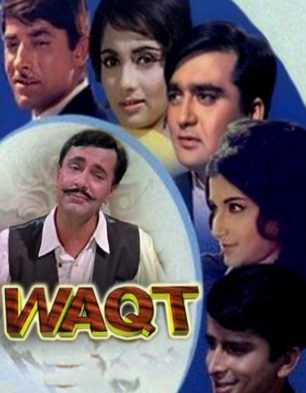
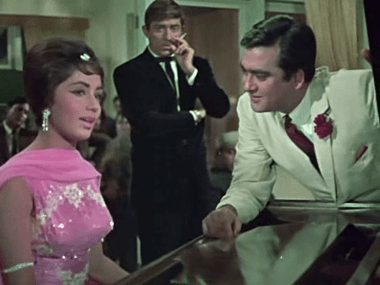
Waqt (1965) is indeed a landmark film in Indian cinema, notable for its ensemble cast and innovative storytelling. Directed by Yash Chopra and produced by B. R. Chopra, it featured a star-studded lineup that included Sunil Dutt, Raaj Kumar, Shashi Kapoor, Sadhana Shivdasani, Sharmila Tagore, and Balraj Sahni, among others.
The film revolves around the theme of familial bonds and the impact of time on relationships. It tells the story of a wealthy family whose members are separated by fate and circumstances. The narrative explores how time affects their lives and relationships, leading to emotional reunions and dramatic confrontations.
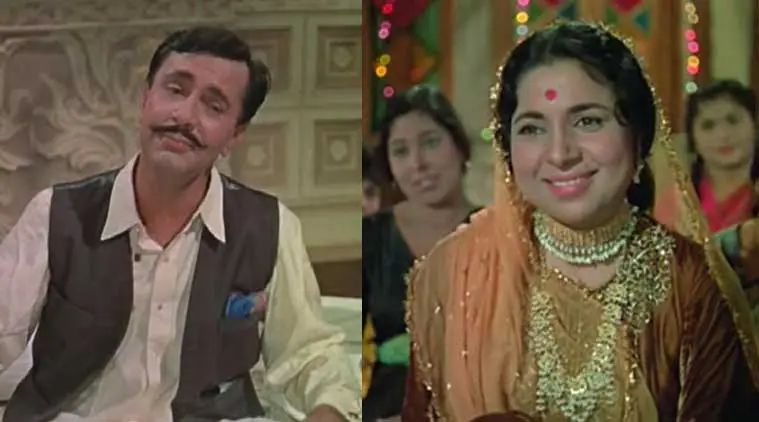
The opening sequence of Waqt sets a dramatic and poignant tone for the film. Lala Kedarnath, played by Balraj Sahni, embodies the archetype of a proud patriarch, confident in his wealth and achievements. The visit from the astrologer serves as a crucial narrative device, foreshadowing the impending tragedy and introducing the theme of the unpredictable nature of time.
The movie’s theme of fate and destiny begins to take shape in this crucial scene, where Lala Kedarnath’s life is shattered by an unforeseen disaster. The astrologer’s warning about the unpredictability of time (waqt) contrasts with Lala Kedarnath’s confidence in his wealth and plans for the future. His disregard for this advice leads to a devastating turn of events—a sudden earthquake that literally and symbolically tears apart his world, separating him from his family and leaving him in ruins. This moment serves as a pivotal setup for the rest of the film, where the unpredictable twists of fate play a central role in the lives of the characters.
The way the film juxtaposes Lala Kedarnath’s grand aspirations with the unstoppable force of destiny is a poignant commentary on how life’s plans can be upended in an instant, reinforcing the film’s message about the fragility of human control over fate.
This intricate plot development from Waqt is a fine example of Yash Chopra’s skillful use of fate and coincidence to weave together the lives of separated family members. The transformation of Raju into Raja (Raaj Kumar), a sophisticated thief, who works for Chinnoy Seth (Rehman), highlights the impact of circumstance on an individual’s path. His entanglement with Meena (Sadhana Shivdasni), followed by the revelation that Ravi (Sunil Dutt), the man he intends to kill, is his own brother, intensifies the dramatic tension, reflecting the central theme of Waqt: that time (and fate) governs all.
Raja’s decision to give up his life of crime for Meena, only to discover that she is set to marry his own brother, marks a turning point in the film. The dramatic irony here lies in the audience’s awareness of their familial connection before the characters themselves realize it, adding emotional weight to their interactions.
The subplot about Ravi’s unknown parentage and religion reflects the societal prejudices of the time, as Meena’s parents refuse to let her marry him because of his uncertain background. This not only adds complexity to Ravi’s character but also reinforces the theme of fate’s role in shaping destinies, regardless of personal merit or achievements. The separation of the brothers, their differing upbringings, and eventual convergence illustrate the unpredictability of life’s course, as hinted at by the astrologer’s warning to Lala Kedarnath at the beginning of the film.
Ravi’s departure after the argument with Renu (Sharmila Tagore), despite their close sibling relationship, adds emotional complexity to the story. His disapproval of her relationship with Vijay (Shashi Kapoor) reflects societal class differences, as Vijay, despite his education, is forced to work as a chauffeur. This highlights the struggles of the educated but unemployed, particularly in a city like Mumbai, and the sacrifices individuals make for their loved ones, as seen with Vijay taking up the job to support his ailing mother, Laxmi (Achala Sachdev).
The escalating tension at Chinnoy Seth’s party, where Raja intends to reveal the truth about his familial connection with Ravi, showcases his character’s evolution—from a thief to someone willing to reconcile and correct the past. However, the situation spirals out of control when Balbir Singh’s (Madan Puri) drunken misbehavior with Meena triggers a confrontation. Raja’s reaction to Balbir adds to his moral struggle, as he steps up to defend Meena.
Chinnoy Seth’s decision to murder Balbir in self-defense and then frame Raja introduces a crime thriller element to the story, shifting the stakes significantly. The framing of Raja, a central character, creates a looming threat of injustice, further compounded by Vijay’s dilemma. Witnessing the murder but being coerced into silence with the promise of money for his mother’s cancer treatment puts Vijay in a moral bind. This act of desperation underscores the lengths to which the characters are pushed by their circumstances, highlighting the unpredictable forces of fate and survival that the film continuously explores.
The courtroom drama becomes the backdrop for the long-awaited family reunion, with the characters’ fates intertwined in unexpected ways. Raja’s arrest and Ravi’s decision to defend him as an advocate illustrate how destiny brings the brothers back together, even without their knowledge of their true relationship at the outset.
Vijay’s moral conflict and eventual decision to recant his false testimony demonstrate his growth, as he chooses to do the right thing despite his initial fear and desperation for his mother’s medical treatment. His transformation underscores the film’s emphasis on integrity and the triumph of truth. Lala Kedarnath’s presence as a key witness not only adds to the tension of the trial but also sets the stage for the emotional climax when the separated family members finally recognize each other.
The revelation of Raja and Ravi’s identities as Lala Kedarnath and Laxmi’s long-lost sons is a powerful moment of catharsis, fulfilling the astrologer’s earlier warning about the unpredictability of time. The entire family’s reunion in the courtroom signifies that despite the twists of fate and hardships, destiny has finally brought them back together.
The final scene, where the family builds a new home and welcomes Meena and Renu’s families, symbolizes a new beginning. It highlights the resilience of the human spirit and the ability to rebuild after loss, echoing Lala Kedarnath’s journey from prideful businessman to a humbled and reunited patriarch. The film closes on a hopeful note, with the message that while waqt (time) is unpredictable, love, family, and justice ultimately prevail.
The soundtrack of Waqt (1965) was composed by Ravi, with lyrics penned by the legendary Sahir Ludhianvi. The music of the film became immensely popular and contributed to the overall success of the movie. The soundtrack is not only remembered for its catchy and melodious tunes but also for Sahir Ludhianvi’s profound and meaningful lyrics, which reflect the film’s underlying themes of time, destiny, love, and life.
At the 13th Filmfare Awards, Waqt (1965) was both a critical and commercial success, earning several prestigious awards:
Won:
- Best Director – Yash Chopra
Yash Chopra’s direction was lauded for skillfully weaving together a complex narrative that balanced family drama, romance, crime, and social commentary, all while delivering an emotionally charged and visually compelling film. - Best Supporting Actor – Raaj Kumar
Raaj Kumar’s portrayal of Raja, the sophisticated yet conflicted thief, was praised for its intensity and depth, earning him the award for Best Supporting Actor. - Best Story – Akhtar Mirza
The engaging story of separated brothers, fate, and reunification struck a chord with audiences and critics alike, leading to Akhtar Mirza winning Best Story. - Best Dialogue – Akhtar ul Iman
The film’s dialogues, known for their sharpness and emotional resonance, especially Raaj Kumar’s iconic line “Chinoy Seth, jinke ghar sheeshe ke hote hain, woh dusron par pathar nahi phenka karte,” contributed to Akhtar ul Iman winning this award. - Best Cinematography (Color) – Dharam Chopra.
The film intensifies its core theme of how time and circumstances force individuals into impossible choices, bringing the separated family members closer to their ultimate fates. The film’s intricate plot by introducing layers of conflict, moral dilemmas, and heightened tension between the characters.
Key Themes and Symbolism
- Pride and Hubris: Lala Kedarnath’s arrogance about his success and his disregard for the astrologer’s warnings symbolize the pitfalls of excessive pride. This sets up a classic conflict between human ambition and the forces of fate.
- Time as a Central Motif: The title Waqt (Time) underscores the film’s exploration of how quickly life can change. The earthquake acts as a catalyst, abruptly transforming the family’s fortunes and testing their bonds.
- Tragedy and Loss: The destruction of Lala Kedarnath’s home and the loss of his family emphasize the fragility of life and the inevitable trials that come with time. This tragedy serves as a powerful emotional anchor for the rest of the film.
- Family Dynamics: The relationship between Lala Kedarnath and his wife, Laxmi, is pivotal. Her character adds depth to the narrative, showing the impact of sudden loss on familial relationships and the need for resilience.
Narrative Impact
The earthquake not only acts as a plot device but also symbolizes a turning point in Lala Kedarnath’s life. It sets the stage for his character’s journey throughout the film, highlighting themes of redemption, the quest for family, and the struggle against fate.
Character Development
As the story unfolds, Lala Kedarnath’s initial pride is replaced by a deep sense of loss and responsibility. His journey reflects a transformation from a wealthy businessman to a man searching for his lost family, emphasizing the emotional and moral lessons about humility and the transient nature of life.
Photos courtesy Google. Excerpts taken from Google.
 Writer Sunita