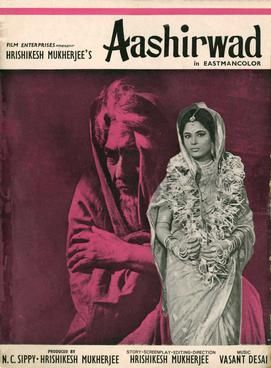

Ashirwad (1968), directed by Hrishikesh Mukherjee, is a Bollywood classic that has gained recognition for its heartfelt narrative and powerful performances, particularly by Ashok Kumar and Veena. The film tells the story of Jogi Thakur, a benevolent zamindar who loves children and animals and believes in helping the poor. However, a series of unfortunate events turns his life upside down, leading him on a journey filled with deep emotional conflicts. His portrayal of Jogi Thakur is considered one of his finest, capturing the nuances of a man who faces moral dilemmas but retains his innate kindness.
In Ashirwad, Ashok Kumar’s portrayal of Jogi Thakur highlights the complexity of a man torn between his high principles and the harsh realities of life. Jogi Thakur, a simple and kind-hearted man, becomes a gharjamai (resident son-in-law) after inheriting his father-in-law’s property, only to find himself at odds with his autocratic wife, played by Veena. When he learns that his wife, through manipulation, has forced him to unknowingly approve the burning of houses belonging to the poor, his sense of morality is shaken. In response, Jogi Thakur makes the difficult decision to break his marriage, leave his home, and vow never to return, even though it means leaving behind his beloved daughter, Neena.
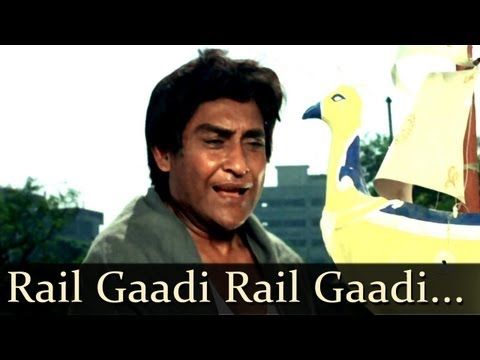
Moving to Mumbai, Jogi Thakur reinvents himself by entertaining children in a local park, using his natural charisma and love for storytelling to bring joy to them. It’s during this phase of his life that he performs the iconic song “Rail Gaadi,” a rhythmic, rap-like number that remains one of the most memorable aspects of the film. This song is often hailed as one of the earliest instances of rap-style music in Indian cinema, showcasing Ashok Kumar’s versatility and charm.
The emotional arc of Jogi Thakur in Ashirwad reaches its profound conclusion with his return to Chandanpur, his home village, where fate continues to challenge his moral resolve. After discovering that the daughter of his friend Baiju has been abducted and is in grave danger, Jogi Thakur confronts the estate’s corrupt chief accountant, who is attempting to rape her. In a desperate act to protect the girl, Jogi kills the accountant. The villagers, grateful for his heroic action, concoct a false story to protect him from punishment. However, true to his high principles, Jogi refuses to lie and insists on telling the truth in court, leading to his imprisonment.
In jail, Jogi Thakur continues to embody his philosophy of simplicity and goodness, tending to the garden and composing reflective, philosophical poems that reveal his inner peace despite his circumstances. His character inspires those around him, particularly Dr. Biren, the jail’s doctor, played by Sanjeev Kumar. Dr. Biren forms a deep bond with Jogi, coming to view him as a father figure.
In a poignant twist of fate, Jogi Thakur discovers that Dr. Biren is engaged to marry his estranged daughter, Neena. He overhears their conversations while tending to the garden and learns that Neena despises criminals. To protect her from the truth of his identity and to avoid tarnishing her happiness, Jogi takes great care to shield his face from her whenever their paths cross.
As Jogi Thakur is granted a pardon by the government for his good behavior, his health begins to deteriorate. Dr. Biren, now emotionally attached to him, shares the joyful news that Jogi’s release will coincide with the eve of his wedding to Neena. Yearning to witness his daughter’s wedding but determined to remain unrecognized, Jogi slips into the crowd of beggars who have gathered for the marriage feast, where the newlyweds are serving food. In this bittersweet moment, he manages to give his blessings to Neena without her realizing his true identity.
The climax of the film is deeply emotional as Jogi Thakur collapses on the road shortly after giving his blessing. Recognized by the people around him, word reaches Neena, who rushes to his side, finally meeting her father in his last moments. The film ends on this heart-wrenching note, with Jogi Thakur’s ultimate sacrifice of personal pride for the happiness of his daughter, underscoring the themes of selflessness, morality, and the profound emotional ties between a father and his child.
Ashirwad is indeed a rich emotional tapestry, not only due to its powerful narrative and performances but also through its deeply moving music, which beautifully complements the story’s themes of love, sacrifice, and life’s moral struggles. The film’s songs serve as poignant markers in Jogi Thakur’s journey, enriching his character and the emotional depth of the story.
The music of Ashirwad was composed by the talented Vasant Desai, whose work added a layer of emotional depth to the film’s narrative. With lyrics by the iconic Gulzar, the songs in the film reflect the thematic richness of the story, enhancing its emotional and philosophical undertones.
Harindranath Chattopadhyay (Baiju “Dholakia”) is also remembered for writing the iconic song “Rail Gaadi,” performed by Ashok Kumar in the film. This song remains one of the standout moments of Ashirwad and showcases Chattopadhyay’s contribution not only as an actor but also as a lyricist. This song, performed with great energy by Ashok Kumar, became a timeless classic and is often considered one of the first rap-like songs in Indian cinema due to its rhythmic delivery and catchy beat. The playful nature of “Rail Gaadi” contrasts with the heavier themes of the film, but it perfectly aligns with Jogi Thakur’s character, emphasizing his connection to children and his cheerful disposition despite life’s challenges.
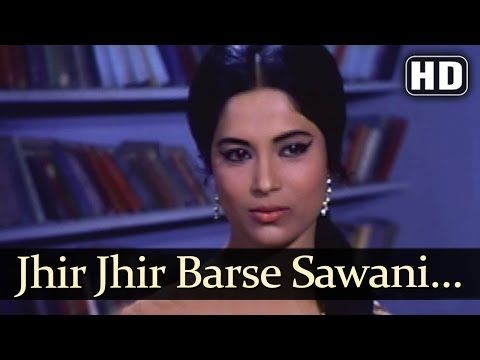
The other songs, with Gulzar’s evocative lyrics, especially “Ek Tha Bachpan” and “Jeevan Se Lambe Hai Bandhu Yeh Jeevan Ke Raste,” are deeply philosophical and filled with reflection, mirroring the inner struggles and emotional depth of Jogi Thakur’s journey. Vasant Desai’s music, paired with Gulzar’s poignant lyrics, created a soundtrack that remains memorable for its ability to touch upon the different shades of life—innocence, love, sacrifice, and the complexities of human existence.
Together, these songs not only enhance the emotional journey of Ashirwad but also highlight the inner conflicts and ultimate redemption of Jogi Thakur, whose steadfast principles are finally softened by his overwhelming love for his daughter. The combination of Hrishikesh Mukherjee’s sensitive direction, Ashok Kumar’s stellar performance, and the soulful music makes Ashirwad an unforgettable cinematic experience.
Ashirwad received significant acclaim, particularly for Ashok Kumar’s outstanding portrayal of Jogi Thakur. His performance earned him the following prestigious awards in 1969:
National Film Award for Best Feature Film in Hindi (1969): Ashirwad was also recognized as the Best Feature Film in Hindi at the National Film Awards, highlighting its overall excellence in direction, storytelling, and production. Directed by Hrishikesh Mukherjee, the film’s emotional depth and moral themes left a lasting impact on Indian cinema.
Filmfare Award and National Film Award for Best Actor (1969): Ashok Kumar was honored with this awards for his powerful and nuanced performance in Ashirwad. His role as Jogi Thakur, a man of principles who is ultimately overcome by his love for his daughter, was celebrated as one of his finest.
Ashirwad stands out not only for its emotional depth but also for Ashok Kumar’s unforgettable portrayal of Jogi Thakur, a man of unwavering principles who faces the ultimate test of character in the face of life’s harshest realities.
Veena plays the role of Jogi Thakur’s wife, an autocratic landlady. Her character is central to the conflict in the early part of the film. As the matriarch of the household, she exerts considerable influence over the family estate, which was bequeathed to Jogi Thakur when they married.
Her authoritarian and ruthless nature becomes apparent when she orders the eviction and burning of the poor villagers’ houses on the estate, an action carried out by the estate’s chief accountant. Unbeknownst to Jogi, his wife manipulates the situation by having the accountant obtain his signatures to approve the cruel order. When Jogi discovers what has happened and realizes that his wife was behind it, he is deeply shocked and morally outraged. This betrayal leads to the dramatic turning point in the film, where Jogi breaks his marriage and leaves his wife, vowing never to return.
Veena’s character represents the social and moral divide between Jogi’s principles and the oppressive behavior of the ruling class. Her cold and unsympathetic demeanor serves as a foil to Jogi’s compassionate and righteous nature, creating the emotional tension that drives the story forward.
Harindranath Chattopadhyay played the role of the village priest. His character is significant as he adds a philosophical and moral layer to the film, aligning with the central themes of the story. As a respected figure in the village, his character embodies wisdom and tradition, offering guidance to the villagers and playing a supportive role in Jogi Thakur’s journey.
Photos courtesy Google. Excerpts taken from Google.
 Writer Sunita