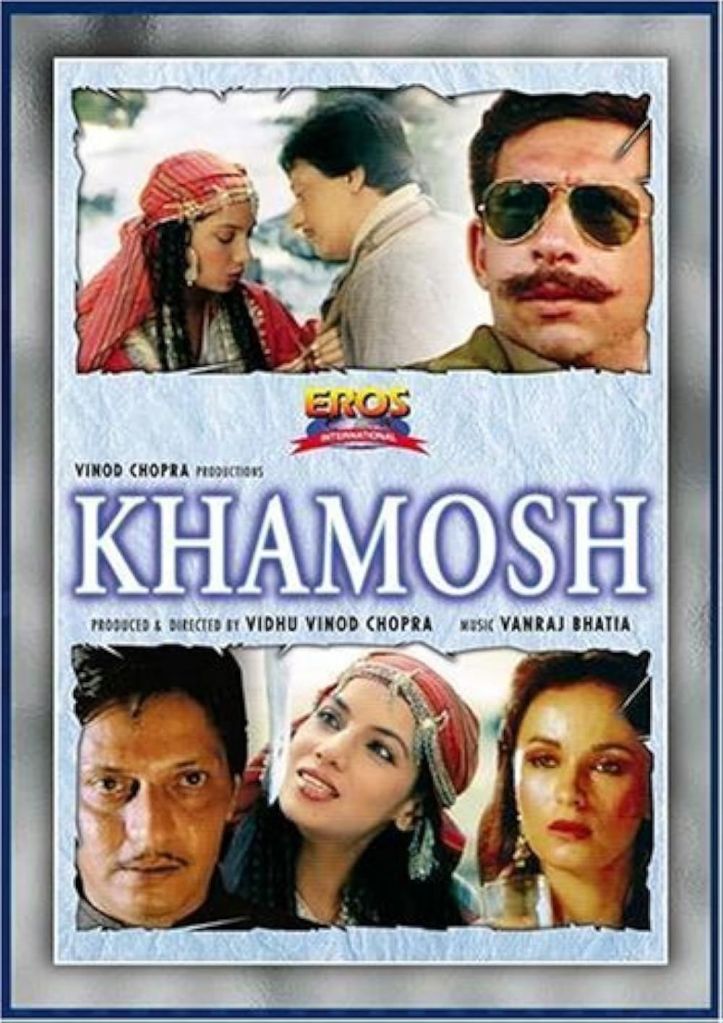
Khamosh (1985) is a notable Indian Hindi-language thriller directed and produced by Vidhu Vinod Chopra. The film stars an ensemble cast, including Naseeruddin Shah, Shabana Azmi, Amol Palekar, Soni Razdan, and Pankaj Kapoor.
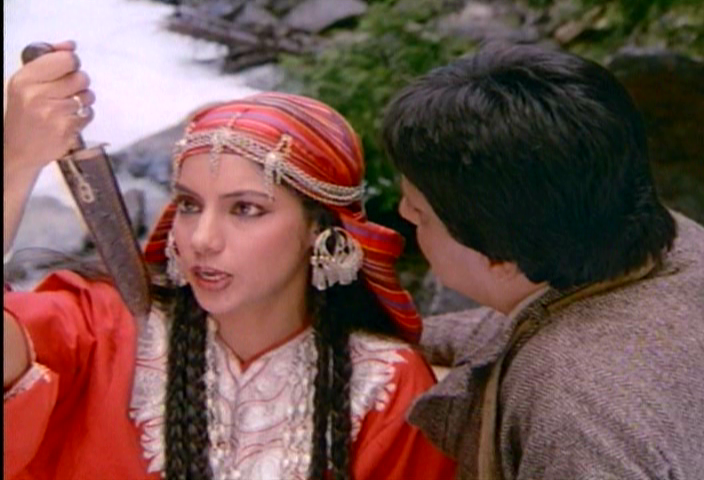
Khamosh opens with a serene yet symbolic scene set in the picturesque landscape of Pahalgam, Kashmir. A couple, Amol (played by Amol Palekar) and Shabana (played by Shabana Azmi), are shown embracing each other by the Lidder River. The tranquil setting contrasts with the fierce, rushing water of the river, which mirrors the turbulence that will soon unfold in their lives. Seated on a steadfast rock, the couple shares a moment of intimacy, making promises never to leave each other’s side. This tender scene introduces the audience to their relationship, but the ominous backdrop of the wild, relentless river foreshadows the emotional and psychological turmoil that will soon follow in the narrative.
The film expertly intertwines the thriller genre with a meta-cinematic exploration of secrets within a film crew, building a layered narrative. Soni Razdan’s character’s death being prematurely labeled a suicide adds to the intrigue, but it’s Naseeruddin Shah’s role as an undercover investigator—and ultimately, as her estranged brother—that pivots the story from a mere whodunit to a deeply personal quest for truth.
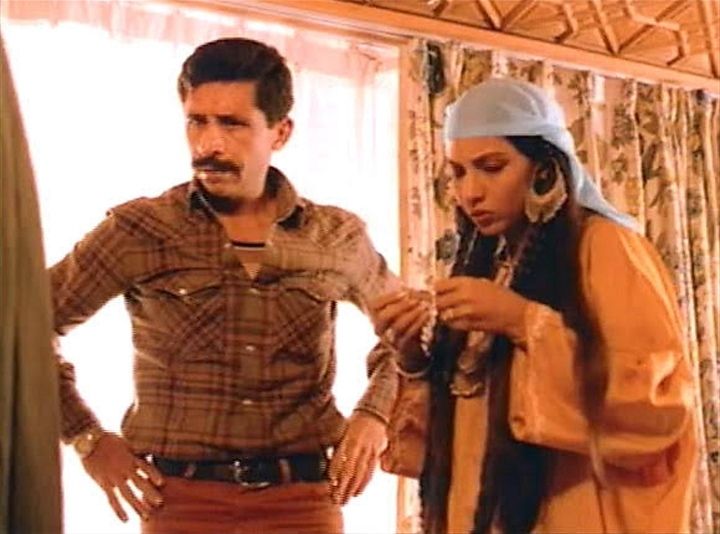
The discovery of the missing earring under Mrs. Bhal’s mattress, symbolizes hidden truths coming to light. This revelation escalates the psychological tension, with Sushma Seth’s composed portrayal of Mrs. Bhal adding a formidable layer to the ensemble’s dynamics. Shah’s dual motivation—justice for his sister and unveiling the circumstances of her death—heightens the stakes. His confrontation with the unwilling crew, who confirm Razdan’s career milestone yet avoid probing further, deepens the story’s mystery and their collective culpability or fear.
In Khamosh‘s gripping climax, the narrative tension culminates as Shabana Azmi and Naseeruddin Shah narrow down their suspicions and finally uncover the real killer among the film crew. Azmi’s keen observations lead to a pivotal moment when she discovers that the gun used in Ajit Vachchani’s murder had been taken from the film’s props and costumes box—an item that had mysteriously disappeared earlier. This realization confirms that the murderer is indeed one of their own, heightening the sense of betrayal and urgency.
The true mastermind’s identity shocks everyone: Amol Palekar, who until then had maintained an image of calm and affability, is revealed as the culprit. His composed exterior concealed a darker, desperate nature. It turns out that Soni Razdan’s character had been threatening him with defamation, which pushed him over the edge. In a bid to protect his reputation and career, Palekar killed Razdan. When Ajit Vachchani witnessed the crime, Palekar coerced him into aiding the cover-up, but as fear of exposure mounted, Palekar felt compelled to eliminate any potential threats, including Vachchani and Mrs. Bhal.
The complexity of Palekar’s deception deepens when it’s revealed that he planted evidence to mislead the investigation, including framing an innocent waiter by dumping his body in the river. This diversion kept suspicion away from him and stoked confusion among the crew and the authorities.
The final confrontation is tense and emotionally charged. Cornered by Azmi and Shah, Palekar breaks down and confesses, his carefully constructed facade shattering under the weight of his crimes. The confrontation showcases the psychological depth of the film, exposing how ambition, fear, and guilt can warp even the most seemingly composed individuals. The unraveling of Palekar’s character is a stark reminder of the consequences of desperation and the lengths to which someone might go to protect themselves, bringing Khamosh to a powerful and unforgettable conclusion.
The film’s focus on the unraveling of complex human motives, amplified by Shah’s revelation of his relationship to the deceased, showcases Khamosh as more than a typical murder mystery. It’s a study in ambition, guilt, and denial within a close-knit group whose loyalties and ambitions obscure the search for the truth, all set against the haunting serenity of Kashmir.
From the very beginning, Vidhu Vinod Chopra establishes a parallel between the reel life of the characters and their real selves. Early on, Amol, Shabana, and Soni Razdan (the first victim) reveal their authentic identities, blurring the lines between performance and reality. The narrative’s dark irony is highlighted when Soni’s dead body is discovered hanging from a tree branch.
Naseeruddin Shah’s dual role as both investigator and grieving brother intensifies the narrative’s emotional resonance, transforming the story into a personal crusade for justice. His relationship with the victim makes each revelation more impactful, especially when he challenges the crew. Sushma Seth’s portrayal of Mrs. Bhal, with her reserved yet potentially sinister presence, adds another layer of intrigue; the discovery of the earring under her mattress is a masterful plot device, unmasking both her and the concealed facets of the crew.
Shabana Azmi’s character, who refuses to embody the role of a helpless woman in real life, realizes that Soni’s last words—“Help! Please don’t kill me”—cannot be part of the script since they are spoken in English. This critical moment underscores the stark difference between the performative nature of their roles and the chilling reality unfolding around them.
Cinematographer Binod Pradhan enhances this tension through his strategic use of lighting. The harsh studio lights, typically reserved for the film shoot, are redirected toward the investigation scene whenever a significant breakthrough occurs. This technique visually connects the two worlds, blurring the lines between fiction and reality. Ultimately, a special red light is employed at the climax to expose the murderer, serving as a powerful metaphor for the revelation of hidden truths and the dark undercurrents of the film industry.
Binod Pradhan’s lens captures the beauty of Pahalgam. There are no flowing chiffons in the snow; instead, the visuals consist of slow-motion shots, such as a glass of water shattering, a piercing shower, and a lifeless body resting against a rock in the river. The harsh reality of the setting is punctuated by the sounds of gunshots echoing through the valley, intricately complemented by the gentle release of water streams, all masterfully captured by sound designer Mangesh Desai.
Editor Renu Saluja expertly balances the pacing of the film, knowing precisely when to allow the frame to breathe and when to accelerate the tension to a breaking point. Meanwhile, music composer Vanraj Bhatia channels the spirit of Bernard Herrmann, enveloping the serene landscape of Kashmir in a noir, almost Gothic ambiance. This combination of visual and auditory elements creates a rich tapestry that heightens the film’s suspense and emotional depth, underscoring the darker themes that permeate the narrative.
The minimalist style and psychological depth in Khamosh helped establish Vidhu Vinod Chopra as a talented filmmaker and paved the way for his later successes.
Photos courtesy Google. Excerpts taken from Google.
 Writer Sunita