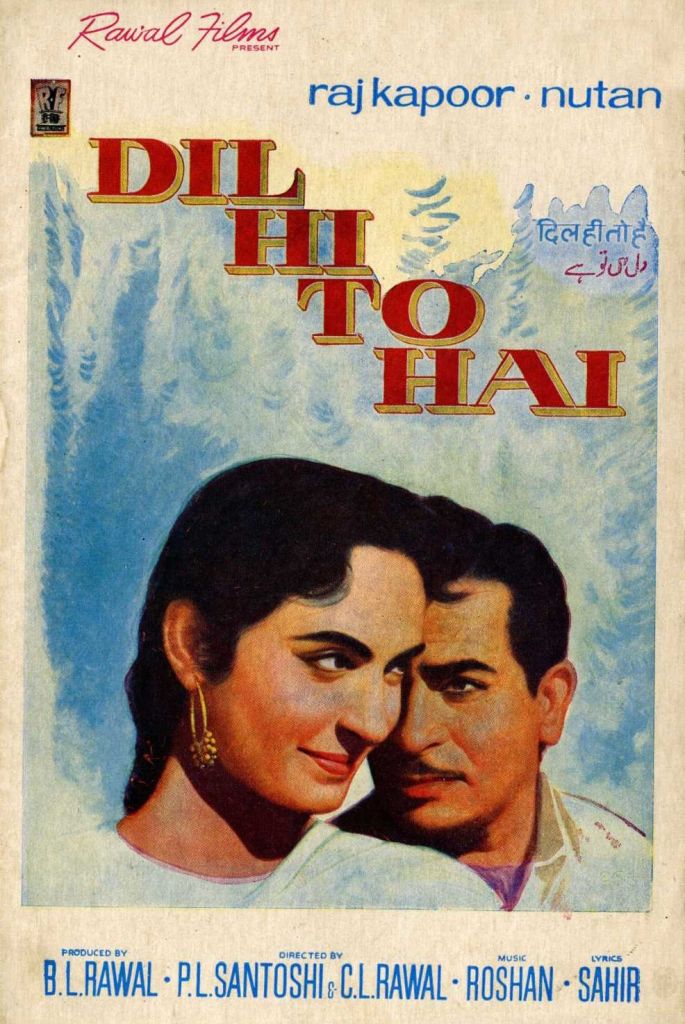
Dil Hi To Hai (1963) is an Indian Bollywood film directed by C.L. Rawal and P.L. Santoshi and produced by B.L. Rawal. It features Raj Kapoor and Nutan in pivotal roles, bringing together two iconic stars of Hindi cinema.
The film is notable for its blend of romance, drama, and social commentary, with Raj Kapoor portraying Chand, a man navigating the challenges of love, societal expectations, and familial obligations. Nutan plays Jamila Banu, his love interest, whose character and journey add emotional depth to the story.
Chand is the beloved son of Seth Durga Das, a wealthy and traditional businessman. However, Chand’s life takes an unexpected turn when he falls in love with Jamila Banu, a beautiful and talented dancer. Their love story faces significant obstacles due to their differing religious and cultural backgrounds, which leads to conflicts with his family.
To complicate matters further, Chand’s family wishes to marry him off to a woman of their choice, creating a rift between him and his father. The film explores whether Chand and Jamila’s love can triumph over societal norms and familial pressures.
The story addresses the challenges of love across cultural and religious divides. It highlights the conflict between personal desires and familial obligations. The film showcases the sacrifices individuals are willing to make for love.
The soundtrack, composed by Roshan with lyrics by Sahir Ludhianvi, is a highlight of the film. The songs are melodious, poetic, and integral to the narrative. Songs like “Laaga Chunari Mein Daag” (sung by Manna Dey) and “Nigahen Milane Ko Jee Chahta Hai” remain classics in the history of Hindi film music. “Tum Agar Mujhko Na Chaaho Toh Koi Baat Nahin“ is another gem and is cherished for its heartfelt lyrics and soothing melody. Sung by the inimitable Mukesh, the song beautifully conveys themes of unconditional love and acceptance. In this song reflects Chand’s unwavering love and willingness to respect the feelings of his beloved, even if they don’t reciprocate. “Dil Jo Na Keh Saka“ is another unforgettable song sung by Talat Mahmood and Lata Mangeshkar, it is a poignant duet that beautifully captures the essence of unspoken emotions and the longing between two lovers. It portrays the hesitation and vulnerability of two people who deeply care for each other but are unable to voice their feelings.
Dharm Chopra’s cinematography plays a crucial role in supporting the emotional and romantic themes of the film. His visual style reflects the mood of the story and the delicate balance between love, sacrifice, and family conflict.
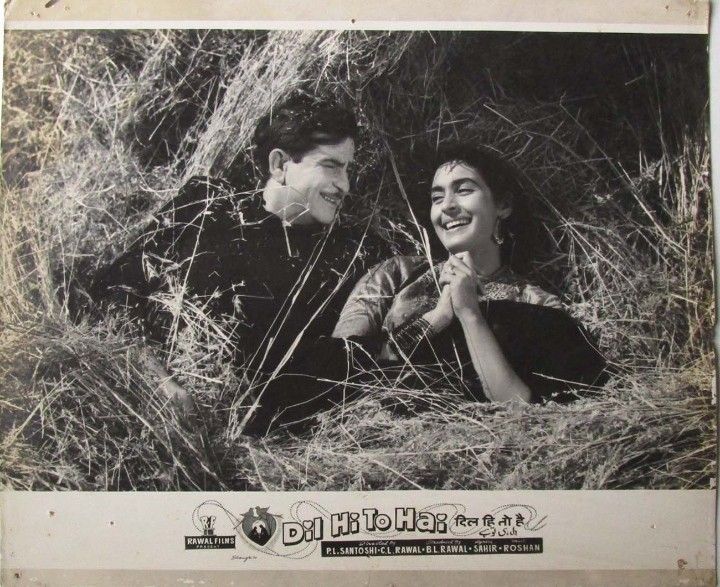
Chopra’s cinematography is soft and romantic, particularly in the love scenes between Raj Kapoor and Nutan. His use of natural lighting, close-ups, and thoughtful shot compositions ensures that the visual storytelling aligns with the film’s tone and helps convey the emotional states of the characters.
Raj Kapoor’s character embodies the classic persona, a man of strong emotions, conflict, and depth. He is not only romantic and charming but also someone who is deeply torn between love and duty. His performance as Chand is marked by his trademark emotional depth, which captures the complexities of the character’s love and anguish. He seamlessly transitions between moments of joy, sorrow, and frustration, making his portrayal deeply relatable.
Nutan plays Jamila Banu, a beautiful and talented dancer who falls in love with Chand. Her character is a woman of grace, dignity, and strength, who also faces societal obstacles due to her background and profession.
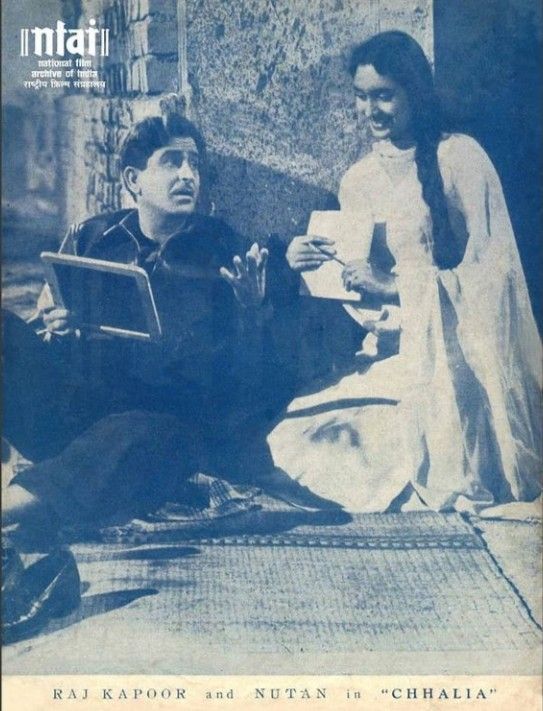
The chemistry between Raj Kapoor and Nutan is one of the highlights of the film. Both actors bring out the emotional complexity of their characters, making their love story believable and poignant. Their performances balance the tension between passion and societal pressure, creating a deeply touching portrayal of forbidden love.
Its exploration of interfaith relationships and societal pressures makes film an engaging and relevant watch, even decades after its release.
Photos courtesy Google. Excerpts taken from Google.
 Writer Sunita