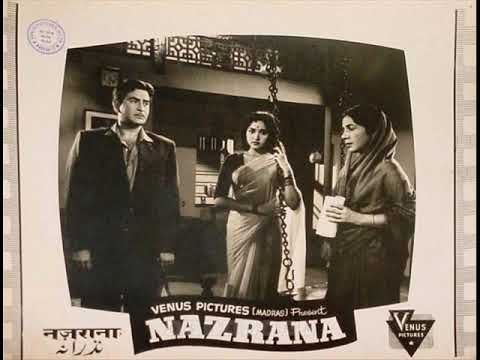
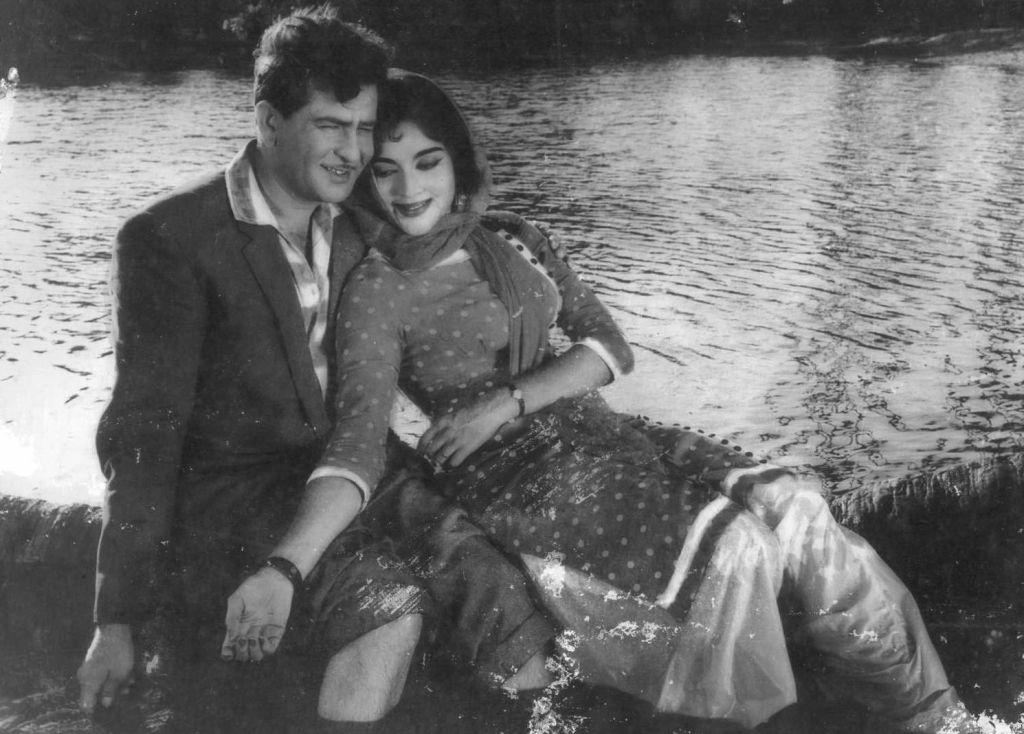
Nazrana (1961) is a poignant Hindi-language melodrama directed by C. V. Sridhar in his Hindi directorial debut. Produced by S. Krishnamurthy and T. Govindarajan, the film is a remake of Sridhar’s 1959 Tamil hit Kalyana Parisu. It features an engaging love triangle with a stellar cast, including Raj Kapoor, Vyjayanthimala, and Usha Kiran, alongside an extended cameo by South Indian star Gemini Ganesan.
The story revolves around Raj, Vasanthi, and Geeta, with their relationships and sacrifices forming the emotional crux of the narrative. The film delves into themes of love, loyalty, and heartbreak, with its emotional depth resonating strongly with the audience of the era.
Raj and Basanti are college mates who clash when she complains to the college principal about a love letter he sent her. They eventually fall in love after Basanti apologizes for misunderstanding him.
Basanti’s elder sister, Geeta, supports the family and develops feelings for Raj while nursing him during an illness. Unaware of Raj and Basanti’s love, she confesses her feelings to Basanti.
supports the family by stitching clothes. Raj rents the room upstairs in their house. He falls ill and in nursing him, Geeta falls in love with him. She confides her love to Basanti, who decides to sacrifice her love for the sake of her sister and convinces Raj to marry Geeta. Basanti, in a selfless act, persuades Raj to marry Geeta to ensure her sister’s happiness.
Raj, though initially indifferent toward Geeta, is reminded by Basanti’s letter of the importance of his role as a devoted husband. He ultimately accepts his duties, leading to a family life with Geeta and their son.
Basanti joins them and Geeta suspects that there is something on between Raj and Basanti and makes Basanti leave the house. Geeta later realizes the truth about Raj and Basanti’s past love but, consumed by guilt, she dies, asking Raj to promise that he will ensure Basanti becomes their child’s mother. Raj attempts to fulfill Geeta’s dying wish but arrives too late as Basanti marries her boss, Shyam. In a final act of love, Raj entrusts his son to Basanti as a symbolic gesture of their bond and walks away.
Both Basanti and Raj make heart-wrenching sacrifices for the sake of Geeta’s happiness. The love between Raj and Basanti remains unconsummated, adding a layer of tragedy to their story. The characters grapple with societal and familial obligations, often at the expense of personal desires.
This emotionally charged narrative, coupled with strong performances by Raj Kapoor, Vyjayanthimala, and Usha Kiran, makes Nazrana a memorable melodrama that resonates deeply with themes of love, guilt, and redemption.
The music of Nazrana is remembered for its emotional resonance and melodic richness. Ravi’s compositions, paired with Rajendra Krishan’s meaningful lyrics, contributed significantly to the film’s success, ensuring its place in the annals of classic Hindi film soundtracks.
Song “Baazi Kisi Ne Pyar Ki Jeeti Ya Haar Di” Sung by Mohammed Rafi, this melancholic track is an iconic representation of unfulfilled love and heartbreak. Picturized on Raj Kapoor, it became one of the era’s most celebrated sad songs. The melancholic tune and heartfelt lyrics perfectly capture the emotional turmoil of unrequited love.
Nazrana received recognition at the Filmfare Awards for its compelling storytelling. The film won the Filmfare Award for Best Story in 1961, awarded to C. V. Sridhar, the director and original writer of the story.
This recognition highlights Sridhar’s ability to craft a deeply emotional and engaging narrative that resonated with audiences. The film’s exploration of love, sacrifice, and familial bonds, paired with its memorable performances and music, made it a notable work in Hindi cinema of the era.
Photos courtesy Google. Excerpts taken from Google.
 Writer Sunita