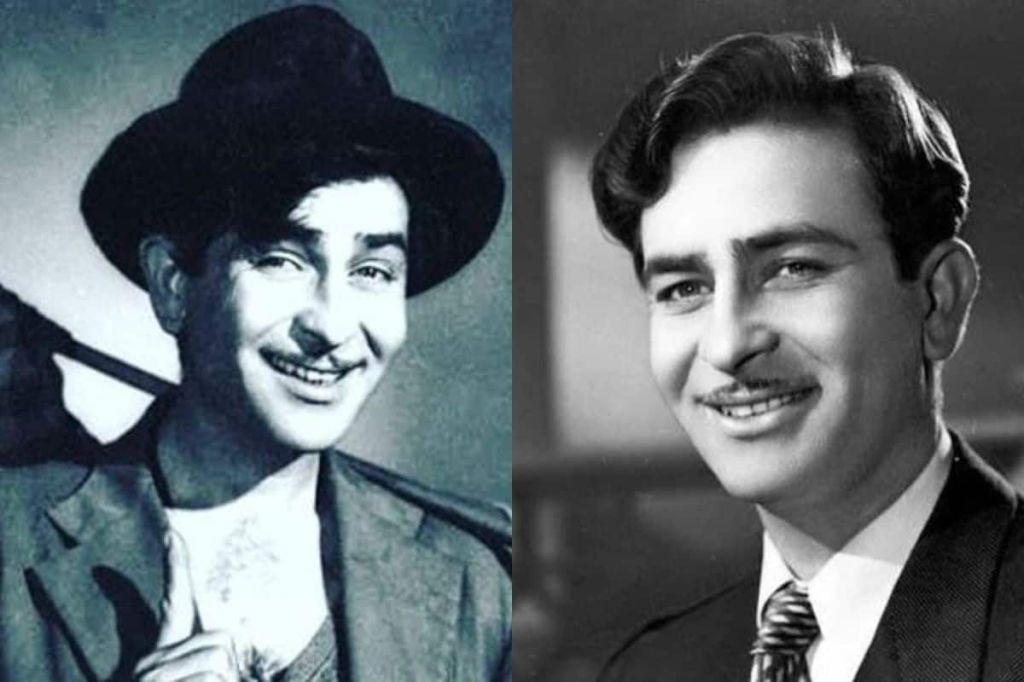
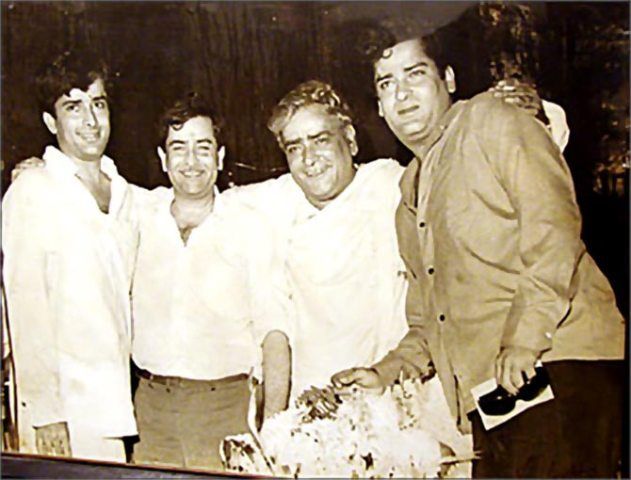
Raj Kapoor, often referred to as “The Showman of Indian Cinema,” was born on 14 December 1924. This milestone is expected to be commemorated widely by fans, film enthusiasts, and the Indian film industry, given his immense contributions to Indian cinema as an actor, director, and producer.
Raj Kapoor, originally named Shrishti Nath Kapoor, was born at Kapoor Haveli, a prominent family home in the Qissa Khwani Bazaar neighborhood of Peshawar, British India (now in Pakistan). He belonged to a distinguished Punjabi Hindu family of the Kapoor clan.
The Kapoor Haveli, built by Raj Kapoor’s grandfather, was a large, architecturally significant residence that symbolized the family’s prominence in Peshawar. It remains a historic landmark and a site of interest for fans of Indian cinema.
Raj Kapoor’s father Prithviraj Kapoor, a legendary actor and one of the pioneers of Indian cinema, who laid the foundation for the Kapoor family’s legacy in the film industry. As the eldest son of Prithviraj Kapoor, Raj grew up in a household steeped in the performing arts, which influenced his early aspirations and career in cinema.
The family later moved to Bombay (now Mumbai) as Prithviraj Kapoor pursued a career in films and theater, paving the way for Raj Kapoor’s eventual foray into the film industry.
At the age of ten, Raj Kapoor made his first appearance in a Hindi film, the 1935 movie Inquilab. His big break as a lead actor came in 1947 with Kidar Sharma’s romantic drama Neel Kamal, opposite Begum Para and a young Madhubala. Although the film was a semi-hit at the box office, it established Kapoor as a promising talent. However, his subsequent releases—Jail Yatra, Dil Ki Rani, and Chittor Vijay—did not perform well commercially.
Raj Kapoor founded R. K. Films in 1948 and produced his first directorial venture, Aag (1948), where he played a romantic idealist. Raj Kapoor at just 24 years old, making him India’s youngest filmmaker at the time. While Aag was critically acclaimed, it struggled commercially. It featured Kapoor and Nargis, marking the beginning of their legendary collaboration.
Barsaat (1949), directed and produced by Raj Kapoor under his own banner, Barsaat was a romantic drama that paired him with Nargis, his frequent collaborator and onscreen muse. The film’s stunning visuals, timeless music by Shankar-Jaikishan, and Kapoor’s portrayal of a passionate lover solidified his status as a romantic hero. The iconic image of Kapoor and Nargis under an umbrella became a symbol of eternal love in Indian cinema.
The R. K. Films logo, inspired by a scene from Barsaat, features Raj Kapoor holding Nargis in his arms. This image remains one of the most recognizable symbols in Indian cinema.
Andaz (1949), directed by Mehboob Khan, Andaz featured Raj Kapoor alongside Nargis and Dilip Kumar in a love triangle that explored themes of love, jealousy, and betrayal. Kapoor’s nuanced performance as the charming and misunderstood Raj made a significant impact, showcasing his ability to balance intensity and vulnerability. The film was a massive success, marking Kapoor as a bankable star.
The success of Andaz and Barsaat not only catapulted Raj Kapoor into superstardom but also paved the way for his illustrious career as an actor and filmmaker, securing his place as an integral part of Indian cinema’s most celebrated trio.
In the film Baware Nain (1950), Raj Kapoor plays the role of Chander, a romantic and kind-hearted young man who falls in love with the beautiful and spirited Tara, played by Geeta Bali. The film explores themes of love, misunderstanding, and redemption.
Deewana (1952), Raj Kapoor plays the role of Prakash is a masterclass in understated acting, a compassionate and selfless doctor who becomes entangled in a tragic love triangle. The film is a poignant tale of love, sacrifice, and misunderstandings, showcasing Raj Kapoor’s ability to portray deep emotional conflicts. He effectively conveys the internal struggle of a man torn between his own desires and his moral responsibilities. His chemistry with Madhubala adds depth to the film, making their interactions memorable.
Boot Polish (1954), Directed by Prakash Arora, with Kapoor producing. A poignant story about orphaned siblings struggling for survival. Film Won the Filmfare Award for Best Film.
Raj Kapoor’s films, including Awaara, Shree 420, and Mera Naam Joker, are considered timeless classics. These films showcased his unique blend of romance, social commentary, and pathos. Awaara‘s theme song “Awaara Hoon” resonated globally, especially in countries like the Soviet Union and China, where he remains a cultural icon. Shree 420 Tackled urban corruption and morality. Iconic songs like Mera Joota Hai Japani and Pyaar Hua Iqraar Hua in the film. As a filmmaker, he introduced bold themes and was unafraid to explore controversial topics such as the struggles of artists in Mera Naam Joker.
Jagte Raho (1956), Co-produced with Amit Maitra. A satirical film on urban hypocrisy and morality, featuring Raj Kapoor in a unique role. Film Won the Crystal Globe at the Karlovy Vary International Film Festival.
Chori Chori, a romantic comedy inspired by It Happened One Night. Jis Desh Mein Ganga Behti Hai, focused on dacoit reform, earning Raj Kapoor a Filmfare Award for Best Actor.
Phir Subah Hogi (1958), Raj Kapoor stars as Ram, a poor and idealistic young man burdened by poverty and social injustice. Raj Kapoor’s performance is widely praised for its depth and realism.
Parvarish (1958), Raj Kapoor plays Raja, a charming and idealistic young man who finds himself at the heart of a compelling drama about identity, upbringing, and familial bonds.
Kanahiya (1959), Raj Kapoor stars as Kanahiya, a carefree and mischievous yet deeply spiritual character inspired by the playful and divine nature of Lord Krishna. It showcases Raj Kapoor’s versatility as an actor and his ability to bring a blend of playfulness and gravitas to the screen.
Anari (1959), directed by Hrishikesh Mukherjee. A heartwarming tale of an honest, naive man (Kapoor) entangled in a misunderstanding. Raj Kapoor Won Filmfare Award for Best Actor. Songs like Sab Kuchh Seekha Humne and Kisi Ki Muskurahaton Pe Ho Nisar, which beautifully complement Raj Kapoor’s character and the film’s message.
Chhalia (1960), a melodrama set during the Partition, Kapoor played a sympathetic, kind-hearted man helping a separated woman reunite with her family. Film touching narrative of love, sacrifice, and humanity.
Sangam (1964), a love triangle shot in India and Europe, one of Indian cinema’s first films in Technicolor.
Teesri Kasam based on Phanishwar Nath Renu’s short story Mare Gaye Gulfam, Kapoor portrayed Hiraman, a simple bullock-cart driver who develops a tender bond with a nautanki (folk theater) dancer.
Around the World (1967), Raj Kapoor takes on the role of Raj Singh, a young Indian man who unexpectedly finds himself on a globe-trotting adventure. His portrayal of a naïve yet resilient traveler strikes a chord with the audience, making his misadventures both endearing and relatable.
In Abdullah (1980), Raj Kapoor played the role of Abdullah, a devout and kind-hearted Muslim living a solitary life in the desert. His character is central to the film’s narrative, symbolizing compassion, faith, and moral integrity amidst a tale filled with conflict and drama.
Abdullah’s life takes a dramatic turn when he rescues and raises a Hindu child who has been separated from his family. Despite the religious and societal tensions surrounding him, Abdullah’s unwavering belief in humanity and his sense of duty to protect the innocent form the emotional core of the story.
Raj Kapoor’s performance as Abdullah was poignant and impactful, showcasing his ability to portray a character deeply rooted in spiritual values while navigating the complexities of a fractured world. His portrayal added gravitas to the film and served as a reminder of the power of love and unity over prejudice and hatred.
Raj Kapoor was known for his ability to portray a wide range of characters, from the relatable “common man” and tragic roles. His expressions and body language often conveyed profound emotions, making his performances resonate deeply with audiences.
Inspired by Charlie Chaplin, Kapoor’s “tramp” character, especially in Awaara and Shree 420, became iconic. This persona depicted the struggles of the underprivileged while highlighting themes of hope and resilience.
Kapoor’s romantic pairings, particularly with Nargis, created some of Indian cinema’s most memorable moments. Kapoor’s ability to lip-sync with heartfelt conviction, paired with timeless songs composed by Shankar-Jaikishan and sung by legends like Mukesh, added emotional depth to his roles.
Raj Kapoor’s films combined powerful storytelling, larger-than-life characters, and universal themes of love, poverty, and humanity. His deep understanding of cinematic art, from acting to production design, made his movies grand spectacles that left lasting impressions.
Kapoor’s films were known for their timeless music, with collaborations with legendary composers like Shankar-Jaikishan and lyricists like Shailendra and Hasrat Jaipuri, and playback singer Mukesh became hallmarks of his work.
Raj Kapoor’s dual roles as actor and director enabled him to shape the golden era of Indian cinema. As an actor, he connected emotionally with audiences, while as a director, he pushed boundaries and elevated the artistic and commercial scope of filmmaking. His works remain timeless, continuing to inspire and entertain generations worldwide.
Raj Kapoor’s birth and lineage mark the beginning of a legacy that would profoundly shape Indian cinema for decades to come. Raj Kapoor is indeed celebrated as one of the greatest and most influential figures in the history of Indian cinema. His work as an actor, director, and producer not only defined Indian cinema’s golden era but also earned him enduring admiration both in India and internationally.
Raj Kapoor received numerous accolades, including three National Film Awards and 11 Filmfare Awards. He was also honored with the Padma Bhushan (1971) and the Dadasaheb Phalke Award (1987), India’s highest award in cinema.
Raj Kapoor’s films were remarkable for their global appeal, making him one of the most internationally recognized and celebrated Indian filmmakers of his time. His works transcended cultural and linguistic boundaries, becoming commercial successes in diverse regions such as Asia, the Middle East, the Caribbean, Africa, and the Soviet bloc.
In countries like China and Japan, Awaara (The Vagabond, 1951) became a phenomenal success. The theme song “Awaara Hoon” was so popular that it was translated into multiple languages and embraced by audiences who connected with its universal themes of struggle, love, and resilience. His films were admired for their melodious music, emotional depth, and relatable characters, which resonated strongly with Asian sensibilities.
Raj Kapoor’s contributions transcend entertainment; his films explored the soul of India while connecting with audiences worldwide. His 100th birth anniversary will undoubtedly be a time to celebrate his remarkable journey and legacy as a global cinematic legend.
Photos courtesy Google. Excerpts taken from Google.
 Writer Sunita