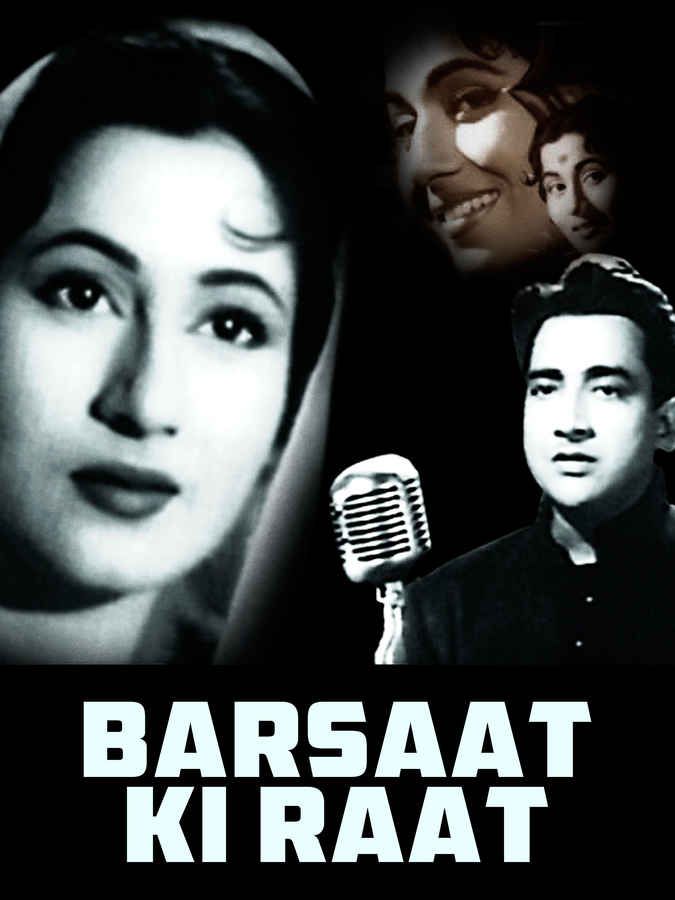
Barsaat Ki Raat (1960) is a celebrated romantic musical film featuring Madhubala, Bharat Bhushan, and Shyama. Directed by P. L. Santoshi, it is considered a defining film in the romantic musical genre. The film’s Muslim-social setting, poetic storytelling, and Roshan’s unforgettable music contributed to its lasting impact.

Amaan is a talented and struggling Urdu poet trying to making a mark in the world of music. Shabnam, who has not seen him yet, loves his songs and poetry. When they meet accidentally in a stormy rainy night, Amaan and Shabnam fall in love with each other. Luck comes his way as he is appointed as a tutor for Shabnam’s little sister Razia.
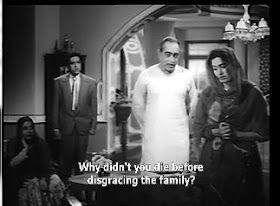
Amaan and Shabnam start romancing each other and plan to marry soon. However, Shabnam’s father Khan Bahadur is not much impressed of Amaan due to Amaan’s poverty. He insults and expels Amaan from their house and fixes a devastated Shabnam’s marriage with Aftab Ahmed of Lucknow against her wish. Khan Bahadur sets off for Lucknow with his family. Amaan also arrives at Lucknow in search of his fortune. Coincidentally, Amaan discovers that Aftab, the friend in whose house he is staying is actually the future husband of his lady love Shabnam.
Amaan leaves Aftab’s house without noticing him. Meanwhile, Amaan’s old friends Shabab and Shama arrive at Lucknow to participate in a qawwali competition, in which they keep losing. Shama is in love with Amaan, but he does not know this. Amaan begins to compose shayaris for the competition and very quickly he carves a niche for himself in the musical world. However, submerged in the painful memory of his lost love Shabnam, Amaan does not realise Shama’s unconditional love for him. Anyway, he becomes the heart and soul of Shama’s musical troupe. With Amaan’s beautiful voice and shayaris, Shama’s group attains popularity and win in the competition.
A shattered and imprisoned Shabnam overhears Amaan’s voice on radio and learns that Aman is still in Lucknow. Shabnam somehow reaches one of Aman’s poetic duels. Shama faints during the program when she learns that Amaan is in love with someone else. Her sickness gives a platform Shabnam and Amaan to meet each other. Khan Bhadur and Shekhar reach the spot searching for the missing Shabnam. At this point Shabnam’s mother revolts against Khan Bahadur, for she wants her daughter to be happy. At the end, Khan Bhadur gives in and the lovers reunite on another rainy night.
Shabnam’s admiration for Amaan’s poetry before even meeting him reflects the film’s romantic idealism, where love is not just physical attraction but also an intellectual and artistic connection. Their fateful meeting in the rain is a classic trope, heightening the film’s poetic and dramatic essence.
Khan Bahadur’s disapproval of Amaan due to his financial instability is a common theme in romantic tragedies, emphasizing class struggles. The twist of Amaan unknowingly seeking shelter at Aftab’s house adds to the film’s dramatic tension, making his suffering more poignant.
Shama’s silent love for Amaan introduces a parallel heartbreak, adding another emotional layer. Her unspoken emotions make her a tragic character, much like the selfless lovers often found in classic Urdu poetry. Amaan’s eventual rise to fame through qawwali competitions also highlights the film’s musical brilliance, especially with Sahir Ludhianvi’s thought-provoking lyrics and Roshan’s spellbinding compositions.
Madhubala’s performance as Shabnam is often praised for its grace and emotional depth. Her ethereal beauty, expressive eyes, and effortless charm would being grace and depth to the character. Her strong performances in romantic and emotional roles, she would excel in portraying Shabnam’s journey from admiration to love, heartbreak, and ultimate reunion. She can showcase romantic innocence, definance against family pressure, and deep sorrow, making the audience root for her love story.
K. N. Singh was known for portraying sophisticated yet menacing antaginists, often playing roles of powerful and authoritative figures. Based on the story, he would likely be a perfect fit for the rôle of Khan Bahadur, Shabnam’s strict and domineering father.
As Khan Bahadur, K. N. Singh’s commanding presence and sharp dialogue delivery would enhance the character’s authority. His disapproval of Amaan due to his poverty, his forceful decision to arrange Shabnam’s marriage with Aftab, and his eventual transformation in the climax would provide him a well-rounded role. His confrontation with Amaan and his final breakdown when Shabnam’s mother revolts could be highlights of his performance.
The film’s themes of love, poetry, longing, and music, the soundtrack would play a crucial role in shaping the emotional depth of the story. Here’s a suggested list of songs that could fit naturally into the narrative:-
“Garjat Barsat Sawan Aayo Re” is a beautiful monsoon raag-based classical song that perfectly captures the mood of romance and longing during the rainy season.
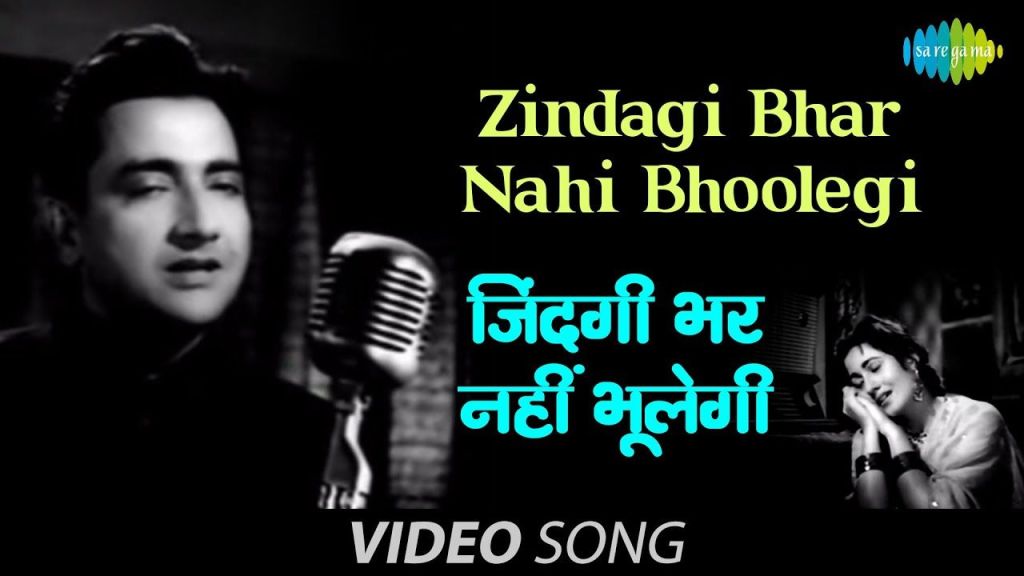
First meeting in the rain, “Zindagi Bhar Nahi Bhoolegi Barsaat ki Raat”, Amaan and Shabnab meet accidentally on a stormy night and fall in love. A soft, orchestral duet capturing their instant connection and the magical ambiance of rain.
“Na To Karwan Ki Talash Hai” and “Yeh hai Ishq Ishq” the most legendary qawwalis in Hindi cinema, known for their mesmerizing poetry, soulful rendition, and grand musical scale. Amman secretly helps Shama’s group by writing shayaris, leading them to victory in the qawwali competition.
“Mujhe Mil Gaya Bahana Teri Deed Ka” is a romantic melody captures the joy of love and longing, expressed through Rafi’s soulful voice and Roshan’s melodious composition.
The film’s blend of romance, poetry, and music ensures its timeless appeal.
Photos courtesy Google. Excerpts taken from Google.
 Writer Sunita