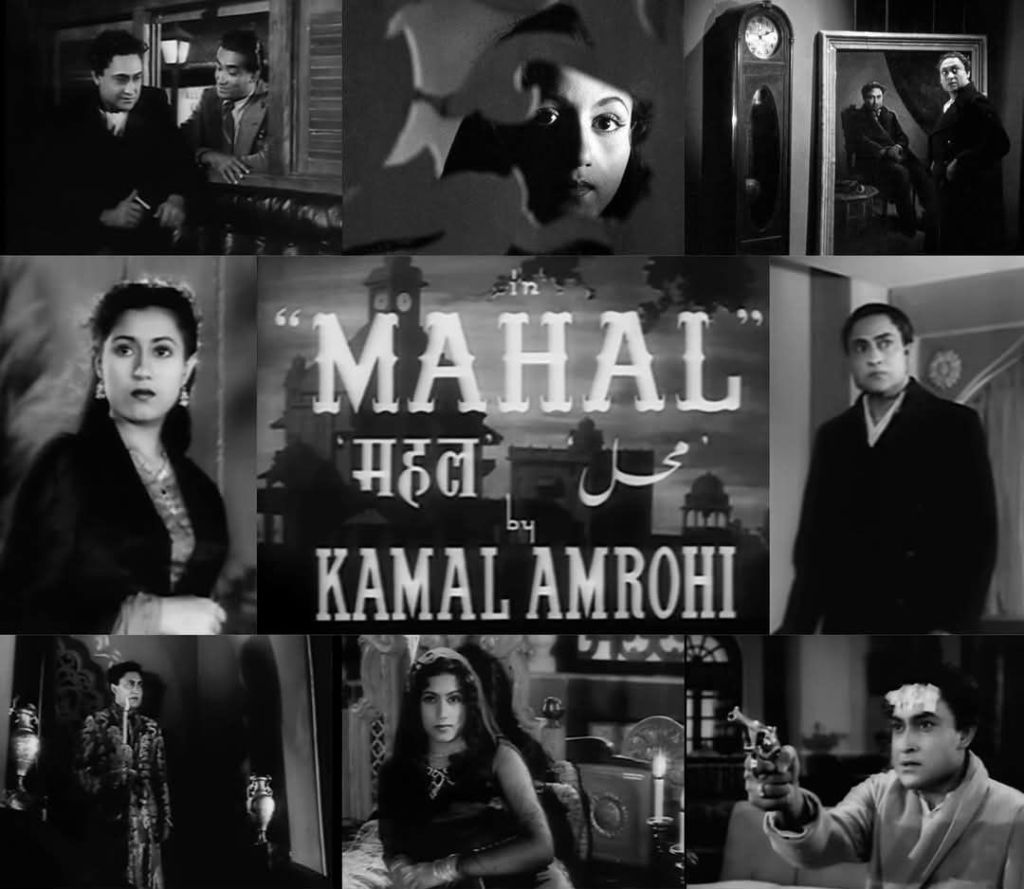
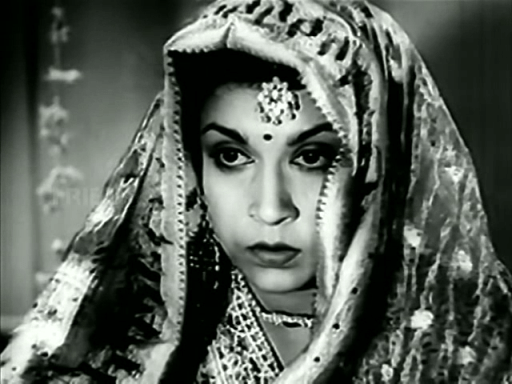
Mahal (1949) is indeed a landmark film in Indian cinema, credited with being Bollywood’s first horror film and a pioneer in the genre of psychological supernatural thrillers. Film produced by Savak Vacha and Ashok Kumar under the banner of Bombay Talkies, and directed by Kamal Amrohi as his directorial debut. The film centres on a screenplay written by Amrohi, while its music is composed by Khemchand Prakash.
In Prayag, a beautiful yet abandoned palace stands as a monument to an incomplete love story. When Hari Shankar (Ashok Kumar) moves into the mansion, the old gardener recounts its tragic past.
Decades ago, a man built the palace for his beloved Kamini (Madhubala), who awaited him each night. However, he always left before dawn. One stormy night, his ship sank, leaving Kamini forever waiting. She died shortly after, but before parting, the man had promised that their love would never perish.
While exploring the mansion, Shankar discovers an old photograph—and is stunned to see that the man in the portrait looks exactly like him. That night, he hears a woman singing and follows the voice, only to glimpse a mysterious figure who vanishes before his eyes. His friend Shrinath (Kanu Roy) arrives and dismisses Shankar’s suspicions of a past-life connection, but when the apparition reappears and leaps from the terrace into the water, they find no trace of her below.
Determined to uncover the truth, Shankar returns to the palace, where Kamini insists she is real. Shrinath warns him that she will lure him to his doom, but the ghost commands him to stay away. Desperate to reunite in the flesh, Kamini tells Shankar that if she can possess the body of a woman he desires, she can return to life. She urges him to look at the gardener’s daughter and decide if he finds her beautiful enough for Kamini’s rebirth.
Shankar’s father, alarmed by his growing obsession, forces him to leave. Shankar eventually marries Ranjana (Vijayalakshmi) and moves far away to escape Kamini’s hold. However, his nocturnal disappearances continue, arousing Ranjana’s suspicion. Two years later, she secretly follows him and overhears Kamini’s chilling demand: Shankar must kill the gardener’s daughter to bring Kamini back to life. Devastated, Ranjana drinks poison and accuses Shankar of betrayal in a dying statement to the police.
In court, the gardener’s daughter, Asha, is summoned as a witness, accused of causing the rift between Shankar and Ranjana. In a shocking revelation, Asha confesses that she posed as Kamini’s ghost—having fallen in love with the man in the portrait, who bore an uncanny resemblance to Shankar. Despite this confession, Shankar is sentenced to death.
At the last moment, the police discover Ranjana’s letter admitting to suicide, and Shankar is freed. He rushes to Shrinath’s place, but fate is unforgiving—Shankar collapses and dies. The film closes with a grieving Asha and Shrinath walking away, leaving behind an unfulfilled love that spans lifetimes
Mahal captures its central themes of obsession, reincarnation, and tragedy well. The film masterfully blurs the lines between supernatural horror and psychological drama, leaving the audience questioning whether Kamini is truly a ghost or a clever deception.
Shankar’s descent into obsession and his ultimate fate make the film deeply melancholic. His belief in past-life love consumes him to the point where he loses everything, including the woman he longs for. The reveal that Kamini was never a ghost but Asha in disguise adds an intriguing twist, shifting the film from supernatural horror to psychological manipulation.
The ending is particularly haunting—Shankar’s desperate hope of uniting with Asha/Kamini in the next life remains unfulfilled in this one, reinforcing the film’s tragic tone. His wrongful conviction, the last-minute revelation of his innocence, and the realization that he has lost Asha forever make for a poignant climax.
Madhubala’s screen test for Mahal highlights not only her eventual transformation into the ethereal Kamini but also the crucial role of cinematography in shaping an actor’s on-screen presence.
Josef Wirsching, the German cinematographer, was known for his mastery of light and shadow, particularly his use of deep focus and moody lighting. The claim that he was instructed to capture Madhubala at her worst—possibly to dissuade Kamal Amrohi from casting her—adds an intriguing behind-the-scenes layer to Mahal‘s production.
Amrohi taking charge of the second screen test and arranging the lighting himself suggests his strong conviction that Madhubala was the right choice. His instincts proved right, as her performance and haunting beauty became Mahal‘s defining features, cementing her as a star.
Kamal Amrohi’s directorial debut demonstrated a remarkable command over atmosphere, psychological tension, and innovative filmmaking techniques that were rare in Hindi cinema at the time. It’s interesting that the studio executives insisted on brightening the lighting—had Amrohi’s original vision been retained, the film might have had an even stronger noir or gothic feel
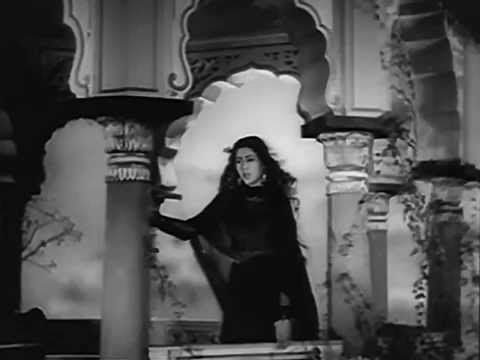
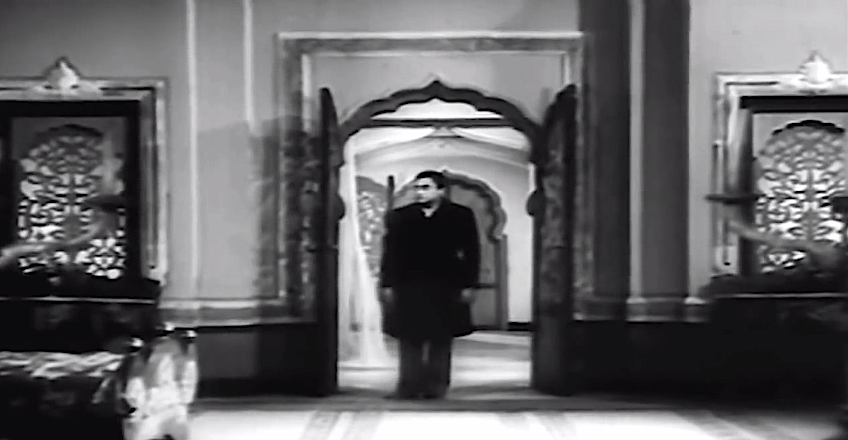
The film’s German Expressionist influence is particularly fascinating—its use of deep shadows, stark contrasts, and dramatic lighting adds to the eerie and mysterious mood of the story. Josef Wirsching’s cinematography plays a crucial role in creating the haunting imagery, especially in the scenes where Madhubala’s character, Kamini, appears and disappears through the haveli’s long corridors. It’s a visual language that heightens the sense of both supernatural mystery and psychological unease.
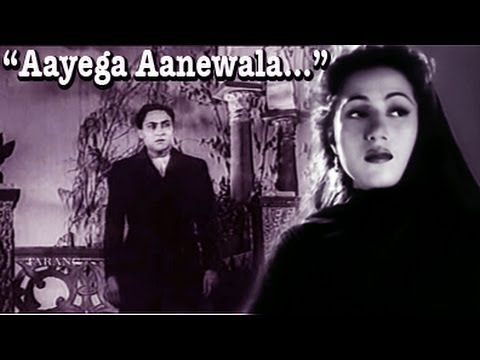
Another key element that elevates Mahal is its sound design and music. Khemchand Prakash’s score, especially “Aayega Aanewala,” is not just a song but an integral part of the film’s atmosphere. The slow build-up, with Lata Mangeshkar’s ethereal voice seemingly emerging from nowhere, adds to the sense of an unseen presence haunting Shankar.
The tantalizing ambiguity of the film’s plot—whether Kamini is a ghost, a hallucination, or a deception—keeps the audience engaged, making Mahal one of the earliest Indian films to explore psychological horror in such depth.
Mahal was edited by Bimal Roy, who later became one of Indian cinema’s most celebrated filmmakers. His work on Mahal is particularly significant because of the way he structured the film’s eerie atmosphere, suspenseful pacing, and smooth transitions between past and present. His editing helped maintain the film’s haunting tension, ensuring that the psychological and supernatural aspects blended seamlessly
Mahal owes much of its enduring appeal to the mesmerizing performances of Ashok Kumar and Madhubala.
Ashok Kumar, delivers a masterful performance as Shankar, the aristocrat consumed by his obsession with a mysterious past-life love. His ability to convey deep emotions without excessive dialogue, relying instead on his expressive eyes, subtle body language, and well-timed silences, makes his portrayal incredibly compelling. His haunted expressions and frenzied gaze when following Kamini’s apparition add a layer of psychological depth, making his obsession feel both tragic and believable.
Madhubala, in one of her breakthrough roles, is ethereal and enigmatic as Kamini. She exudes an almost supernatural charm, making it easy to believe that she could be an actual spirit luring Shankar into a doomed fate. Her performance, blending seduction, sorrow, and mystery, played a crucial role in making her a major star. Mahal cemented her reputation not just as a beauty but also as an actress capable of carrying complex roles.
Together, Ashok Kumar and Madhubala create an on-screen chemistry that enhances the film’s haunting, dreamlike quality. Their interactions, filled with longing and an eerie inevitability, make Mahal an unforgettable cinematic experience.
Photos courtesy Google. Excerpts taken from Google.
 Writer Sunita