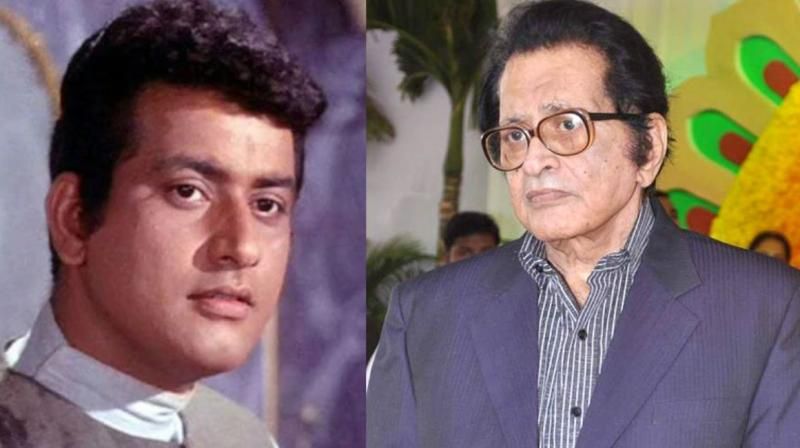
Manoj Kumar (born Harikrishan Giri Goswami; 24 July 1937 – 4 April 2025) was an Indian actor, film director, screenwriter, lyricist, and editor who worked in Hindi cinema. In a career spanning over four decades, he acted in 53 films. Widely regarded as one of the most successful actors in the history of Indian cinema, he was known for pioneering the trend of patriotic films, earning him the nickname “Bharat Kumar.”
Kumar was born into a Punjabi Hindu Brahmin family in Abbottabad, a town in the North-West Frontier Province of British India (present-day Khyber Pakhtunkhwa, Pakistan). In the aftermath of the Partition, when he was just 10 years old, his family migrated from Jandiala Sher Khan to Delhi.
He went on to pursue a Bachelor of Arts degree from Hindu College, University of Delhi, before trying his luck in the film industry. As a young boy, he deeply admired actors Dilip Kumar, Ashok Kumar, and Kamini Kaushal. Inspired particularly by Dilip Kumar’s character named Manoj in the film Shabnam, he adopted Manoj Kumar as his screen name.
After a little-noticed debut in Fashion (1957), Manoj Kumar appeared in a string of forgettable roles in films like Sahara (1958), Chand (1959), and Honeymoon (1960). His first leading role came in Kaanch Ki Gudiya (1961), followed by films such as Piya Milan Ki Aas (1961), Suhag Sindoor (1961), and Reshmi Roomal (1961).
His first major commercial breakthrough came in 1962 with Vijay Bhatt’s Hariyali Aur Rasta, in which he starred opposite Mala Sinha. The film’s success established him as a bankable lead. This was followed by a string of hits including Shaadi (1962), Dr. Vidya (1962), and Grahasti (1963), all of which performed well at the box office.
Kumar found another major success as the leading man in Raj Khosla’s mystery thriller Woh Kaun Thi? (1964). The film emerged as a superhit, widely acclaimed for its taut screenplay and hauntingly melodious music composed by Madan Mohan. Songs like “Lag Jaa Gale” and “Naina Barse Rimjhim”, both soulfully rendered by Lata Mangeshkar, became instant classics and are still considered among the finest romantic ballads in Hindi cinema. The film not only showcased Kumar’s versatility as an actor but also established him as a reliable presence in suspense dramas.
1965 proved to be a turning point in Manoj Kumar’s career, initiating his steady rise to stardom. His first release of the year was the patriotic drama Shaheed, based on the life of revolutionary freedom fighter Bhagat Singh. The film received widespread critical acclaim and was even praised by the Prime Minister of India, Lal Bahadur Shastri. It emerged as a major box office success, further strengthening Kumar’s association with nationalistic themes.
He followed this with the romantic drama Himalay Ki God Mein, which turned out to be a blockbuster, firmly establishing him as a bankable leading man. Before the year ended, he scored another hit with the suspense thriller Gumnaam (1965), which further cemented his versatility.
Kumar’s success streak continued into 1966 with Do Badan, where he reunited with director Raj Khosla and starred opposite Asha Parekh. The film was praised for Khosla’s emotive direction, Kumar’s restrained performance, and a memorable soundtrack by Shakeel Badayuni, featuring enduring classics such as “Raha Gardishon Mein Hardam” (sung by Mohammed Rafi) and “Lo Aa Gayi Unki Yaad” (a poignant solo by Lata Mangeshkar).
He delivered yet another hit that year with Sawan Ki Ghata, directed by Shakti Samanta, co-starring Sharmila Tagore.
After the Indo-Pakistani War of 1965, Prime Minister Lal Bahadur Shastri personally urged Manoj Kumar to create a film that embodied the spirit of his now-iconic slogan, “Jai Jawan, Jai Kissan” (“Hail the soldier, hail the farmer”). The result was Kumar’s directorial debut, Upkar (1967) a patriotic drama that struck a powerful chord with audiences. The film opened to widespread critical acclaim and went on to top the box office, ultimately being declared an All-Time Blockbuster.
Its soundtrack was equally celebrated, ranking as the sixth best-selling Hindi film album of the 1960s. The song “Mere Desh Ki Dharti”, sung by Mahendra Kapoor, became a timeless patriotic anthem, still played during Republic Day and Independence Day celebrations in India.
Upkar earned Kumar the National Film Award for Second Best Feature Film, as well as his first Filmfare Award for Best Director, cementing his identity as “Bharat Kumar” a symbol of patriotic Indian cinema.
He delivered another hit with Patthar Ke Sanam, opposite Waheeda Rehman and Mumtaz. In 1968, he appeared alongside Raaj Kumar and Waheeda Rehman in Neel Kamal, which became a blockbuster and the third highest-grossing film of the year. That same year, he shared the screen with Dilip Kumar in Aadmi, which also proved a commercial success.
In 1969, Kumar’s sole release was Sajan, directed by Mohan Sehgal and co-starring Asha Parekh. Although an adaptation of the 1951 film Happy Go Lovely, Sajan held its own at the box office and emerged as one of the top ten highest-grossing films of the year.
Manoj Kumar returned to patriotic themes in 1970 with the ambitious film Purab Aur Paschim, which explored the cultural contrast between life in the East and the West. The film was a massive blockbuster, both in India and internationally. In the United Kingdom, it was released in 1971 and enjoyed a record-breaking theatrical run of over 50 weeks in London.
In addition to Purab Aur Paschim, Kumar had three other releases in 1970: Yaadgaar, Pehchan (opposite Babita), and Mera Naam Joker. Yaadgaar performed well commercially, while Pehchan was a solid hit.
After delivering a semi-hit with Balidaan in 1971, Kumar bounced back strongly in 1972 with two major successes: Be-Imaan, directed by Sohanlal Kanwar, and his own directorial venture Shor. Both films were blockbusters and received an overwhelmingly positive response from audiences.
Shor featured the evergreen song “Ek Pyar Ka Nagma Hai” a soul-stirring duet by Lata Mangeshkar and Mukesh, composed by Laxmikant-Pyarelal. The song became an instant classic and was ranked #29 on the Binaca Geetmala annual list for 1972.
Kumar’s performance in Be-Imaan earned him his first and only Filmfare Award for Best Actor, while he also won the Filmfare Award for Best Editing for Shor, showcasing his multifaceted talent as an artist both in front of and behind the camera.
In 1977, Manoj Kumar returned to the screen with two releases: the long-delayed Amaanat and the devotional biopic Shirdi Ke Sai Baba. Both films emerged as commercial successes, further showcasing his enduring popularity. After taking a year-long break, Kumar appeared in the Punjabi-language hit Jat Punjabi, extending his reach beyond Hindi cinema and reinforcing his pan-Indian appeal.
In 1981 that Kumar would deliver the most monumental film of his career — the historical patriotic epic Kranti. Not only did he direct, produce, and star in it, but he also brought together a stellar ensemble cast: Dilip Kumar, Hema Malini, Shashi Kapoor, Parveen Babi, and Shatrughan Sinha. The film was a sweeping saga of India’s freedom struggle set in the 19th century, filled with grandeur, intense patriotism, and action.
Kranti was released at a time when Indian cinema was undergoing major transitions, but it towered over every other release that year. It became the biggest box office hit of 1981. The film’s colossal success, Kranti also proved to be the last major box office triumph of Manoj Kumar’s career. It stood as a fitting final chapter to a body of work defined by nationalism, idealism, and powerful storytelling — a cinematic swan song that captured the spirit of the nation and sealed his legacy as “Bharat Kumar”.
The film’s popularity reached fever pitch across North India — in regions like Delhi, Rajasthan, Uttar Pradesh, and Haryana, local markets brimmed with Kranti themed merchandise, including T-shirts, jackets, vests. The Kranti phenomenon had truly swept the nation.
Manoj Kumar is widely regarded as one of the greatest actors in Indian cinema history, celebrated for his distinctive style, intense performances, and pioneering contributions to patriotic storytelling. Known fondly as Bharat Kumar, he carved a niche for himself through films that championed national values, social issues, and the spirit of sacrifice.
Beyond his acting prowess, Kumar is also recognized as one of Hindi cinema’s finest directors, standing alongside stalwarts like Raj Kapoor, Raj Khosla, and Mehboob Khan. His directorial ventures such as Upkar, Roti Kapada Aur Makaan and Kranti not only redefined mainstream cinema but also drew millions to the theatres. Each reportedly selling between 40 to 50 million tickets in India alone, ranking among the biggest blockbusters in the nation’s history.
Throughout the 1960s and 1970s, Kumar remained a box office mainstay, appearing eight times in Box Office India’s list of Top Actors (1967–1969, 1972–1976). His screen presence was often complemented by repeated collaborations with celebrated co-stars such as Prem Nath, Pran, Prem Chopra, Kamini Kaushal, and Hema Malini, forming a consistent ensemble that resonated with audiences.
Off-screen, Kumar maintained deep bonds of friendship with some of the industry’s most iconic figures, including Dilip Kumar, Raj Kapoor, Mukesh, Mahendra Kapoor, Dharmendra, Rajendra Kumar, and Shashi Kapoor relationships that reflected his stature and goodwill within the film fraternity.
Manoj Kumar is credited with blending entertainment and patriotism without being preachy. His films often showcased a common man’s struggle, love for the nation, and moral responsibility. He was a symbol of the ideal Indian hero during a critical era of post-Independence cinema.
Manoj Kumar’s contribution to Indian cinema goes beyond acting. As a filmmaker, he redefined patriotism, creating a genre that moved audiences to tears, inspired pride, and promoted moral values. Few artists have influenced Indian cinema with such sincerity and enduring impact. He remains a towering figure both as a storyteller of the nation and a craftsman who used cinema as a means to build social consciousness.
He was honoured with the Padma Shri in 1992 and received the Dadasaheb Phalke Award, India’s highest award in cinema in 2015, in recognition of his outstanding contribution to Indian cinema and the arts. Over the course of his illustrious career, he also won a National Film Award and seven Filmfare Awards across various categories, further cementing his legacy in the annals of Hindi cinema.
“A standing ovation for Manoj Kumar, the legendary actor, director, and patriot whose cinematic legacy stirred the soul of a nation and redefined the spirit of Indian cinema.”
Photos courtesy Google. Excerpts taken from Google.
 Writer Sunita