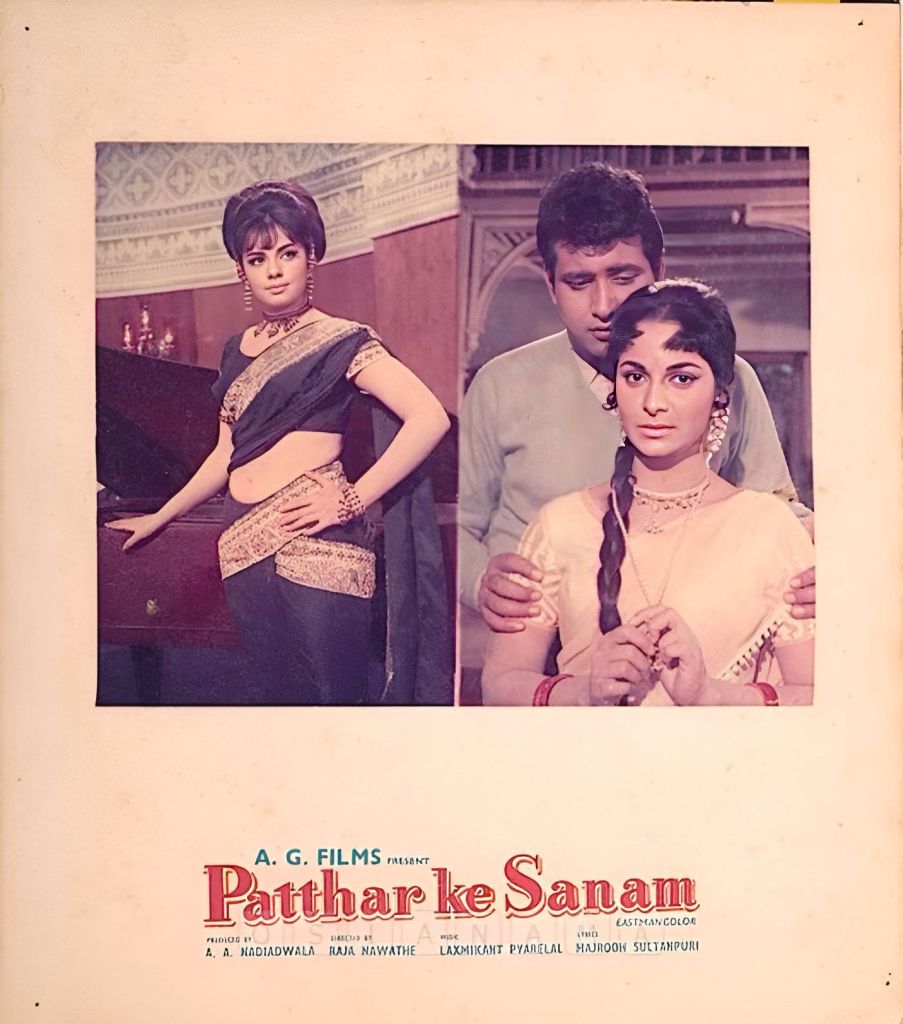
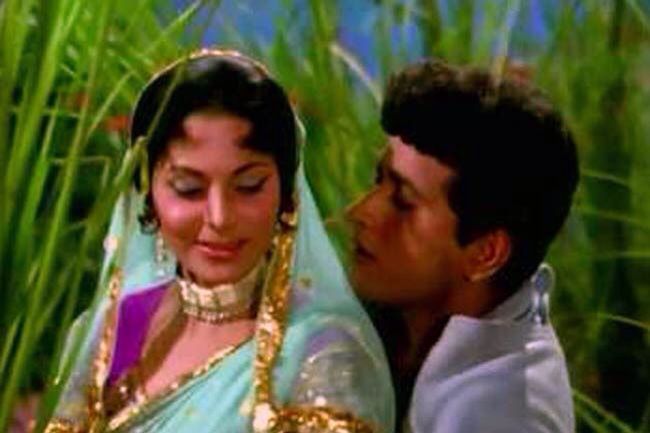
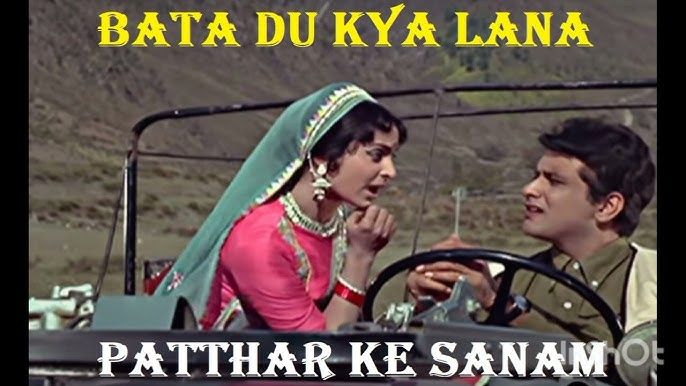
Patthar Ke Sanam (1967) is a true gem from the golden era of Hindi cinema. The film beautifully blends romance, drama, and music, all set against the classic emotional conflict of love, betrayal, and sacrifice.
The title itself Patthar Ke Sanam, meaning “hard-hearted lover” or literally “idol of stone” perfectly captures the essence of a love that is as unyielding as it is tragic. With Raja Nawathe’s direction, Manoj Kumar and Waheeda Rehman leading the cast, and Mumtaz adding her charm, the film becomes a quintessential ’60s melodrama. Pran, as always, adds intensity, and Mehmood provides that perfect comic relief.
It’s a story of intertwined fates and shifting identities, the rich girl Meena and her humble friend Taruna, whose destinies are unknowingly reversed. The dramatic revelation that Rajesh and Meena are switched at birth adds that classic masala twist which audiences of the time loved.
Meena, portrayed with elegance and complexity, starts off as a playful rich girl but later becomes a tragic figure, her death in the end adds a poignant note, almost cleansing the pain caused by the love triangle.
Taruna, shines as the true emotional heart of the film selfless, loyal, and resilient despite immense pain. Her decision to sacrifice her love for Rajesh under pressure from Shanti shows incredible strength, and her attempted suicide is a heartbreaking climax.
Rajesh, the charming yet sincere hero balances the light-hearted teasing in the beginning with deep emotional intensity later on. His unwavering love for Taruna makes him a classic romantic lead.
Lala Bhagatram, portrayed likely by Pran, is vintage Bollywood villainy oppressive, controlling, and ultimately destroyed by his own cruelty. The subplot with Haria and Gauri provides some relief from the heavier moments and reinforces the theme of love prevailing even in the most unexpected places.
The themes of sacrifice, maternal manipulation, and justice are all prominent—especially through Shanti, a mother with a tragic past and questionable methods. Her journey from vengeance to acceptance is also compelling.
The songs of Patthar Ke Sanam are a major highlight and a big reason for the film’s lasting popularity. The music was composed by the iconic Laxmikant–Pyarelal and the lyrics were penned by the masterful Majrooh Sultanpuri.
“Patthar Ke Sanam” the title track and the most iconic song of the film. It’s haunting, melodic, and deeply emotional—expressing pain and betrayal in love. “Patthar ke sanam, tujhe humne mohabbat ka khuda jaana” translates to “O heartless beloved, I had worshipped you as the very god of love.” This line beautifully expresses the anguish of someone who loved deeply, only to realize that their beloved was cold and unfeeling—like a statue of stone (patthar ke sanam). The use of “khuda“ (God) for love signifies the depth of devotion, making the betrayal all the more painful.
“Mehboob Mere Mehboob Mere” a romantic duet that’s light, dreamy, and full of charm. It showcases the developing love angle beautifully. “Tauba Yeh Matwali Chaal” a playful, teasing number picturized on the heroine, full of flirtation and mischief. “Jabse Hum Tum” another sweet duet, capturing innocence and mutual attraction. The tune is soft and hummable.
Each of these songs blends seamlessly with the narrative and reflects the emotional landscape of the characters.
Manoj Kumar as Rajesh is a charming, upright man who arrives as the new manager at Thakur’s estate. Initially teased by Meena and Taruna, Rajesh turns the tables and pretends to love both women, leading to unexpected consequences. His true love is Taruna, but circumstances and class barriers, along with hidden truths, complicate the romance. Rajesh is caught between love and duty, especially when he learns of his real parentage and the manipulations surrounding his love life. Manoj Kumar brings quiet strength, vulnerability, and restraint to the role, making Rajesh both empathetic and dignified.
Mumtaz as Meena is the wealthy daughter of Thakur and Taruna’s closest friend. Meena falls deeply in love with Rajesh and eventually becomes possessive and jealous. Mumtaz, in a strong early role, conveys vulnerability, inner conflict, and later bravery. Her chemistry with Manoj Kumar is heartfelt and moving.
Waheeda Rehman as Taruna is Meena’s loyal assistant and best friend, but also Rajesh’s true love. Innocent and sincere, Taruna is caught in a moral and emotional dilemma when forced to choose between love and loyalty. Waheeda Rehman delivers a poised performance, portraying Meena’s transformation from carefree to emotionally devastated with great grace and sensitivity.
These three characters form the emotional triangle at the center of Patthar Ke Sanam, each reflecting a different side of love—romantic, obsessive, and sacrificial.
Raja Nawathe, the director of Patthar Ke Sanam, played a crucial creative role in shaping the film’s romantic drama, emotional complexity, and musical richness. His direction brought out the best in a story that blends love, deception, social constraints, and sacrifice. He guided the layered storytelling of a love triangle involving friendship, hidden identities, and betrayal. Waheeda Rehman’s conflicted elegance, Mumtaz’s vibrant jealousy, and Manoj Kumar’s quiet intensity were well balanced under his direction. Raja Nawathe was known for tasteful framing and elegance in song picturization. This film is no exception songs like “Patthar Ke Sanam” and “Tauba Yeh Matwali Chaal” are beautifully shot, with poetic visuals matching lyrical themes.
The film truly encapsulates the quintessential drama of 1960s Bollywood friendship tested by love, mistaken identities, hidden pasts, and redemption through sacrifice.
Photos courtesy Google. Excerpts taken from Google.
 Writer Sunita