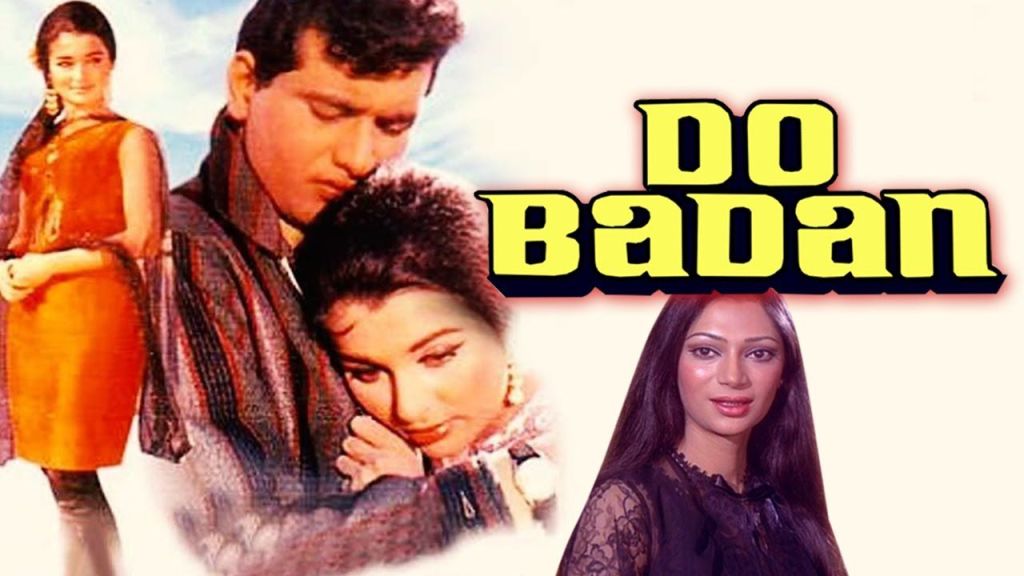
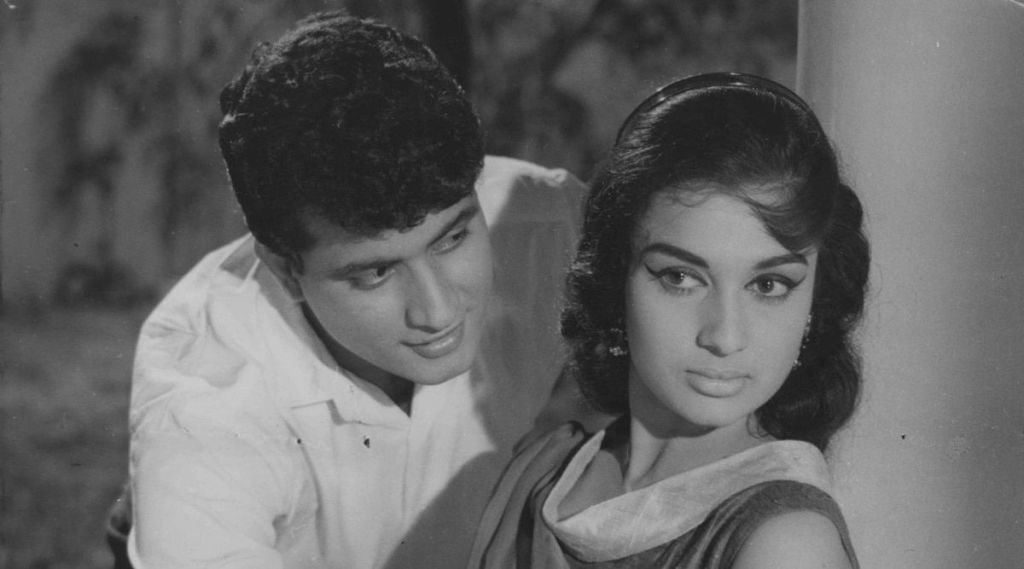
Do Badan (1966) is a classic romantic tragedy that holds a special place in the golden era of Hindi cinema. Film directed by Raj Khosla, starring Manoj Kumar, Asha Parekh, Simi Garewal, and Pran. The music was composed by Ravi, with lyrics by Shakeel Badayuni. The story of Do Badan was developed after Manoj Kumar suggested the idea to Raj Khosla, inspired by the 1951 film Deedar. The plot was then reworked, and the screenplay was written by G.R. Kamat.
Vikas (Manoj Kumar), a bright and conscientious student from a poor family, is focused on his education with the hope of securing a stable job to support his loved ones. At college, he meets the beautiful and wealthy Asha (Asha Parekh). Despite the difference in their social backgrounds, the two are drawn to each other and gradually fall in love.
Just before the final exams, tragedy strikes Vikas is called away due to his father’s sudden death. He misses the exams, putting his academic future in jeopardy. Deeply moved by his situation, Asha secretly helps him by arranging a job through her influential father, ensuring that Vikas can begin earning.
However, things take an unexpected turn when Asha’s father, unaware of his daughter’s relationship with Vikas, announces her engagement to Ashwin (Pran), a scheming man with designs on Asha and her wealth. This decision shakes the foundation of Vikas and Asha’s budding love story.
Ashwin, having discovered that Asha is in love with Vikas, grows jealous and vengeful. In a sinister move, he arranges an “accident” for Vikas. Vikas survives, but is left blind, a tragic turn that changes everything. Feeling helpless and believing he can no longer offer Asha a future, Vikas chooses to step away rather than be a burden.
To seal this cruel fate, Ashwin deceitfully tells Asha that Vikas died in the accident. Shattered by the news, Asha mourns deeply. Meanwhile, Ashwin seeks out Vikas and manipulates him further, convincing him that the only way to save Asha from pain is to break her heart. Vikas, noble in suffering, agrees.
In a heartbreaking scene, he tells Asha that he has moved on and is now in love with Dr. Anjali (Simi Garewal), the compassionate physician caring for him. Devastated and disillusioned, Asha agrees to marry Ashwin but her love for Vikas is undying. Though legally wed, she refuses to accept Ashwin as her husband, living in emotional solitude.
Vikas, now blind and estranged from Asha, reinvents himself as a singer. During a performance at a hotel, Asha spots him, her heart aching with the realization that he is alive. Her suspicions are confirmed when Dr. Anjali reveals the truth about Ashwin’s deceit, and Vikas’s noble sacrifice.
Overwhelmed with guilt and love, Asha tries to reach out to Vikas to explain and apologize, but Ashwin stops her once again, torn between guilt and his obsessive love. Vikas refuses a surgery that could restore his eyesight, believing life holds no meaning without Asha. Desperate, Dr. Anjali pleads with Asha to convince him to undergo the operation. When Asha tries to meet Vikas, Ashwin, in one final act of cruelty, abducts her and locks her away.
Asha’s condition deteriorates. Her uncle, heartbroken to see her fading, rescues her and brings her home. But Asha, consumed by sorrow and emotional trauma, is now terminally ill. At last, Vikas undergoes the eye operation. His sight is restored but too late. Ashwin, remorseful, finally tells him the full truth and leads him to Asha.
In a final, tragic reunion, Asha opens her eyes to see Vikas once more. Their eyes meet full of love, pain, and all that was lost. She takes one final breath and dies in his arms. Unable to bear the grief, Vikas follows her in death, reuniting with her in eternity. In the closing scene, Ashwin and Asha’s family find them together two bodies, one soul, now forever inseparable.
Raj Khosla showcased his flair for melodrama and romantic tragedy, skillfully translating a deeply emotional story into a film that struck a chord with audiences. Khosla’s use of shadows, song sequences, and close-ups enhanced the mood of longing and loss. Songs in Do Badan aren’t interruptions they carry the narrative forward, a hallmark of Khosla’s ability to blend music into storytelling.
The performances by Manoj Kumar and Asha Parekh were widely appreciated, and Pran, as the antagonist, delivered one of his nuanced negative roles. Simi Garewal, though in a supporting role, left a lasting impression.
V. N. Reddy’s cinematography, his camerawork plays a crucial role in heightening the emotional and tragic tone of the narrative. Reddy’s mastery of chiaroscuro the interplay of light and dark intensifies the film’s emotional atmosphere. Scenes where Manoj Kumar’s character is struggling with his blindness are lit with a soft but tragic tone, often framing him against dim backdrops, subtly echoing his internal darkness. Reddy often used tight close-ups, soft lighting on the heroine, and slow tracking shots to highlight the characters’ inner turmoil. Reddy gave a lyrical feel to romantic and melancholic songs by using gentle pans, dreamy backlighting, and soft focus. The song “Jab Chali Thandi Hawa” benefits greatly from this style lush outdoor shots, fluttering dupattas, and breezy trees shot with grace. The film moves between different emotional spaces hospital rooms, bustling cities, lonely pathways and Reddy always finds a way to use the environment to echo the emotional states of the characters. His framing in crowd scenes isolates the characters emotionally, even when physically surrounded by people.
Music by Ravi and lyrics by Shakeel Badayuni came together as a golden combination. Here’s a brief look at the unforgettable songs you mentioned.
“Bhari Duniya Mein Aakhir Dil Ko” a hauntingly beautiful song that captures the pain of unfulfilled love. Rafi Saab’s emotional rendition elevates the melancholy of the moment.
“Naseeb Mein Jiske Jo Likha Tha” deeply philosophical, this track speaks about destiny and helplessness.
“Raha Gardishon Mein Hardam Mere Ishq Ka Sitara” a poetic expression of undying love amidst life’s turmoil.
“Jab Chali Thandi Hawa” a lighter, breezy number that beautifully captures the innocence and sweetness of love.
The songs continue to be popular, especially on radio and nostalgia playlists.
Do Badan stands out as a classic tragic romance elevated by its powerful performances, emotional storytelling, and unforgettable music. The film unfolds as a deeply emotional saga of love, sacrifice, and fate, with twists that test the endurance of the human heart.
Film won filmfare Awards Best Supporting Actress, Simi Garewal for her sensitive portrayal of Dr. Anjali, a woman caught between duty, compassion, and unspoken love and Nominations and nominated Best Music Director Ravi, Best Lyricist, Shakeel Badayuni, Best Playback Singer (Female), Lata Mangeshkar.
Photos courtesy Google. Excerpts taken from Google.
 Writer Sunita