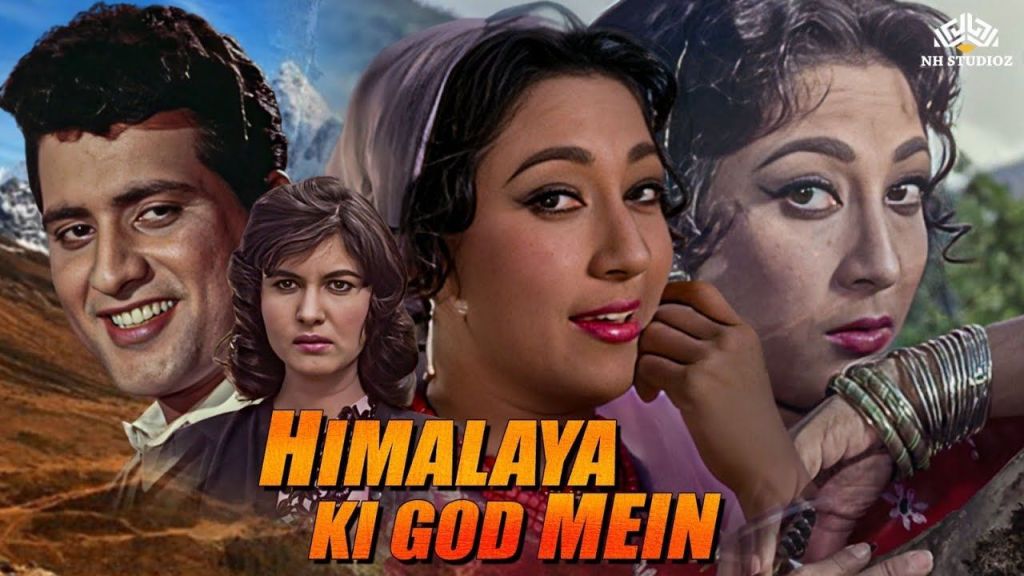
Himalay Ki God Mein (1965) is a memorable film from the golden era of Hindi cinema film directed by Vijay Bhatt. Film is beautifully blending social themes, romance, and rural simplicity, all set against the breathtaking backdrop of the Himalayas.
Dr. Sunil Mehra (Manoj Kumar), a newly qualified doctor, sets out on a journey through the remote Himalayan region, hoping to serve the underprivileged. However, fate takes a cruel turn when he is kidnapped by dacoits, harassed, and left gravely injured in the rugged terrain. He is found by Phoolwa (Mala Sinha), a compassionate village girl, who nurses him back to health in her humble home.
During his recovery, a gentle love blossoms between the two. However, their growing bond is threatened by a grave obstacle, Phoolwa’s father, Lakhan Singh (Jayant), a feared dacoit leader, disapproves of their relationship.
To complicate matters, Sunil is already engaged to Neeta (Shashikala), a modern, sophisticated woman from the city. Torn between duty, love, and social boundaries, Sunil ultimately returns to the city, leaving Phoolwa and the village behind but not without emotional conflict.
Concerned for his well-being, Sunil’s family sends his fiancée Neeta, who is also a doctor, to bring him back. But Neeta struggles to adapt to the harsh and humble life of the mountains. Despite Sunil’s plea to stay and work alongside him, Neeta returns to the city, unwilling to sacrifice her comfort for his mission.
Undeterred, Sunil chooses to stay, continuing his work with resilience and compassion. Over time, his sincerity wins over the villagers, and even the hardened Lakhan Singh has a change of heart. In a final act of redemption, Lakhan Singh comes to Sunil’s rescue, signifying not just personal acceptance, but a broader triumph of humanity and healing over fear and prejudice.
Manoj Kumar gives a restrained yet emotionally powerful performance as the idealistic doctor. Mala Sinha shines as Phoolwa, blending innocence and strength. Her character reflects rural India’s purity and resilience. Shashikala adds complexity with her portrayal of a modern, sophisticated woman caught between love and ego.
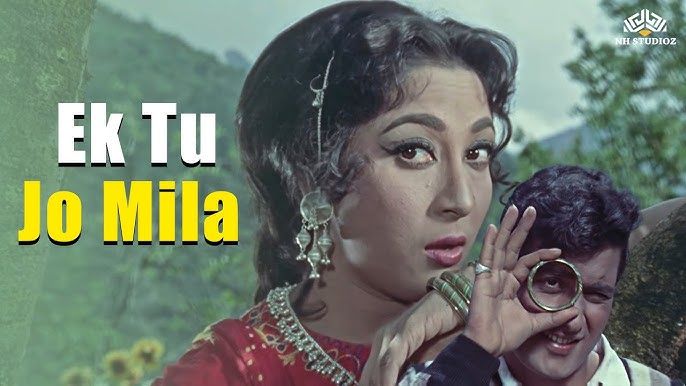
Pravin Bhatt’s work in Himalay Ki God Mein stands out for its naturalistic lighting, emotive framing, and stunning outdoor photography. The film was one of the early showcases of his talent, and he effectively captured the serenity, grandeur, and emotional texture of the Himalayan region. The film was shot in real Himalayan villages, and Pravin Bhatt used wide-angle shots and natural lighting to do justice to the magnificence of the mountains. His lens highlighted the emotional arc of the doctor and his interaction with the villagers. There’s a rawness and honesty in the visuals that support the narrative beautifully. “Ek Tu Na Mila” song, are beautifully picturized in real locations, giving them a haunting, lyrical quality a hallmark of Bhatt’s camera work.
The film has a simple, emotionally rich story and Dave’s editing maintains a steady pace, allowing both the romance and the social message to breathe. Key emotional beats, especially scenes involving the villagers, or moments of tension, like conflict with the locals or the doctor’s struggle, are given time allowing the audience to connect deeply with the characters.
Kalyanji-Anandji’s music is deeply rooted in folk melody and emotion, perfectly in sync with the film’s theme.
“Chand si mehbooba ho meri kab aisa maine socha tha Haan tum bilkul waisi ho jaisa maine socha tha…” (A beloved like the moon—when did I ever dream I’d have one? Yet you are exactly like what I had imagined…) is a dreamy romantic ballad, where the Sunil imagines his ideal life partner, a woman as gentle, radiant, and pure as the moon itself. The lyrics are deeply poetic and idealistic, perfectly capturing Sunil’s innocent and heartfelt longing. Mukesh’s velvety voice, full of soul and longing, adds emotional weight to the song. It’s a song that feels both personal and universal yearning for a love that is tender and timeless.
Himalay Ki God Mein won the Filmfare Award for Best Film and Best Editing and nomiated Best Actress, Best Supporting Actress, Best Music Director, Best Lyricist and Best Female Playback Singer.
Photos courtesy Google. Excerpts taken from Google.
 Writer Sunita