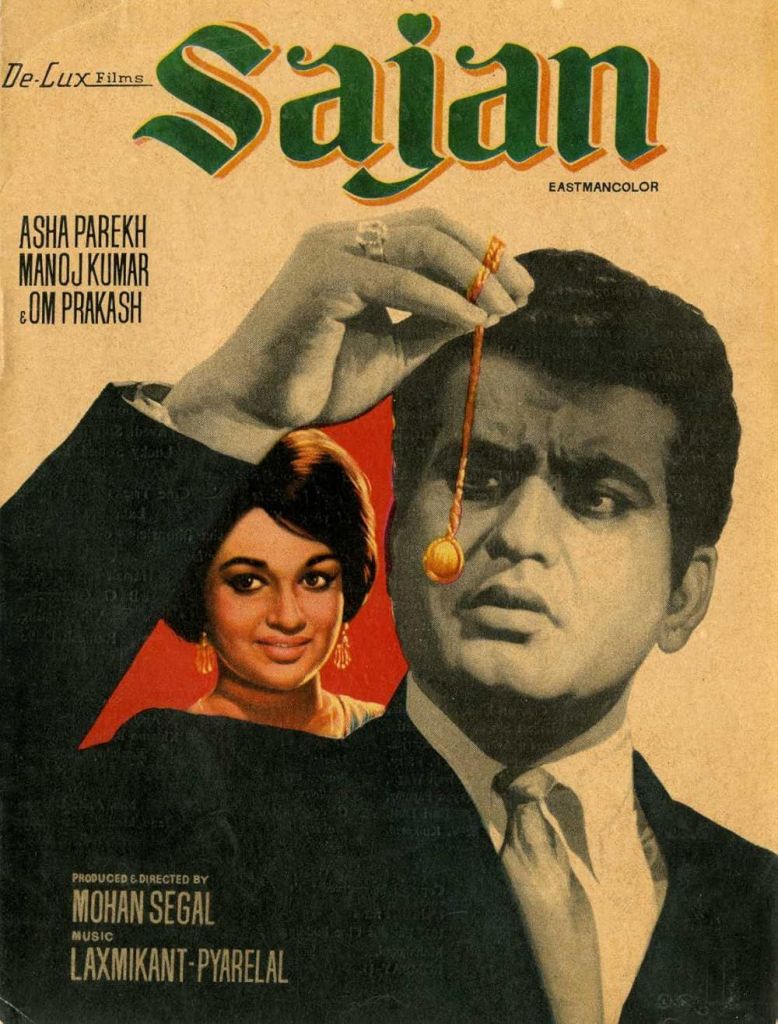
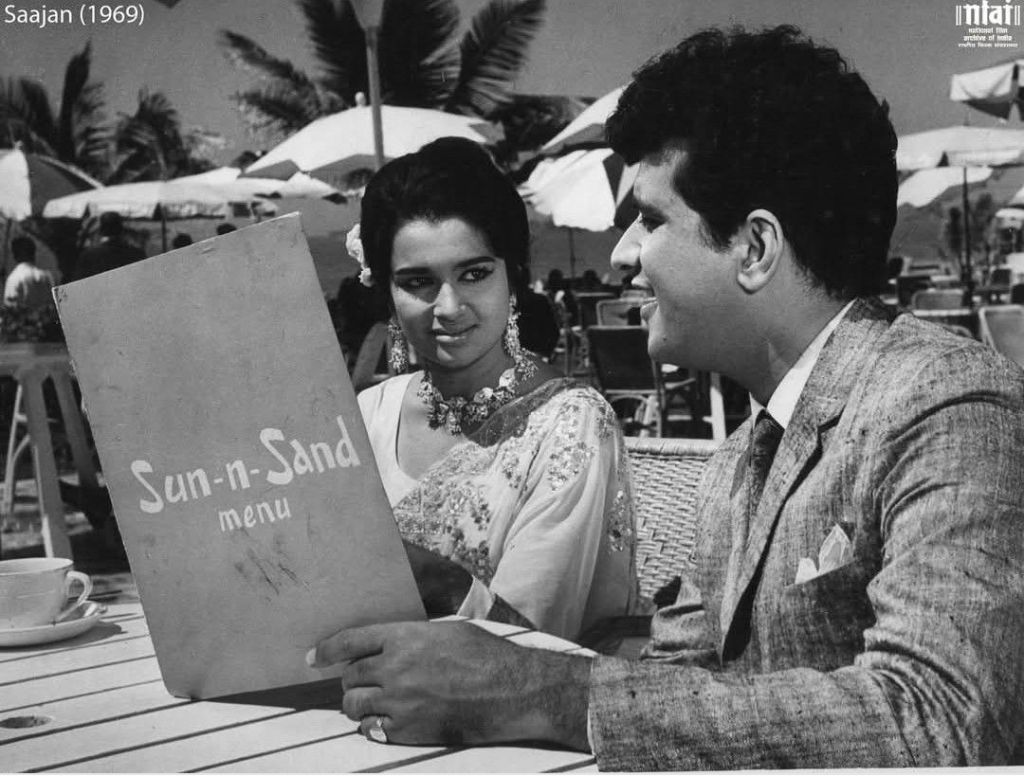

Sajan (1969) is an Indian Bollywood film directed by Mohan Segal, featuring Manoj Kumar and Asha Parekh in lead roles. The film was a commercial success upon its release and holds significance for marking the Hindi film debut of Shatrughan Sinha.
The narrative structure of Sajan is particularly interesting due to its dual inspiration. The first half draws heavily from the 1951 British musical comedy Happy Go Lovely. The second half of Sajan veers into a mystery thriller tone, taking inspiration from I Killed the Count, a 1937 stage play by Alec Coppel.
Ashok (Manoj Kumar) belongs to a wealthy business family and leads a lavish lifestyle. One day, while reading a newspaper, he stumbles upon an article falsely announcing his engagement to a dancer named Rajni (Asha Parekh). Infuriated by the baseless claim, Ashok decides to confront Rajni and threatens legal action. However, upon meeting her, he is instantly captivated by her charm and innocence. What begins as a confrontation soon turns into courtship, and Ashok falls deeply in love.
Initially concealing his true identity, Ashok eventually reveals the truth to Rajni, and the two decide to marry. But their romantic plans are derailed when they become entangled in a murder mystery involving Dharamdas (Madan Puri), a blackmailer who had been threatening Rajni’s mother (Sulochana) over a dark secret from her husband’s past.
When Dharamdas is found dead, the investigation is thrown into chaos. Ashok, Rajni, and Ashok’s loyal driver Balam (Om Prakash) all independently confess to the murder, each claiming to be the sole perpetrator to protect the others. Their conflicting versions leave the investigating officers, Inspector Khan (Raj Mehra) and Sub-Inspector Tiwari (Shatrughan Sinha, in his debut role), completely bewildered.
The truth finally unravels in a dramatic courtroom climax, where the real murderer confesses to the crime. With the mystery resolved, all three Ashok, Rajni, and Balam are acquitted, paving the way for a happy ending.
Mohan Segal displayed a deft hand in blending romantic comedy with suspense and mystery, steering the film from light-hearted misunderstandings to a full-fledged whodunit with elegance. He was known for his ability to work well with popular actors of the time, like Manoj Kumar, Asha Parekh, and others, drawing out charming and sincere performances.
Songs are quintessential examples of Laxmikant–Pyarelal’s melodic richness and versatility, paired with Anand Bakshi’s simple yet evocative lyrics. The film features a melodious and memorable soundtrack that complements its romantic and dramatic elements.
“Saajan Saajan Pukaaroon Galiyon Se” a beautifully rendered solo where the heroine calls out to her beloved.
“Resham ki dori jo ban jaaye to phir toote na rishta ye janmon ka hai…” this song uses the “resham ki dori” (silken thread) as a poetic metaphor for the delicate yet enduring bond between two people, likely in the context of love or a sacred emotional connection. Rafi’s emotive singing enhances the theme of sincerity and timeless togetherness.
The mix of romantic comedy and murder mystery gives Sajan a unique tonal shift, blending light-hearted entertainment with a suspenseful resolution, reflective of the creative storytelling experiments in late 1960s Bollywood.
Photos courtesy Google. Excerpts taken from Google.
 Writer Sunita