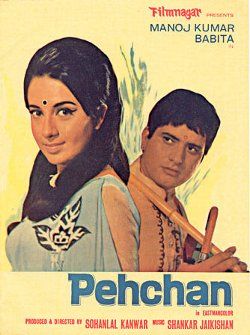
Pehchan is a 1970 Bollywood romance film, produced and directed by Sohanlal Kanwar, with a story by Sachin Bhowmick. The film stars Manoj Kumar, Babita, and Balraj Sahni in pivotal roles.
Pehchan tells the story of Barkha, a young woman from Bombay who lives a privileged life with her widowed mother and brother Rakesh, who is engaged to a wealthy woman named Maya. Barkha meets Gangaram, a naive and honest man from the village of Vishnupur, who has come to Bombay for an arranged marriage. However, the match falls apart when the bride’s father, Duriya Choudhry, discovers that Gangaram lacks a job, doesn’t speak English, and has no promising future.
Despite his simplicity, Barkha is drawn to Gangaram’s sincerity, and the two form a strong bond. Gangaram introduces her to his modest home, where he lives with a kind-hearted ex-firefighter and Champa, whom he calls his sister. Their relationship deepens further when Barkha learns that the ex-firefighter once saved her life during a fire at her home.
However, when Barkha expresses her desire to marry Gangaram, her mother and brother vehemently oppose the match due to his lower social status. Eventually, Barkha convinces them to reconsider, and Rakesh visits Gangaram’s home. But upon returning, Rakesh falsely claims that Gangaram is living with a brothel dancer—referring to Champa, the same woman Gangaram had introduced as his sister.
A shocked and heartbroken Barkha confronts Gangaram and demands that he sever ties with Champa. When he refuses, standing by Champa with unwavering loyalty, Barkha is left with a difficult ultimatum, to accept Gangaram with his moral convictions intact or walk away.
Sohanlal Kanwar served both as the producer and the director of Pehchan. The film stands out as one of his most successful and critically recognized works. Known for his emotionally rich storytelling, Kanwar effectively combined social commentary with romance and melodrama in this film. The film was praised for its emotional depth, strong performances, and excellent music. His sensitive handling of the characters especially the dignified portrayal of Champa played by Chand Usmani.
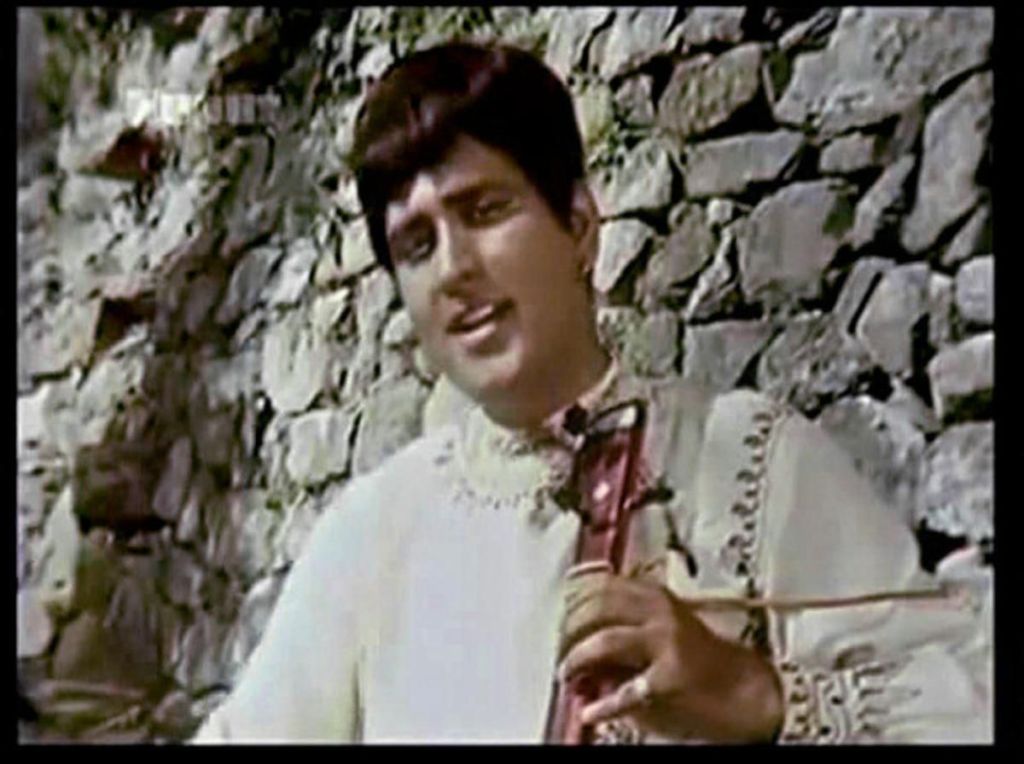
Manoj Kumar plays Gangaram, a simple, honest, and naive villager from Vishnupur who arrives in Bombay with dreams of getting married. Rejected by a prospective bride’s family for his lack of modern sophistication and English skills, he represents the humble, rooted Indian who values integrity over wealth or polish. Despite the city’s rejection, he finds love in Barkha and remains unwavering in his principles, especially when asked to disown his foster sister Champa. His portrayal of dignity, humility, and quiet strength is central to the film’s emotional core.
Babita plays Barkha, a modern, upper-class young woman who initially leads a privileged life in Bombay. Her attraction to Gangaram, a man far removed from her social circle, sets the film’s romantic and social tension in motion. Barkha’s character is torn between love and societal norms, especially when her family objects to Gangaram’s background. Her emotional journey from attraction to doubt, and confrontation with difficult truths adds depth and complexity to the story. Her inner conflict is most evident when she asks Gangaram to choose between her and Champa.
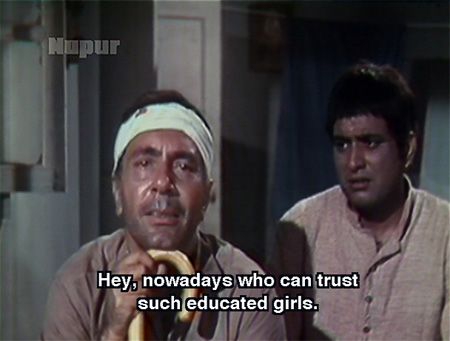
Balraj Sahni plays Rakesh, Barkha’s elder brother — a man of stature and pride, deeply concerned with social image and family reputation. Though he appears warm and affectionate, his conservative mindset surfaces when he disapproves of Barkha’s relationship with Gangaram. He becomes the voice of societal judgment, and his discovery (or misunderstanding) of Champa’s background becomes a pivotal moment in the story, leading to a dramatic shift in relationships. Balraj Sahni brings gravitas and intensity to this layered character.
Chand Usmani delivers a standout performance as Champa, Gangaram’s foster sister, a woman with a past stigmatized by society. Living with Gangaram and the ex-firefighter who saved Barkha’s life, Champa is kind-hearted and loyal, but misunderstood due to her association with a brothel. Her bond with Gangaram is pure, but when Barkha and her family misjudge her, it leads to a major turning point in the story. Usmani’s portrayal won her the Filmfare Award for Best Supporting Actress.
The soulful and diverse soundtrack of Pehchan was composed by the celebrated duo Shankar-Jaikishan, with lyrics penned by a team of accomplished lyricists: Verma Malik, Hasrat Jaipuri, Indeevar, and Neeraj. The songs played a significant role in enhancing the emotional and thematic depth of the film.
“Sabse Bada Nadaan” this heart-touching melody is a soulful lament of love, innocence, and pain. Sung with great emotional depth by Mukesh, the song captures the vulnerability of a man misunderstood by the world and perhaps by his beloved.
“Bas yehi apradh main har baar karta hoon, aadmi hoon aadmi se pyaar karta hoon…” (“This is the only crime I keep committing — I am a human who keeps loving other humans…”) this song is a poetic reflection on the burden of being human and the repetitive nature of suffering due to kindness or emotional attachment. Neeraj weaves a philosophical depth into his words, and Mukesh’s poignant voice delivers it with grace and introspection. The music is subdued and haunting, allowing the lyrics to shine.
These two songs not only stood out musically but also elevated the film’s emotional weight.
Pehchan received at the Filmfare Awards, for Best Supporting Actress, Best Music Director, Best Lyricist, Best Male Playback Singer and nominated for Best Film, Best Director, Best Lyricist, Neeraj for the song “Bas Yehi Apradh Hai Ke Main Insaan Hoon,” Best Story.
These accolades reflect Pehchan‘s strong storytelling, memorable music, and emotionally resonant performances.
Photos courtesy Google. Excerpts taken from Google.
 Writer Sunita