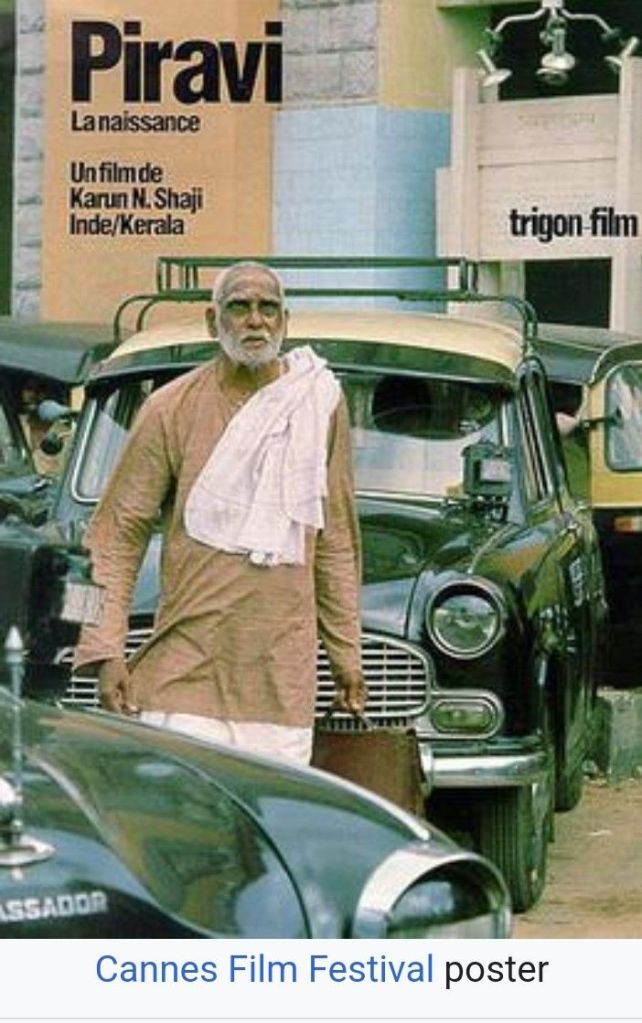
Piravi is a 1989 Indian Malayalam language drama film directed by Shaji N. Karun, starring Premji, Archana, and Lakshmi Krishnamurthy. Inspired by the real life tragedy of Professor T. V. Eachara Warrier, the story revolves around a father’s tireless search for his missing son, a student at the Regional Engineering College in Calicut, who was killed in police custody during India’s Emergency period in 1976. The film’s haunting music was composed by G. Aravindan and Mohan Sithara.
Raghu is the younger of two children born to Raghava Chakyar (Premji) and his wife. Arriving late in their married life, Raghu is cherished deeply, becoming the center of his parents’ affection. Raised with unwavering devotion, he grows into adulthood surrounded by love and high hopes.
Now a student at an engineering college far from home, Raghu is expected to return for his sister’s (Archana) engagement ceremony. But when he fails to arrive, concern begins to grow. His father, Raghava Chakyar, clings to hope and begins making daily visits to the local bus stop, waiting from dawn to dusk, convinced that Raghu will return on the next bus. Days pass, and the waiting becomes ritual an act of love, denial, and growing despair. Eventually, the harsh truth begins to surface through newspaper reports: Raghu has been taken into police custody for political reasons during the Emergency. The family’s fears deepen as hope slowly gives way to the grim possibility of a tragedy concealed by the state.
Determined to uncover the truth, Raghava Chakyar sets out in search of his missing son, eventually making his way to the police headquarters. But there, he is met with indifference and denial the authorities claim no knowledge of Raghu or his arrest. As the days drag on, the truth becomes harder to ignore. Raghu’s sister comes to terms with the likely reality, her brother has died under police torture. She remains silent, unable to shatter her father’s fragile hope. Meanwhile, Raghavan begins to drift away from reality, retreating into a world of memories and illusions, where he imagines his family joyfully reunited. His descent into delusion becomes a haunting portrait of grief, denial, and the silent suffering inflicted by an unyielding state.
Premji played the central role of Raghava Chakyar, the grieving father in Piravi. His performance is widely regarded as the emotional backbone of the film and is considered one of the finest in Indian parallel cinema.
Raghava Chakyar is portrayed as a deeply loving and gentle father who is shattered by the mysterious disappearance of his son, Raghu. As he clings to hope, making daily visits to the bus stop and confronting unyielding authorities, the audience witnesses his slow descent into emotional isolation and psychological disintegration.
Premji’s performance is marked by a quiet intensity he expresses grief not through outbursts but through silence, body language, and vacant stares, which reflect a man emotionally eroded by denial and helplessness. His portrayal resonates universally as a father’s helpless search for justice and truth. Premji’s role as Raghava Chakyar is a masterclass in minimalist acting, where internal agony is conveyed with haunting realism.
The director Shaji N. Karun, played a pivotal role in shaping the film into a deeply moving and internationally acclaimed cinematic experience. His direction is not just technical it is poetic, political, and profoundly human.
Karun’s film based on the real life tragedy of Professor T. V. Eachara Warrier, whose son died in police custody during the Emergency in India. He transformed this personal grief into a universal story about loss, repression, and the quiet endurance of hope. He avoids melodrama. Instead, he uses silences, pauses, and ambient sounds to convey emotional depth. He extracted a career-defining performance from Premji, ensuring that every expression felt honest and grounded. He maintained a naturalistic tone across the cast, avoiding theatricality and emphasizing stillness and sorrow.
Karun’s directorial brilliance lies in his ability to turn silence into speech, grief into poetry, and a local tragedy into a universal lament. Piravi is not just a film it is an experience, crafted with a deep understanding of cinema’s emotional and political power.
The cinematography was handled by Sunny Joseph, whose visual storytelling is one of the film’s most powerful and evocative elements. His work complements Karun’s direction perfectly, turning the camera into a silent witness of grief, absence, and psychological deterioration.
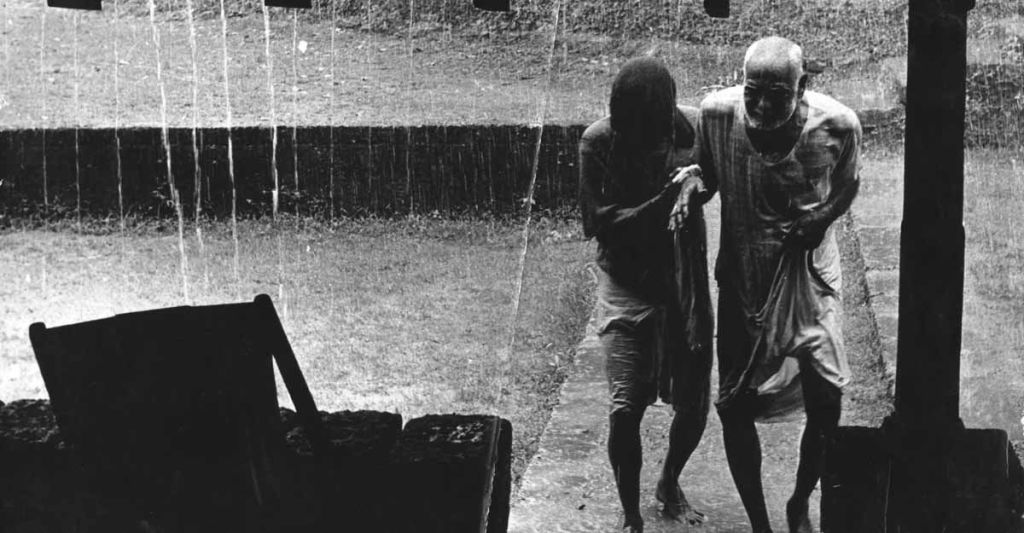
Sunny Joseph crafted a visual language steeped in silence and stillness, using subdued lighting and natural tones to reflect the emotional vacuum left by Raghu’s disappearance. The monsoon soaked landscapes, empty interiors, and dusky evenings visually symbolize the father’s lonely, unchanging routine and decaying hope.
Shadows and dim environments suggest both mystery and emotional suffocation, enhancing the film’s themes of uncertainty and repression. The bus stop, a recurring visual motif, is shot in various moods and lights, becoming a symbol of hope and futility.
Sunny Joseph’s cinematography is instrumental in making Piravi a visually haunting experience. His control over visual tempo, light, and composition helps express what words often cannot grief, silence, and the quiet breakdown of a man’s world.
The music of Piravi was composed by G. Aravindan and Mohan Sithara, and it plays a subtle but powerful role in shaping the film’s emotional tone.
G. Aravindan, an acclaimed filmmaker and musician himself, contributed a minimalist and ambient score that aligned perfectly. His music is non-intrusive, focusing on atmosphere over melody, enhancing the sense of stillness, grief, and waiting. Aravindan used sound textures to reflect the father’s inner turmoil and the oppressive silence surrounding state violence.
Mohan Sithara, known for his more melodic sensibilities, provided gentle compositions that added emotional depth without overwhelming the film’s restrained tone. His contribution likely centered on the more human and intimate moments, subtly supporting the characters’ emotional arcs.
It enhances the realism and emotional suffocation without distracting from the core themes of loss, denial, and injustice. The music is sparse, atmospheric, and deeply integrated into the storytelling. There are no songs or elaborate musical sequences a conscious choice that keeps the audience focused on the emotional gravity of the narrative.
Film Won in Cannes Film Festival (France), 1989, Caméra d’Or Mention d’Honneur, Edinburgh International Film Festival (UK), Sir Charles Chaplin Award, Locarno International Film Festival (Switzerland), Prize of the Ecumenical Jury Special Mention, Silver Leopard, Nominated, Golden Leopard, Hawaii International Film Festival (USA), Best Feature Film, Chicago International Film Festival (USA), Silver Hugo, Bergamo Film Meeting (Italy), 1990, Bronze Rosa Camuna, Fribourg International Film Festival (Switzerland), Distribution Help Award, Fajr Film Festival (Iran), 1991, Crystal Simorgh – International Competition Superb Film Shaji N. Karun
National Film Awards, 1989, film Won Golden Lotus Best Feature Film, Best Director, Shaji N. Karun, Silver Lotus Best Actor Premji and Best Audiography.
These accolades underscore Piravi’s universal appeal and artistic excellence, especially for its sensitive portrayal of loss and state violence, and for Shaji N. Karun’s poetic directorial vision.
Photos courtesy Google. Excerpts taken from Google.
 Writer Sunita