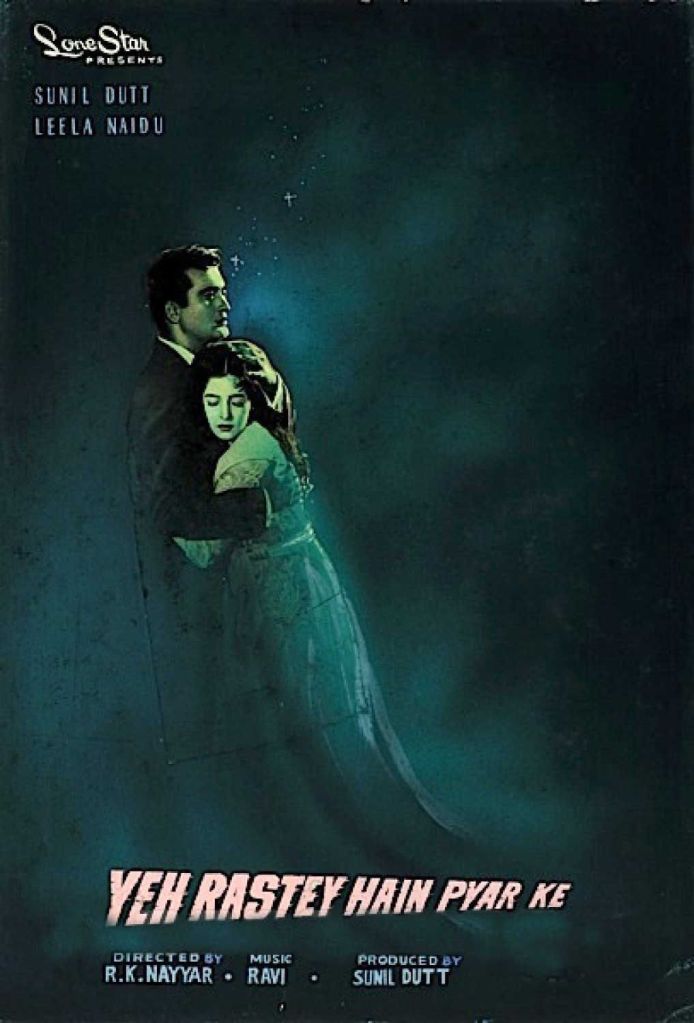
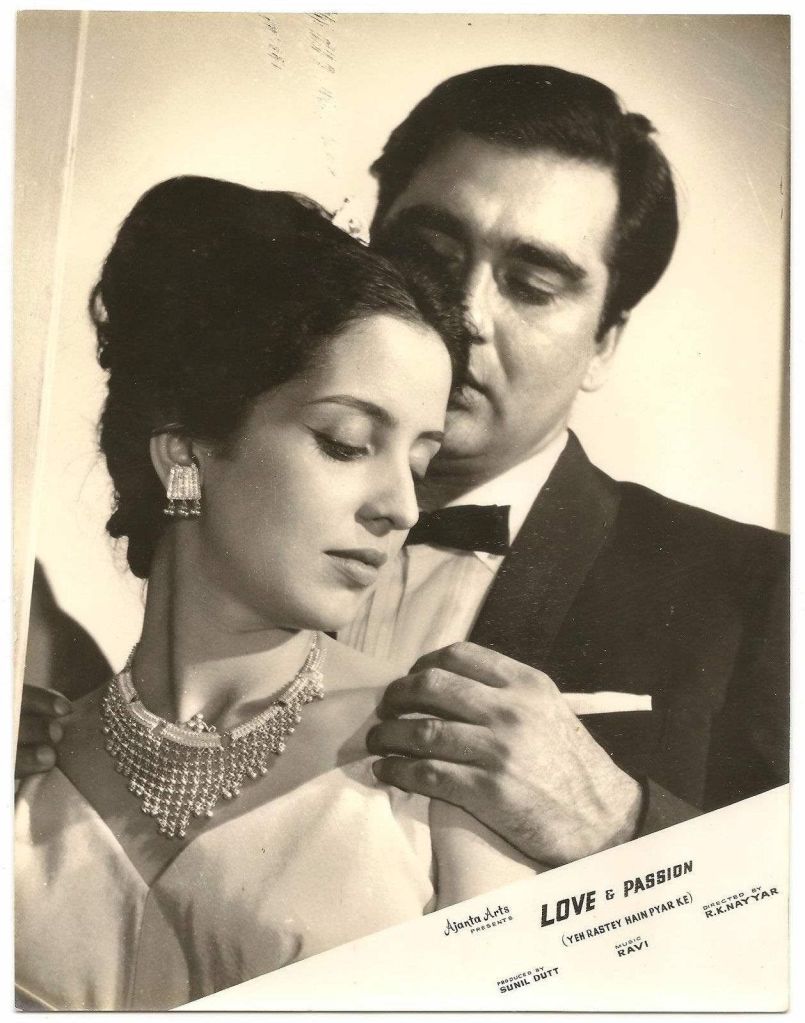
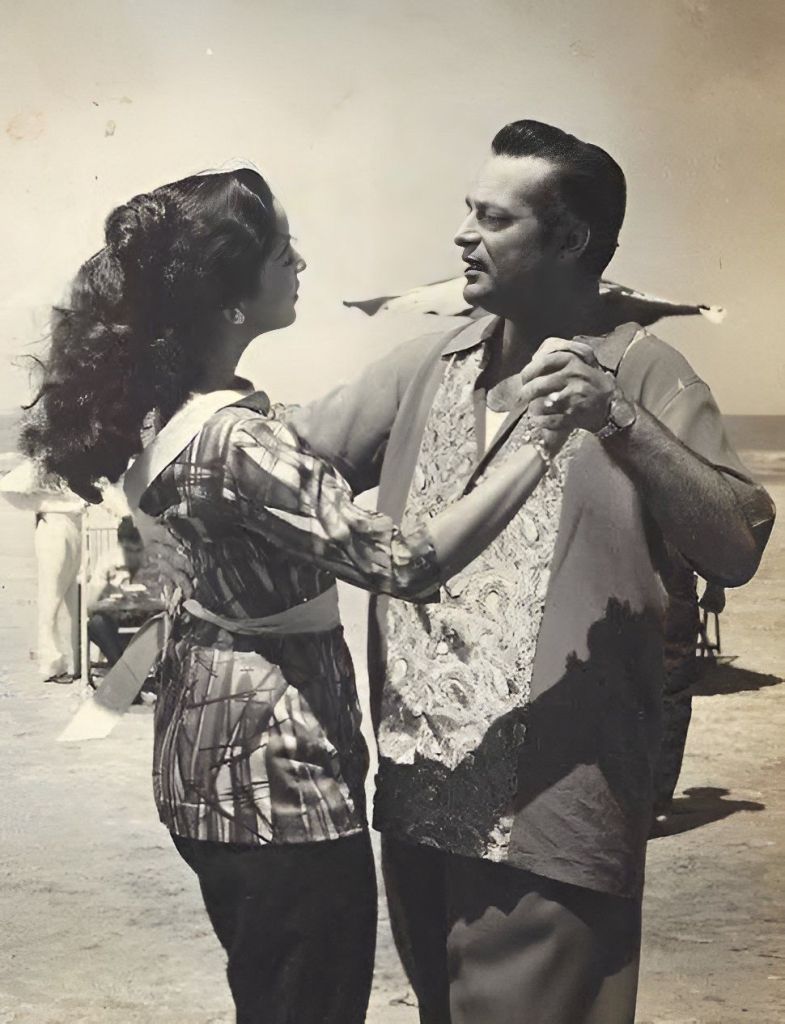
Yeh Rastey Hain Pyar Ke is a 1963 Hindi crime drama film starring Sunil Dutt and Leela Naidu in the lead roles. Marking Sunil Dutt’s debut as a producer, the film was directed by R.K. Nayyar and featured a musical score by Ravi, with lyrics penned by Rajinder Krishan.
The screenplay, crafted by Dutt’s favorite writer Aghajani Kashmiri, is loosely based on the infamous 1959 K.M. Nanavati case, a sensational real life incident that shook post independence India.
Commander Kawas Manekshaw Nanavati, a decorated naval officer, shot and killed his wife Sylvia’s lover, Prem Ahuja, after Ahuja reportedly refused to marry her. The case captivated India, with public sympathy, especially from the Parsi community, and media support led by Blitz magazine portraying Nanavati as a wronged husband. Initially acquitted by a jury, the verdict led to the abolition of the jury system in India. The Bombay High Court later sentenced him to life imprisonment, but he was pardoned after three years by Governor Vijayalakshmi Pandit. Nanavati and his family later emigrated to Canada, where he lived until his death in 2003.
The story revolves around Anil Sahni ( Sunil Dutt), an upright and principled Indian Air Force pilot, defies his wealthy father’s wishes to marry Neena (Leela Naidu), a woman he deeply loves. She is a beautiful and independent woman who was raised abroad. Their marriage is portrayed as a loving relationship built on mutual trust. They also have two children.
Their marriage seems stable at first, but things take a dark turn when Anil is called away on duty. In his absence, Neena becomes emotionally distant and eventually grows close to Ashok Srivastava (Rehman), a charming man who exploits her vulnerability. Their friendship soon blossoms into an affair. This betrayal is not just a casual extramarital affair but a profound emotional and physical attraction that shakes the very foundation of trust and marriage.
When Anil returns home unexpectedly and discovers the affair, he is shattered both mentally and emotionally. Consumed by rage, his confrontation with Ashok becomes a pivotal moment, turning into a fatal encounter that changes all their lives forever. Ashok is murdered.
Anil is arrested and put on trial for murder. The courtroom becomes the stage for a tense legal battle, with the prosecution determined to prove premeditated murder, while the defense argues in favor of Anil’s emotional provocation and honor. The trial probes deep into issues of love, betrayal, and justice, as Anil’s fate hangs in the balance.
In film, Sunil Dutt plays Anil Sahni, a principled and emotionally intense commercial pilot whose world collapses when he discovers his wife’s extramarital affair. Dutt delivers a deeply nuanced performance, capturing the anguish, betrayal, and moral dilemma of a man pushed to the brink, making it one of the standout roles of his career.
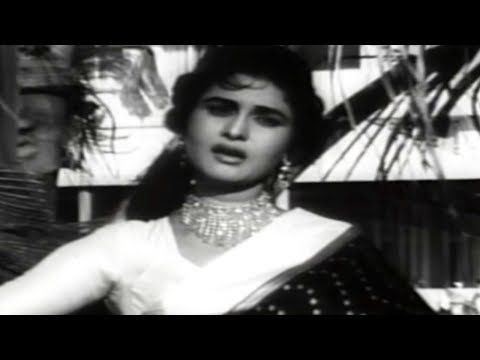
Leela Naidu plays Neena Sahni, Anil’s elegant and independent wife, who was raised abroad. In a bold and ahead-of-its-time portrayal, Naidu brings complexity to the character of a woman torn between marital expectations and personal desires. Her subtle performance reflects the internal conflict of guilt, longing, and vulnerability, making Neena both sympathetic and controversial especially given the conservative context of 1960s Indian cinema.
Legendary actor Ashok Kumar played a significant supporting role as a lawyer in the film. Supporting actor Rehman portrayed Ashok Srivastava, the man whose actions altered the entire course of the story. Other members of the cast included Motilal, Shashikala, Rajendra Nath, Hari Shivdasani, and Iftekhar. Each of the actors brought remarkable depth to their characters, elevating the film from a simple crime story to a historic classic.
Film director R.K. Nayyar marked one of his most significant works, based on the real life K.M. Nanavati case, which was controversial and ahead of its time. He was known for giving his characters emotional depth, and blended melodrama with realism, making it stand out from other films of that era. R. K. Nayyar took a risk by adapting a real life case involving adultery, crime, and courtroom drama. Nayyar remains his most remembered work due to its courageous subject matter, tight screenplay, and strong performances, especially from Sunil Dutt and Leela Naidu.
The music of film was composed by Ravi, one of the prominent music directors of the era, known for his melodic and emotionally resonant compositions. The lyrics were written by the versatile Rajinder Krishan, whose words complemented the film’s intense emotional and dramatic themes.
The soundtrack features a blend of soulful solos and emotionally charged duets, rendered by two of Hindi cinema’s legendary voices Mohammed Rafi and Asha Bhosle.
“Yeh Khamoshiyan, Yeh Tanhaiyan” This haunting duet expresses the emotional distance and isolation between the characters, likely reflecting the growing rift between Anil and Neena. The title itself “These silences, these solitudes…” evokes a sense of emptiness and unspoken sorrow. The subdued orchestration, paired with Rafi and Asha’s restrained vocal delivery, emphasizes the inner turmoil and heartbreak of a relationship slowly falling apart. It’s a song of two people emotionally disconnected, possibly yearning to reconnect but trapped in silence.
“Yeh Raste Hain Pyar Ke” As the title track, this song captures the film’s central theme — the unpredictable, sometimes painful journey of love. The phrase “Yeh raste hain pyar ke” (“These are the paths of love”) serves as a metaphor for the trials, choices, and consequences faced by the characters. Asha Bhosle’s rendition is both tender and resigned, suggesting a recognition of love’s complexity, where devotion and betrayal often coexist.
The song may reflect Neena’s perspective torn between passion and guilt, or it may serve as a broader commentary on love’s ability to both uplift and destroy.
D. N. Pai’s editing played a crucial role in maintaining the film’s taut narrative flow. K. H. Kapadia’s cinematography added depth and atmosphere, capturing both the intimate domestic moments and the stark tension of the legal drama, enhancing the film’s noir-like tone with effective use of lighting and framing.
The social impact of this film was significant. Film was not just a murder story caused by betrayal in love it was not the kind of typical crime tale, which often depict sensationalized cases of love, passion, and crime. Instead, it was a social commentary that challenged the notions of marriage, betrayal, and morality.
The film presents a thinly veiled fictionalized account of this event, focusing on themes of love, betrayal, honor, and justice.
Photos courtesy Google. Excerpts taken from Google.
 Writer Sunita