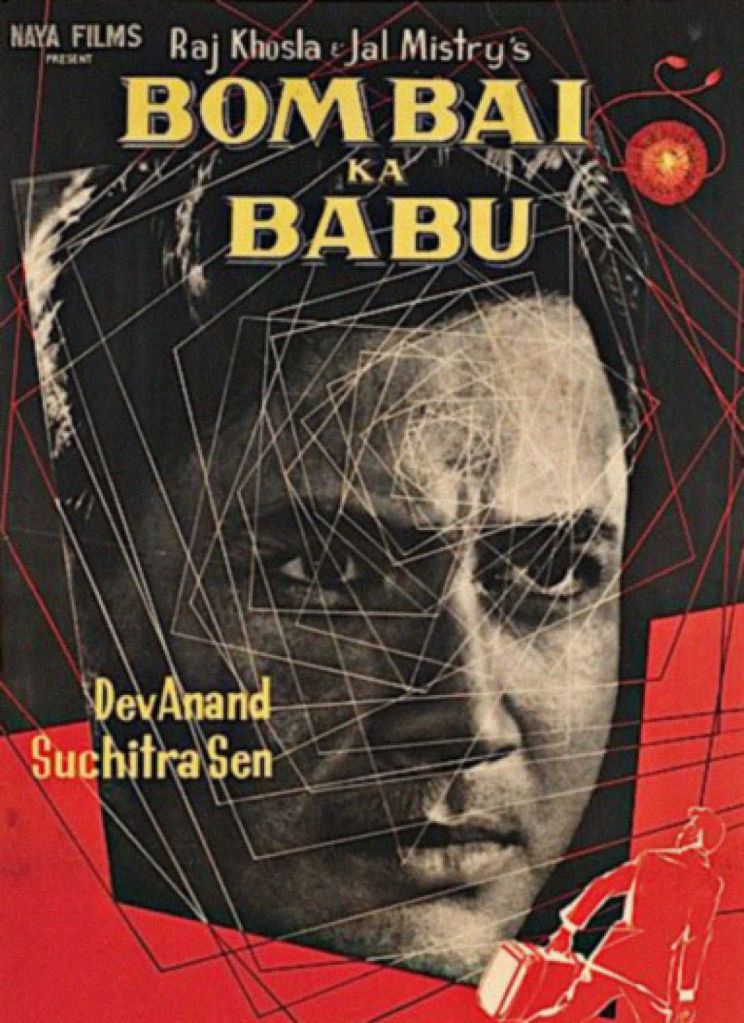
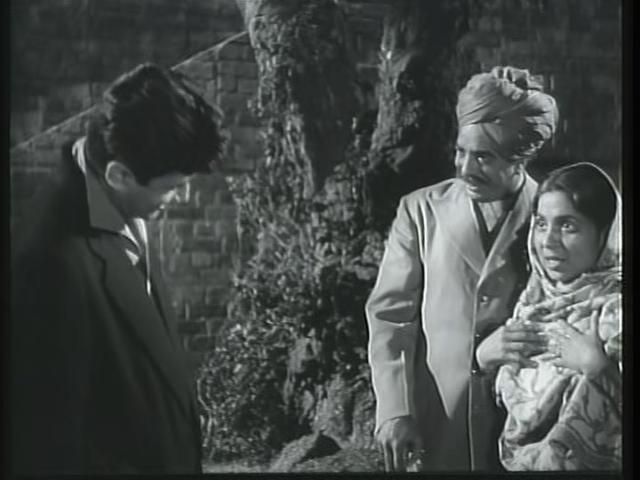
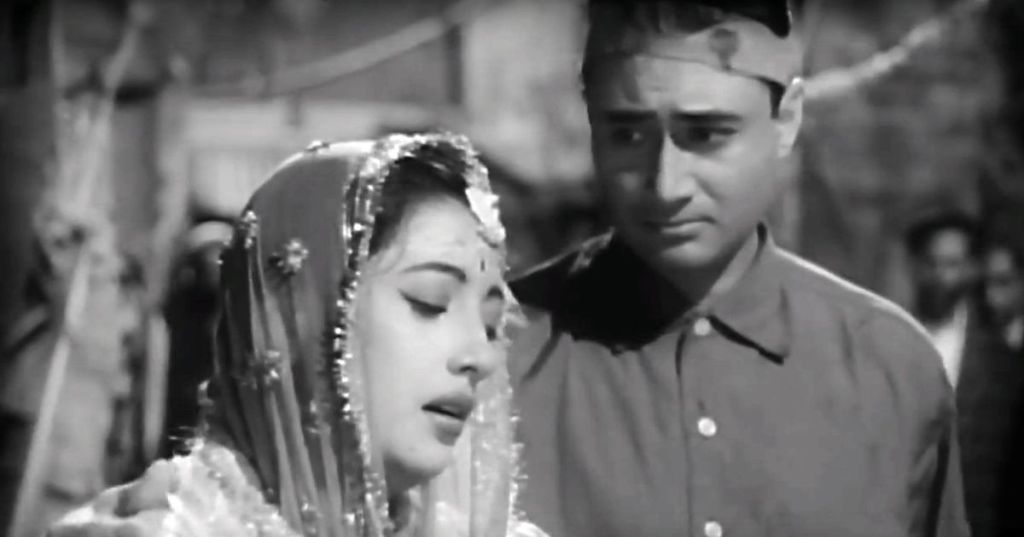
Bombai Ka Babu (1960), directed by Raj Khosla and written by Rajinder Singh Bedi, is a Hindi crime drama starring Dev Anand and Suchitra Sen marking one of her rare appearances in Hindi cinema. Loosely inspired by O. Henry’s short story A Double-Dyed Deceiver, the film centers on a criminal who assumes the identity of a long lost son in a wealthy family, only to fall in love with the woman the world believes to be his sister, adding a morally complex “brother-sister” angle absent in the original tale.
Babu (Dev Anand) and Malik, childhood friends in a small Indian town, are known for their mischief and unbreakable bond. One fateful day, a harmless prank turns into a theft that lands them both in trouble with the law. While Malik’s father arrives to bail him out, Babu, an orphan with no one to stand surety, is left behind and sent to a juvenile detention center. This marks a turning point in their lives.
As they grow older, their paths diverge starkly. Malik becomes a principled police officer, upholding the law he once broke. Babu, shaped by abandonment and hardship, slides deeper into crime, ultimately landing in jail.
Babu, hardened by abandonment and circumstances, walks a darker path into the world of crime. After serving time in jail, Babu seeks out his old accomplice, Bali, to plan their next heist. But a chance meeting with Malik reawakens Babu’s dormant conscience. Malik urges him to leave the criminal life behind and live honestly.
Babu reveals he once tried. He had taken up a job and lived by the law, but was framed for stealing a necklace belonging to his employer’s wife. Branded a thief again, with no one to believe in his innocence, he lost faith in reform. Still, Malik’s words strike a chord. Determined to break free from his past, Babu informs Bali that he will not be joining in any more crimes.
Soon after, Bali and his gang are arrested, and they suspect Babu of tipping off the police. Bali, furious at the betrayal, is released on bail and now seeks revenge. Babu finds himself isolated hated by the underworld, distrusted by society, and constantly watched by the police.
After refusing to participate in the heist, Babu finds himself the target of Bali’s fury, accused of betrayal. The tension between the two escalates when Babu confronts Bali. An intense argument leads to a violent struggle, and in the chaos, Bali is killed. Overcome with panic and fear of arrest, Babu flees Bombay, leaving behind the only life he has known.
On the run, Babu arrives in Jogendra Nagar, a quiet town nestled in Northern India. There, he encounters Bhagat, a mysterious figure who sees an opportunity in Babu’s desperate state. Bhagat persuades him to impersonate Kundan, the long lost son of Shahji, a wealthy zamindar who has been awaiting his heir’s return for years.
With nowhere else to go and his past catching up to him, Babu agrees to the deception. Introduced into the grand household, he is warmly welcomed by Shahji and others who accept him as Kundan. For the first time in his life, Babu experiences familial warmth and respect things he had long been denied.
But just as he begins to settle into this new identity, a new complication arises: he meets Maya, a graceful and intelligent young woman believed to be his “sister.” Babu finds himself drawn to her, but his feelings are forbidden—morally and socially. The emotional turmoil grows as he battles with guilt, love, and the weight of his lies.
Haunted by his crime in Bombay and the threat of exposure, Babu must navigate a delicate balance, living a lie, suppressing his feelings for Maya, and confronting his conscience. The path he has chosen promises comfort but also danger, and perhaps an even greater moral fall.
Having successfully assumed the identity of Kundan, Babu begins repaying Bhagat in small instalments from the allowance he receives as Shahji’s “son.” But Bhagat’s greed grows insatiable. No longer content with modest sums, he now pressures Babu to loot the family’s entire wealth cash, jewellery, and valuables and vanish.
Babu is torn. Shahji and his household have given him unconditional love and trust. For the first time, he feels wanted, respected… even human. He cannot bring himself to betray them, especially Maya, the young woman he now secretly loves a love made unbearable by the cruel twist that she is believed to be his sister.
Bhagat grows threatening, reminding Babu that exposure means disgrace, arrest, and possibly the gallows. Meanwhile, the net tightens, rumors swirl, suspicions rise, and the Bombay police, led by Inspector Malik, have begun tracing Babu’s footsteps. His past is catching up, and his present is built on a dangerous lie.
As Babu struggles between his criminal past and the desire for redemption, Malik, now a police inspector, resurfaces this time as a symbol of justice that may either save or doom his old friend.
Final scene of Bambai Ka Babu, as Babu prepares to leave the home he deceived his way into, Maya confronts him not with bitterness but with quiet, heartbreaking truth: he came to fool others, but ended up fooling himself. She reveals that everyone, Mother, Father, herself, and even Babu has found unexpected happiness in a shared illusion. What they had searched for all their lives love, family, belonging was found in this lie. Babu, the orphaned drifter turned impostor, gained everything he had yearned for, only to lose it by the weight of his conscience. The film ends not with judgment, but with tender sorrow where love, guilt, and longing collide and Babu walks away, a free man perhaps, but never truly unchained.
The film explores themes of fate, morality, friendship, and redemption, and is particularly notable for its mature handling of taboo subjects, Raj Khosla’s noirish direction, and Dev Anand’s intense performance as Babu. The haunting song “Chal Ri Sajni Ab Kya Soche” remains one of its emotional highlights.
Bombai Ka Babu is a fine example of director Raj Khosla’s mastery in blending noir aesthetics with emotional depth. Known for his skill in crafting suspenseful narratives with psychological complexity, Khosla infuses this film with moral ambiguity, particularly through the character of Babu, whose journey from criminal to conflicted imposter is both tense and poignant.
The film’s cinematography by Jal Mistry complements Khosla’s vision beautifully. Mistry’s use of shadows, tight close-ups, and dimly lit interiors heightens the film’s noir undertone, creating a visual language that mirrors Babu’s inner turmoil. The contrast between the bustling streets of Bombay and the serene, morally complex household in Jogendra Nagar is skillfully captured, reinforcing the dual life that Babu leads. Together, Khosla’s direction and Mistry’s cinematography elevate Bombai Ka Babu from a mere crime drama to a layered exploration of identity, guilt, and forbidden love.
Dev Anand plays the complex role of Babu, a small-time criminal on the run who is coerced into impersonating a wealthy family’s long-lost son, Kundan. As Babu steps into Kundan’s identity, he is drawn into the warmth and affection of the unsuspecting family. His inner conflict intensifies when he falls in love with Maya, the woman he is now expected to treat as his sister. Dev Anand masterfully portrays the emotional and moral dilemmas of a man trapped in a dangerous web of lies, desire, and guilt. His nuanced performance conveys both charm and vulnerability, making Babu one of his most layered characters.
Suchitra Sen, in a rare Hindi film appearance, plays Maya, the gentle and affectionate daughter of the household. Her performance brings grace, restraint, and quiet strength to the role. Maya’s bond with “Kundan” (Babu) is warm and trusting, which makes the undercurrent of forbidden love all the more tragic and emotionally stirring. Sen’s poised and expressive acting lends dignity to a role caught between innocence and unknowing emotional transgression.
Dev Anand and Suchitra Sen create a compelling dynamic at the heart of the film, making Bombai Ka Babu a powerful exploration of identity, deception, and forbidden love.
The music of Bombai Ka Babu stands as one of its greatest strengths, composed by the legendary S. D. Burman with evocative lyrics by Majrooh Sultanpuri. The soundtrack is a blend of haunting melodies, romantic duets, and folk-inspired tunes that enrich the emotional and psychological layers of the film. Each song is carefully placed to enhance the narrative, particularly reflecting Babu’s inner conflict and the evolving relationships.
Memorable song is “Chal Ri Sajni Ab Kya Soche“, sung soulfully by Mukesh, which captures the aching emotional climax of the film. The romantic duet “Deewana Mastana Hua Dil” is another standout, embodying the forbidden affection between Babu and Maya.
Photos courtesy Google. Excerpts taken from Google.
 Writer Sunita