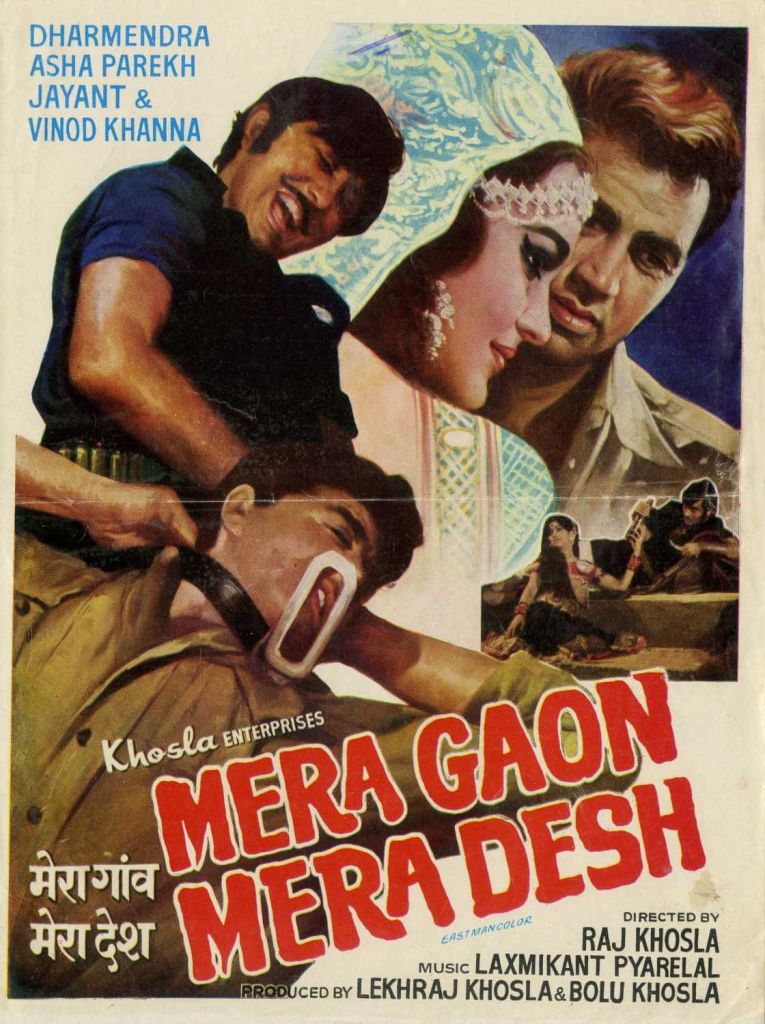
Mera Gaon Mera Desh is a 1971 Indian action-drama film directed by Raj Khosla and written by Akhtar Romani. The film stars Dharmendra and Asha Parekh in the lead roles, with Vinod Khanna in one of his early negative roles as the primary antagonist. Set against the backdrop of rural India, the film blends action, romance, and social themes, becoming a milestone in the careers of its lead actors and contributing to the popularity of dacoit-based narratives in Hindi cinema.
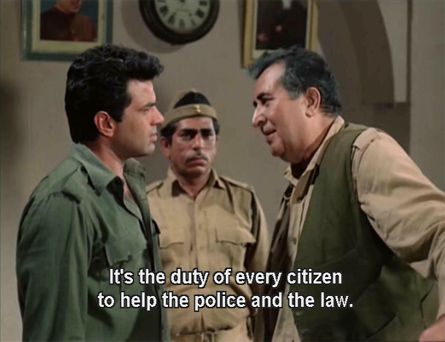
Havaldar Major Jaswant Singh (Jayant) arrests a petty thief named Ajit (Dharmendra) and turns him over to the authorities. After serving a six-month jail sentence, Ajit is advised by the jailer to seek honest work and is sent to Jaswant Singh, who offers him employment on his farm.
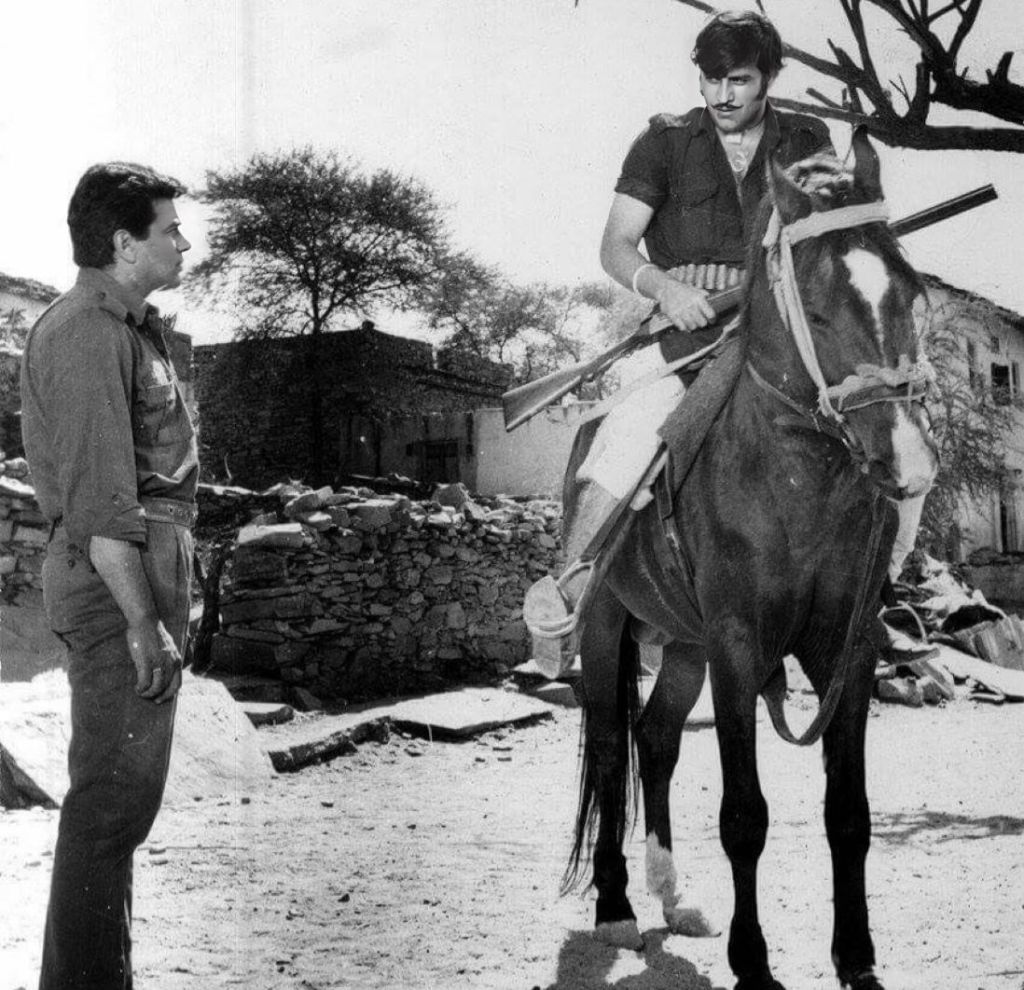
As Ajit begins to reform, he meets the spirited and kind-hearted Anju (Asha Parekh), and the two gradually fall in love. Just as Ajit starts embracing his new life, he learns of Jabbar Singh (Vinod Khanna), a ruthless dacoit who is terrorizing nearby villages.
Determined to protect the innocent villagers, Ajit takes it upon himself to confront Jabbar. In a cruel act of retaliation, Jabbar abducts Anju and demands that Ajit come to his hideout unarmed. Ajit complies, but upon arrival, he is also captured. He finds himself at the mercy of Jabbar and Munni (Laxmi Chhaya), a woman who once loved Ajit but now feels betrayed.
Jayant plays the role of Hawaldaar-Major Jaswant Singh His character is central to the film’s emotional and moral backbone. He provides shelter and a second chance to Ajit, a small-time criminal sent to the village on parole. Initially wary of Ajit’s background, Jaswant Singh gradually recognizes the goodness in him, especially as Ajit begins to reform under the influence of village life and Anju’s affection. Jayant’s dignified presence adds gravity to the story, especially as the village faces the terror of the bandit Jabbar Singh. When the dacoits threaten the village, Jayant becomes both a symbol of resilience and a catalyst for Ajit’s transformation. Jayant’s performance as Major Jaswant Singh brings a quiet strength to the narrative, highlighting themes of redemption, trust, and moral courage in the face of adversity.
Vinod Khanna plays Jabbar Singh, the film’s menacing and ruthless dacoit. This was one of his earliest negative roles, and he delivered a chilling performance that helped establish him as a powerful screen presence. Jabbar Singh terrorizes the peaceful village with his gang, looting, threatening, and brutalizing the villagers. His character stands in direct contrast to Ajit, who transitions from a petty thief to the village’s protector. Vinod Khanna’s intense screen presence and raw villainy made Jabbar Singh a memorable antagonist, foreshadowing similar dacoit roles in later Hindi cinema, especially in films like Sholay.
Laxmi Chhaya plays Munnibai, a spirited village dancer who is associated with Jabbar Singh’s gang but ultimately plays a complex role. Though she appears to be aligned with the dacoits, she is not entirely villainous. Her character provides key information at a crucial point in the plot and adds emotional nuance to the narrative. Munnibai’s dance numbers, especially her item song, are energetic and serve to heighten tension while also showcasing Laxmi Chhaya’s excellent dancing skills. Her performance adds a layer of intrigue and emotional contrast, making her more than just a secondary character.
Raj Khosla, played a pivotal role in shaping the film into a compelling mix of action, romance, drama, and social commentary. Known for his mastery across genres, Khosla brought emotional depth and narrative sharpness to this rural action drama by balancing Ajit’s redemptive journey, the villagers’ struggle against dacoity, and the evolving romance between Ajit and Anju. He developed well-defined characters, from the reformed hero to the menacing Jabbar Singh, and gave emotional weight even to supporting roles like Munnibai. His visual storytelling captured the contrast between pastoral peace and looming violence, while his tight pacing and suspenseful buildup kept the film gripping. Khosla’s direction elevated film beyond a typical entertainer, laying the groundwork for the dacoit genre that would later find iconic expression in Sholay, and securing the film’s lasting place in Hindi cinema history.
Pratap Sinha’s cinematography beautifully captures the contrast between the tranquil village life and the looming threat of dacoity. His use of wide landscape shots brings out the rustic charm of the setting, while the action sequences are shot with intensity and clarity, especially in the climactic scenes. The camera work highlights both the intimacy of character interactions and the broader social environment, enriching the film’s emotional and dramatic tone.
Waman Bhonsle’s editing keeps the film tightly paced and engaging throughout. Known for his crisp and coherent storytelling style, Bhonsle ensures that the narrative flows smoothly, balancing romance, action, and drama without abrupt transitions. The buildup to key confrontations is handled with precision, and the action scenes, particularly the final battle between Ajit and Jabbar Singh, are edited to maximize tension and emotional payoff.
The film’s soundtrack by Laxmikant–Pyarelal, lyrics by Anand Bakshi. The songs are not just musical interludes but integral to character development and mood-setting.
Song “Maar Diya Jaaye” – a haunting cabaret-style number by Laxmi Chhaya, expressing female anguish and rage. Her dance numbers are used not just as entertainment, but as expressions of longing, betrayal, and emotional turbulence. “Sona Le Ja Re” – picturized on Laxmi Chhaya, capturing heartbreak and intensity.
“Apni prem kahaniyaan, duniya ko lagti hain afsaane…” (Our love stories may seem like fables to the world…) – the romantic duet between Ajit and Anju, evoking the emotional bond they share. In the song, Ajit and Anju tease and flirt with each other, expressing their growing affection. The lyrics are filled with charm and innocence, suggesting how their hearts are writing their own stories.
Mera Gaon Mera Desh is a story of personal transformation, moral responsibility, and the triumph of good over evil, set against the backdrop of rural India. The film’s gripping narrative, memorable characters, stirring music, and socially relevant message have given it a lasting place in the canon of Hindi cinema.
Photos courtesy Google. Excerpts taken from Google.
 Writer Sunita