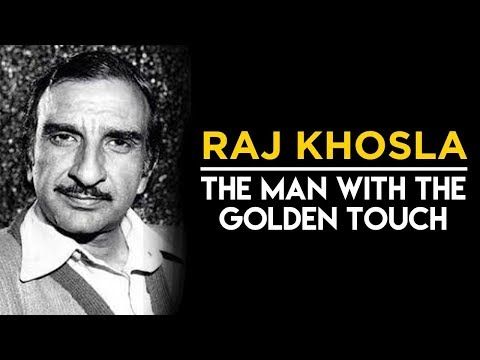
Raj Khosla was a towering figure in Hindi cinema, whose directorial vision helped shape the golden age of Bollywood from the 1950s through the 1980s. A multifaceted talent director, producer, and screenwriter Khosla was celebrated for infusing Indian films with a distinctive blend of neo-noir aesthetics and stylish storytelling. Revered as a “women’s director” for his nuanced and powerful portrayals of female characters, he also left an indelible mark through his long and fruitful collaborations with Dev Anand.
Khosla began his film career under the guidance of Guru Dutt and quickly made a name for himself by directing hit films like C.I.D. (1956), Woh Kaun Thi? (1964), Mera Saaya (1966), Mera Gaon Mera Desh (1971), Dostana (1980), and Main Tulsi Tere Aangan Ki (1978), which won the Filmfare Award for Best Film. His training in classical music helped him create songs that were not just beautiful but also deeply emotional, making the music an important part of his storytelling. Many of these songs are still loved today.
The 1955 film Milap, features a collection of songs with lyrics by the celebrated poet Sahir Ludhianvi and music composed by Datta Naik (N. Dutta). The soundtrack includes seven tracks sung by legendary voices like Lata Mangeshkar, Geeta Dutt, Asha Bhosle, and Mohammed Rafi. Among these, Geeta Dutt’s “Jaate Ho To Jaao Par Jaaoge Kahaan” stands out for its emotive delivery and catchy melody. Film critic Vijay Lokapally of The Hindu described this particular song as “hummable”. The film’s music still reflects the melodic style of 1950s Hindi cinema and showcases the early creative collaborations of some of its finest talents.
The music of C.I.D. (1956), composed by O. P. Nayyar, and the lyrics were written by Majrooh Sultanpuri, except for the song “Aankhon Hi Aankhon Mein,” which was penned by Jan Nisar Akhtar.
“Aankhon Hi Aankhon Mein” translates to “Through the eyes alone” it refers to a silent, wordless exchange of emotions especially romantic or affectionate through eye contact is picturized on Dev Anand and Shakila. This charming, flirtatious number takes place in a party setting where Dev Anand and Shakila exchange romantic glances. In Indian poetic and cinematic language, this phrase often evokes the idea of lovers communicating deep feelings just by looking into each other’s eyes, without saying a word.
The phrase “Kahin Pe Nigaahen Kahin Pe Nishaana” (“Eyes (focus) are somewhere but the aim (target) is somewhere else.”) it refers to a situation where someone appears to be paying attention to one thing but is actually targeting or thinking about something else often used to describe someone being sly, flirtatious, or strategically deceptive. This song marks Waheeda Rehman’s first appearance in Hindi cinema, where she plays a mysterious woman dancing in a club. The number is both seductive and intriguing, matching the noir tone of CID. Her graceful performance left a lasting impression.
“Yeh Hai Bombay Meri Jaan,” is a lively and iconic song that captures the vibrant spirit of Bombay (now Mumbai). Song picturized on Johnny Walker, who plays a comical pickpocket in the film. This song is a satirical and soulful tribute to the city of Bombay (now Mumbai), reflecting its charm, chaos, and contradictions. Johnny Walker’s light-hearted portrayal adds humor and poignancy, making it one of the most memorable street songs
“Leke Pehla Pehla Pyaar,” (Bringing my very first love) is a playful song that celebrates the excitement of first love. The song is a playful, teasing number sung in the streets as playfully mocks the romantic tension between the lead pair, Dev Anand and Shakila. The song is full of youthful energy, flirtation, and lively banter between the voices. With its peppy rhythm and cheerful tone, the song became a hit and is still remembered for its light hearted charm and the delightful chemistry between the singers. It reflects the carefree, romantic vibe of early Hindi cinema.
“Boojh Mera Kya Naam Re” translates to “Guess what my name is” this playful and teasing song, is known for its catchy tune and rhythmic beat. In the song, the singer playfully challenges the listener to guess her name, using flirtation and fun as a theme. It reflects a sense of mystery and mischief, which was a hallmark of O. P. Nayyar’s musical style.
The music of Kala Pani (1958) was composed by the legendary S. D. Burman, with lyrics penned by Majrooh Sultanpuri, resulting in a memorable and melodious soundtrack.
Mohammed Rafi’s emotional solo “Hum Bekhudi Mein Tumko Pukarey Chale Gaey” is a hauntingly beautiful expression of longing and heartbreak. This song beautifully captures the emotional longing and heartbreak of the character, with Dev Anand walking alone, lost in thought. The song captures the pain of unrequited love and emotional surrender. Rafi’s voice is filled with melancholy and depth, making the listener feel every word of the sorrowful plea. The tune is slow and poignant, and the orchestration gently supports the mood of despair and helplessness.
“Achha Ji Main Haari, Chalo Maan Jao Na”, this playful romantic duet showcases the charming chemistry between Dev Anand and Madhubala. It’s set in a light, flirtatious mood where the heroine is trying to pacify the upset hero. The song captures the light-hearted teasing between a couple where the woman pretends to surrender after a tiff and urges her partner to forgive and make up. Its breezy melody, witty lyrics, and cheerful tone make it an evergreen.
The vibrant qawwali “Dilwale O Dilwale” this qawwali-style song is part of a courtroom/club-style performance, expressing emotional confrontation and unspoken love. Nalini Jaywant’s character sings it with subtle tension, and Dev Anand watches, silently affected. The song stands out for its semi-classical composition, lyrical depth, and dramatic setting a fine example of how Hindi films used musical performance to express unspoken feelings and advance the plot.
The song “Nazar Lagi Raja Torey Bangley Per” this is a classic mujra number, beautifully performed by Nalini Jaywant. The setting is elegant, and the song reflects both the charm and anguish of unfulfilled love. It’s rich with expressions, hand gestures, and ghungroo-laced footwork, making it memorable. “Jab Naam-E-Mohabbat Le Ke Kisi Ne Daaman Phailaya” stands out for its poetic depth, as it speaks of love and sacrifice with dignity and emotional weight. “Dil Lagake Kadar Gayi Pyaarey” is more reflective, lamenting the betrayal that often follows love. Each song carries the flavor of traditional courtesan performances, blending grace, pathos, and expressive storytelling through music and dance.
The songs of Solva Saal (1958) are composed by the legendary S. D. Burman, with lyrics penned by the poetic Majrooh Sultanpuri, resulting in a charming and memorable soundtrack that perfectly complements the film’s youthful, romantic tone. Each song from film, teasing, or introspective is meticulously placed. The lead characters (Dev Anand and Waheeda Rehman) as they go from misunderstanding to affection over the course of one adventurous night.
“Hai Apna Dil To Awara”, this iconic song is set inside a train compartment, where Dev Anand’s character strums a ukulele and casually sings, while Waheeda Rehman listens first annoyed, then charmed. The minimal setting, conversational style, and breezy melody make it an evergreen favorite. Hemant Kumar’s velvety voice suits Dev Anand perfectly, and the song has become symbolic of light-hearted romance in Hindi cinema.
“Dekho Ji Mera Haal, Badal Gayi Chaal, Dekho Mohe Laga Solva Saal” this is a light-hearted, youthful solo picturized on Waheeda Rehman, portraying the joy and innocence of a girl stepping into womanhood. The lyrics reflect the changes she feels as she turns sixteen a symbolic coming-of-age. Waheeda performs it with grace and charm, and the setting enhances the song’s playful yet emotional tone.
“Yahi To Hai Woh” this song is gentle and heartfelt, reflecting a turning point in the emotional journey of the characters. Rafi’s soothing voice adds sincerity, making it a standout ballad that underlines the protagonist’s deeper feelings.
“Yeh Bhi Koi Ruthne Ka,” Asha Bhosle captures the essence of a light, playful pleawhere a character tries to win back affection after a lover’s mild upset. Her voice conveys both mischief and warmth, making it an endearing number.
“Nazar Ki Katari Yeh”, this song allows Asha to flaunt her coquettish charm, backed by a breezy melody. It’s full of wordplay and rhythmic allure, fitting for a sequence filled with light tension and attraction.
The music of Bambai Ka Babu (1960) is composed by S. D. Burman, with lyrics by Majrooh Sultanpuri, creating a melodious and memorable soundtrack that complements the film’s dramatic and romantic themes.
““Saathi na koi manzil, manjil ka na koi raahi…” (No companion, no destination — and no path to follow.), this melancholic solo by Mohammed Rafi reflects the inner turmoil of Dev Anand’s character, who is trapped in a web of lies, identity, and guilt. The song beautifully expresses a sense of loneliness and longing, capturing the emotional turmoil of a journey without a companion or a clear destination.
“Deewana Mastana Hua Dil, Jaan-E-Jahan,” (My heart has gone mad in love, beloved of my soul) the song is picturised on Dev Anand, who is shown falling for Suchitra Sen, the woman he should not love, due to the false identity he’s assumed. The romantic intensity is layered with dramatic irony, as the audience knows the emotional dilemma he’s trapped in.
“Pawan Chale To Uthe Man Mein Lehar Si,” (When the breeze blows, waves rise in the heart…) use the metaphor of nature to express emotional awakening. The song is delicate, reflective, and filled with innocent yearning. This is picturised on Suchitra Sen, who plays a woman unknowingly growing close to a man she believes is her brother adding a layer of tragic irony and emotional complexity to the moment.
“Chal Ri Sajni Ab Kya Soche,” this is a soft, contemplative song picturized on Suchitra Sen’s character. It conveys a mood of gentle persuasion, encouraging the beloved not to worry or overthink the uncertainties of love and life. The tone is soothing yet emotionally rich, perfectly matching the film’s blend of romance and drama.
“Takdam Takdam Baje” by Manna Dey adds a rhythmic and lively flavor, contributing to the film’s varied musical palette. “Dekhne Mein Bhola Hai” and “Aise Mein Kachhu Kaha”, both sung by Asha Bhosle, showcase her versatility, ranging from playful to contemplative.
Ek Musafir Ek Hasina (1962) features music composed by O. P. Nayyar, with lyrics by S. H. Bihari, Raja Mehdi Ali Khan, and Shewan Rizvi. The songs are a perfect blend of romance and melody, with a classic touch of Nayyar’s rhythmic style.
One of the most memorable songs, “Aap Yun Hi Agar Humse Milte Rahe”, is based on Raga Kedar, known for its serene and devotional feel, which adds a graceful charm to the song. The song picturises Joy Mukherjee and Saira Banu, their romantic moments, reinforcing the chemistry between the lead pair. The song reflects a quiet, growing intimacy between two people, marked by subtle expressions of love and admiration.
“Bahut Shukriya, Badi Meharbani” this is a light-hearted banter between the two characters, where the leads exchange words of thanks and affection with a charming, flirtatious tone. The catchy tune and the delightful chemistry between the singers make it a memorable part of the film’s soundtrack.
“Mujhe Dekhkar” a romantic solo by Rafi, expressing admiration. “Phir Tere Shehar Mein” longing to this song about returning memories. “Humko Tumhare Ishq Ne” Rafi sings of the deep impact of love. “Main Pyar Ka Rahi Hoon, Teri Zulf Ke Saye Mein” a lovely journey of love. “Tumhe Mohabbat Hai Humse Mana“ another duet with subtle emotional exchanges. “Zabaan-E-Yaar, Man Turki, Nami Daanam” a poetic and intriguing piece. “Udhar Woh Chaal Chalte Hai” Asha’s solo with a mix of admiration and curiosity. “Meri Nazren Haseen Hai” A flirtatious number with Asha’s lively vocals.
The 1964 film Woh Kaun Thi? features a hauntingly beautiful soundtrack composed by Madan Mohan, with lyrics penned by Raja Mehdi Ali Khan. The music played a crucial role in establishing the film’s mysterious and romantic atmosphere.
“Lag jaa gale ke phir yeh haseen raat ho na ho, Shaayad phir is janam mein mulaaqaat ho na ho…” (Embrace me now, for this beautiful night may never return; Perhaps in this lifetime, we may never meet again…) picturised on Sadhana, adding to the mysterious, romantic, and melancholic aura of the film. It expresses a deep yearning to embrace a fleeting moment. Lata Mangeshkar’s soulful voice, combined with the delicate orchestration and poignant lyrics, creates a hauntingly beautiful atmosphere that resonates deeply with listeners.
“Naina barse rimjhim rimjhim, Piya tore aavan ki aas…” (My eyes rain softly,
Hoping for your return, my beloved…) is a mystical, melancholic melody that deepens the eerie and suspenseful atmosphere. Lata Mangeshkar’s voice glides like falling rain. The song appears in key moments, often tied to the mysterious woman (Sadhana), creating a feeling of longing, loss, and something beyond the natural world.
“Chhodkar tera pyaar ka daaman, Zindagi ko taras jaayenge…” (If I ever leave the embrace of your love, I’ll be left yearning for life itself…) This soulful song is a deep expression of love and dependence, highlighting how central the beloved is to the singer’s sense of purpose and life. Mahendra Kapoor brings powerful emotion and clarity to the song, which builds upon the film’s themes of identity, devotion, and the supernatural. Picturised on Manoj Kumar, the song reflects his character’s emotional turmoil and inner conflict.
“Shokh nazar ki bijliyan, dil pe giraake chaali gayi…”, (The flirtatious lightning of her gaze struck the heart and passed on…) this is a rare light-hearted and sensuous song in an otherwise suspenseful and mysterious film. Picturised on the graceful Helen, it offers a contrast to the film’s haunting mood and provides a vibrant, energetic interlude.
“Aap Kyun Roye” another soulful melody expresses deep sorrow and vulnerability, with Madan Mohan’s subtle orchestration highlighting the pain in the lyrics. “Tiki Riki Tiki Riki Tum” a lighter, playful duet providing contrast to the film’s otherwise somber tone.
The music for the 1966 film Mera Saaya was composed by the legendary Madan Mohan, with all lyrics penned by Raja Mehdi Ali Khan.
“Jhumka gira re, Bareilly ke bazaar mein…” (My earring fell down in the market of Bareilly…) this energetic and playful number is one of Asha Bhosle’s most popular songs, remembered for its catchy rhythm and Sadhana’s expressive dance performance. Though Mera Saaya is largely a suspense-thriller, this song brings a burst of joy and mischief, showing a different side of Sadhana’s character. It remains a classic in Indian cinema and pop culture so much so that Bareilly is now forever associated with the “jhumka”!
“Aap ke pehlu mein aakar ro diye…Zindagi bhar ka gham humein de diya...” (I wept resting in your arms…You gave me a sorrow that will last a lifetime…) this emotionally charged ghazal-style number expresses deep sorrow, love, and helplessness. It beautifully captures the heartbreak of Sunil Dutt’s character, who is torn between grief and suspicion, as the story unfolds with mystery surrounding his wife’s identity and death.
“”Tu jahan jahan chalega, mera saaya saath hoga…“ (Wherever you go, my shadow will follow…) this iconic song is the emotional and thematic heart of Mera Saaya. It encapsulates the mystery, devotion, and tragic romance that define the film. The song expresses eternal love beyond death, casting a spectral mood over the story. It is used at a key moment in the film and serves as a musical motif that echoes the heroine’s undying presence and the central suspense surrounding her identity.
“Nainon mein badra chhaye, bijuri si chamke haaye...” (Clouds gather in the eyes, lightning flashes gently…) song is based on the Raag Bhimpalasi and conveys emotional depth and longing through its poetic imagery of monsoon clouds. This melody captures the deep emotional longing and mystique of the character portrayed by Sadhana. The imagery of monsoon and love is deeply poetic and symbolic of the film’s underlying mystery and emotional tension.
The 1966 film Do Badan features a deeply emotional and melodious soundtrack composed by Ravi, with lyrics written by the celebrated poet Shakeel Badayuni. The music plays a crucial role in enhancing the film’s tragic love story, and several of its songs have become evergreen classics.
“Naseeb Mein Jiske Jo Likha Tha”, a soul-stirring and philosophical number that reflects on fate and helplessness. “Bhari Duniya Mein Aakhir Dil Ko”, this romantic song captures the longing and vulnerability of love. “Raha Gardishon Mein Hardam”, a melancholic tune depicting life’s unending struggles, beautifully rendered by Rafi. The lyrics explore resilience and sorrow in equal measure. “Lo Aa Gayi Unki Yaad”, a haunting melody that expresses the heartache of memories. “Jab Chali Thandi Hawa”, a breezy, romantic number that stands in contrast to the otherwise somber mood of the soundtrack. “Mat Jaiyo Naukariya Chhodke”, a fun, light-hearted track that adds a touch of humor and realism to the film’s emotional narrative. .
The 1967 film Anita features music composed by the famous duo Laxmikant-Pyarelal, with lyrics written by Raja Mehdi Ali Khan, Anand Bakshi, and Arzoo Lucknavi.
“Theme Music” another instrumental track providing a musical backdrop for the film’s narrative. “Gore Gore Chand Se Mukh Pe”, this song is a romantic ode celebrating beauty and charm. “Hai Nazar Ka Ishara”, filled with playful and flirtatious emotions. “Kareeb Aa Ye Nazar”, this is a soft, inviting melody expressing closeness and longing. “Pichhwade Buddha Khansta” solo, bringing depth and mood to the film. “Samne Mere Sanwariya”, adds a romantic and soothing touch to the soundtrack. “Tum Bin Jeevan Kaise Beeta” a soulful solo by Mukesh, that beautifully expresses the pain of separation and yearning. “Anita (Title Music)”, an instrumental piece that sets the tone of the film.
The music of Chirag (1969) was composed by Madan Mohan, with lyrics written by Majrooh Sultanpuri. Director Raj Khosla specifically wanted the line “Teri Aankhon Ke Siwa Duniya” from a poem by Faiz Ahmed Faiz to be used in a song. Permission was obtained, and the result was one of the most memorable tracks in the film.
Teri aankhon ke siwa duniya mein rakha kya hai, Ye uthe subah chale, ye jhuke shaam dhale (“What is there in the world except your eyes? They rise with the morning and set with the evening.”) this song is one of the most beloved romantic ballads. It expresses the depth of love where the entire existence and rhythm of life revolves around the beloved’s eyes. The male and female versions are used in different emotional moments in the film, adding to the mood of longing and love.
Chhai Barkha Baha, a beautiful rain song that captures the freshness and charm of the monsoon, expressing the feelings of love blossoming with nature’s beauty. Bhor Hote Kaga, a soft, early morning song that uses the image of a crow (kaga) calling at dawn to reflect sorrow and longing, symbolizing separation or inner turmoil. Jab Dekh Liya, a song filled with philosophical reflection, possibly about the truth of love or life after realizing a harsh reality. More Bichhade Saath, a deeply emotional song about separation from a loved one. Lata’s voice brings out the pain of loneliness and remembrance beautifully. Chirag Dil Ka Jalao, the song uses the metaphor of lighting a lamp in the heart a call for inner strength or emotional light in dark times. Rafi’s soothing rendition makes it uplifting.
Do Raaste (1969) is a beloved family drama known not just for its touching story, but also for its unforgettable music. The songs, composed by Laxmikant–Pyarelal with lyrics by Anand Bakshi, played a key role in the film’s success. Each song reflects a different emotion. “Mere Naseeb Mein Ae Dost” is a soulful melody about fate and heartbreak. “Bindiya Chamkegi” is a joyful tune full of bridal dreams, while “Yeh Reshmi Zulfen” is a soft romantic song celebrating beauty. The duet “Chup Gaye Saare Nazaare” captures the magic of love, and “Do Rang Duniya Ke” shares a moral message about life’s choices. “Apni Apni Biwi Pe” adds humor, likely around married life. Some songs, like “Yeh Reshmi Zulfen,” “Bindiya Chamkegi,” and “Dil Ne Dil Ko Pukara,” appear again in the film with slight changes in mood. The film also features a classical instrumental title track.
Mera Gaon Mera Desh (1971) is a popular action-romantic film known for its strong storyline and memorable music. The songs were composed by Laxmikant–Pyarelal with lyrics by Anand Bakshi. Each song adds depth to the film’s emotions and settings.
“Kuchh kehta hai ye saawan, kuchh kehti hai barsaat...” (This monsoon says something, the rain whispers something…) this gentle, introspective song captures the feelings of longing and emotional awakening. Set against the backdrop of the rainy season, it reflects the character’s internal stirrings of love and perhaps uncertainty. Asha Parekh performs it with quiet grace, and Lata Mangeshkar’s voice brings out the soft melancholy and romantic tension beautifully.
“Apni Prem Kahaniyaan,” is picturised on Vinod Khanna and Laxmi Chhaya. In this scene, Munni (Laxmi Chhaya) teasingly narrates her “many” romantic tales to Jabbar Singh (Vinod Khanna), the feared dacoit. The song is laced with mocking humor and flirtation, while also subtly revealing the tension and unbalanced power dynamic between them. Despite the song’s playful tone, it’s steeped in emotional subtext, as Munni uses her wit and charm as a form of resistance and survival in a dangerous world.
“Maar diya jaye ki chhod diya jaye, bol tere saath kya salook kiya jaye…”
(Shall you be killed or spared? Tell me, what should be done with you…) this song is a pivotal moment, reflecting the internal conflict of Munni, portrayed by Laxmi Chhaya. Her character grapples with feelings of betrayal and vengeance, and the song’s lyrics poignantly express this turmoil.
“Aaya Aaya Atariya Pe Koi Chor” this is a light, teasing, and flirtatious song where the heroine playfully complains about a “thief” (symbolic of love) who’s come to steal her peace from the rooftop. It’s full of romantic anticipation, and Asha Parekh delivers the expressions with lively charm.
“Sona Lai Ja Re” this song is steeped in folk rhythms and rural flavor, echoing the life and spirit of the village. It’s a heartfelt number where the woman yearns for her beloved, asking the golden breeze (sona = gold) to carry her message. It beautifully enhances the rural setting and emotional tone of the film.
Raj Khosla attained remarkable success as a filmmaker and earned the distinction of being a ‘women’s director’, much like George Cukor in Hollywood. Khosla apart is his extraordinary command over multiple genres from thrillers to musicals, courtroom dramas, romantic tragedies, and intense social films. He moved through these diverse narrative styles with remarkable ease, all while imprinting his signature style rich visual aesthetics, dramatic storytelling, and emotionally resonant music. He transformed songs into narrative tools, not just interludes, blending music, and mood in a way that left an enduring impact.
He played a pioneering role in using songs not just as musical embellishments but as powerful narrative tools in Hindi cinema. His style exemplified how film songs could be deeply integrated into narrative, mood, and character development rather than just serving as musical interludes. He often wove songs into the fabric of storytelling to advance the plot, express deep emotions, and heighten suspense. He had a remarkable grasp of romance and melancholy, often bringing out deep emotional resonance through his song picturizations. His flair for suspense also extended to his noir-style thrillers, where songs heightened the mood rather than disrupted it.
Known for his stylish picturizations, he directed song sequences with an eye for elegance and emotional depth. He treated songs as cinematic moments never as interruptions but as emotional or dramatic high points. His ability to seamlessly weave songs into the rhythm of the narrative and align them with the inner lives of his characters helped elevate the overall storytelling, leaving behind a legacy of timeless film music that continues to resonate across generations.
Photos courtesy Google. Excerpts taken from Google.
 Writer Sunita